
Squats do not make you taller in any measurable, permanent sense. They won't lengthen your bones or reopen growth plates that have already fused. That said, the picture is a little more nuanced depending on your age: kids and teenagers who are still growing may benefit indirectly from the hormone response and postural improvements that strength training supports, while adults can realistically expect better posture and a taller appearance without any change to actual bone length. So if you're hoping squats are a secret height hack, the honest answer is no. But if you want to understand what they can genuinely do for your body and height perception, there's real value in unpacking the science.
Does Squats Help You Grow Taller? Science and Safety Guide

Marcus Reeves
5 Jun 2026
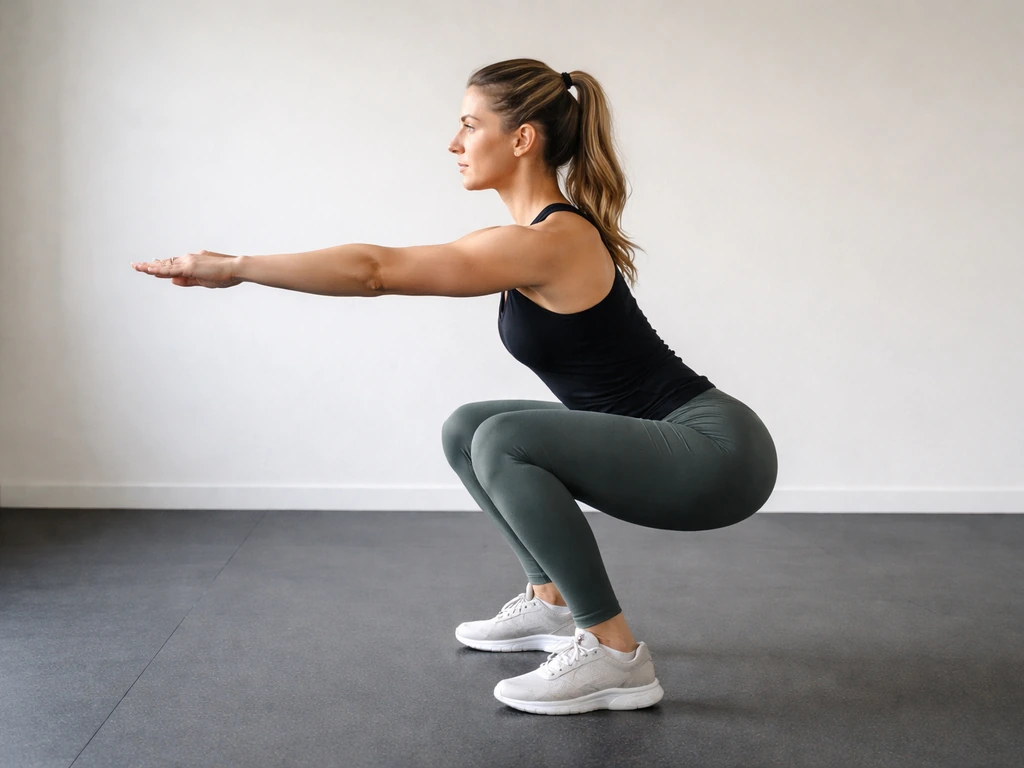
The answer depends heavily on your age
For kids and teenagers who are still in active growth phases, the environment around height is more flexible. Bones are actively elongating, growth plates (the cartilaginous zones near the ends of long bones) are still open, and lifestyle factors like nutrition, sleep, and physical activity genuinely influence how much of a person's genetic height potential gets expressed.
Squats, as part of a well-designed strength training program, are safe during these years and may contribute to an optimal hormonal environment for growth. The American Academy of Pediatrics and the American College of Sports Medicine both confirm that well-supervised resistance training does not harm growth plates or stunt linear growth in youth. So for teens, squats aren't going to make you taller, but they're not going to make you shorter either, and the overall health benefits are real. HealthyChildren.
org, an AAP resource, says strength training is not harmful to growth plates when it is supervised and uses low weight with higher repetitions strength training does not harm growth plates.
For adults, the situation is straightforward: growth plates fuse by the late teens to early twenties for most people, and once that happens, bone elongation stops permanently. No exercise, squat variation, or training protocol changes that biology. What squats can do for adults is improve posture, strengthen the posterior chain and core, and make you carry yourself in a way that looks taller. That's not nothing, but it's worth being clear that it isn't actual height gain.
How height actually works: bones, growth plates, and genetics
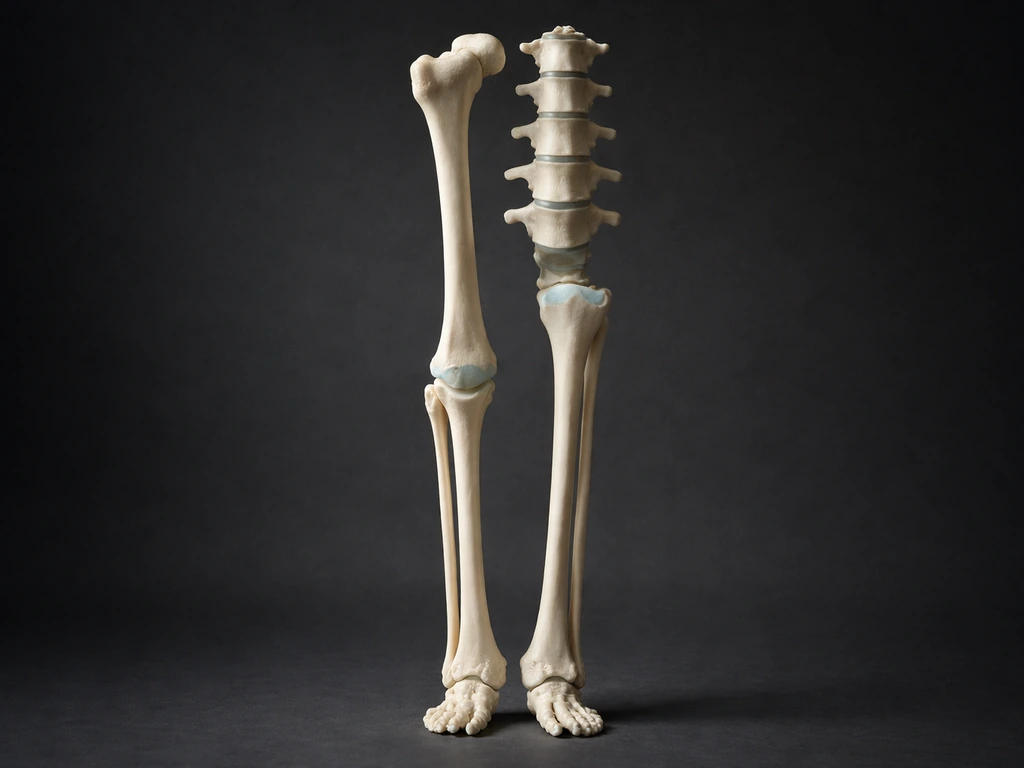
Your height is primarily determined by the length of your long bones, especially the femur (thigh bone) and tibia (shin bone) in the legs, and the vertebrae stacked in your spine. During childhood and adolescence, these bones grow through a process driven by specialized cartilage zones called growth plates, or physes, located near each end of the bone. Hormones like growth hormone (GH) and insulin-like growth factor 1 (IGF-1), along with adequate nutrition, stimulate cells in these plates to multiply and mineralize into new bone tissue, which is how bones get longer over time.
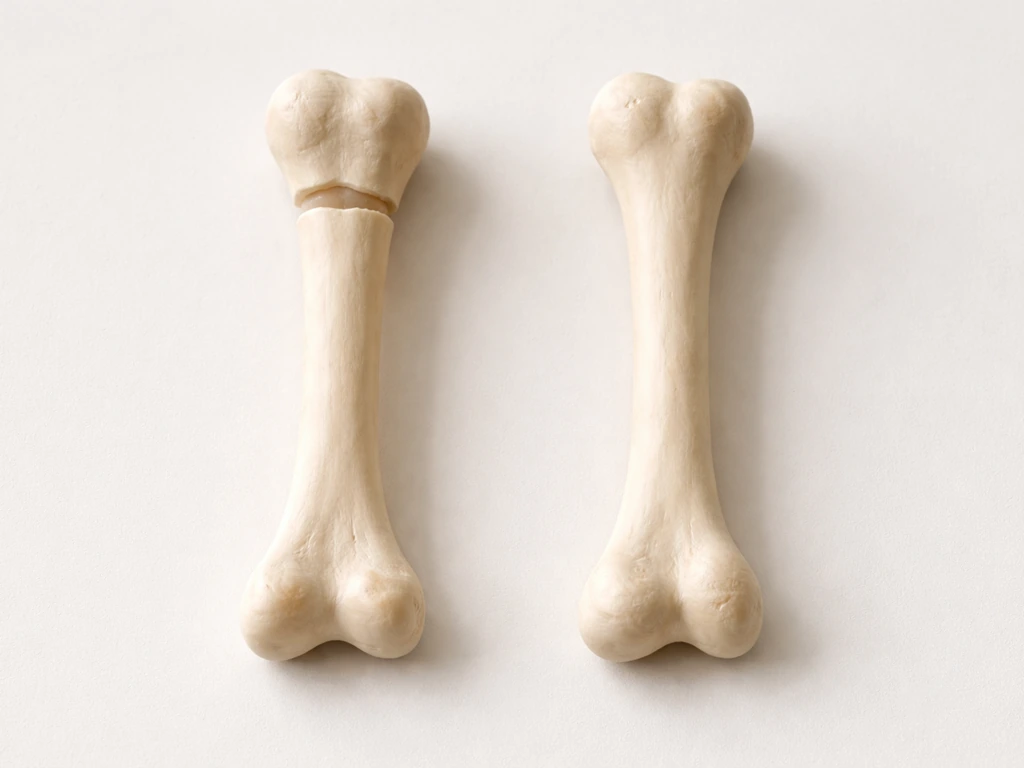
Once puberty completes, typically between ages 16 and 18 in girls and 18 to 21 in boys, the growth plates harden and fuse. After fusion, there is no mechanism left for bone elongation. Genetics sets the ceiling: studies consistently show that 60 to 80 percent of height variation between people is explained by inherited factors. The remaining 20 to 40 percent is where environment comes in, things like childhood nutrition, sleep quality, chronic illness, and physical activity levels. But even that environmental window closes when the growth plates fuse.
What squats can genuinely improve
Even if squats won't add inches to your skeleton, they do produce real, measurable changes that affect how tall you look and feel. These are worth taking seriously.
Posture and spinal alignment
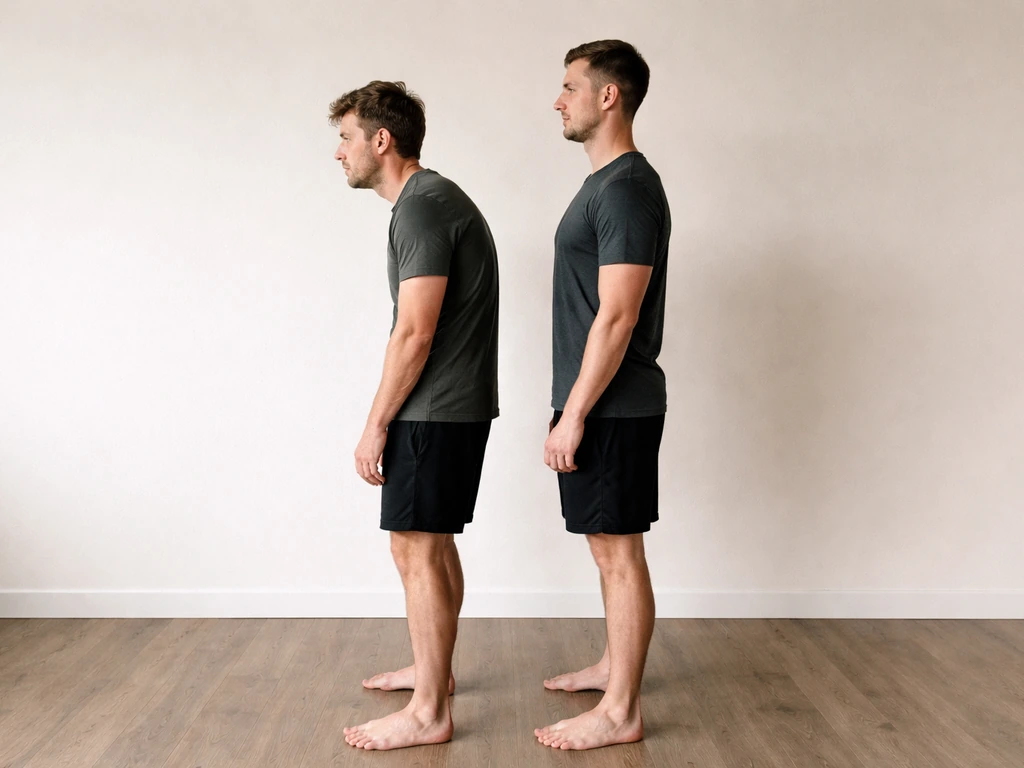
Poor posture is one of the most underappreciated sources of lost apparent height. Chronic forward head posture, rounded shoulders, and an exaggerated thoracic curve (kyphosis) can compress your apparent height by an inch or more. Squats, particularly back squats and goblet squats performed with correct form, train the spinal erectors, glutes, and core muscles that actively support an upright posture. Over time, consistently training these muscles builds the strength and body awareness to maintain better alignment throughout the day, which genuinely makes you stand taller.
Core and hip strength
Squats are a compound movement that simultaneously loads the quadriceps, hamstrings, glutes, hip flexors, and deep core stabilizers. Strengthening these muscles improves pelvic positioning. A weak core and tight hip flexors (common in people who sit most of the day) tend to produce an anterior pelvic tilt, which flattens the lumbar spine or exaggerates the arch in a way that changes how upright you actually stand. Building strength through squatting corrects these imbalances and gives you a more neutral, tall posture naturally.
Body composition and visual proportions
Stronger, more developed legs and glutes improve overall body proportions in a way that can make a person appear leaner and longer. This is purely aesthetic and perceptual, but it's a real outcome of consistent squat training. Combined with better posture, the visual effect can be meaningful even if no bone has changed.
What squats cannot do
Squats cannot lengthen bones after growth plates have fused. Full stop. There is no credible mechanism by which loading the legs and spine through a squat movement causes new bone tissue to form at the growth plates in adults, because those plates no longer exist as active growth zones. Claims that squats 'stretch' the spine, decompress vertebrae enough to add height, or somehow stimulate dormant bone growth are not supported by physiology or evidence. Spinal discs do compress and rehydrate throughout the day (which is why most people are slightly shorter in the evening than in the morning), but this is a daily fluctuation of a few millimeters, not a growth response driven by exercise.
It's also worth noting that squats, unlike some exercises such as running or pull-ups, apply axial loading through the spine and lower body. Done with poor form, heavy loading, or too much volume too soon, this can increase compressive stress on spinal discs and joints. That is not a reason to avoid squats, they are an excellent and safe exercise when programmed correctly, but it does debunk the idea that squatting somehow decompresses or elongates the spine to create height.
Do squats affect growth hormone? Myths vs. what the evidence actually says
This is where a lot of the 'squats make you taller' claims originate. It's true that resistance training, especially large compound movements like squats and deadlifts, produces an acute spike in growth hormone (GH) and testosterone after a workout session. This is well-documented. The question is whether that spike is large enough or sustained enough to translate into additional bone growth or measurable height gains.
The evidence says no, at least not in any clinically meaningful way for height. The post-exercise GH pulse is transient, typically peaking within 15 to 30 minutes and returning to baseline within an hour. In children and adolescents, this hormonal environment supports overall musculoskeletal development and may contribute to healthy bone density and structure, but research has not shown that lifting weights causes children to grow taller than their genetics would otherwise allow. In adults with closed growth plates, the GH spike has no pathway to bone elongation regardless of magnitude. What it does support is muscle protein synthesis, recovery, and metabolic health, all worthwhile, just not height-related.
There's also a persistent myth that heavy squats compress the spine so severely during youth that they stunt growth. This has been studied and effectively debunked by major sports medicine bodies. Both the ACSM and the AAP have stated clearly that well-designed youth resistance training programs have not been shown to negatively affect physeal health or linear growth. The key phrase is 'well-designed': supervised training with appropriate loads, proper form, and gradual progression does not pose meaningful risk to developing growth plates.
How to squat safely to actually get the benefits
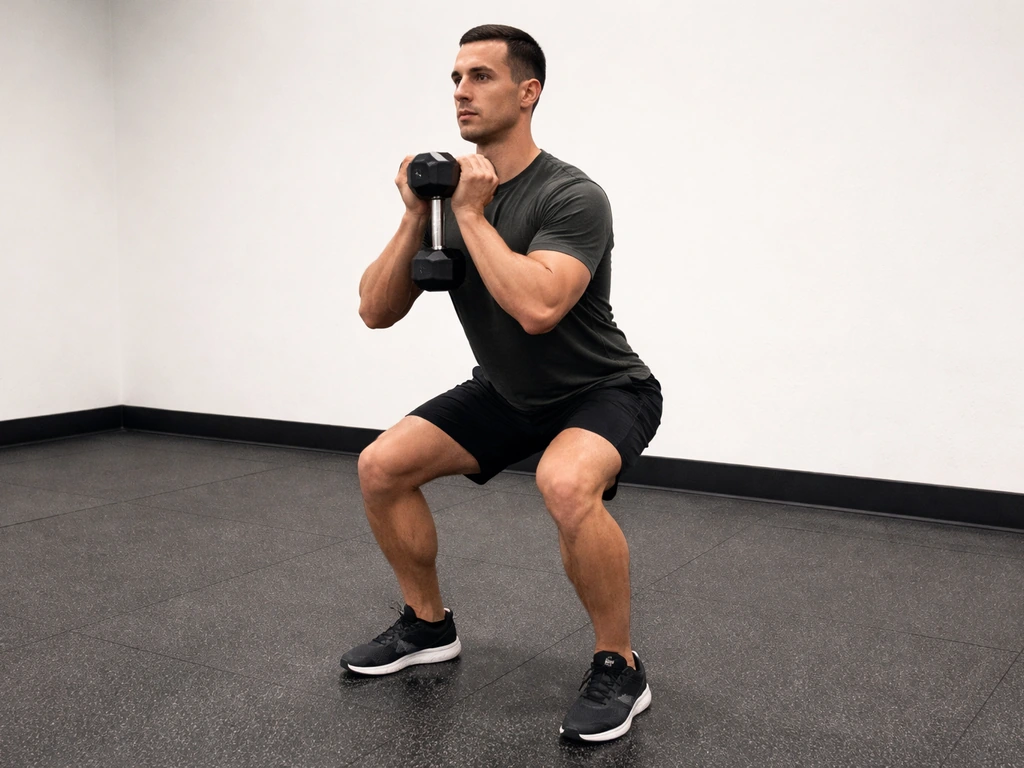
If the goal is better posture, stronger legs and hips, and the appearance of standing taller, squatting well matters more than squatting heavy. Here's how to approach it practically.
Start with the goblet squat
The goblet squat (holding a dumbbell or kettlebell at chest height) is the best teaching variation for most people. It naturally cues an upright torso, forces thoracic extension, and builds the core and hip strength needed before adding a barbell. Start with a light load, 10 to 15 pounds, and focus on sitting into the squat with your chest tall, knees tracking over your toes, and heels flat on the floor. Three sets of 8 to 12 reps two to three times per week is a solid starting point.
Form cues that matter most for posture
- Chest up and out: actively extend your thoracic spine before descending
- Brace your core like you're about to take a punch, and hold that through the movement
- Push your knees out in line with your toes, not caving inward
- Drive through your full foot, not just the ball or heel
- Stand all the way up at the top, fully extending hips and squeezing glutes
Progression and volume for teens and adults
| Group | Recommended Start | Load Guidance | Frequency | Primary Goal |
|---|---|---|---|---|
| Younger teens (under 14) | Bodyweight or very light goblet squat | Focus on form, minimal external load | 2x per week | Movement patterns, core strength |
| Older teens (14-18) | Goblet or barbell back squat with light load | Progress load gradually, prioritize technique | 2-3x per week | Strength, posture, athletic development |
| Adults (18+) | Goblet, front, or back squat based on mobility | Progressive overload with form as the constraint | 2-3x per week | Posture, strength, body composition |
For youth athletes specifically, the NSCA recommends building programs around the individual's training age and physical maturity, not just chronological age. NSCA’s 2009 youth resistance training position statement similarly emphasizes developing training programs around youth needs while using safe training practices and appropriate load prescription the NSCA recommends building programs around the individual's training age and physical maturity. A 14-year-old with no lifting experience should train very differently from a 16-year-old who has two years of supervised training. Always prioritize supervised instruction when introducing squats to younger athletes.
What to avoid
- Maximal or near-maximal loading in youth athletes who haven't mastered technique
- Sudden large jumps in training volume or load week to week
- Squatting through pain, especially knee or low back pain
- Rounding the lower back at the bottom of the squat under any significant load
- Heel elevation workarounds that mask underlying ankle mobility issues rather than solving them
What to do next if height is actually your goal

Squats are one piece of a larger picture. If you're in your growth years or supporting a child or teen who is, the habits that genuinely influence how much height potential gets expressed are well-established. Exercise can support posture and overall health, but it does not override genetics or reopen fused growth plates how much height potential gets expressed. If you're an adult, the focus shifts to maximizing what you've got through posture and strength.
Prioritize sleep above almost everything else
The majority of growth hormone secretion happens during deep sleep, particularly in the first few hours after falling asleep. For children and teenagers, consistently getting 8 to 10 hours per night is one of the most impactful things they can do to support healthy growth. Chronic sleep deprivation during adolescence genuinely blunts GH output in a way that diet or exercise can't fully compensate for.
Get your nutrition right, especially protein and micronutrients
Bone growth requires raw materials: protein for the collagen matrix, calcium and vitamin D for mineralization, zinc, magnesium, and vitamin K2 for supporting bone metabolism. Undernourished children consistently fall short of their genetic height potential. For teens doing resistance training, total caloric intake and protein (roughly 1.2 to 1.6 grams per kilogram of body weight per day) become especially important because both muscle and bone are being actively built.
Combine squats with other movement types
Squats work best alongside other exercises that support posture and full-body mechanics. Pull-ups and rows counterbalance the anterior loading of many squat patterns and directly address the rounded-shoulder posture that costs apparent height. Pull-ups can help your back and shoulder posture too, but they still won't change your bone length. Activities like swimming, basketball, and general cardiovascular exercise also support healthy development in youth.
For the specific question of whether cardio for height helps, the focus is mostly on healthy development, fitness, and posture rather than changing your bone length. If you're exploring whether other specific exercises affect height, the comparison between squats, running, and other movement patterns is worth thinking through, since different exercise types load the body very differently and have different implications for posture and bone health.
You might also wonder, can running help you grow taller, and the answer depends mostly on age and growth plate status.
When to see a clinician
If a child or teenager is significantly shorter than peers and growth seems to have slowed or stalled, a pediatrician or pediatric endocrinologist can assess whether growth is tracking normally through bone age X-rays and hormone panels. In some cases, treatable conditions like growth hormone deficiency or delayed puberty are the underlying cause, and early intervention makes a meaningful difference. For adults concerned about height loss (which can occur with age due to disc compression and spinal changes), a primary care physician can help rule out conditions like osteoporosis. No squat program addresses those medical scenarios, but knowing the difference between normal variation and a clinical concern is important.
Realistic expectations: what you can measure vs. what you can't
| Outcome | Possible with squats? | Who benefits most |
|---|---|---|
| Improved posture and upright stance | Yes | All ages |
| Stronger core, glutes, and legs | Yes | All ages |
| Taller appearance due to posture changes | Yes | Adults especially |
| Increased bone length (true height) | No | Not possible after growth plate fusion |
| Optimized hormonal environment during growth years | Possibly, as part of overall activity | Children and teens only |
| Prevention of age-related height loss | Partially (maintains posture and bone density) | Adults 40+ |
The bottom line is that squats are a genuinely useful exercise for posture, strength, and how you carry yourself, and during the growing years they're safe and appropriate as part of a balanced training plan. But they won't make you taller in the bone-length sense. If you've been doing squats hoping to add inches to your height, redirect that energy toward the habits that actually move the needle: consistent sleep, solid nutrition, and a well-rounded exercise routine.
If you are wondering whether sprinting helps you grow taller, the key factors are still age, sleep, nutrition, and genetics rather than any single workout. If you're wondering whether exercise can make you grow taller, the evidence points to posture and development benefits, not permanent bone-length changes does exercise help you grow taller. That combination gives you the best realistic shot at expressing your full height potential during growth, and looking and feeling as tall as possible after it.
FAQ
If I do squats consistently, can I gain an inch or two of height just from better posture?
You may see a small improvement in apparent height, especially if you have forward head posture, rounded shoulders, or an anterior pelvic tilt. The change is usually modest and depends on how long you sit, your mobility (thoracic extension and hip flexors), and whether you practice upright posture outside the gym, not only during squat sets.
Do squats “compress my spine,” and could that stunt growth in teens?
Well-designed youth resistance training has not been shown to stunt linear growth or meaningfully harm growth plates. The risk is mainly form and load selection, for example using excessive weight, bouncing out of the bottom, or progressing volume too fast. Supervision matters most when technique is still developing.
What squat variation is best if my goal is looking taller, not lifting heavier?
Goblet squats and front-facing cues (chest tall, ribs down) tend to keep the torso more upright, which helps train alignment. Back squats can also work well, but only when you can brace correctly and maintain a neutral spine, otherwise the focus shifts to collapsing into a rounded posture.
Will squats help me if I feel “shorter” at night?
That evening height drop is usually temporary disc and posture fluctuation. Squats can improve muscle support for posture, which may reduce how much you sink over the day, but they cannot stop normal daily compression and rehydration.
Can squats increase height in adults if I have not finished growing yet but I am older than typical puberty age?
If growth plates are still open, which varies by person, there is no guarantee that squats will increase height, but resistance training is generally compatible with healthy development. The only way to know growth-plate status is a clinician assessment (often via bone age), especially if puberty or growth seems delayed.
Is it better to squat heavy with low reps or light with higher reps for posture and “taller looking” results?
For posture and confidence in alignment, start lighter and prioritize consistent depth, knee tracking, and bracing. Heavy low-rep work can be useful later, but if form deteriorates under load, it can teach the wrong movement pattern and reduce the posture benefit.
How often should I squat if my main goal is appearance and posture?
Two to three sessions per week is a practical starting point, with enough rest to recover. More volume does not automatically equal better posture; pay attention to your daily alignment habits and add complementary upper-back work to counter rounded shoulders.
What are the most common mistakes that make people think squats made them shorter?
Usually it is technique-related: rounding the upper back, letting knees collapse inward, losing brace, or using too much weight too soon. Those issues can worsen posture awareness, irritate the back, and make you carry yourself differently after training.
If squats do not change bone length, what should I prioritize alongside them for maximum apparent height?
Combine lower-body strength with anti-rounding and extension support, for example pulling movements (rows or pull-ups) and hip mobility work (to reduce hip flexor tightness). Also prioritize sleep and nutrition, because they influence musculoskeletal development during growth years.
Can skipping squats and doing only cardio (running, biking) help me grow taller?
Cardio can support overall fitness and healthy development, but it does not reliably increase bone length. If you are trying to improve how tall you look, strength training that supports posture and core control, plus enough sleep and nutrition, is typically more directly relevant.
I am short compared with peers, what should I do before assuming squats or exercise will fix it?
If growth has stalled or there is a significant height gap, talk with a pediatrician or pediatric endocrinologist. They can check growth tracking and consider bone age and labs for treatable issues like delayed puberty or growth hormone deficiency, since training cannot correct those directly.
Is there a situation where I should avoid squats or get medical clearance?
Consider clearance if you have a history of spinal conditions, unexplained back pain, neurologic symptoms (numbness or weakness), or significant injury history. Pain that changes your gait or persists despite technique changes should be evaluated before progressing squat load or volume.
Next Article
Does Walking Help You Grow Taller? Science and Steps
Learn if walking can increase height, how growth plates affect kids vs adults, and how posture changes make you look tal