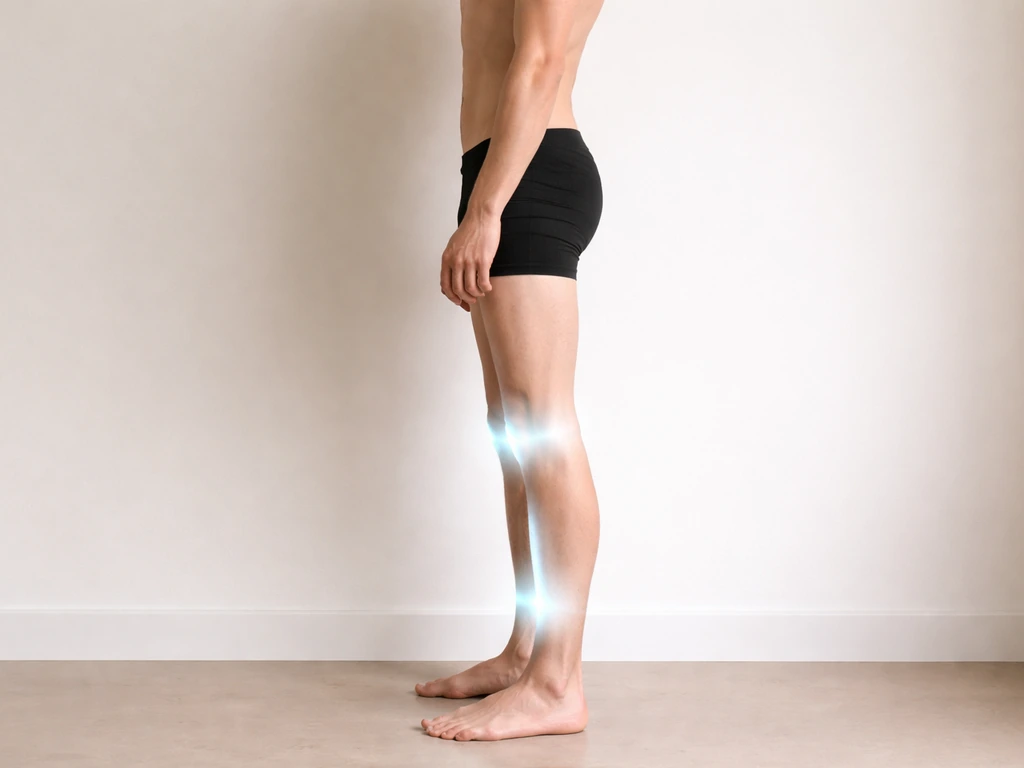
Working out does not directly make you grow taller in the sense of adding centimeters to your bones on demand. But that is not the whole story. If you are still growing, the right kind of exercise supports the hormonal and mechanical environment that healthy bone development needs. Since growth plates close in adulthood, can exercise make you grow taller is only realistic for children and teens with open growth plates. If your growth plates have already closed, no workout will lengthen your skeleton, but exercise can absolutely change how tall you look and how tall you measure on any given day. The answer genuinely depends on your age, your growth stage, and what you mean by 'taller.'
Does Working Out Help You Grow Taller? Evidence and Tips

Marcus Reeves
21 Apr 2026
The direct answer: can working out make you taller, and when
For children and teenagers whose growth plates are still open, well-designed exercise, including resistance training, does not stunt growth and may modestly support it by stimulating growth hormone and IGF-1 signaling. It is not going to override your genetics or add inches beyond your genetic potential, but it creates favorable conditions for reaching that potential. For adults whose growth plates have fused, exercise changes muscle mass, bone density, and posture, but it does not lengthen bones. Full stop. What adults can realistically gain from training is a taller appearance, better posture, and measurably better spinal height, which are real and worthwhile, just not the same as true skeletal growth.
How height actually grows: growth plates and what drives bone lengthening
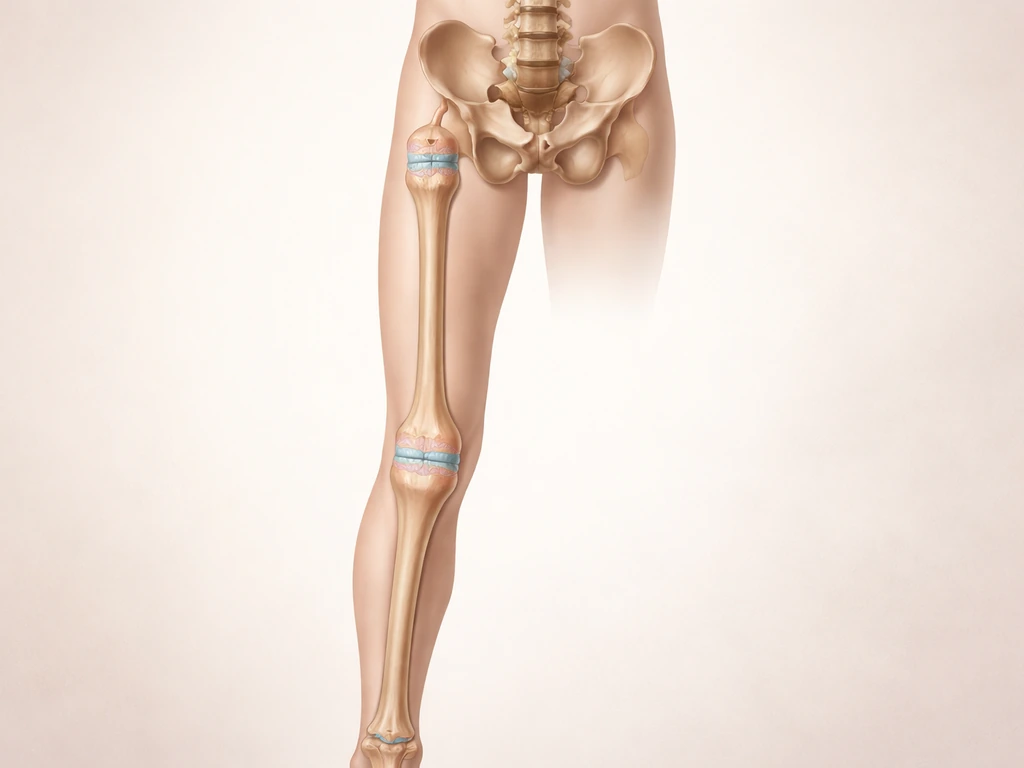
Your height comes from the length of your long bones, primarily your leg bones and spine. Those bones grow at specific sites called growth plates, which are thin layers of cartilage located near the ends of long bones. Inside the growth plate, cartilage cells called chondrocytes divide and mature in organized columns, gradually getting replaced by hardened bone and pushing the bone ends further apart. That process, not stretching or pulling, is what makes you taller during childhood and adolescence.
Growth plates close in response to hormonal changes that accompany puberty. Girls typically see growth plate closure around age 14, boys around age 16, though there is meaningful individual variation. Once growth plates harden into solid bone, longitudinal bone growth stops. No exercise, supplement, or intervention reverses that process. The Mayo Clinic is direct about this: when growth plates close, a person will not grow taller.
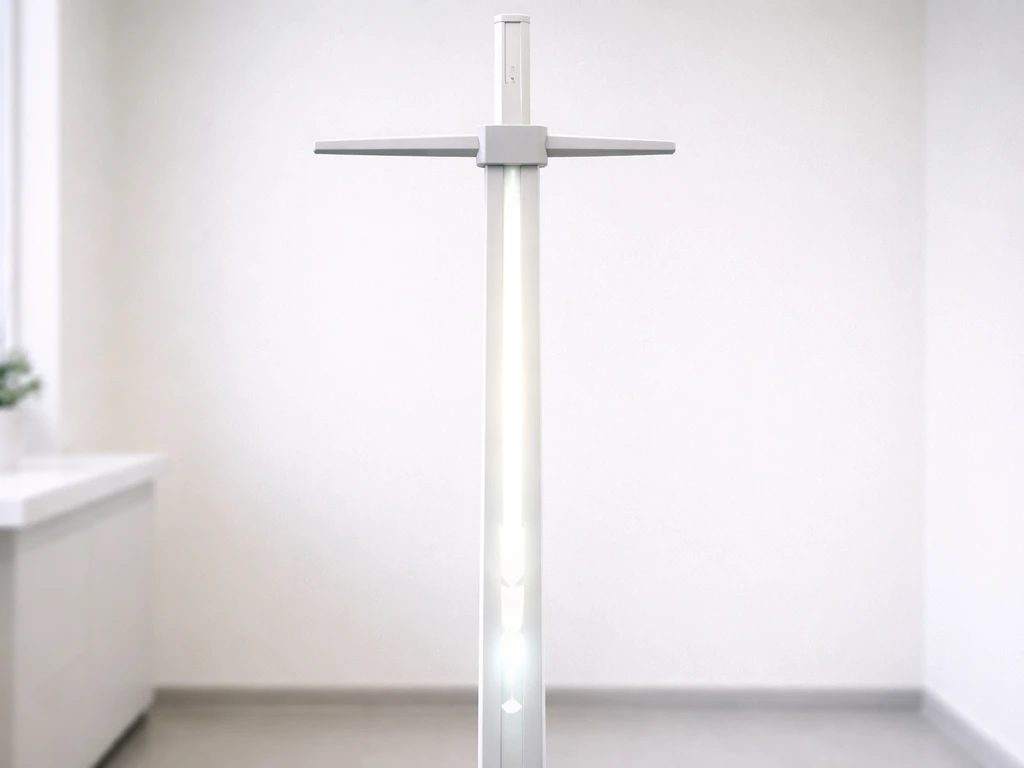
It is also worth separating true skeletal height from measured height. Your spine is made up of vertebrae separated by intervertebral discs that compress throughout the day and rehydrate overnight. Studies using stadiometry and MRI have confirmed that measured height can shift by a centimeter or more depending on posture, time of day, and spinal loading. That is not bone growth; it is disc mechanics. Improving posture can make those measurements more consistently favorable, which is a real benefit, just a different one than growing taller.
What the science actually says about lifting weights and growth
The old fear that lifting weights would 'crush' a child's growth plates and stunt their height has been thoroughly examined and largely put to rest. The American College of Sports Medicine states plainly that no scientific evidence indicates that a well-designed youth resistance training program will stunt the growth of children or harm their developing skeleton. The American Academy of Pediatrics reinforces this, noting that well-designed, technique-driven resistance training programs have not been shown to negatively affect growth plate health or linear growth in youth.
That said, the caveats matter. The safety finding applies to supervised, properly programmed training, not to unsupervised heavy lifting with poor form. A PubMed-indexed review of national injury data from 2014 to 2023 found that adolescents aged 15 to 18 had the highest number of resistance-training-related fracture injuries, and many occurred at home without supervision. Growth plate injuries are a real concern not because weightlifting inherently causes them, but because improper loading and lack of supervision create injury risk. A growth plate fracture that disrupts cartilage can potentially affect future bone growth, which is exactly why program design matters.
On the more optimistic end, there is emerging mechanobiology research suggesting that moderate mechanical loading may actually support growth plate organization and function during active growth stages. Cohort studies have also found associations between vigorous physical activity and height growth velocity in children aged 9 to 15, and a 24-week jumping intervention in short-stature children reported effects on the GH-IGF-1 signaling axis, the hormonal pathway that drives growth. These findings are interesting and plausible, but they do not mean that training overrides genetics. They suggest that staying physically active gives the body better tools to reach its natural ceiling.
For adults, the physiology is fundamentally different. In older adults with fused growth plates, progressive resistance training improves muscle strength and bone mineral density, not bone length. Exercise remodels bone tissue in terms of strength and density, which matters enormously for health, but it does not add to bone length.
Kids and teens versus adults: different expectations at every stage
| Growth stage | Growth plates | What exercise can do | What exercise cannot do |
|---|---|---|---|
| Children (pre-puberty) | Open, active | Support GH/IGF-1 release, build fitness, encourage healthy development | Directly add bone length beyond genetic potential |
| Adolescents (puberty) | Open, closing progressively | Same as above; safe supervised resistance training is appropriate | Override genetic height ceiling or accelerate plate closure |
| Young adults (late teens to early 20s) | Closing or recently closed | Improve posture, build muscle, protect bone density | Lengthen long bones |
| Adults (plates fully closed) | Closed | Improve posture and spinal alignment, increase apparent height, maintain bone density | Increase true skeletal height in any way |
The most important window is childhood through adolescence. This is when physical activity, including structured resistance training, interacts with real growth biology. Outside that window, the goals of training for height shift entirely to posture and appearance, which are still worth pursuing, just physiologically different.
Can exercise make you look taller? Posture, spine health, and body composition
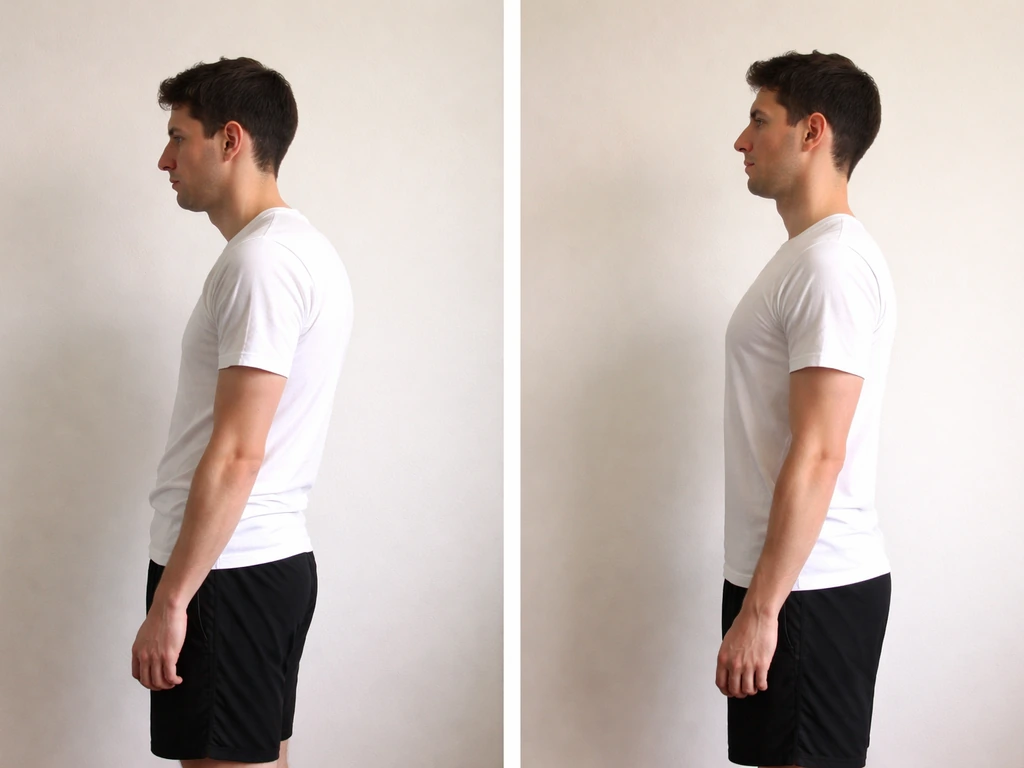
This one is genuinely underrated. Many people walk around noticeably shorter than their skeleton actually is because of rounded shoulders, a forward head, anterior pelvic tilt, and compressed spinal discs from prolonged sitting. Walking can also help you look taller by improving posture and reducing day-to-day height changes from spinal loading walking help you grow taller. Targeted exercise that strengthens the posterior chain, including the glutes, erector spinae, and upper back, along with flexibility work for the hip flexors and chest, can realistically improve standing height by correcting these patterns. Research on spinal height changes confirms that postural alignment directly affects measured height, independent of any bone growth.
Body composition also plays a perceptual role. Someone with good muscle tone, upright posture, and a lean physique reads as taller than someone of the same height who is slumped and less defined. This is not an illusion you are manufacturing; it is your actual height being expressed properly. If improving posture adds a centimeter or two to your measured standing height, that is real and measurable, not a trick.
Specific exercise types worth considering for this purpose include rows and face pulls for upper back strength, hip flexor stretches and glute activation work for pelvic alignment, core stability training for spinal support, and yoga or targeted flexibility routines for overall mobility. These are not height-growth interventions; they are posture interventions, and the distinction matters for setting realistic expectations.
Safe, growth-supporting workout guidance (and the mistakes to avoid)
For children and teens still growing
The NSCA's updated position stand for youth resistance training gives practical, evidence-based guidance. The structure is straightforward: train 2 to 3 times per week on nonconsecutive days, start with light loads and focus on technique before adding weight, use 1 to 3 sets of 6 to 15 reps per exercise, include a dynamic warm-up, and progress load gradually as strength improves. Qualified supervision and a safe training environment are not optional extras; they are the core of what makes youth resistance training safe.
The AAP also recommends at least 1 to 2 rest days per week from structured training, particularly for young athletes involved in multiple sports or high training volumes. The injury risk in youth resistance training comes primarily from poor supervision, inappropriate loading, and inadequate recovery, not from the act of lifting itself.
Mistakes to avoid, regardless of age
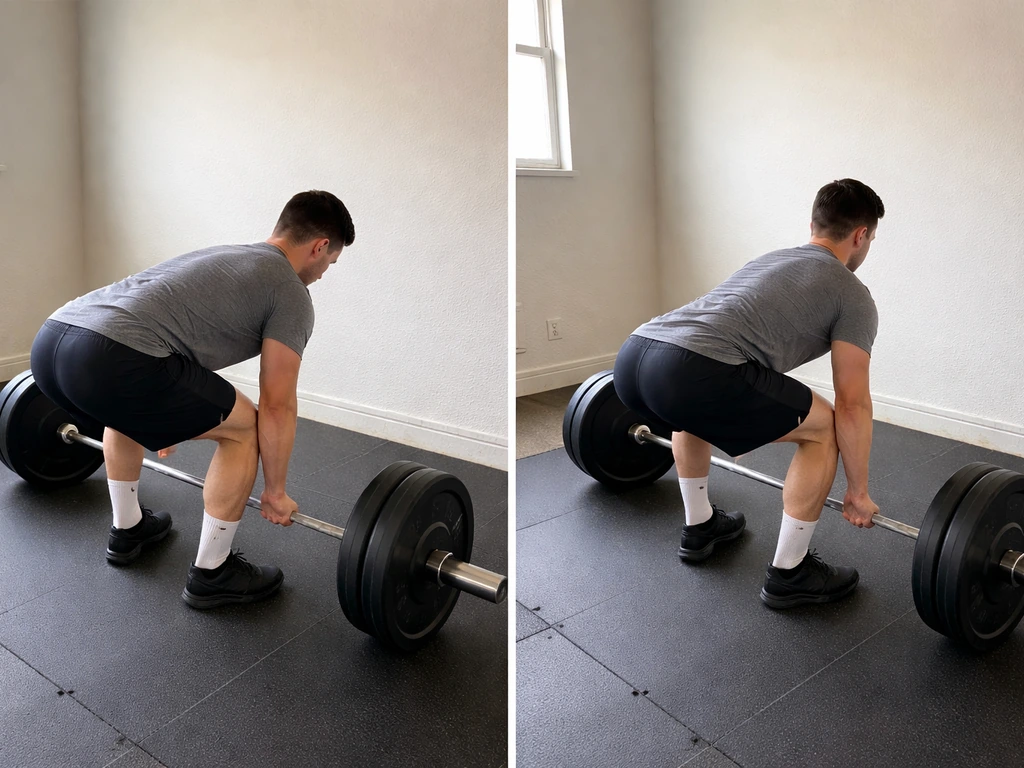
- Lifting heavy without learning technique first: growth plate fractures in young athletes most often happen with poor form under high load
- Training unsupervised at home with adult weights or equipment not appropriate for body size
- Extreme caloric restriction while training: severely cutting food intake suppresses the hormonal environment that growth depends on
- Overtraining without adequate recovery: growth hormone is released primarily during sleep and recovery periods, so grinding through fatigue actively works against the goal
- Expecting exercise alone to add height if growth plates are already closed: this leads to frustration and chasing unproven approaches
For adults focused on appearance and posture
If you are past your growth years, the practical focus should be on posture-strengthening exercises, flexibility work, and maintaining bone density through resistance training. A consistent program that hits upper back, core, and hip alignment work three times a week will produce visible postural improvements within a few months. Combine that with adequate sleep and nutrition and you are doing everything within your control.
What matters more than exercise: sleep, nutrition, genetics, and tracking growth
Exercise is one piece of the picture, and for true height potential, it is arguably not the most important one. The NIEHS notes that growth hormone release in children happens primarily during sleep, with the largest pulses occurring during slow-wave sleep. Consistent, quality sleep during childhood and adolescence is directly tied to growth hormone availability. One disrupted night does not derail growth, but chronic sleep deprivation during key growth periods matters.
Nutrition is equally critical. Adequate calories, protein, calcium, vitamin D, and zinc provide the raw materials for bone formation and hormonal signaling. Extreme dieting or chronic under-eating during growth years is one of the clearest ways to suppress height potential below the genetic ceiling.
Genetics remains the dominant factor. Your genetic blueprint sets the upper limit of your height potential, and no combination of exercise, sleep, and nutrition will push you meaningfully beyond it. What these factors do is determine whether you reach that ceiling or fall short of it due to suboptimal conditions during development.
For parents monitoring a child's growth, growth velocity is a more informative metric than a single height measurement. The AAP defines growth velocity as the change in height in centimeters divided by the time in months between measurements, multiplied by 12. Growth charts from the CDC offer reference curves to compare a child's trajectory to population norms. A sudden slowdown in growth velocity, regardless of current height, is worth discussing with a pediatrician.
Your practical next steps based on where you are right now
If you are a child or teenager still growing, exercise regularly including supervised resistance training, prioritize 8 to 10 hours of sleep, eat enough to fuel both activity and growth, and do not let unfounded fears about weights stunting your growth hold you back from a well-designed program. If you are considering sprinting, it may help overall fitness and activity during growth years, but it is not a reliable way to increase true skeletal height sprinting during growth years. If you are wondering specifically about pull-ups, it is still about fitness and posture benefits, not adding bone length do pull ups help you grow taller. Similar questions come up around specific exercise types, including whether running, walking, or even squats and pull-ups have a role, and the core principle applies across all of them: activity during growth years supports health and the hormonal environment for growth, but no single exercise type is a height hack.
If you are an adult, redirect your expectations honestly. Invest in posture work, posterior chain strengthening, and spinal mobility. These genuinely improve how tall you stand and how tall you measure. Resistance training also protects bone density as you age, which is a real long-term health benefit. Just do not spend energy on approaches promising to lengthen bones that stopped growing years ago.
The bottom line: working out helps you <a data-article-id="9BF05226-E038-4D44-9D16-D40440E12D7E">grow taller</a> in the sense that it supports the environment for healthy growth during the years when growth is actually happening. If you are wondering about what to do specifically, check whether does exercise help you grow taller for guidance matched to your age and growth stage. If you want the direct answer about squats specifically, it helps to compare what happens before versus after growth plates close does squats help you grow taller. Once that window closes, its value shifts to posture, appearance, and bone health. Both are worth pursuing. Just know which one applies to you.
FAQ
If I start working out now, can I still grow taller even if I had a late puberty or I am older than average for my class?
Possibly, but only if your growth plates are still open. People who start puberty later can keep meaningful growth longer, so the deciding factor is growth stage, not age or how old you feel. A pediatrician can discuss timing and, if needed, options to assess growth potential beyond just a single height measurement.
How can I tell the difference between “growing taller” and temporary height changes from posture or disc compression?
Track height at the same time of day and under consistent conditions. Use a repeatable method such as measuring on waking, after using the same standing position cues, and comparing averages over weeks. True bone length change will be reflected in longer-term growth velocity, while disc and posture effects often reverse or shift within days.
Are there workouts I should avoid if I am still growing to protect my growth plates?
It is not about avoiding all loading, it is about avoiding risky loading patterns. Avoid maximal attempts, high-impact volume spikes, and heavy lifting done with poor technique, especially without supervision. If you are training at home, err toward lighter loads, better form, and gradual progression rather than “testing” one-rep maxes.
Do stretching routines make you taller faster, especially if I do them every day?
Stretching can help you stand straighter by improving mobility, but it does not lengthen bones or reopen closed growth plates. The most reliable way to keep gains from flexibility work is to combine it with strengthening that supports the new range, such as core stability and glute or upper-back work.
Will supplements or vitamins make exercise increase my height if I am still growing?
Supplements only help if you are deficient and they do not override genetics or closed growth plates. The highest value nutrients are typically the basics for bone and growth, like adequate calories, protein, calcium, vitamin D, and zinc, but it is smart to avoid megadoses and confirm needs with a clinician or lab testing when possible.
If I am an adult, can I realistically increase “spinal height” and look taller even if my bones do not grow?
Yes, because spinal height on measurements can change with disc hydration and alignment. The practical approach is consistent posture training plus load management, since many adults notice more change when they sit less and strengthen the posterior chain and core. Measuring at consistent times helps you see what is real for your body.
How often should youth training happen for height potential, and what is the biggest mistake to avoid?
Aim for a frequency like 2 to 3 nonconsecutive sessions per week, focus on technique, and progress gradually. The most common mistake is starting with weights that are too heavy or copying adult powerlifting approaches without qualified coaching, which raises injury risk without adding any height-specific benefit.
My child plays multiple sports, should they take extra rest days to help growth?
Growth is supported by overall recovery, not just training quality. If training volume is high, adding at least 1 to 2 rest days from structured strength training and ensuring adequate sleep can lower fatigue and reduce injury risk. If growth velocity slows, it is worth discussing workload, nutrition, and sleep with a pediatrician.
Can cardio, like sprinting or running, help my child grow taller compared with resistance training?
Cardio can support fitness and, for some kids, may correlate with growth velocity, but it is not a replacement for resistance training when the goal is healthy musculoskeletal development. If you have to choose, prioritize safe overall activity and add structured strength work rather than relying on a single “height” activity like sprinting.
Does doing pull-ups, squats, or jumping translate into guaranteed height increases?
No single exercise guarantees taller bones. Pull-ups, squats, and jumping can improve strength, posture, coordination, or hormonal signaling in active growth stages, but outcomes vary and genetics remains the ceiling. Treat them as general health and posture tools, not as a height hack.
What is the best way for parents to monitor whether exercise is helping, without getting misled by one measurement?
Track growth velocity using repeat measurements across months, not a single height check. Compare the trend to age-appropriate growth chart expectations, and contact a pediatrician if growth velocity slows suddenly regardless of current height. Consistent measurement technique at home also reduces measurement noise from posture and time of day.
Next Article
What Amino Acids Make You Grow Taller
Know which amino acids support growth via protein and IGF-1, why they can’t extend height after closure, and practical t