Pull-ups do not make you taller by growing your bones longer. There is no human evidence showing that pull-ups, or any specific exercise, increases the length of your long bones after your growth plates have closed. Before they close, during childhood and adolescence, exercise plays a supporting role in healthy growth, but it is not the direct driver of how tall you get. What pull-ups can genuinely do is improve your posture, strengthen your upper back, and decompress your spine enough to let you stand closer to your actual full height, which can make a real, visible difference even if it is not new bone.
Do Pull-Ups Help You Grow Taller? Evidence and Facts

Marcus Reeves
27 Jun 2026
How you actually get taller (and why exercise isn't the main switch)
Height comes from bone length, and bone length is determined almost entirely by what happens at your epiphyseal growth plates, the cartilage-rich zones near the ends of your long bones. These plates drive longitudinal growth through a tightly regulated process called endochondral ossification: cartilage cells (chondrocytes) proliferate, enlarge, then get replaced by bone tissue as blood vessels move in. That cycle, repeating over years, is what pushes your femur, tibia, and spine longer. The whole system is controlled by growth hormone, IGF-1, sex steroids, thyroid hormones, and genetics. No pull-up routine overrides that signaling.
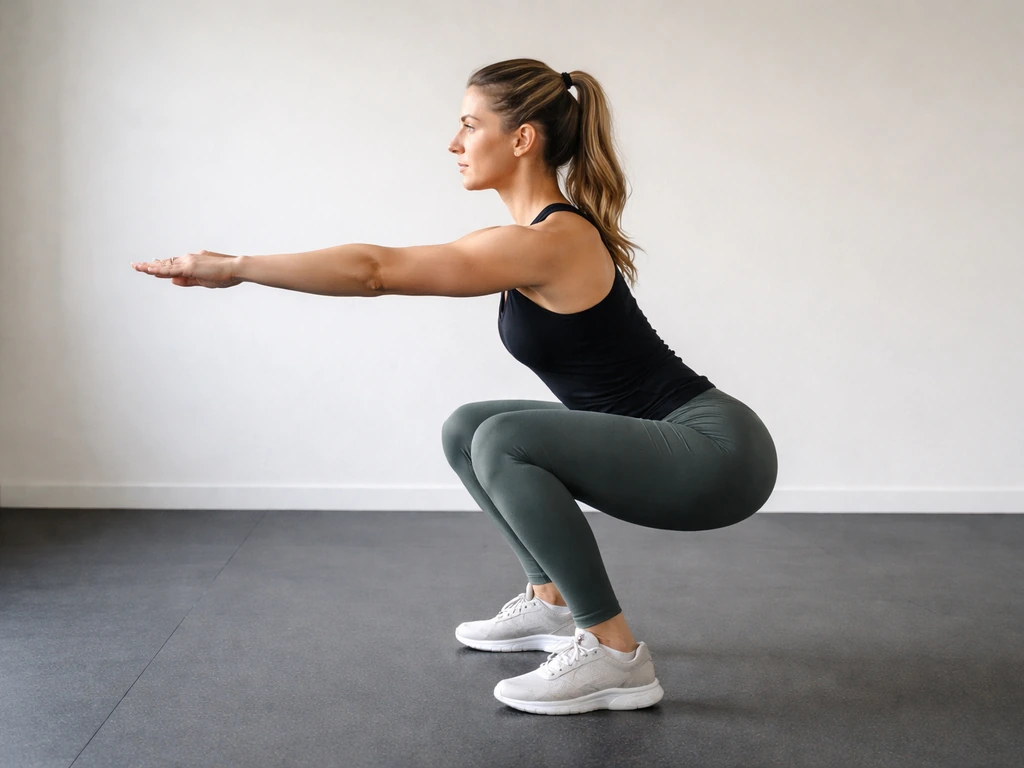
Growth plates close during and after puberty due to rising levels of sex steroids, especially estrogen (which affects both males and females). Once they fuse, longitudinal growth effectively stops. Squats can help strength and posture, but they do not change the closed growth plates that determine whether you can grow taller. Growth velocity drops toward zero, and that is a physiological endpoint, not a problem you can train around. The timing varies between individuals and even between different bones in the same body, but by the late teens to early twenties most people's plates are fully closed.
blank" rel="noopener noreferrer">Mechanical load does interact with growth plate biology. Research on mechanobiology shows that physical stress can modulate how growth plates behave in developing skeletons. Animal studies show these effects clearly. The honest caveat is that translating this into 'do pull-ups and grow taller' in actual humans is a leap the science has not made. Physical activity supports healthy development and contributes to the conditions where normal growth can proceed well, but no one exercise type has been shown to reliably increase final adult height. That is why the answer to whether working out helps you grow taller is mostly no for bone-length changes after growth plates close does working out help you grow taller.
What pull-ups actually do for your body (and why some of it matters for height)
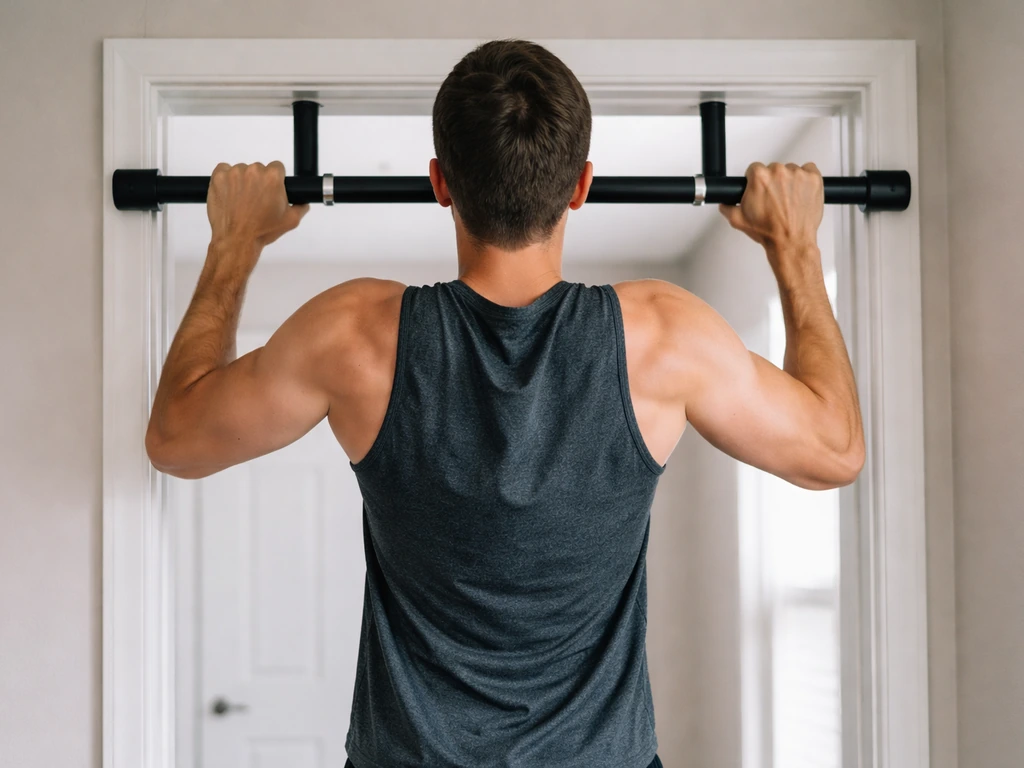
Pull-ups are a compound pulling exercise that loads your lats, rhomboids, lower trapezius, biceps, and core. When done with good form, they do three things relevant to how tall you look and feel: they strengthen the muscles that hold your spine upright, they retract and depress your scapulae which counters the forward rounding most people carry, and they place your spine in a hanging, lightly decompressed position during the movement. None of these grow new bone. All of them can contribute to better posture and a taller-looking, more confident stance.
Research on thoracic posture shows that upper-back strengthening and scapular control exercises can measurably reduce thoracic kyphosis angle, which is the forward rounding of the mid-back. Slouching compresses the spine and literally makes you stand shorter. Studies on scapular kinematics during pull-ups confirm that technique differences change how much scapular retraction and upward rotation you get, so the way you do pull-ups matters for the postural benefit you actually receive.
There is also a temporary spinal decompression effect. Research on spine height using stadiometry and MRI documents that standing height changes across the day as spinal discs compress under load. Hanging and decompression can partially reverse this. The key word is temporary: these are not permanent gains in bone length, and bedrest studies confirm that spine height does not keep increasing beyond the normal morning maximum you already have. You are recovering height you lose during the day, not adding new height.
Pull-ups vs hanging vs stretching: what the evidence actually shows
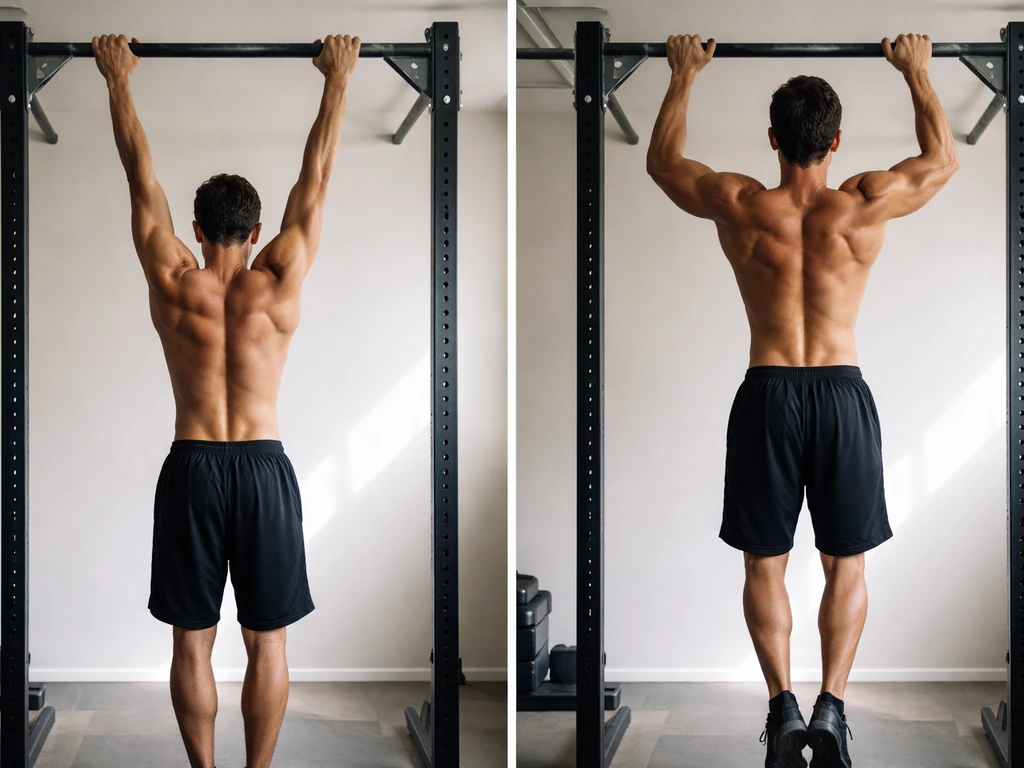
A common belief is that passive hanging from a bar, or spinal stretches, can increase height more than active pull-ups by 'decompressing' the spine and allowing discs to expand. Traction studies do show that applying load in the opposite direction to gravity produces measurable short-term stature increases, in the range of a few millimeters to a centimeter or so. The problem is that these gains reverse once you stand up and gravity reloads your spine. They are not structural changes to bone.
Compared to passive hanging, active pull-ups add muscle development on top of whatever temporary decompression you get. The muscle strengthening effect is what produces lasting postural changes over weeks and months. So if you had to choose between hanging passively and doing structured pull-up training for long-term height appearance, pull-ups likely give you more because they build the postural muscles that hold you taller throughout the day. Stretching alone has even less evidence for lasting height change, though flexibility work combined with strengthening is a reasonable complement.
| Method | Bone Length Change | Postural Benefit | Temporary Height Recovery | Lasting Effect |
|---|---|---|---|---|
| Pull-ups | None | Strong (upper back, scapular control) | Mild (hanging phase) | Yes, via posture improvement |
| Passive bar hanging | None | Minimal (no muscle building) | Mild | Little without muscle development |
| Spinal stretching/yoga | None | Moderate (flexibility) | Minimal | Moderate with consistent practice |
| Traction | None | None specific | Measurable short-term | Reverses when standing |
Teens vs adults: what you can realistically expect at your life stage
If you are still growing (roughly under 18)
If your growth plates are still open, exercise genuinely matters, just not in the direct 'pull-ups make bones longer' way most people assume. What exercise does is support the hormonal and metabolic environment that lets normal growth proceed. Walking helps overall health and conditioning, but it does not reopen growth plates or create new bone length exercise genuinely matters. It contributes to healthy body composition, promotes growth hormone release (especially during sleep after exercise), and keeps the musculoskeletal system developing in a balanced way. Pull-ups and resistance training are safe and beneficial for teens when progressed appropriately. The bigger levers on actual height during this window are genetics, sleep, and nutrition, not which exercises you do.
One caution worth taking seriously: growth plates in adolescents are more vulnerable to injury than adult bone. Overuse or improper loading of the shoulder and elbow, for example, can damage growth plate tissue. The American Academy of Orthopaedic Surgeons flags this specifically for youth athletes. This does not mean teens should avoid pull-ups, but it does mean form, volume, and recovery matter more than they do in adults. Aggressive overtraining at this stage is not a shortcut to height, and it carries real injury risk.
If you are an adult with closed growth plates
Once your growth plates are fused, no exercise will increase your bone length. That is simply the biology. What you can still change as an adult is posture, spinal health, and the muscular support that determines how close to your actual maximum height you stand during the day. Can running help you grow taller? It can support posture and overall health, but it does not increase your bone length after growth plates have closed. Many adults carry an inch or more of lost height due to thoracic kyphosis, forward head posture, and compressed spinal discs. Pull-ups, combined with other postural work, can recover a meaningful portion of that. It is not adding height, but it can feel like it because you are standing taller than your habitual slouch.
A practical pull-up routine that actually helps with posture and spinal health
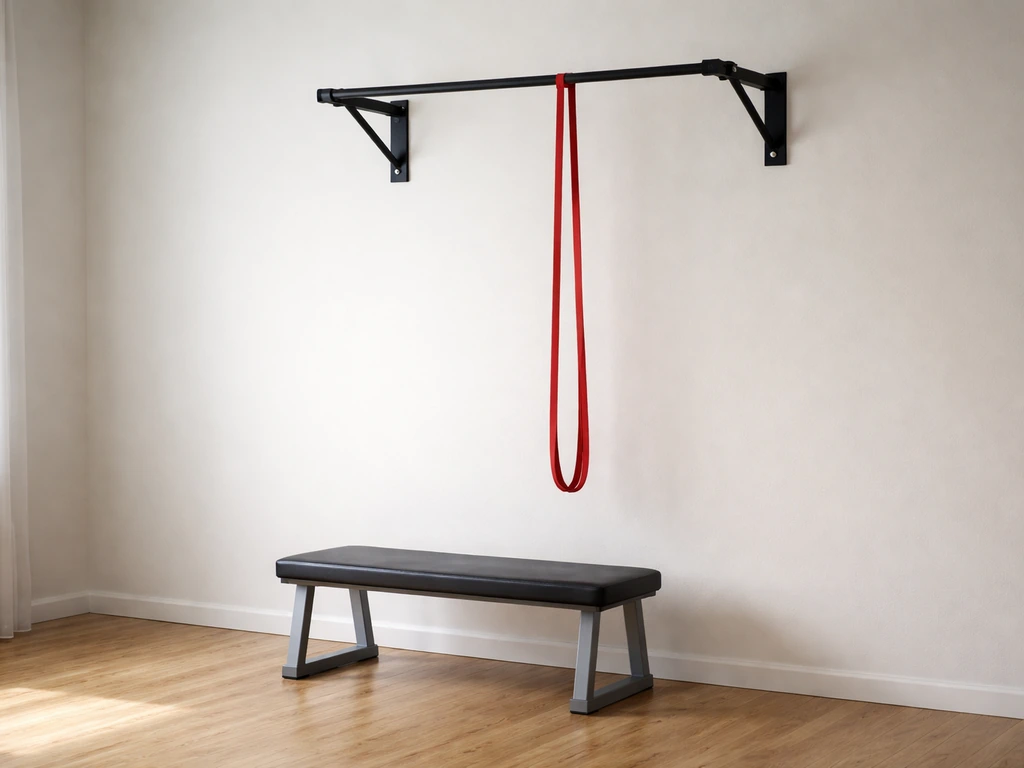
If you want to use pull-ups for the genuine benefits they offer, here is how to do it without wasting time or risking injury. The goal is building the upper-back and scapular strength that translates into better posture day to day.
Start here: the scapular pull-up
Before doing full pull-ups, learn scapular depression and retraction. Hang from a bar with straight arms and simply pull your shoulder blades down and together without bending your elbows. This activates the lower trapezius and primes the posture muscles that matter most. Do 2 to 3 sets of 8 to 10 reps as a warm-up or standalone starting point if you cannot yet do a full pull-up.
Progression steps
- Scapular pull-ups: 3 sets of 8 to 10, focusing on shoulder blade movement
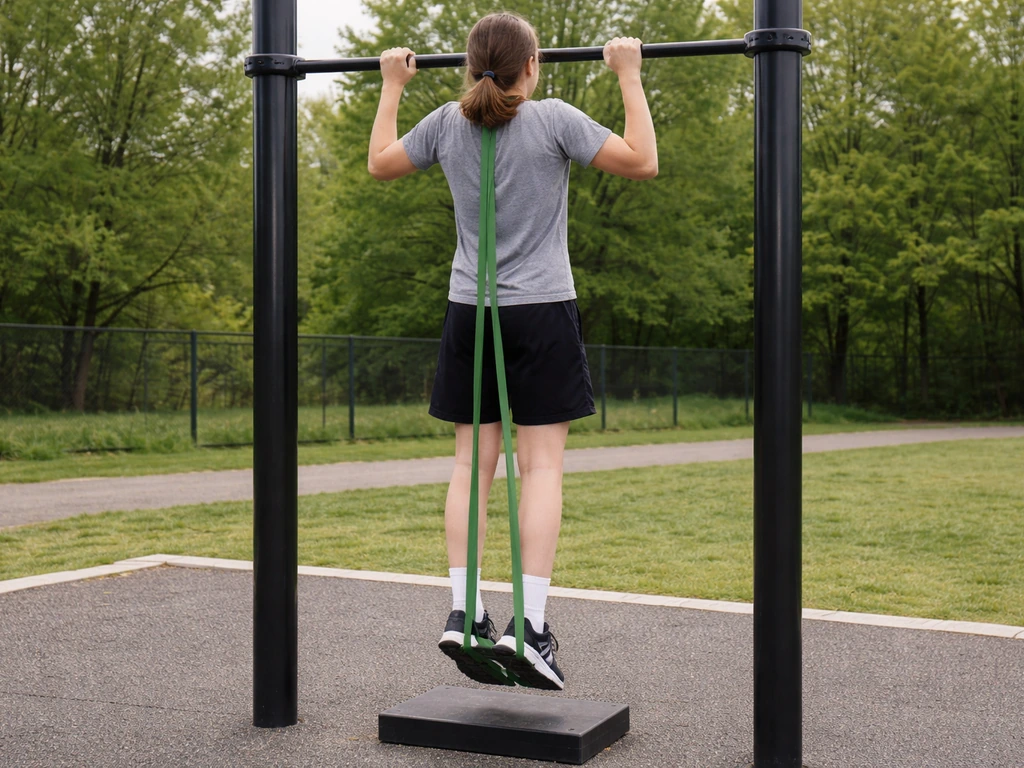
- Band-assisted pull-ups: use a resistance band looped around the bar to reduce load; aim for 3 sets of 5 to 8 reps with full range of motion
- Negative pull-ups: jump or step to the top position, then lower yourself slowly over 4 to 5 seconds; 3 sets of 4 to 6 reps builds strength fast
- Full pull-ups: once you can do 5 clean reps, work toward 3 sets of 8 to 12 at a controlled tempo
- Add a brief hang at the bottom of each rep (1 to 2 seconds) for light spinal decompression
Form cues that matter for posture specifically
- Initiate every rep by pulling shoulder blades down before bending your elbows, not by shrugging
- Keep your chest up and slightly forward, not tucked in
- Avoid excessive forward head jut at the top of the rep
- Use a grip width that feels comfortable for your shoulders, roughly just outside shoulder width
- Dead hangs between sets are fine and provide some decompression benefit
Frequency: 2 to 3 times per week is enough. More is not better for this goal, and scapular stabilizer muscles need recovery time like any other muscle group. Pair pull-ups with thoracic extension work (foam rolling, cat-cow, or a supported thoracic extension over a rolled towel) for maximum postural effect.
What actually moves the needle on height potential
If you are in a growth window and want to maximize your height potential, the honest answer is that the biggest factors are the ones that feel least exciting: sleep, nutrition, and general physical health. Pull-ups can be part of a good routine, but they are not the priority. Sprinting, like other exercises, does not directly lengthen growth plates, so it is unlikely to help you grow taller does sprinting help you grow taller. Here is where to focus your energy.
Sleep
The majority of growth hormone is released during slow-wave sleep. Teenagers need 8 to 10 hours per night, and cutting that short consistently is one of the most direct ways to undercut normal growth. This is not optional background advice, it is probably the highest-leverage thing a growing teen can do.
Nutrition
Adequate protein, calcium, vitamin D, and overall caloric sufficiency are all necessary for normal longitudinal bone growth. Chronic under-eating or specific nutrient deficiencies (especially vitamin D and calcium) can impair growth. The goal is not special supplements, it is consistent, adequate eating with real food.
General physical activity
Regular mixed exercise including cardiovascular activity, weight-bearing movement, and resistance training supports the hormonal and metabolic conditions for normal growth. No single exercise type has an outsized advantage here. If questions about whether running, walking, sprinting, or squats help with height are on your mind, the answer is essentially the same as with pull-ups: general activity helps, specific exercises do not directly grow bones. In the same way, the question does exercise help you grow taller is mostly about growth timing and hormones, not about one specific routine increasing bone length running, walking, sprinting, or squats. The broader topic of how exercise interacts with growth potential covers these comparisons in more depth.
When to see a doctor instead of trying to train your way taller

Most people searching this question are healthy individuals curious about maximizing their height. But there are real scenarios where a medical evaluation is the right move, and no exercise routine substitutes for that.
- A child or teen is consistently below the 2nd to 3rd percentile on height growth charts (roughly more than 2 standard deviations below the mean for their age and sex)
- Growth appears to be slowing significantly compared to prior measurements, meaning they are crossing downward through percentile lines rather than tracking along one
- Growth velocity drops below age-expected thresholds (for example, less than 5.5 cm per year between ages 2 and 4, with age-stratified benchmarks continuing into adolescence)
- Puberty appears to be starting unusually early or unusually late
- There are associated symptoms like fatigue, weight changes, or hormonal signs that suggest an underlying condition
- A teen is well past the typical age of growth completion and is significantly shorter than would be expected from family height patterns
These situations call for evaluation by a pediatric endocrinologist or a primary care physician who can order bone age imaging, growth hormone testing, and other relevant workups. Clinical short stature has defined diagnostic criteria and treatable causes. Spending months doing pull-ups while an underlying growth disorder goes unaddressed would be the wrong call. If something about a child's or teenager's growth pattern feels off, serial measurements tracked by a doctor are the most useful tool, not a new exercise program. For children with possible short stature, evaluation should include serial growth and growth velocity to assess growth properly, as reviewed by the American Academy of Family Physicians.
For healthy adults simply wanting to look taller and stand better: pull-ups are a genuinely useful tool, just with realistic expectations. Cardio can support overall health and fitness, but it does not change your growth plates or bone length the way normal growth does does cardio help you grow taller. Build the upper back, fix the posture, recover your daily height loss from spinal compression, and you may find you are already taller than your slouch has been letting you appear.
FAQ
If I already do pull-ups, will I get taller faster than my friends who don’t?
No, pull-ups do not provide a bone-length growth advantage. If you are in a normal growth window, you and your friends are limited mainly by genetics, growth-plate timing, sleep, and nutrition, so pull-ups can help you look taller by improving posture, not by speeding bone growth.
Can pull-ups help me regain the height I lost during the day?
Yes, they can help recover your “at-home” daily height by countering slouch and briefly reducing perceived compression during the movement. The effect is temporary, so don’t treat it like permanent height gain, and consider pairing pull-ups with thoracic extension work to improve your day-long posture.
I’m tall already but my back rounds forward. Should I switch to pull-ups even if I have no trouble doing them?
If forward rounding is your main issue, pull-ups can be a good targeted choice because they train scapular control (retraction and depression). However, the form matters, aim for controlled scapular movement and avoid turning the exercise into a pure arm pull that fails to load the upper-back stabilizers.
What’s the safest way to progress if I’m a teen and want pull-ups for posture?
Progress slowly with lower volume at first, focus on shoulder blade depression and retraction, and keep technique strict. If you feel sharp pain at the shoulder or elbow, or you can’t maintain controlled scapular motion, scale back and get a coach or clinician to assess your mechanics before increasing frequency.
Do chin-ups or neutral-grip pull-ups work better for standing taller?
Any pulling variation can help posture as long as you get meaningful scapular control and upper-back involvement. Neutral-grip often feels kinder to elbows for some people, but “better” depends on your comfort and your ability to keep the shoulder blades moving correctly without shrugging.
Will hanging from a bar increase my height more than doing pull-ups?
Both can create short-term stature changes, but hanging gains reverse when you stand up. Pull-ups are more likely to produce longer-term improvements because they strengthen the muscles that hold your spine and scapula in a better position, not because they decompress your discs permanently.
How many pull-ups should I do if my goal is posture, not strength?
A practical starting point is 2 to 3 sessions per week, using sets around 8 to 10 reps or a volume you can complete with clean scapular motion. If you can’t do full pull-ups yet, use scapular-retraction and depression drills or partial reps, rather than forcing reps that turn into sloppy arm pulling.
Do pull-ups count as “enough” exercise for growth if my goal is maximizing height potential?
They can be part of the plan, but they are not enough by themselves to cover sleep, nutrition, and overall physical development needs. For growth support, prioritize consistent sleep, adequate calories and protein, and a mix of weight-bearing activity plus resistance training, with pull-ups as one component.
Are growth-plate injuries a real concern with pull-ups?
Yes for adolescents, because young growth plates are more vulnerable than adult bone. Overuse, poor form, and aggressive volume changes can increase injury risk, so prioritize gradual progression and monitor symptoms rather than using pull-ups as a shortcut.
If I’m an adult, can pull-ups permanently increase bone length?
No. Once growth plates are fused, no exercise can lengthen long bones. As an adult, the realistic wins are posture-related, including better upper-back control and a standing height closer to your personal maximum rather than true structural height increase.
How do I tell whether pull-ups are helping my posture or just my arms?
You should feel more engagement in your upper back (lats and scapular stabilizers) and see posture changes like reduced rounding during your daily stance. If your shoulders creep up toward your ears or your form collapses as reps increase, that usually means you are loading arms more than the posture muscles.
When should I see a doctor about my height instead of trying pull-ups?
If a child or teen’s growth seems unusually slow, there is a pattern change, or measurements drop off compared with prior percentiles, get evaluated. Bone-age imaging and related testing can identify treatable causes, and that is not something pull-ups can replace.
Next Article
Does Squats Help You Grow Taller? Science and Safety Guide
Learn if squats grow taller, how posture changes your height, safety tips, and next steps for measurable results.