
Growing taller does not push the Earth down in any meaningful way. When you stand on the ground, your weight exerts a force on the Earth, but that force comes from your mass, not your height. Whether you're 5 feet or 6 feet tall, the gravitational interaction between you and the planet is governed by your weight, and the Earth's response is so astronomically small it's physically immeasurable. The more interesting version of this question is what's actually happening inside your body when you grow, and that's where the science gets genuinely fascinating. When you grow taller, what happens to your body composition is separate from whether your bones lengthen.
Do You Push the Earth Down When You Grow Taller?

Marcus Reeves
17 Jun 2026

The physics of you standing on Earth

Every object with mass exerts a gravitational pull on every other object with mass. When you stand on the ground, you push down on the Earth with a force equal to your body weight, and by Newton's third law, the Earth pushes back up on you with exactly the same force. If you gain 10 pounds, that reaction force increases slightly. You might wonder, do you grow taller when you lose weight, but true height growth depends on growth plates and bone growth rather than just body weight changes. If you grow 2 inches taller without gaining weight, that reaction force doesn't change at all. Height itself contributes nothing to the downward force you exert on the ground.
What does technically change when you grow taller is your center of mass moves higher off the ground, and your weight is distributed over the same foot contact area. But the net force pushing down? That's still just your weight. The Earth does technically move in response to your gravitational pull, but the displacement is so vanishingly small (we're talking far less than a proton's diameter) that it is not a real-world phenomenon worth calculating. Growing from 5'4" to 5'9" during adolescence changes your posture, your biomechanics, and your spine loading, but it does not push the Earth down any more than you already were.
How height growth actually works in your body
Real height growth is driven almost entirely by your long bones, specifically the femur (thigh bone) and tibia (shin bone) in the legs, plus the vertebral column. The key players are growth plates, also called epiphyseal plates, which are cartilaginous zones located near the ends of long bones. During childhood and adolescence, specialized cells called chondrocytes in these plates divide and produce new cartilage, which then gradually mineralizes into bone. This process is what physically makes you taller, not stretching of muscles or tendons.
Growth hormone (GH), secreted by the pituitary gland, stimulates the liver to produce insulin-like growth factor 1 (IGF-1), which is the primary signal that tells growth plates to get to work. Sex hormones like estrogen and testosterone also play a major role during puberty, initially accelerating growth and then eventually triggering growth plate fusion. Once the plates fuse, they harden into regular bone tissue and longitudinal bone growth stops. There's no workaround for this. Fused plates mean done growing, full stop.
The spine adds a meaningful contribution too. The vertebral column contains 23 intervertebral discs, which are gel-filled cushions between vertebrae. These discs are compressible and respond to loading throughout the day. Research has shown that measured standing height on waking can be up to 18 mm greater than height measured later in the day, purely because the discs decompress overnight when you're not bearing your body weight. Over a 32-hour bedrest study, subjects actually lost about 10 mm of spine height rather than gaining any, confirming that these stature changes are entirely reversible and have nothing to do with new bone growth. A 32-hour bedrest study in Changes in spine height throughout 32 hours of bedrest (1996) likewise found about a 10 mm loss in spine height, supporting that these daily stature changes are reversible rather than new bone growth Over a 32-hour bedrest study, subjects actually lost about 10 mm of spine height. You're not growing taller in bed, you're just temporarily decompressed.
Center of gravity and posture as you get taller
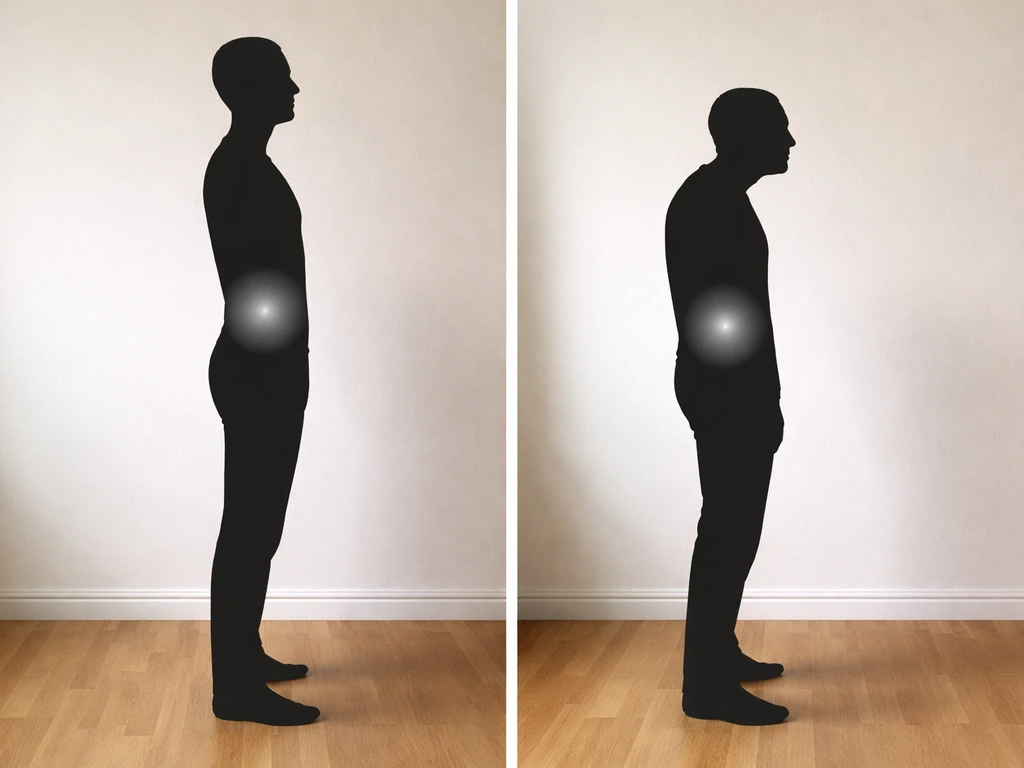
As you grow taller, your center of gravity rises proportionally. Taller people have a higher center of mass relative to the ground, which affects balance, gait mechanics, and how the spine handles load. During a growth spurt, the brain and musculoskeletal system essentially have to recalibrate. Muscles, tendons, and ligaments don't always lengthen at the same rate as bone, which is one reason adolescents going through rapid height gains sometimes feel temporarily clumsy or notice tightness in their hamstrings and calves. If you're dealing with back pain as you grow taller, it's worth considering how posture and spinal loading change during adolescence back pain when you grow taller.
Posture also interacts with perceived and measured height in a real way. Poor posture, especially forward head posture and thoracic kyphosis (rounded upper back), can reduce your measured standing height by several centimeters. Correcting posture won't make your bones longer, but it can help you express your full skeletal height. If you are worried that being skinny might affect growth, the main limiter is whether your growth plates are still open, not body size alone Correcting posture won't make your bones longer. blank" rel="noopener noreferrer">MRI studies confirm that spinal disc height changes measurably with loading and unloading, and that the anterior versus posterior disc height distribution shifts with posture and movement. This is why deliberately working on posture and core strength has a legitimate, if modest, effect on how tall you appear and measure.
What can and can't change about your height as an adult
Once your growth plates fuse, which typically happens somewhere between ages 16 and 18 in females and 18 and 21 in males, your bone length is fixed. No supplement, exercise protocol, or lifestyle change will lengthen those bones after that point. This is not a matter of insufficient effort or the wrong technique. It's basic skeletal biology. The growth plates are gone, replaced by solid cortical bone, and there's no mechanism left to add length.
What can technically change in adulthood is spinal height, and only within a narrow reversible range. Better hydration, reduced spinal compression through decompression exercises, and improved posture can help you reclaim a small amount of height that chronic compression or poor posture was hiding. The numbers are real but modest: we're talking millimeters, not inches. Adults also naturally lose height starting around age 30 to 40 due to gradual disc dehydration and vertebral bone density changes, so maintaining bone health and posture is genuinely useful for preserving the height you have.
Surgical limb lengthening procedures do exist and can add several inches to stature, but these are expensive, painful, and carry significant risks. They're not a realistic option for most people and are generally reserved for cases of significant limb length discrepancy or short stature conditions, not cosmetic preference.
Height myths that need to go away

There is a persistent ecosystem of misinformation around height growth, and it's worth dismantling the most common claims directly.
| The Myth | What the Science Actually Says |
|---|---|
| Hanging from a bar makes you permanently taller | Hanging briefly decompresses the spine but the effect reverses within hours. No new bone growth occurs. |
| Stretching routines add inches to your height | Stretching can improve posture and temporarily decompress the spine by small amounts. It cannot lengthen fused bones. |
| Height-boosting supplements work at any age | No supplement has been shown to increase height in adults with fused growth plates. In children with genuine deficiencies, correcting nutrition can help growth reach its genetic potential. |
| Swimming or basketball makes you taller | These activities support healthy bone development during growth years but do not cause height gains beyond your genetic ceiling. |
| Adults can grow taller with the right protocol | After growth plate fusion, additional bone length is not physiologically possible through lifestyle changes. |
| Losing or gaining weight affects your height | Body weight changes do not add bone length, though weight loss may slightly improve posture and measured height in some cases. |
The common thread in all these myths is conflating temporary spinal changes (which are real but small and reversible) with actual bone lengthening (which requires open growth plates and the right hormonal environment). They are completely different mechanisms.
Real next steps to maximize your height potential, by life stage
If you're a child or early adolescent (under 14)
This is when your growth plates are most active and your lifestyle choices have the highest leverage on final height. The fundamentals matter enormously here. Adequate protein intake (roughly 0.8 to 1 gram per kilogram of body weight daily), sufficient calcium and vitamin D for bone mineralization, and 9 to 11 hours of quality sleep per night (since growth hormone is predominantly secreted during deep sleep stages) are all evidence-backed inputs. Regular physical activity supports healthy bone density and stimulates growth hormone release, but no specific sport will make you meaningfully taller than your genetics allow if your nutrition and sleep are already dialed in. And no, focusing on height-related factors like growth hormone does not mean you gain weight just because you grow taller growth hormone release.
During puberty and the teenage years
Peak height velocity, the fastest phase of growth, typically occurs around ages 11 to 13 in girls and 13 to 15 in boys. During this window the same principles apply with even more urgency: caloric adequacy is critical because severe restriction during a growth spurt can genuinely limit height outcomes. Avoid chronic stress where possible, as elevated cortisol suppresses growth hormone. Sleep remains non-negotiable. If growth seems significantly slower than expected, or a child is falling off their growth curve, that warrants a conversation with a pediatrician. Conditions like growth hormone deficiency, hypothyroidism, or celiac disease can all impair growth and are treatable when caught early.
If you're a young adult still potentially growing (17 to 21)
Growth plates in males can remain open into the early twenties. If you're in this window and want to know whether you still have growth potential, a hand and wrist X-ray (bone age assessment) can show whether your plates have fused. If they haven't, optimizing sleep and nutrition still has a real chance of contributing to additional height. If they have fused, the focus shifts to posture and bone health.
If you're a full-grown adult
Your skeletal height is set, but preserving it is a legitimate goal. Focus on maintaining bone density through weight-bearing exercise and adequate calcium and vitamin D intake, since age-related bone loss can shorten stature over decades. Consistent core and back strengthening helps maintain the posture that lets you stand at your full height. Intervertebral disc health benefits from regular movement, staying hydrated, and avoiding prolonged static compression of the spine. These are small factors individually, but they add up meaningfully over a lifetime.
- Get a bone age X-ray if you're a teenager with concerns about growth rate (it shows whether plates are still open)
- Prioritize 9 to 11 hours of sleep during childhood and adolescence to support growth hormone secretion
- Meet protein, calcium, and vitamin D needs consistently throughout the growing years
- Work on posture and spinal decompression habits as an adult to preserve and express full skeletal height
- See a pediatric endocrinologist if a child's growth is tracking well below the expected curve for their age and family history
- Ignore any product claiming to add inches to adult height through pills, stretches, or devices
The bottom line is that height growth is a tightly regulated biological process driven by genetics, hormones, and growth plate status. The Earth isn't going anywhere because you grew two inches taller, and neither is your height once your plates have closed. But during the years when growth is genuinely happening, the basics of sleep, nutrition, and overall health are more powerful than most people realize.
FAQ
If my weight stays the same, can my taller height make me push harder on the Earth?
No. Your height does not create extra “downward pressure” beyond your weight, so you are not pushing the planet down differently when you grow taller. What can change is your posture and how your weight loads through the feet and spine, which can affect how tall you measure standing, not how much force you exert overall.
Does being taller increase gravity pull on Earth enough to matter?
Not in any practical way. Even though you are farther from Earth’s center when you are taller, the change in gravitational force is minuscule, far smaller than everyday differences like eating, hydration, or the scale being off by a pound.
Why do I look taller after sleeping, but not after a workout?
Only slightly, and usually through posture and disc compression rather than bone length. For example, someone can look a bit taller after sleeping or doing decompression-friendly routines, but if growth plates are closed, the “real” bone length will not increase.
How much does weight gain or loss affect your height measurement day to day?
Weight changes can change your stance and the amount your spine compresses, but your bone height will not. If you gain or lose body fat, you might also change how your posture sits over your pelvis, which alters measured height by centimeters even while skeleton length stays fixed.
Can daily stretching make me permanently taller?
Not usually. Stretching temporarily changes how your spine is loaded and can reduce tightness, but it does not reopen fused growth plates. The typical “after stretching I’m taller” effect is mostly reversible posture and disc spacing changes, not new bone.
Does improving posture actually increase my measured height, or just make me stand differently?
It can, but only within the modest reversible range. If you have rounded shoulders or forward head posture, correcting those patterns can bring your measured standing height closer to your true skeletal length by a few centimeters, without changing bone size.
Are height supplements worth it if I’m still growing?
Most supplements marketed for height will not lengthen bones after growth plates fuse. If plates are still open, the most evidence-based approach is correcting deficiencies (especially vitamin D and adequate calories and protein), because “more” of a nutrient you already have does not automatically translate into more height.
What lifestyle mistake most commonly limits final height during a growth spurt?
Yes, deficiency states can reduce growth potential even if you are healthy-looking. Severe calorie restriction during a growth spurt can slow bone growth, and chronic poor sleep can reduce growth hormone release, which can affect how fast your growth plates do their work.
When should I suspect a medical growth problem instead of normal variation?
A big yes if growth seems off. If a child drops across growth percentiles, is much shorter than expected, or has symptoms like fatigue, unusual weight changes, delayed puberty, or stomach issues, a pediatrician can check treatable causes such as thyroid problems or celiac disease.
Should I get a bone age test to see if I can still grow?
No, but it’s a useful decision step. A bone age X-ray (often hand and wrist) helps determine whether growth plates are likely still open. It cannot guarantee future height, but it can separate “still some potential” from “plates fused, focus shifts to posture and bone health.”
Does any specific exercise make you taller faster?
Generally, the benefit of weight-bearing activity is about preserving bone density and supporting healthy posture and mechanics, not forcing extra long-bone growth. If growth plates are open, activity supports overall development, but it will not override genetics if nutrition and sleep are inadequate.
Is limb lengthening a reasonable option just for height enhancement?
Yes, and the most practical reason is safety. Limb lengthening carries significant risk and long recovery, so it is usually considered only for medical indications or substantial discrepancy rather than cosmetic goals, which the article notes are not a realistic option for most people.
Next Article
Do You Get Skinnier as You Grow Taller? What to Expect
Understand if you get skinnier as you grow taller, how weight and proportions change, and what to do if growth seems off