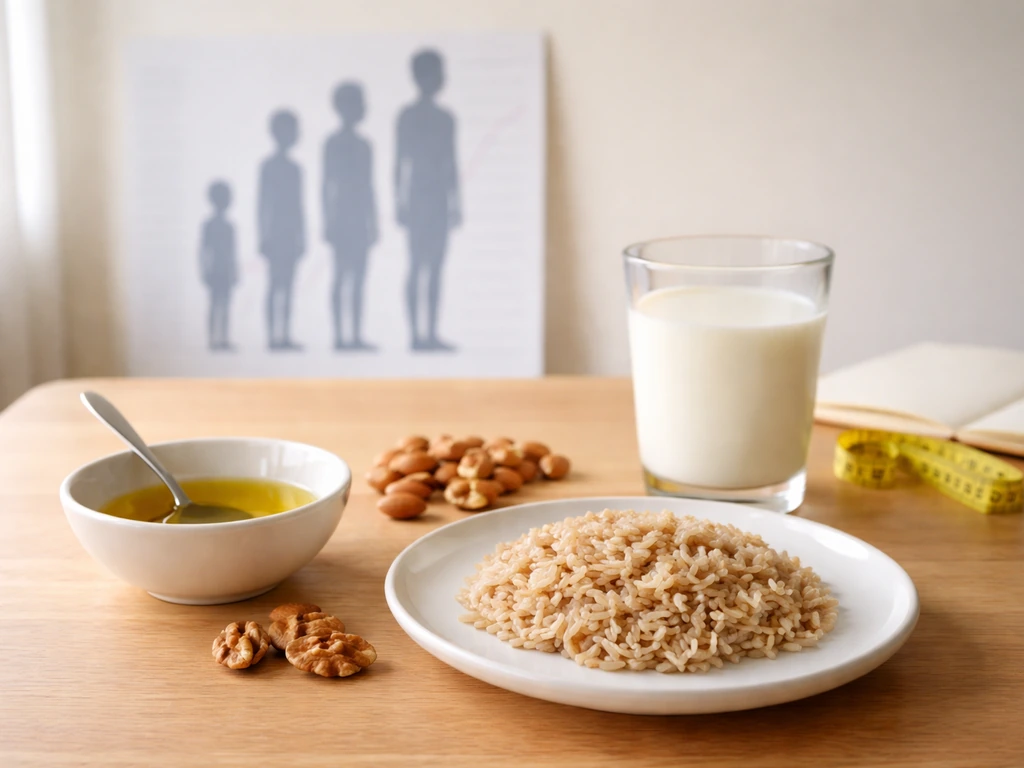
No, you don't need to eat a lot to grow taller. What actually matters is eating enough of the right things, not sheer food volume. The science is pretty clear: correcting undernutrition can unlock growth that was being suppressed, but piling on extra calories beyond your needs doesn't make well-nourished kids or teens any taller. Growth is driven by hormones and genetics, with food playing a supporting role, not a starring one.
Do You Need to Eat a Lot to Grow Taller? Evidence-Based Guide

Marcus Reeves
14 Jun 2026

How height growth actually happens
Height is determined almost entirely by what happens at your growth plates, which are thin strips of cartilage near the ends of your long bones (femur, tibia, humerus, and so on). These are called epiphyseal plates, and they work through a process called endochondral ossification: cartilage cells called chondrocytes multiply, enlarge, and eventually get replaced by bone, pushing the bone ends further apart and making you taller.
The main hormonal driver of all this is the growth hormone (GH) and insulin-like growth factor 1 (IGF-1) axis. Your pituitary gland releases GH, which signals the liver and growth plate tissue to produce IGF-1, which in turn drives chondrocyte activity. During puberty, sex hormones (estrogens and androgens) amplify the GH-IGF-1 signal and create the growth spurt you see in teenagers. But here's the catch: those same sex hormones eventually trigger growth plate senescence and fusion. Once the cartilage is replaced by solid bone, growth stops permanently, leaving only a faint epiphyseal scar.
Timing varies by sex. On average, girls hit peak height velocity around ages 10 to 11 and finish growing around 14. A JCEM clinical review reports that girls peak in height velocity around ages 10 to 11 and typically complete growth around 14. 5 years, while boys peak around ages 12 to 13 and complete growth around 16.
5 to 17 years on average peak height velocity around ages 10 to 11 and finish growing around 14. 5 years.
Boys peak around 12 to 13 and complete most of their growth by about 16. 5 to 17 years. Girls also tend to reach full growth plate fusion roughly two years earlier than boys. After that point, no amount of nutrition, exercise, or supplements changes skeletal length.
Does eating more calories actually increase height?

The honest answer is: only if you were undereating to begin with. If you are in a calorie deficit, the priority is fixing undernutrition and meeting key nutrients, since that is what can restore growth. The strong and consistent finding in nutrition research is that correcting a calorie and nutrient deficit can restore or accelerate linear growth in children who were falling behind. In randomized controlled trials, undernourished children who received blank" rel="noopener noreferrer">oral nutritional supplementation (ONS) alongside dietary counseling gained measurably more height than children who got counseling alone. That's real and meaningful. But the same logic doesn't apply once someone is adequately nourished.
Overfeeding well-nourished children doesn't make them taller adults. The evidence on chronic caloric surplus in humans shows the main outcome is fat and weight gain, not extra linear growth. Your growth plates respond to hormonal signals, not to a calorie overflow. So if a teen who's already eating well decides to force-feed themselves to "maximize" their height, they're more likely to gain fat than centimeters.
The more useful framing: think of adequate food intake as a prerequisite, not a multiplier. You need enough energy to keep your hormonal systems running properly and to supply the raw materials for bone building. Going significantly below that threshold suppresses growth. Going above it, past the point of adequacy, adds nothing in terms of height.
What nutrients actually matter (it's not just calories)
This is where the nuance lives. Rather than asking "how much food," the better question is "which nutrients." A systematic review of nutrition interventions in children past the first two years of life found that zinc, vitamin A, multiple micronutrients combined, and protein all showed significant positive effects on height. Calcium, interestingly, didn't show consistent evidence of improving linear growth as a standalone public health strategy in older children, even though it's critical for bone density.
Protein

Protein is probably the single most important macronutrient for growth. IGF-1 production is protein-sensitive: when dietary protein is low, IGF-1 drops, and growth slows even if calories are adequate. For children and teens, a reasonable target is roughly 0.85 to 1.2 grams per kilogram of body weight per day, with some researchers suggesting slightly higher intakes (up to 1.5 g/kg) during peak growth periods. Distributing protein across meals rather than loading it all into one sitting likely improves how well it's used.
Zinc
Zinc deficiency is one of the most documented causes of growth faltering worldwide. Zinc is required for cell division and protein synthesis, both of which are central to growth plate activity. Good sources include meat, shellfish (especially oysters), legumes, and seeds. The daily requirement for adolescents is around 8 to 11 mg, and deficiency is worth ruling out in any child with unexplained slow growth.
Vitamin D
Vitamin D plays a key role in calcium absorption and bone mineralization, and supplementation in nutritionally depleted children has been shown to improve nutritional status markers alongside height gains. For most children and teens, 600 IU per day is the standard recommendation, though many practitioners suggest 1,000 to 2,000 IU for those with limited sun exposure or low baseline levels.
Iron and vitamin A
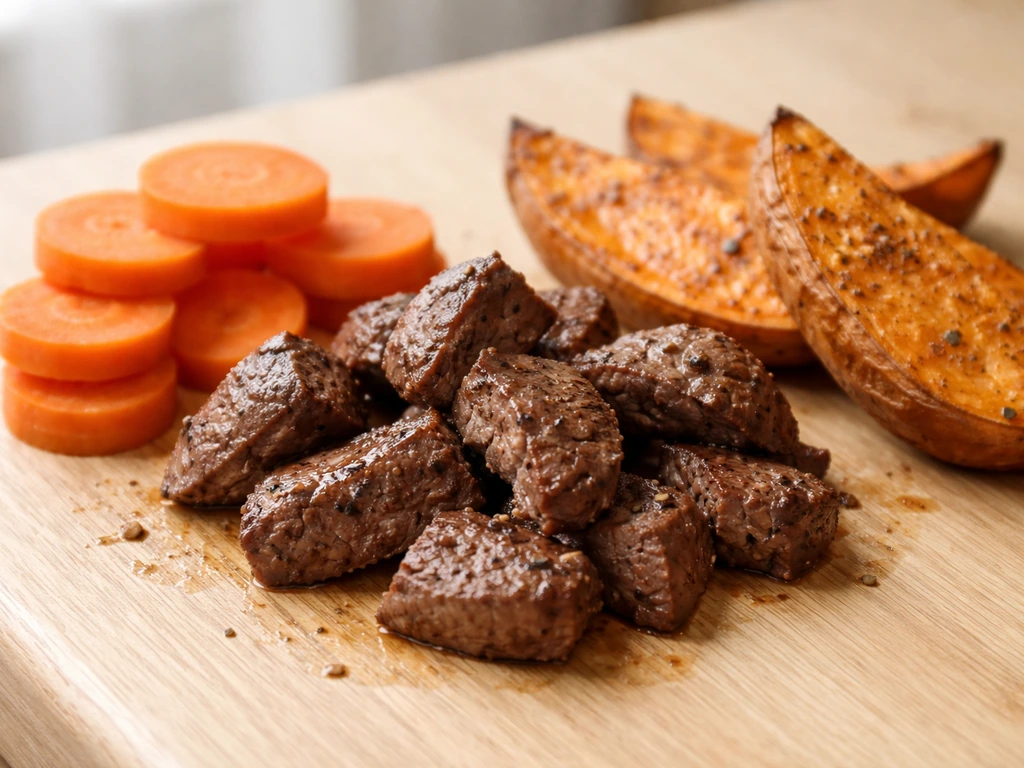
Iron deficiency impairs growth indirectly through its effect on energy metabolism, appetite, and thyroid function. Vitamin A supports bone remodeling and IGF-1 signaling. Both deficiencies are common in children and teens who eat restrictive or low-variety diets, and both show up in the evidence as contributors to growth faltering when corrected through multiple-micronutrient interventions.
Age matters a lot: what nutrition can realistically do at different life stages
| Life Stage | Growth Plate Status | What Nutrition Can Do |
|---|---|---|
| Early childhood (2–8 years) | Open and active | Correcting deficits can restore faltering growth; catch-up growth is biologically feasible |
| Pre-puberty / early puberty (9–13 years) | Open; growth accelerating | Adequate protein, zinc, vitamin D critical; deficiency at this stage can significantly limit adult height |
| Mid to late puberty (14–17 years) | Open but approaching fusion | Nutrition still matters; deficiency can shorten the growth window |
| Post-puberty / adulthood (18+ years) | Fused in most individuals | Linear growth is essentially complete; nutrition supports bone density, not height |
The most impactful window is childhood through puberty, particularly the two to three years around peak height velocity. This is when nutritional gaps do the most damage and when correcting them yields the most return. The concept of catch-up growth is real: when a child who was underfed gets adequate nutrition, their body can accelerate growth to bring them back toward their genetically programmed trajectory. This is time-limited, though, and becomes harder to achieve the older the child gets and the closer they are to growth plate fusion.
For adults, the honest message is that your growth plates have closed and height is set. Nutrition at this stage is about maintaining bone density, posture, and overall health, not adding centimeters. If you're an adult reading this hoping to grow taller, the realistic answer is that food choices won't change your skeletal height.
Signs you might be under-fueling (and rough intake targets to aim for)
Under-fueling doesn't always look like obvious starvation. A teenager who skips breakfast, eats a small lunch, and survives on processed snacks can be chronically under-supplying the nutrients their growth plates need, even if their total calories look borderline adequate. Here are some signs worth paying attention to:
- Height has slowed or stalled compared to previous growth trajectory (crossing percentile lines downward on a growth chart)
- Persistent fatigue, difficulty concentrating, or poor recovery from exercise
- Frequent illness or slow wound healing (can suggest zinc or vitamin A gaps)
- Brittle nails, hair thinning, or dry skin (micronutrient deficiency markers)
- Delayed puberty or irregular periods in teenage girls
- Low appetite combined with high physical activity load
- Restrictive eating patterns, food avoidance, or dieting in a child or teen
For practical intake targets, the goal isn't a specific calorie number but a pattern. Growing children and teens generally need three balanced meals per day with protein at each, plus one or two snacks if activity levels are high. A rough protein target of 1.0 to 1.2 grams per kilogram of body weight daily is a reasonable minimum. Calorie needs vary widely: a sedentary 12-year-old girl needs around 1,600 to 1,800 kcal/day, while an active 15-year-old boy in his growth spurt may need 2,800 to 3,200 kcal or more. The key isn't hitting a magic number; it's not chronically restricting, eating a varied whole-food diet, and getting adequate protein, zinc, vitamin D, and iron consistently.
What else shapes how tall you grow

Food is one input among several. These factors work alongside nutrition and are worth taking seriously, especially if growth seems slower than expected.
Sleep
Growth hormone is secreted in pulses, with the largest pulse occurring in the first few hours of deep sleep. Chronic sleep deprivation suppresses GH output. Children aged 6 to 12 need 9 to 12 hours of sleep per night; teenagers need 8 to 10 hours. Getting consistently less than this isn't just a tired-kid problem. It's a genuine growth concern.
Physical activity
Weight-bearing exercise and resistance training stimulate bone remodeling and GH release, supporting the growth process. Activities like running, jumping, swimming, and general play are beneficial for growing children. There's no evidence that any specific exercise protocol makes someone significantly taller than their genetic potential, but staying active supports the hormonal environment that allows growth to happen. Extreme overtraining, especially in young female athletes, can suppress hormones and impair growth, so balance matters.
When to see a doctor
If a child is consistently tracking below the 3rd percentile on growth charts, has dropped two or more major percentile lines, shows signs of delayed puberty, or has a height significantly below what family genetics would predict, it's worth a pediatric evaluation. Conditions like growth hormone deficiency, hypothyroidism, celiac disease, inflammatory bowel disease, and other chronic illnesses can all impair growth even in a child eating well. These are medical issues, not nutrition problems, and they require medical diagnosis, not dietary tweaks.
Myths worth putting to rest
A few beliefs circulate widely enough that they're worth addressing directly.
"Eating more food makes you taller"
Only if you're undereating. For a well-nourished child or teen, adding more food beyond adequacy leads to fat gain, not height gain. The research on overfeeding in humans consistently shows weight gain as the primary outcome, with no established link to extra linear growth in adequately nourished individuals.
"Milk and calcium are the most important things"
Calcium is important for bone density but isn't the primary driver of linear growth. If you are trying to meet calcium needs for healthy growth, it helps to focus on adequate total intake for your age rather than expecting calcium to directly add height. Systematic reviews have not found strong evidence that calcium supplementation alone improves height in children who aren't severely deficient. Protein, zinc, and overall dietary adequacy have stronger and more consistent ties to linear growth outcomes.
"Growth supplements can add inches"
The supplement market is full of products claiming to boost height. None of them have reliable evidence behind them for increasing height in well-nourished individuals. Multi-micronutrient supplements can help fill gaps in deficient children, but they're not height-boosters; they're gap-fillers. If you're already meeting your nutrient needs through food, adding a supplement on top won't add centimeters.
"Genetics are just an excuse"
Genetics account for roughly 60 to 80 percent of adult height variation across populations. Mid-parental height (averaging both parents' heights with a sex adjustment) is a reasonably good predictor of a child's genetic height potential. Nutrition and environment can influence how close a child gets to that potential, but they can't meaningfully exceed it. A child of short parents who eats perfectly will reach their genetic ceiling, which may simply be shorter than average. That's not failure; that's biology.
The bottom line is this: eat enough, eat well, sleep properly, stay active, and address any real deficiencies. That's genuinely the best nutritional strategy for supporting healthy growth. But chasing extra height through extra food volume is a misconception worth letting go of. You can think of this as the answer to do you need calories to grow taller: adequacy matters, but excess does not increase height once you are nourished.
FAQ
If my teen is eating “enough,” could adding extra calories still make them taller?
Usually not. If a child is growing along their expected curve and eating enough to avoid nutrient gaps, “more food” beyond comfort and adequacy mainly increases risk of weight gain. The exception is when they were under-eating (even subtly), where correcting intake can support catch-up growth.
How can a child be “not starving” but still not get what they need to grow tall?
Yes, it can, even when total calories look borderline adequate. Skipping meals, eating low-protein snacks, or having a low-variety diet can reduce key growth nutrients like protein, zinc, iron, and vitamin D, which can suppress growth despite not looking like starvation.
What should I track instead of calories if my goal is height-supporting nutrition?
The most common practical target is nutrient adequacy, not a specific calorie number. As a quick check, ensure protein is present at most meals, and that the overall diet includes zinc- and iron-rich foods plus vitamin D sources (or appropriate supplementation if advised). If you want a more precise plan, track intake for a few days and compare it to a pediatric dietitian’s guidance.
Can I just give supplements on top of a good diet to boost height?
Don’t. Supplements should be treated as gap-fillers, not height boosters. If a child is already meeting needs through food, extra supplements can be ineffective or, in high doses, harmful (especially with fat-soluble vitamins like vitamin A and excess iron).
Will protein shakes or nutritional drinks help a child get taller?
Sometimes, but mostly when they fix an underlying deficiency or inadequate intake. If growth faltering is from undernutrition, oral nutritional supplementation plus counseling can improve linear growth. If the issue is medical (thyroid disease, celiac, inflammatory bowel disease, growth hormone deficiency), supplements alone may not address the cause.
Is it possible to be active and still under-eat enough for growth?
Yes, poorly planned diets can. Teen athletes, teens dieting for weight, and kids who are “picky” can end up short on protein, zinc, vitamin D, or iron, and growth can slow. If activity is high, the “right” calories may be higher, but protein distribution and micronutrients still matter.
If calories aren’t the answer, how important is protein compared with total food volume?
There is a real difference. Protein affects the GH-IGF-1 pathway and growth-plate activity, so low protein can slow growth even if calories are adequate. A small surplus of calories without adequate protein and micronutrients is unlikely to help height.
Can lack of sleep reduce growth even if my child eats well?
For most children and teens, focus on sleep quantity and consistency. Chronic short sleep can reduce growth hormone pulses, which can affect growth velocity. If sleep is consistently below age needs, improving sleep timing and duration is usually higher-yield than changing diet amounts.
When should I stop troubleshooting food and ask a doctor about slow growth?
If linear growth is truly delayed, it is worth medical evaluation rather than trying to “outfeed” the problem. Signs include crossing down percentiles, very short stature compared with family patterns, or delayed puberty. Conditions like hypothyroidism, celiac disease, inflammatory bowel disease, and growth hormone deficiency require diagnosis and targeted treatment.
If a teen stops growing, can nutrition still help an adult gain height?
If the growth plates are fused, nutrition cannot add centimeters. Adults can improve bone health, posture, and overall musculoskeletal function, but that is different from increasing skeletal length. If height changes come from fractures or spinal issues, a clinician should evaluate those causes.
Is calcium the best nutrient to focus on for getting taller?
Because calcium mainly supports bone density, not the growth-plate process that creates new height. Prioritize overall adequacy for age and ensure vitamin D status is appropriate, since vitamin D helps calcium absorption. Calcium supplementation may be needed when total intake is low, but it is not usually a direct height lever.
My child’s parents are short, does that mean nutrition won’t matter at all?
Family height predictions set an upper limit, and growth timing varies. If a child eats well, sleeps enough, and stays active but remains near their genetic potential, “doing more” usually won’t change the endpoint. The goal becomes supporting healthy growth velocity and ruling out medical or nutritional gaps.
Next Article
Do You Need Fat to Grow Taller? Evidence-Based Guide
Learn if you need dietary fat for height, how it supports growth, and how to meet calories without excess.