
Yes, you need some dietary fat to grow taller, but not in the way most people imagine. Fat doesn't directly stretch your bones or trigger a growth spurt.
Do You Need Fat to Grow Taller? Evidence-Based Guide

Marcus Reeves
9 Jun 2026
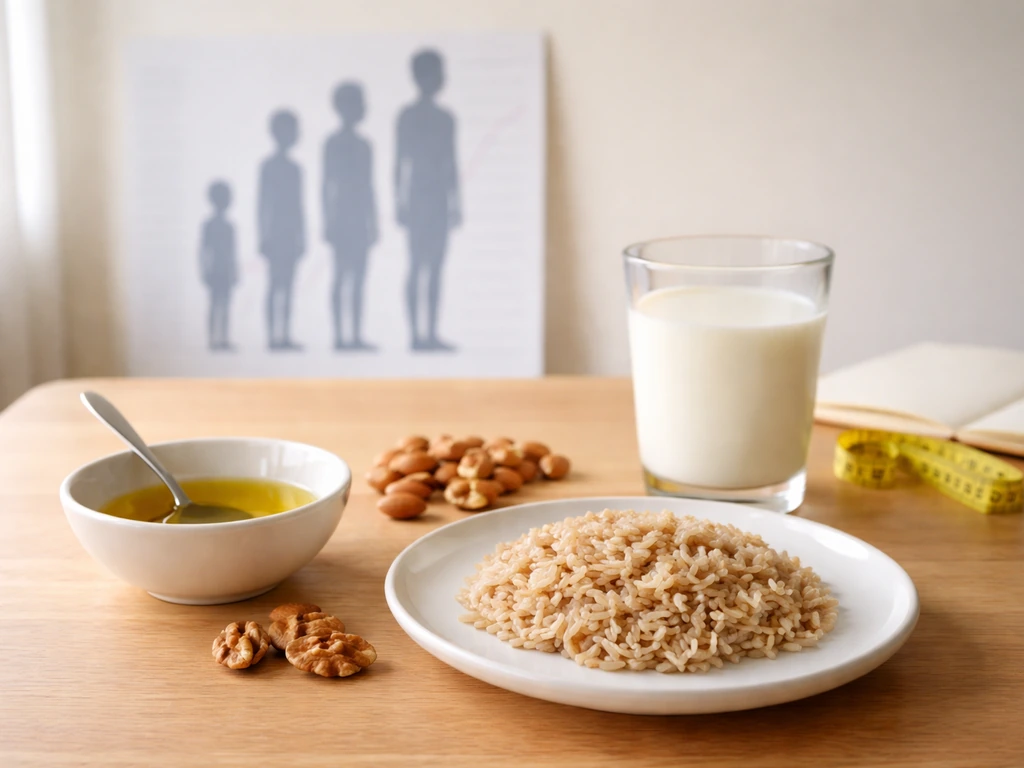
What it does is keep the whole system running: it supplies calories so your body isn't burning muscle for fuel, it carries the fat-soluble vitamins (A, D, E, and K) that your bones and growth plates depend on, and it feeds the hormonal signals, especially leptin, that tell your body it has enough energy to grow and develop. Without adequate fat, those systems get disrupted. But eating extra fat beyond your needs won't add a single centimeter.
In other words, you generally do not need to eat a lot of fat to grow taller, as long as you're meeting your calorie and nutrient needs. The goal is adequacy, not excess.
What fat actually does (and doesn't) do for height

Let's clear this up fast. Fat is not a height nutrient the way protein is a muscle nutrient or calcium is a bone nutrient. For people asking how much calcium per day to grow taller, the key point is that calcium supports bone health, but it does not by itself lengthen bones beyond genetics and timing calcium is a bone nutrient. There's no direct pathway where eating more fat makes bones grow longer.
Multiple randomized trials comparing children on reduced-fat diets to those eating normal fat intake found small, inconsistent differences in height, with effects ranging from about 0. 34 cm more to 0. 57 cm less, essentially noise. A Cochrane review of trials that lowered children's total fat intake found no consistent difference in height across studies.
So if someone's telling you that eating more fat will make you taller, that's not what the evidence shows.
Where fat genuinely matters is as a supporting player. It contributes to total calorie intake, and being in a meaningful calorie deficit can impair growth. If you want to know whether a calorie deficit can slow your height growth, focus on overall energy adequacy and avoid chronic restriction meaningful calorie deficit. It's also the vehicle for fat-soluble vitamins, without which bone development, immune function, and hormonal signaling all take a hit.
And dietary fat, through its role in body fat stores and leptin production, acts as a kind of metabolic signal that tells your brain and endocrine system whether it's safe to grow and go through puberty. Strip fat too low and you risk disrupting those signals, not because fat is magic, but because the body interprets very low fat intake as a sign of starvation.
How growth actually works: energy, hormones, and growth plates
Height is determined by growth plates, the cartilaginous zones near the ends of your long bones (femur, tibia, humerus, etc. ) where new bone tissue is laid down. Chondrocytes in those plates proliferate and differentiate in response to a coordinated set of hormonal signals: growth hormone (GH) released by the pituitary, insulin-like growth factor 1 (IGF-1) produced mostly by the liver, thyroid hormones, sex steroids, and glucocorticoids.
Endocrine Reviews summarizes growth plate regulation as being controlled by systemic hormones, including GH and estrogens, acting along with local growth factors such as IGF-I and hormone receptor signaling on growth-plate chondrocytes growth hormone (GH) released by the pituitary. During puberty, pulsatile GH secretion increases roughly 1.
5 to 3 times, and serum IGF-1 rises more than 3-fold. That's the engine behind the pubertal growth spurt. Eventually, rising estrogen (in both sexes, converted from androgens) causes the growth plates to fuse, and height stops.
Where does fat fit into this? Primarily through leptin and overall energy availability. Leptin, a hormone produced by fat cells, acts as a permissive signal for pubertal onset. In leptin-deficient children, puberty doesn't start without intervention. More broadly, chronic undernutrition suppresses the entire hypothalamic-pituitary axis, reducing GH pulses and delaying or preventing puberty. You don't need to be severely malnourished for this to matter. Consistent calorie restriction, especially if it involves cutting fat to very low levels and taking total energy with it, can suppress the system enough to slow growth velocity or delay puberty.
Healthy vs. unhealthy fats: what type matters and why

Not all dietary fat does the same job. Two fatty acids, linoleic acid (omega-6) and alpha-linolenic acid (omega-3, ALA), are classified as essential because the human body cannot synthesize them. The WHO explicitly identifies these two as must-get-from-diet nutrients. EFSA's dietary reference values set an adequate intake of around 4% of energy for linoleic acid and 0.5% of energy for ALA, with a separate 250 mg/day recommendation for the long-chain omega-3s EPA and DHA for adults. For growing children, DHA in particular is important for brain and nervous system development alongside skeletal growth.
The fat-soluble vitamins are the other reason fat quality matters. Vitamins A, D, E, and K are absorbed alongside dietary fat. Cut fat too low or eat a very low-fat diet chronically, and you risk absorbing inadequate amounts of all four, even if your diet technically contains them. Vitamin A supports normal growth and development, and deficiency is associated with impaired growth. Vitamin D is critical for calcium absorption and bone mineralization. Vitamin K status has been linked to childhood bone mineral content in published research. A therapeutic very-low-fat diet in clinical settings has been noted to require supplementation with fat-soluble vitamins specifically because the diet alone can't deliver enough of them.
On the other end, saturated fat in excess raises cardiovascular risk markers without providing any additional growth benefit. The American Heart Association recommends keeping saturated fat below 7% of calories from age 2 onward. Trans fats have no nutritional benefit and should be avoided. The practical takeaway: focus your fat intake on unsaturated sources (olive oil, nuts, seeds, fatty fish, avocado) while getting some saturated fat from whole foods like dairy and eggs, and avoid processed trans fats.
How this changes by life stage
Early childhood (ages 1 to 3)

Fat needs are highest in proportion to body size during toddlerhood. The Acceptable Macronutrient Distribution Range (AMDR) for ages 1 to 3 is 30 to 40% of total calories from fat, higher than at any other life stage. MedlinePlus confirms this same 30 to 40% range for this age group. The reason is straightforward: the brain is still developing rapidly, fat provides the calorie density needed for fast growth, and fat-soluble vitamin delivery is critical. Restricting fat significantly in this window can impair both neurological and physical development.
Childhood through puberty (ages 4 to 18)
The AMDR drops to 25 to 35% of total calories for ages 4 to 18, which is also the range recommended by the AHA for this age group. This is when genetics, hormones, and overall nutrition converge to determine final adult height. Puberty is the most critical window: the GH/IGF-1 axis peaks, sex steroids drive the growth spurt, and eventually epiphyseal fusion locks in your height. Adequate total calorie intake and adequate fat intake are both important here, but neither is sufficient on its own without overall nutritional balance, sleep, and the genetic blueprint doing its job.
Adulthood: when the plates are closed
Once your growth plates fuse, typically in the late teens for girls and late teens to early twenties for boys, no amount of dietary fat, protein, supplements, or exercise will increase your skeletal height. The bone structure is fixed. Dietary fat still matters for overall health, hormone production, and maintaining bone density, but it is not a height lever at this stage. If you're an adult searching this question because you want to grow taller, that's a different conversation about posture, disc health, and realistic expectations rather than nutrition.
Practical targets: how much fat to eat and what to actually choose
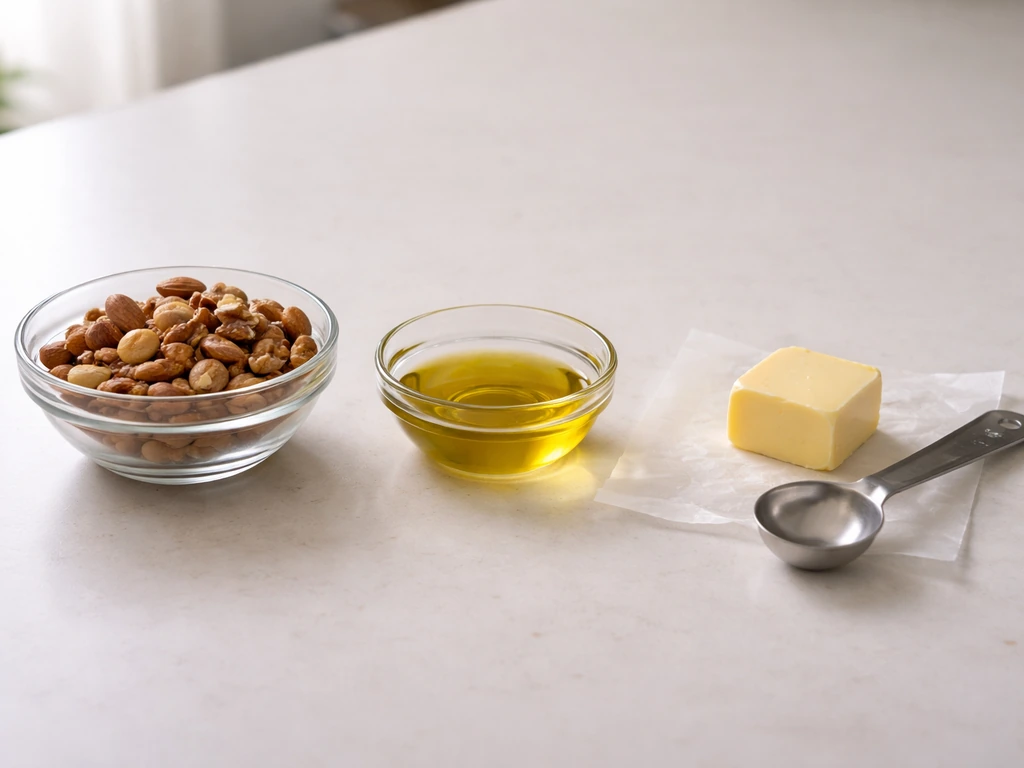
Here's how to put the numbers into practice. Use the ranges below as a starting framework, then adjust based on your total calorie needs.
| Age Group | Fat as % of Total Calories | Saturated Fat Limit | Key Priority |
|---|---|---|---|
| 1 to 3 years | 30 to 40% | No strict limit, minimize processed sources | Calorie density, fat-soluble vitamins, DHA |
| 4 to 18 years | 25 to 35% | Less than 7% of total calories | Essential fatty acids, vitamins A/D/E/K, total energy |
| Adults (18+) | 20 to 35% (standard adult AMDR) | Less than 10% of total calories | Bone density, hormonal health, overall nutrition |
For a 10-year-old eating roughly 1,800 calories per day, the 25 to 35% range means about 50 to 70 grams of fat per day. For a 15-year-old eating 2,200 to 2,500 calories, that's roughly 60 to 97 grams. These are ranges, not hard targets. What matters more than hitting an exact gram count is getting a variety of fat sources and not cutting fat so low that you compromise calorie adequacy or fat-soluble vitamin absorption.
Best food sources to prioritize:
- Fatty fish (salmon, sardines, mackerel): provides EPA, DHA, and vitamin D
- Nuts and nut butters (almonds, walnuts, peanut butter): omega-3 ALA, vitamin E, calories
- Seeds (chia, flaxseed, hemp): ALA and additional micronutrients
- Avocado and olive oil: monounsaturated fats, vitamin E
- Eggs: fat-soluble vitamins A, D, K2, and choline alongside healthy fat
- Dairy (whole milk for young children, low-fat options for older kids): vitamins A and D, saturated fat in moderation
- Fortified foods: many cereals and plant milks are fortified with vitamins A and D
Total calorie intake matters at least as much as fat specifically. Related questions like whether a calorie deficit can impair height growth or how much protein is needed for growth are worth thinking through alongside fat intake, since all three macronutrients contribute to the energy and building blocks that the growing body needs. How much protein do you need to grow taller depends on your age and total calorie intake, but protein mainly supports growth by providing building blocks for new tissue.
Common myths about fat and height
A few persistent misconceptions are worth addressing directly, because they can lead to real dietary mistakes.
- Myth: Cutting fat will make you taller. This has no evidence behind it. Studies in children on reduced-fat diets show negligible or no consistent height differences compared to controls. Aggressively cutting fat can actually impair growth by reducing total calories and fat-soluble vitamin absorption.
- Myth: Only protein matters for height. Protein is critical for building bone matrix and tissue, but it operates within a system that requires adequate energy (including fat) and micronutrients. Eating high protein on very low fat and low total calories doesn't produce optimal growth.
- Myth: Eating more fat will make you taller. Extra fat beyond your needs doesn't trigger any growth mechanism. It just adds calories, and excess calories produce fat storage, not height. Obesity in childhood is actually associated with earlier epiphyseal fusion in some cases, potentially shortening the growth window.
- Myth: Fat supplements will help you grow. There's no supplement that causes bone elongation after normal nutrition is established. DHA and vitamin D supplements can correct deficiencies and support normal development, but they're not growth accelerators in well-nourished individuals.
- Myth: Low-fat diets are fine for kids since research shows no height difference. The studies showing small effects on height used moderately reduced fat diets (around 28 to 30% of energy), not very low-fat diets. Taking fat below the AMDR range, especially in toddlers, is a different situation and not well-supported.
When to worry: signs that nutrition may be affecting growth
Most children eating a reasonably varied diet will reach close to their genetic height potential without needing to count fat grams. But there are warning signs worth knowing. The Endocrine Society flags poor growth velocity as a key trigger for evaluation: if a child is not growing at least 2 inches (about 5 cm) per year, or is falling across height percentiles on a growth chart, that warrants assessment.
The Endocrine Society states that an evaluation is warranted when growth velocity is poor, defined as failing to grow at least 2 inches per year (about 5 cm per year) and/or when children fall downward across height percentiles poor growth velocity. Short stature is formally defined as height below the 0.
4th centile, or more than 2 standard deviations below the mean for age and sex.
NICE clinical guidance (NG75 on faltering growth) notes that when a child's height centile is more than 2 centile spaces below the midparental centile, undernutrition or a primary growth disorder should be considered. A BMI below the 0.4th centile in children is flagged as suggesting probable undernutrition requiring assessment. These thresholds aren't just academic. They're the practical triggers that should prompt a conversation with a pediatrician or dietitian.
Specific situations that deserve professional attention:
- A child or adolescent following a very low-fat or highly restrictive diet, including fat-phobic eating patterns or disordered eating
- Delayed puberty alongside poor weight gain or growth velocity, which may suggest the neuroendocrine system is being suppressed by inadequate nutrition
- Fat malabsorption conditions (such as cystic fibrosis, celiac disease, or inflammatory bowel disease) where fat-soluble vitamins may be inadequately absorbed regardless of dietary intake
- Signs of vitamin D or vitamin A deficiency, including bone pain, frequent infections, night blindness, or poor wound healing
- Any adolescent athlete restricting calories significantly while training heavily, where energy availability may be low enough to impair the GH/IGF-1 axis
If any of these apply, a pediatric dietitian or endocrinologist is the right next step, not a change in fat intake based on something you read online. Growth concerns in childhood have a narrow treatment window, and early assessment matters. Nutrition can support reaching your genetic height potential, but it can't override genetics, and no dietary change after growth plates close will affect skeletal height.
FAQ
Do you need to eat a lot of fat to grow taller, or just enough?
Just enough. Once total calories and fat-soluble vitamins are covered, adding extra fat does not create extra height. If you are already eating within typical fat ranges for your age, focus on overall energy adequacy and food quality rather than pushing fat higher.
What if I cut fat low to “be healthier,” will that slow growth?
It can, especially for kids or teens who are already eating less overall. The key risk is chronic under-fueling, often paired with very low fat intake that reduces absorption of vitamins A, D, E, and K. If a child is restricting calories, or dropping fat to very low levels, it is worth discussing with a pediatric dietitian instead of self-adjusting.
Does fat matter for height more in toddlers than in older kids?
Yes, fat needs as a percentage of calories are highest in the 1 to 3 age range (about 30 to 40%). That timing overlaps with rapid brain and physical development, so chronically restricting fat in toddlers can be more disruptive than similar restriction in older children.
Can omega-3 or omega-6 fats specifically make someone taller?
Not directly. Omega-3s like DHA support brain and nervous system development, and essential fatty acids are necessary for normal development, but the evidence does not support them as a height-boosting “dose.” Their role is more about meeting requirements for healthy growth and development while energy intake stays adequate.
If my child is short but healthy, do we need to increase fat?
Not automatically. If height is below expected, the first step is checking growth velocity and where the child sits on the growth chart. Fat changes may help only if there is true undernutrition or vitamin absorption problems. If growth is slow or crossing percentiles, professional assessment matters more than adjusting macros.
How do I know whether fat intake is too low for my child?
Look for patterns, not single numbers: persistent calorie restriction, low BMI, and poor weight gain often signal low energy availability. If a child’s growth is faltering, a clinician may check whether fat-soluble vitamin intake and overall intake are adequate rather than simply raising fat without addressing calories.
For adults with growth plates fused, does diet fat affect anything height-related?
Not height. After epiphyseal fusion, dietary fat will not lengthen bones. However, fat still affects overall health, hormone function, and bone density support, so keeping an appropriate healthy-fat pattern is still worthwhile for long-term musculoskeletal health.
Is it better to get fat from supplements or whole foods?
For most people, whole foods are preferable because they typically provide the full package of fats plus fat-soluble vitamins and other nutrients. Supplements might be considered only in specific situations under guidance, for example if a child cannot absorb fats well or has a diagnosed deficiency.
Should I increase saturated fat to meet my fat needs?
Meet fat needs overall, but choose sources wisely. Saturated fat in excess can raise cardiovascular risk markers without adding growth benefit, so emphasize unsaturated fats (olive oil, nuts, seeds, avocado, fatty fish) and keep processed trans fats out.
What is the best next step if someone suspects low-fat intake is affecting growth?
Track growth (height and growth rate), review total calorie intake, and get an individualized nutrition plan. The most useful starting point is a pediatrician or pediatric dietitian, especially if a child is not growing about the expected rate or is dropping across height percentiles.
Next Article
Do You Need Calories to Grow Taller? A Practical Guide
Find out if you need calories to grow taller, how much to eat by age and activity, and when more won’t boost height.