
Yes, you need adequate calories to grow taller. Not in the sense that eating more calories than you need will make you taller than your genes allow, but in the very real sense that chronic undereating suppresses the hormonal systems that drive height growth. If your body is running short on energy, it will prioritize survival over growth, and your height potential can take the hit. Since protein helps drive IGF-1 production, getting enough of it alongside adequate calories is important for supporting linear growth protein intake. Getting enough calories is the foundation. Do you need fat to grow taller? Fat can support hormone health and help you meet calorie needs, but it is not a magic ingredient for height. Everything else builds on top of that.
Do You Need Calories to Grow Taller? A Practical Guide


Why calories are required for height growth
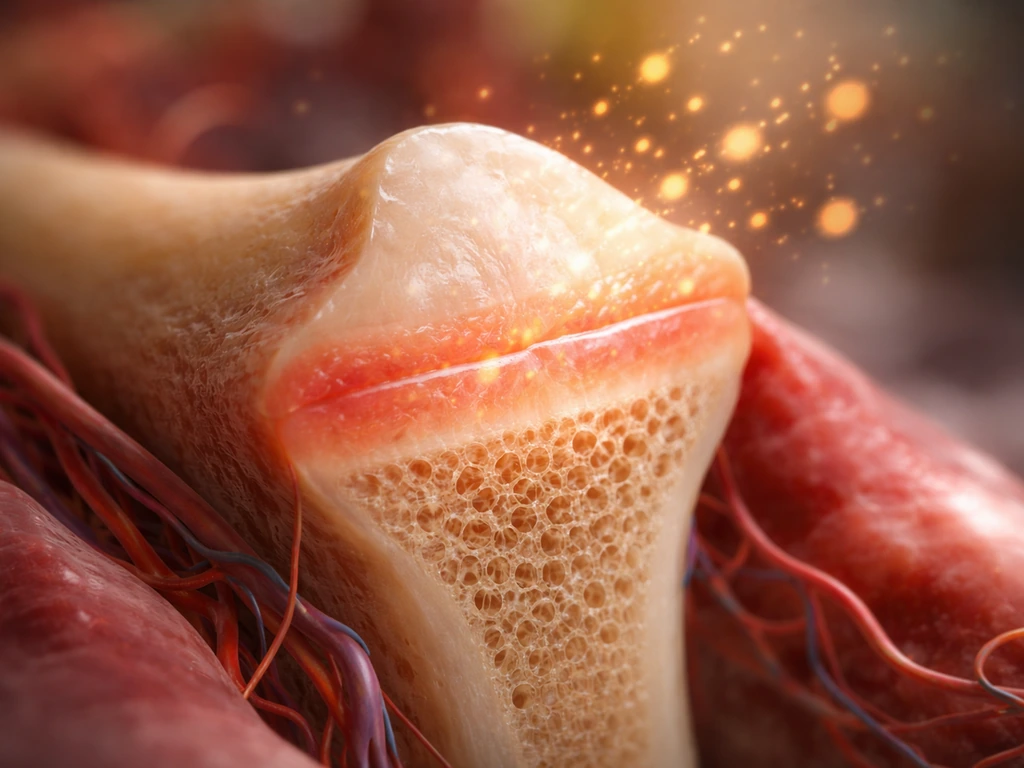
Growth is an energy-expensive process. Your body needs a steady supply of calories to fuel the cellular activity happening in your growth plates, the production of structural proteins for new bone and tissue, and the hormonal signaling that coordinates it all. The central player here is the GH-IGF-1 axis. Growth hormone (GH) is secreted by the pituitary gland, and it stimulates the liver to produce IGF-1 (insulin-like growth factor 1), which is the main driver of linear growth in bone tissue. Here is the catch: IGF-1 is sensitive to both total energy intake and protein intake. When you are undernourished, circulating IGF-1 drops, along with its binding proteins (IGFBP-3 and ALS), and linear growth slows or stalls. Research has also identified mTOR signaling as a key nutrient-sensing pathway that integrates energy availability with these growth factor signals. When energy is low, mTOR activity pulls back, and the growth signal weakens. So calories are not just fuel in a generic sense. They are directly tied to the hormonal machinery that makes you taller.
Undernutrition severe enough to cause growth faltering can have lasting effects on height if it occurs during critical windows of development, particularly in the first few years of life and during the pubertal growth spurt. The encouraging finding from research is that catch-up growth is possible when nutritional status is restored. Linear recovery tends to occur once a substantial portion of healthy weight-for-height has been regained, which underscores that calorie adequacy, not just protein or micronutrients in isolation, is part of the recovery equation.
How many calories you actually need for growth
There is no magic calorie number that unlocks height. What matters is meeting your energy needs consistently so your body has enough fuel to run normal growth processes without diverting resources. Calorie needs vary a lot depending on age, sex, size, and activity level, so the table below gives general ballpark ranges for children and teenagers who are still growing.
| Age Group | Sex | Estimated Daily Calorie Range |
|---|---|---|
| 2 to 3 years | All | 1,000 to 1,400 kcal |
| 4 to 8 years | All | 1,200 to 1,600 kcal |
| 9 to 13 years | Male | 1,600 to 2,200 kcal |
| 9 to 13 years | Female | 1,400 to 2,000 kcal |
| 14 to 18 years | Male | 2,000 to 3,200 kcal |
| 14 to 18 years | Female | 1,800 to 2,400 kcal |
These ranges reflect sedentary to active lifestyles. A 16-year-old boy playing competitive sports every day sits at the high end or even above it. A sedentary 10-year-old girl sits at the lower end. The key signal that calorie intake is appropriate is steady, age-consistent growth on a growth chart. If weight gain is falling off percentile lines over time, or if there is an inappropriate drop in weight, that is a flag for poor nutrition, as the Endocrine Society notes in its guidance on growth and short stature. Pediatricians track this using growth charts specifically because growth velocity is one of the most reliable indicators of nutritional adequacy in children.
Calories vs what you eat: does food quality matter too?
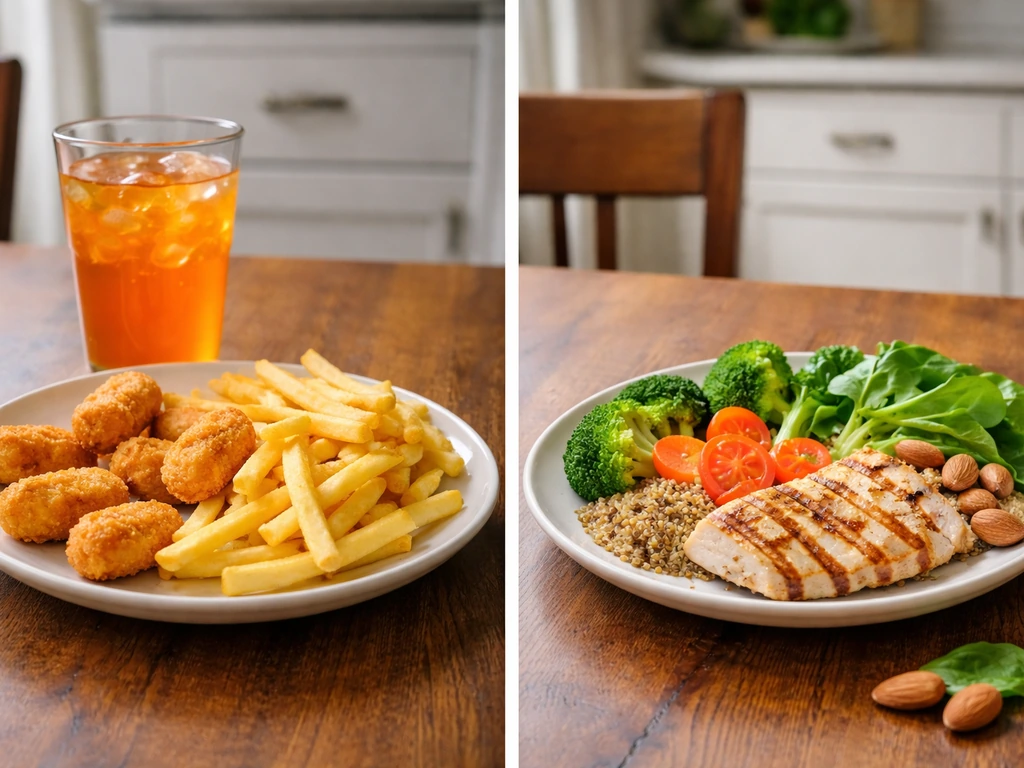
Total calories are necessary but not sufficient on their own. You can technically meet a calorie target with ultra-processed food and still blunt your growth potential if the diet is poor in protein, calcium, vitamin D, and zinc. Protein deserves special attention here because it directly stimulates IGF-1 production. Research on dietary protein and the IGF-1 axis has noted something important: in a reduced-energy environment, even protein that looks adequate as a percentage of total calories may not be enough to raise IGF-1 to optimal levels. In other words, calories and protein interact. You need both.
Micronutrients matter too, particularly for bone growth and mineralization. Calcium is the primary structural mineral in bone. Vitamin D is required for calcium absorption and bone remodeling, with the RDA set at 400 to 600 IU per day (10 to 15 mcg) for infants, children, and adolescents. blank" rel="noopener noreferrer">Zinc supports cell growth and protein synthesis, with RDAs of 11 mg per day for teenage boys and 9 mg per day for teenage girls aged 14 to 18. Getting calories from nutrient-dense whole foods, lean proteins, dairy or fortified alternatives, vegetables, fruits, and whole grains covers most of these bases far better than simply hitting a calorie number with empty food choices. The question of how much protein specifically supports growth is worth exploring separately, as is the role of calcium in bone development.
When extra calories won't make you taller
This is probably the most important thing to understand if you are searching for ways to get taller by eating more. Calories support normal height growth. They do not override genetics, and they do not reopen growth plates that have already closed. Here is why that distinction matters.
Height growth happens at the growth plates, which are zones of cartilage near the ends of long bones. These plates gradually harden and fuse under the influence of sex hormones during and after puberty, typically between the late teens and early twenties (somewhat earlier in females, later in males). Once the growth plates are fused, no amount of extra calories, protein, or supplements will increase your height. The hormonal machinery that drives growth plate activity, primarily GH and IGF-1, operates within a developmental window. After that window closes, those hormones serve other functions in the body, but linear growth is off the table. Adults who are evaluated for GH deficiency are treated for reasons like body composition, bone density, and metabolic health, not to get taller.
Genetics also set a ceiling that calorie intake cannot push through. Even in a growing child eating perfectly, height outcomes are primarily determined by parental height and genetic factors. Good nutrition allows you to reach your genetic potential. It does not let you exceed it. If you are asking, can a fat person grow taller, this is the kind of ceiling genetics sets, meaning nutrition cannot push you past your growth potential exceed it. Similarly, the timing of puberty is heavily influenced by genetics and body composition, not by eating more. Trying to eat above your energy needs specifically to grow taller faster is not backed by evidence and is more likely to affect weight than height.
How to figure out a realistic calorie target for yourself

If you are a parent concerned about a child's growth, or a teenager who wants to make sure you are not accidentally holding back your own development, here is a practical approach to estimating whether you are eating enough.
- Start with your estimated energy need. Use the age and sex ranges in the table above as a starting point, adjusting upward for moderate or high physical activity. Apps like Cronometer or online TDEE calculators can give a more personalized estimate based on height, weight, age, and activity.
- Track what you actually eat for a few days. Most people who are concerned about not eating enough are surprised to find they are either clearly under-eating or right on the edge. A three-day food diary, two weekdays and one weekend day, gives a reasonable picture without requiring long-term logging.
- Look at growth trends if this is about a child. A single weight or height measurement tells you almost nothing. What matters is the direction of travel over months. If a child has dropped across two major percentile lines on a growth chart, that is worth discussing with a pediatrician regardless of what the current number looks like.
- Check for unintentional weight loss. Losing weight without trying during a period of active growth is a clear signal that calorie intake is insufficient. The Endocrine Society flags this directly as a marker of poor nutrition or possible systemic illness.
- Prioritize food quality, not just quantity. Once you know you are hitting an adequate calorie range, shift your focus to protein targets (roughly 1.2 to 1.6 grams per kilogram of body weight is a reasonable goal for growing children and adolescents), calcium, vitamin D, and zinc from food sources before considering supplements.
- See a professional if growth seems off. If a child is consistently falling off their growth curve, has very short stature relative to family history, or shows signs of delayed puberty, a pediatric endocrinologist can evaluate whether there is an underlying hormonal issue (like a thyroid problem or GH deficiency) that nutrition alone will not fix.
The other big drivers of height growth beyond calories
Calories are the energy foundation, but they work alongside other essential inputs. Sleep is probably the most underrated one. Growth hormone is secreted in pulses, and the largest and most consistent pulse happens during slow-wave (deep) sleep, typically in the early part of the night. Research on 24-hour GH secretion patterns confirms that the sleep period accounts for a significant share of total daily GH output, and secretion patterns vary by developmental stage, with adolescents showing particularly robust nocturnal GH activity. Chronic sleep deprivation does not just make you tired. It disrupts the hormonal environment that your body uses to build height during the night. Getting 8 to 10 hours of sleep per night during childhood and adolescence is not optional if you care about growth.
Physical activity and exercise also play a supporting role, primarily by stimulating GH secretion and promoting bone density rather than by directly making bones longer. Resistance training and weight-bearing activity are beneficial for bone health throughout growth. There is a common concern that heavy resistance training during childhood might damage growth plates, and while there is no strong evidence of harm from age-appropriate, well-supervised strength training, excessive loading or training without proper form in young children is worth being cautious about.
Stress and chronic illness are worth mentioning because both can suppress growth through hormonal and inflammatory mechanisms. A child who is eating enough calories but is under chronic psychological stress, or who has an unmanaged condition like hypothyroidism or celiac disease, may still not grow optimally. Thyroid hormones work alongside GH to support linear growth, and conditions that impair thyroid function are a recognized cause of growth failure that shows up in endocrine assessments. The point is that calories are necessary but they are one piece of a larger picture.
What calories can and can't do: children vs adults

For children and teenagers whose growth plates are still open, calorie adequacy genuinely matters for height outcomes. The Daily Values page from NIH ODS defines an RDA as the average daily level sufficient to meet nutrient requirements of nearly all healthy individuals (97%, 98%) RDA as an average daily level sufficient to meet nutrient requirements of nearly all healthy individuals (97%–98%). Chronic undereating or repeated periods of significant calorie restriction during these years can reduce the final height a person reaches. This is well-established in the research on undernutrition and stunted growth, and it is the reason that getting enough to eat during childhood is treated as a public health priority globally. If you are a parent, ensuring your child eats enough energy and nutrient-dense food is one of the most concrete things you can do to support their height potential.
For adults whose growth plates have closed, usually by the early to mid-twenties at the latest, calories have no effect on height. Eating more will not add centimeters. This is not a gap in research. It is just physiology. The growth mechanism no longer exists. What adults can do is protect their existing height by maintaining bone density through adequate calcium and vitamin D intake, regular weight-bearing exercise, and avoiding factors that accelerate bone loss like smoking or long-term low body weight. The question of whether someone in a calorie deficit can still grow taller is really only meaningful for people who are still actively developing, and even then the answer depends on the degree and duration of the deficit, not just whether a deficit exists at all. If you are asking can you grow taller in a calorie deficit, the key factor is whether your growth plates are still open and how severe and long the deficit is.
The practical bottom line: if you are still growing, eat enough to support it, prioritize sleep, get enough protein and key micronutrients, and stay active. If you are an adult wondering whether eating more will make you taller, the honest answer is no. But the same principles that support healthy height development in youth also support overall health and bone integrity in adulthood, so the habits are worth keeping regardless.
FAQ
How can I tell if I’m eating enough calories to support growth, without counting exact numbers?
If you are still growing, you want your intake to support normal weight gain or stable percentile movement on a growth chart. A calorie deficit is risky when it is repeated for weeks, not when it happens occasionally. For a practical check, track growth velocity (cm per year) with your pediatrician rather than trying to hit a specific “height” calorie number.
Does skipping meals or dieting for a short time affect height growth?
Occasional under-eating or skipping a meal usually has less impact than chronic restriction. The growth system is most affected by sustained low energy intake, especially during early childhood and the pubertal growth spurt. If you routinely skip meals or have frequent dieting cycles, that pattern is more concerning than one off day.
What if I hit my calories but my protein is low, will that limit how tall I get?
Yes, but in a different way than many people assume. For example, if calories are adequate but protein is consistently low, IGF-1 signaling can be suboptimal. Also, if total calories are low, protein that is “adequate by percentage” may not be enough to raise IGF-1 to supportive levels, so you need both enough energy and enough protein.
Can I meet my calorie needs with junk food and still grow to my potential?
Ultra-processed food can make calorie targets easy to reach while still coming up short on building blocks like calcium, vitamin D, and zinc. Low micronutrient intake can impair bone mineralization and growth efficiency even when calories look sufficient. The goal is nutrient density, not just calorie volume.
If I eat enough calories, how much does sleep matter for getting taller?
Sleep is a major amplifier of the growth hormone pattern, even when calories are sufficient. Chronic short sleep can reduce the timing and consistency of deep sleep, which is when a large share of daily GH pulses occurs. For adolescents and children, aiming for the recommended hours consistently matters more than “catching up” on one weekend night.
If I’m very active, can I still stall growth by not adjusting my calories?
Calorie needs rise with activity, so a sedentary person and a competitive athlete can require very different intakes. If an active teen keeps the same calories as they would on rest days, they may unintentionally slip into an energy deficit that affects growth. A simple fix is to adjust intake with training intensity and not ignore hunger cues during growth spurts.
What’s the risk if calories drop during the pubertal growth spurt?
During puberty, the timing and severity of undernutrition matters because the window for linear growth is still open. If calories are restricted during the growth spurt, growth velocity can slow, and final height may be lower even if nutrition improves later. Catch-up growth can happen when energy balance is restored, but it is not guaranteed to fully erase the earlier deficit.
If my child eats enough but growth seems slow, what could be going on?
Yes, certain medical conditions can limit growth even when calories seem adequate. Conditions that affect thyroid function, nutrient absorption, chronic inflammation, or overall health can suppress linear growth through mechanisms beyond energy intake. If a child’s growth curve flattens or drops percentiles despite good eating, it is worth asking the pediatrician about endocrine and GI causes.
For adults, if I start eating more, will I at least stop losing height or improve bone health?
Adults cannot increase height by eating more calories because the growth plate closure ends the linear growth mechanism. However, adults can improve bone quality and reduce further height loss risk by preventing low body weight, avoiding smoking, and maintaining calcium and vitamin D plus weight-bearing exercise. If someone has unexplained low height or rapid height loss, evaluation is still important.
Is it safe for teens to be in a calorie deficit to “cut,” if they still want to grow taller?
A prolonged low-calorie diet can reduce bone density and increase the risk of stress injuries, which can indirectly affect posture and how tall someone appears. Also, if menstrual cycles change or energy availability drops in females, that can signal broader hormonal suppression. The safer approach is to avoid aggressive deficits during the years when growth and bone building are still active.
How Much Protein Do You Need to Grow Taller
Protein supports normal growth, but height depends on genetics. Get exact grams per day for kids, teens, adults.