Vegetarians don't automatically grow taller than meat-eaters, and they don't automatically grow shorter either. The best evidence shows that children and teens on well-planned vegetarian diets reach roughly the same heights as their omnivorous peers. What actually determines how tall you grow is a mix of genetics, total calorie intake, protein adequacy, and a handful of specific micronutrients, and a vegetarian diet can either support or undermine those factors depending on how carefully it's put together.
Do Vegetarians Grow Taller? Evidence, Nutrition, and What to Do

Marcus Reeves
3 Jul 2026
What the evidence actually shows

A matched longitudinal study of vegetarian and omnivorous children aged 7 to 11 found no significant difference in height between the two groups, with both sitting close to the 50th percentile. A large pediatric cohort study published in Pediatrics (nearly 9,000 children followed from infancy to age 8) used growth z-scores and sophisticated modeling to compare diet groups, and the picture it painted was similarly nuanced: dietary pattern alone wasn't the defining factor.
A longitudinal cohort study in Pediatrics used growth z-scores and linear mixed-effects modeling with repeated measures to better address confounding than simple cross-sectional comparisons. A 2023 systematic review and meta-analysis did find that lacto-ovo-vegetarians and vegans tended to have slightly lower height and weight z-scores on average, and vegans showed a modest shorter stature trend.
But the key word is average: many of those children were still within normal reference ranges, and the studies had significant heterogeneity in diet quality and nutrient adequacy.
One Oxford cohort study specifically looked at lifelong vegetarians compared to people who became vegetarian in adulthood and found no difference in adult height. That's a meaningful data point: people who grew up eating vegetarian diets from childhood didn't end up shorter than those who switched later. The research landscape isn't perfectly clean, but the consistent message is that vegetarianism itself isn't the issue. Diet quality and specific nutrient gaps are.
How height growth actually works
Linear growth (getting taller) happens at the growth plates, called epiphyseal plates, which are zones of cartilage near the ends of long bones. During childhood and puberty, cartilage cells in these plates divide and get replaced by bone, physically lengthening your skeleton. Puberty dramatically accelerates this process through a surge in growth hormone and sex hormones, and most people gain 20 to 30 centimeters during their adolescent growth spurt. Once puberty ends and the growth plates fuse, typically in the late teens for most people, height is essentially fixed.
Genetics accounts for roughly 60 to 80 percent of your final height. A simple clinical benchmark is mid-parental height: add both parents' heights, adjust for sex, and divide by two. Most children will land within about 8 to 10 centimeters of that target. Nutrition, sleep, and overall health determine whether a child reaches the top or bottom of that genetic range. Chronic under-nutrition, illness, or specific nutrient deficiencies can pull final height below genetic potential, but eating more of any particular food won't push someone above their genetic ceiling. Chicken is not a magic height booster; for growth, the bigger drivers are overall calories, protein adequacy, calcium, vitamin D, and good health.
IGF-1 (insulin-like growth factor 1) is a key mediator here. It's largely produced in the liver in response to growth hormone, and adequate energy intake and protein are required to maintain healthy IGF-1 levels. Research in prepubertal children shows that energy availability and body composition are associated with IGF-1 concentrations, which means a diet that consistently under-delivers calories or protein can blunt the growth hormone axis and slow linear growth.
Why vegetarian diets might (or might not) affect height
When researchers find height differences between vegetarian and omnivorous children, confounders almost always complicate the picture. Vegetarian families, particularly in Western countries, tend to be more educated, have higher incomes, and be more health-conscious overall, all factors independently associated with better growth outcomes. At the same time, poorly planned vegetarian diets, especially in households where meat is simply removed without thought about replacement foods, can fall short on protein, iron, zinc, vitamin B12, vitamin D, and calcium, all of which matter for growth. A randomized trial in children with less than 70% of dietary reference intakes compared dietary counseling alone versus dietary counseling plus calcium and vitamin D supplementation to evaluate how changes in intake status affect outcomes.
Total calorie intake matters enormously. A child eating a vegetarian diet with lots of whole grains, legumes, dairy or fortified plant milks, eggs, fruits, and vegetables and meeting their calorie needs is in a very different position from a child living on pasta and cheese or, at the other extreme, a strict vegan diet with no supplementation. A key difference is whether a child is getting enough calories and protein from a balanced diet, including eggs when appropriate. The systematic review findings showing modestly lower z-scores in vegetarian and vegan groups likely reflect, at least in part, the subset of children with inadequate diets rather than vegetarianism as a category.
The nutrients that directly drive linear growth
Protein
Protein is the structural building block for bone matrix and muscle, and it's required for IGF-1 production. EFSA's protein population reference intakes range from about 0.83 to 1.31 grams per kilogram of body weight per day depending on age, with higher needs during rapid growth phases. Vegetarian diets can absolutely meet these targets, but some studies show protein intake trends lower in vegetarian children compared to meat-eating children. The good news is that if total calorie intake is adequate on a varied vegetarian diet, protein adequacy usually follows. The risk is mostly at the restrictive end, particularly for low-calorie diets or overly limited food variety.
Calcium and vitamin D

Calcium is where lacto-vegetarians have a real advantage over vegans: dairy products are dense, bioavailable calcium sources. NIH recommendations for calcium range from 700 mg/day for toddlers up to 1,300 mg/day for adolescents aged 9 to 18, when bone accretion is at its peak. Studies of vegetarian and omnivorous children have found that only a minority in both groups consistently met vitamin D recommendations, but the shortfall was more pronounced in vegetarians and especially vegans. EPIC-Oxford data confirms that vegans have significantly lower plasma 25-hydroxyvitamin D levels and lower dietary vitamin D intake than meat-eaters. This matters because vitamin D is essential for calcium absorption and for regulating the bone remodeling pathways that underpin growth.
Iron and zinc
Both iron and zinc are less bioavailable from plant foods than from meat, primarily because of phytate (phytic acid) in grains and legumes, which binds these minerals and reduces absorption. Vitamin C consumed in the same meal can meaningfully offset phytate's inhibition of iron absorption. Zinc is trickier because there's no equivalent enhancer, so vegetarians genuinely need higher total zinc intake to absorb the same amount. The systematic review data shows higher prevalence of iron deficiency and anemia in vegetarian and vegan children compared to meat-eating children, and iron deficiency is associated with impaired growth and cognitive development.
Vitamin B12
B12 is found almost exclusively in animal products. Lacto-ovo-vegetarians can get it through dairy and eggs, but levels can still run low if intake is inconsistent. Vegans need to supplement without exception. B12 deficiency in children can cause neurological problems and anemia, both of which can indirectly affect growth and development. The biomarkers used to assess B12 status (serum B12, methylmalonic acid, holotranscobalamin) matter here because serum B12 alone can miss functional deficiency.
A practical vegetarian plan for maximizing height potential
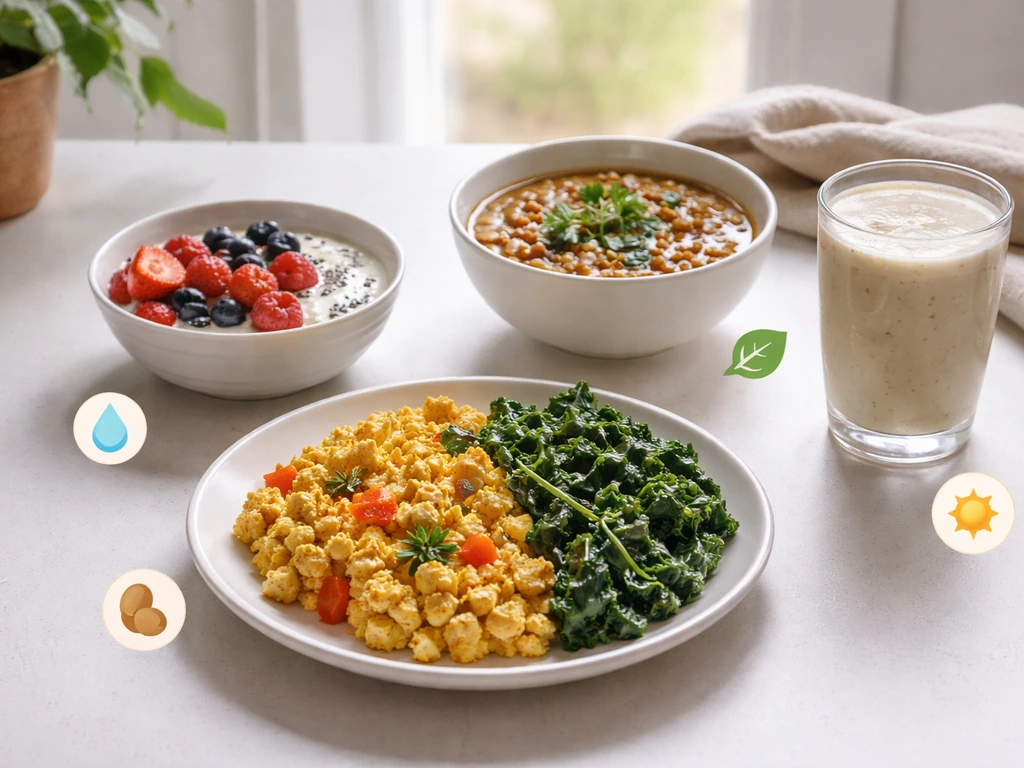
The goal is to hit the key nutritional targets consistently. Here's how to approach it by nutrient.
| Nutrient | Daily target (school-age/teen) | Best vegetarian sources | Absorption tip |
|---|---|---|---|
| Protein | 0.85–1.3 g/kg body weight | Eggs, dairy, legumes, tofu, tempeh, edamame, quinoa | Combine complementary proteins across the day |
| Calcium | 1,000–1,300 mg (age 4–18) | Dairy, fortified plant milks, tofu set with calcium, kale, bok choy, white beans | Spread across 2–3 meals for better absorption |
| Vitamin D | 600–1,000 IU (check local guidelines) | Fortified milk/plant milk, eggs, UV-exposed mushrooms | Supplement if sun exposure is limited; D3 preferred |
| Iron | 8–15 mg (higher for teen girls) | Lentils, chickpeas, tofu, fortified cereals, pumpkin seeds, spinach | Eat with vitamin C; avoid coffee/tea at same meal |
| Zinc | 5–11 mg (age-dependent) | Legumes, nuts, seeds, dairy, eggs, whole grains | Soak or sprout legumes to reduce phytate |
| Vitamin B12 | 1.5–2.4 mcg (age 6–14+) | Dairy, eggs; fortified foods for stricter vegetarians | Supplement at 10–25 mcg/day if intake is inconsistent |
For a lacto-ovo-vegetarian child or teen, the diet can cover all of these if it's varied and calorie-adequate. A practical daily framework: include a protein source at every meal (eggs, legumes, dairy, tofu), use fortified plant milks or regular dairy as a calcium anchor, eat a fruit or vegetable high in vitamin C alongside iron-rich foods, and take a vitamin D supplement in winter or year-round in low-sun regions. If the child is vegan, a B12 supplement is non-negotiable, vitamin D supplementation becomes more critical, and calcium needs careful attention to sources.
On supplements: most vegetarian children eating a varied lacto-ovo diet don't need a full multivitamin, but targeted supplements for vitamin D and B12 are often worth taking given how commonly both fall short. Iron supplements should only be used if deficiency is confirmed by a blood test, since excess iron is not benign. Zinc supplements are rarely needed if diet is varied, but soaking and sprouting legumes can meaningfully improve zinc bioavailability from food.
Teens vs. adults: very different situations
For children and teenagers whose growth plates are still open, nutrition genuinely influences final height. Optimizing diet during the growth window, especially during the pre-pubertal and pubertal years, gives a real chance to reach the top of your genetic height range. Optimizing nutrition during the growth window is one of the main things you can do to support your height potential. Most girls reach growth plate closure around 15 to 17, and most boys around 17 to 19, though there's individual variation. During these years, hitting protein, calcium, vitamin D, zinc, and iron targets consistently is as practical a height-optimization strategy as exists.
For adults, the calculus is completely different. Growth plates are closed, bone length doesn't change, and no diet or supplement will make you taller. What adults can reasonably focus on is spinal health (posture, core strength, and disc hydration can affect standing height by a centimeter or two) and bone density to prevent the gradual height loss that comes with age. Framing adult nutrition choices around 'growing taller' is a misdirection; it's worth understanding that distinction clearly before buying into any protocol marketed to adults.
When to actually worry about growth
Most vegetarian children grow perfectly normally. But if growth seems slow, there are concrete warning signs worth taking seriously. In children aged 2 to 4, growth velocity below about 5.5 cm per year warrants evaluation. More broadly, the red flags are: dropping across height percentile lines on a growth chart over time (rather than tracking along a stable percentile), height significantly below the mid-parental height prediction, or any combination of slow growth with fatigue, pale skin, poor appetite, or developmental concerns.
A pediatrician evaluating growth concerns will typically start by calculating mid-parental height, reviewing growth velocity on a chart, and ruling out common causes. The Endocrine Society distinguishes between normal variants like familial short stature and constitutional delay (both of which are normal, just later or shorter by genetics) versus pathological growth failure that needs workup. If pathological growth failure is suspected, a standard initial lab panel typically includes: complete blood count (CBC), comprehensive metabolic panel, thyroid function tests (TSH and free T4, since thyroid hormone is critical for normal growth), IGF-1 and IGFBP-3, ESR, celiac serology, bone age X-ray, and, given a vegetarian diet, ferritin, serum B12 or methylmalonic acid, and 25-hydroxyvitamin D.
The iron and B12 markers are especially relevant for vegetarian children because deficiency can be subclinical and still affect energy, development, and growth signaling. Vitamin D status is worth checking too, since insufficiency is common and correctable. If standard workup is unremarkable but growth remains slow, referral to a pediatric endocrinologist is the right next step. Catching and correcting nutritional deficiencies early, during the growth window, is where the intervention actually matters.
The bottom line is straightforward: a vegetarian diet doesn't make you taller or shorter on its own. What it does is create some specific nutritional risks that are worth managing deliberately, and if you manage them well, growth outcomes look essentially the same as for omnivores. That's genuinely good news, because every one of those risks is addressable with real food and, where needed, targeted supplementation.
FAQ
My child is vegetarian, but their height is average. Should I still worry about anything that could affect growth?
If a child is already following a varied lacto-ovo or vegan plan and is meeting calories, protein, calcium, vitamin D, and key micronutrients, the odds are they will track like their peers. The more useful question than “vegetarian or not” is whether growth velocity is normal for age, and whether labs (especially iron, B12, and vitamin D) show no deficiency, since inadequate energy intake or nutrient gaps are what tend to slow linear growth.
Do vegetarian kids need supplements to grow well, or can food alone be enough?
Supplements are most important when food intake is inconsistent or when the diet is restrictive. For most lacto-ovo vegetarians, targeted vitamin D (often) and B12 (sometimes, based on intake and bloodwork) can be reasonable, but iron should only be added after confirmed deficiency because excess iron can be harmful. For vegans, B12 supplementation is not optional, and vitamin D plus careful calcium planning is usually needed to stay within recommended ranges.
If growth plates are closed, can a vegetarian adult ever become taller?
Adult height can change only in limited ways, not from growing longer bones. After growth plates close, posture, core strength, and spinal health can alter measured standing height by about a centimeter or two, and bone density issues can contribute to gradual height loss. So if an adult wants to “gain height,” focusing on posture habits, resistance training for bone health, and preventing nutrient-related bone loss is more realistic than trying diet protocols marketed for height.
If a vegetarian teen is already behind their expected height, is it still possible to improve the outcome?
Yes, but the key is timing and detection. If growth is slower than expected or if height percentile drops, it is more effective to assess nutrient status and overall energy intake early, ideally before mid-puberty, when linear growth is still rapid. Waiting until the growth plates are fully closed usually limits what can be corrected, even if nutrition improves later.
What are common meal-planning mistakes that make vegetarian diets fall short for height?
The “danger” pattern is often unintentional underfeeding or narrow food variety, rather than vegetarianism itself. A common mistake is removing meat but not replacing it with sufficient protein and energy, which can lower IGF-1 signaling and growth velocity. If meals regularly lack a protein anchor, rely heavily on refined carbs, or skip fortified dairy/plant milks, growth and development can be affected.
Why do some studies find vegetarian kids slightly shorter, while others find no difference?
Height differences in studies can be driven by confounders like socioeconomic status, baseline health, and overall diet quality, not just the vegetarian label. That means two “vegetarian” diets can have very different growth impacts depending on calorie adequacy and micronutrient coverage. For decision-making, focus on the child’s tracking on their growth chart and their nutrient adequacy rather than comparing diets as categories.
Can vegetarian kids get enough protein for normal growth, or is deficiency common?
Protein adequacy is about the total daily intake and overall meal distribution, not a single “high protein” food. Many vegetarian children can meet protein needs with eggs, legumes, dairy, tofu, or fortified products, but the restrictive end of vegetarian diets sometimes lands below target, especially if calories are low. If growth is a concern, evaluating total intake and symptoms of low energy intake can be more informative than trying to “boost protein” with one supplement.
Which specific nutrient deficiencies are most worth checking if growth slows in a vegetarian child?
A practical way to judge risk is whether key nutrients are consistently obtained from food and whether relevant biomarkers are normal when there are concerns. In vegetarian children, iron, B12, and vitamin D are the most common growth-relevant deficiencies to check, because some are harder to absorb (iron, zinc) or require supplementation (B12 in vegans). If a child has low appetite, fatigue, pallor, or developmental concerns alongside slow growth, lab evaluation becomes more urgent.
Should we start iron or zinc supplements automatically if my child is vegetarian?
Yes, but it should be controlled and evidence-based. Iron deficiency is linked to impaired growth signaling, so correcting confirmed deficiency matters. The mistake to avoid is starting iron supplements “just in case,” because unnecessary iron can be harmful and it can mask the real cause of poor growth. Zinc supplements are usually unnecessary if the diet is varied, since food-based adjustments (like improving legume preparation) often improve bioavailability.
How do I know whether my child is still in the “growth window” where nutrition changes matter most?
Growth plate closure is mostly driven by normal development and varies by individual, but for most girls it is around mid-teens and for most boys later in the teens. If you are trying to support height potential, the most actionable window is before and during the main pubertal growth spurt, when consistent nutrition has the biggest effect on linear growth. If puberty timing is atypical or growth is very slow, an endocrinologist can help determine whether the pattern is constitutional delay versus a treatable growth issue.
Next Article
Do Vegans Grow Taller? Science, Myths, and Nutrients Guide
Evidence on whether vegan diets increase height, comparing studies, myth busting, and nutrient checklist for kids and te