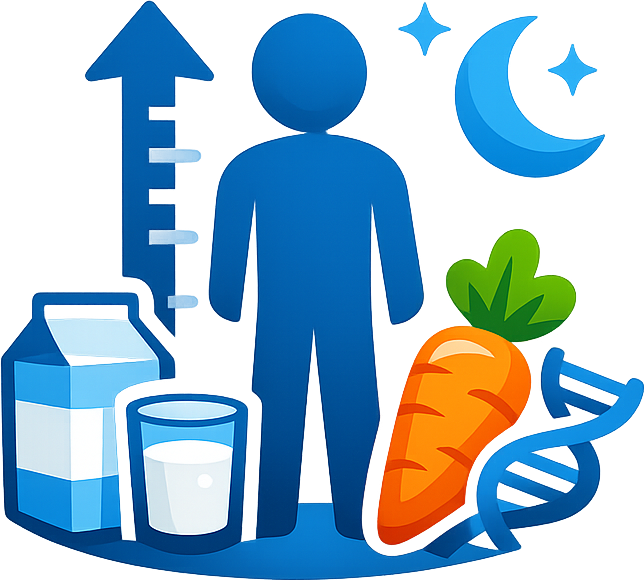
A vegan diet does not automatically make you taller. What it can do is either support or limit your height potential depending on how well it covers the nutrients your body needs during growth. A well-planned vegan diet can absolutely meet those needs. A poorly planned one, especially during childhood and adolescence, carries real risks of shortfalls in protein, calcium, vitamin B12, vitamin D, iron, and zinc, all of which can impair the growth process. The science is pretty clear on this: diet quality matters, diet label does not.
Do Vegans Grow Taller? Science, Myths, and Nutrients Guide

Marcus Reeves
2 Jul 2026

What actually determines how tall you get
Genetics does the heavy lifting. Roughly 60 to 80 percent of your final height is explained by your parents' heights and the genes you inherited. That ceiling is largely fixed before you eat your first meal. The rest comes down to how well your environment, primarily nutrition, sleep, and health, allows you to reach that genetic ceiling. That same idea matters here too: if you are not meeting key nutrition and sleep needs, simply eating a lot will not reliably make you grow taller whether eating a lot helps you grow taller.
The biological mechanism for growing taller is your growth plates, also called epiphyseal plates. These are cartilage-rich zones near the ends of your long bones where new bone tissue is laid down. They respond directly to hormones: growth hormone (GH) triggers the liver to produce IGF-1, which then stimulates chondrocyte proliferation at the growth plate, driving bone elongation. Sex steroids from puberty amplify this process dramatically, producing the well-known adolescent growth spurt, but they also eventually cause the plates to fuse and growth to stop entirely. Once fusion happens, diet changes cannot add height.
Puberty timing matters a lot here. Earlier puberty tends to accelerate growth short-term but can also advance bone age and trigger earlier growth plate fusion, which can reduce final adult height. Nutrition, body fat, and overall calorie adequacy all influence when puberty begins. Chronic malnutrition can delay it; excess energy in early childhood can accelerate it. Both scenarios shift the timeline and can affect the height you end up at.
How a vegan diet interacts with the nutrients that drive growth
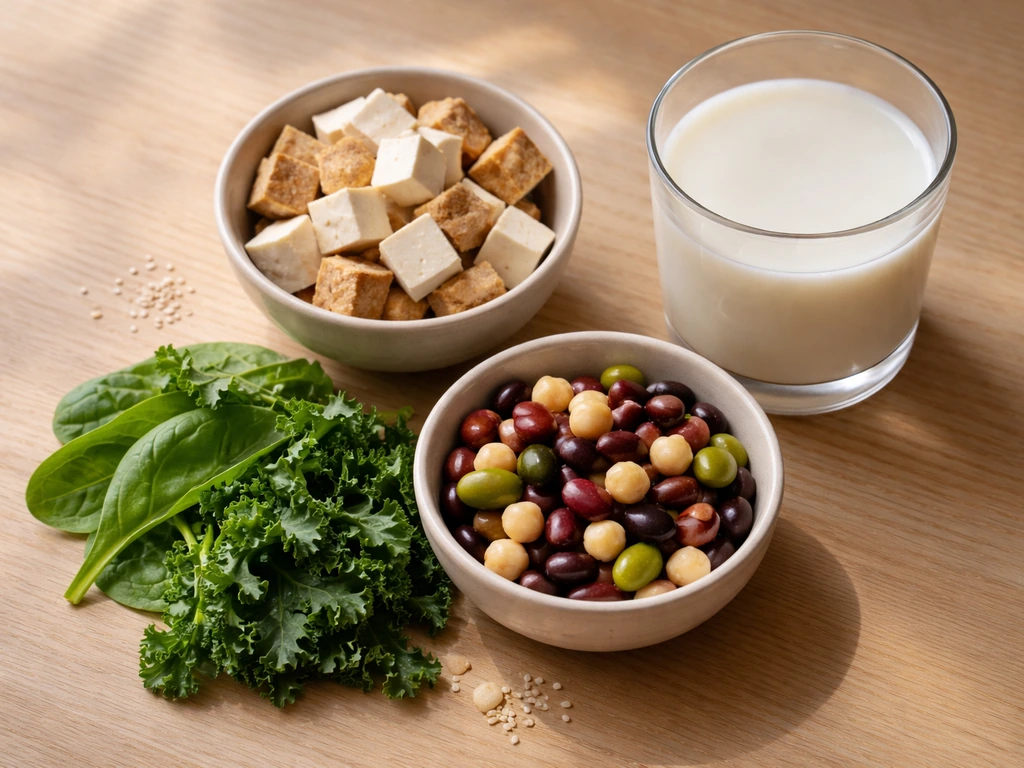
This is where the diet conversation gets concrete. Height growth is not about one magic nutrient. It is about providing enough of several nutrients consistently, across years of development. Here is where a vegan diet can deliver or fall short.
Protein and total calories
Protein is the structural raw material for new tissue and also a key driver of IGF-1 production. Children and teens on vegan diets consistently show lower total protein intake compared to omnivores in the research literature, including in systematic reviews of children aged 0 to 18. This does not mean vegan protein intake is inherently inadequate, it means you have to plan for it. Legumes, tofu, tempeh, edamame, seitan, and soy-based foods can cover protein needs, but passive eating often falls short. Calories matter just as much. Undereating overall is one of the most direct ways to blunt growth, because GH and IGF-1 signaling is calorie-sensitive.
Calcium

Calcium is the primary mineral in bone matrix. Vegan children and teens tend to have lower calcium intakes than omnivores, largely because dairy is removed and not always replaced adequately. Calcium-set tofu, fortified plant milks, fortified orange juice, kale, bok choy, broccoli, almonds, and white beans all contribute, but you need to use them consistently and in meaningful amounts. Fortified plant milks are a practical anchor here. The CDC notes that calcium-fortified milk alternatives can be included in a child's diet from 12 months onward as part of a balanced approach to growth and development.
Vitamin D
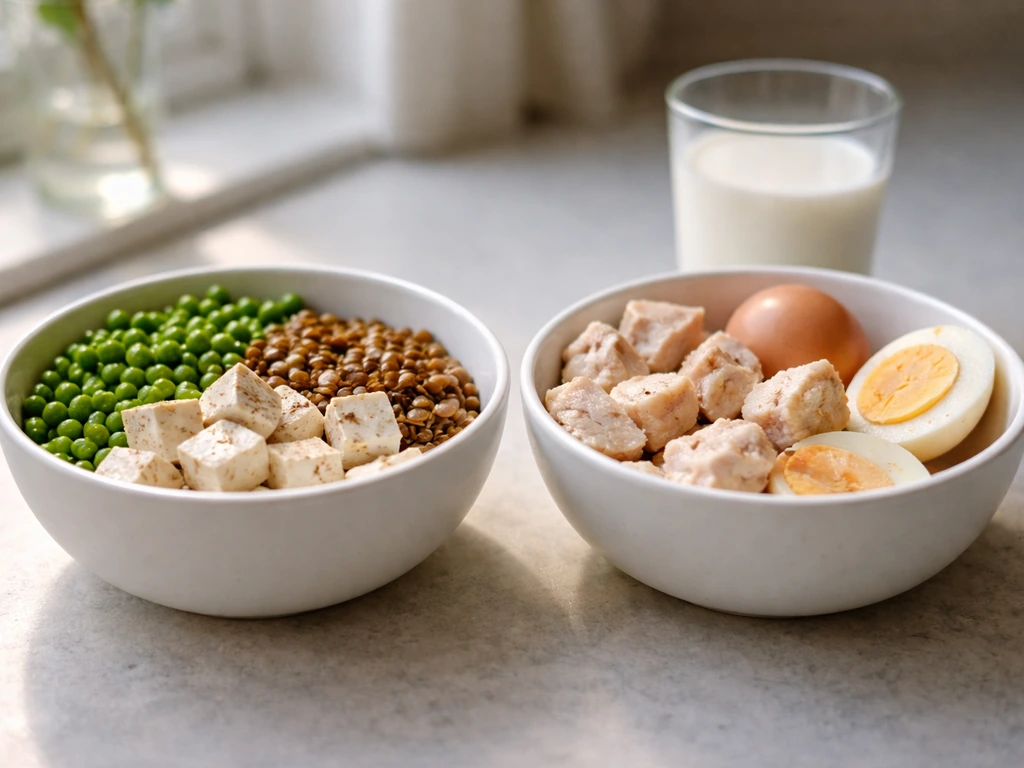
Vitamin D works alongside calcium for bone mineralization and also plays a role in growth plate function. Deficiency is widespread across all diet patterns, but vegans have fewer reliable dietary sources since the main food sources (fatty fish, eggs, dairy) are absent. Eggs are a common source of vitamin D and protein, which can matter for supporting growth if nutrients are otherwise lacking. Sunlight helps, but geography, season, and skin tone all limit its reliability. Supplementation is almost always warranted. That said, be realistic about the upside: systematic reviews of vitamin D supplementation in children show only modest effects on linear growth even when correcting deficiency. It is more about preventing harm than gaining extra height.
Vitamin B12
This is the most non-negotiable nutrient on a vegan diet, and its link to growth is direct and well-documented. B12 is found almost exclusively in animal products. Without supplements or fortified foods, vegan children will become deficient. An RCT found that B12 status at baseline predicted linear growth in unsupplemented children, and a 6-year follow-up of that trial showed that B12 supplementation improved growth outcomes and reduced stunting risk in children with subclinical deficiency. Another observational study found maternal and infant B12 status in infancy predicted linear growth at age 5. B12 supplementation is not optional for vegan children. It is foundational.
Iron and zinc

Both nutrients are found in plant foods but in less bioavailable forms than in meat. Iron from plants (non-heme iron) is absorbed at lower rates and is inhibited by phytates in grains and legumes. Zinc faces similar absorption challenges. The meta-analysis of vegan children found lower ferritin levels compared to omnivores, a sign of reduced iron stores. Systematic reviews of zinc supplementation trials confirm that zinc deficiency restricts linear growth. Pairing iron-rich plant foods with vitamin C, soaking or sprouting legumes, and choosing zinc-fortified cereals are practical ways to improve absorption.
Iodine
Often overlooked, iodine supports thyroid hormone production, which plays a direct role in growth plate regulation and linear growth. Iodine is low in most plant foods unless iodized salt is used regularly. Seaweed provides iodine but in wildly variable amounts that are hard to control. ESPGHAN's 2025 position paper and the DGKJ pediatric position paper both flag iodine as a critical nutrient to monitor in vegan children.
What the research actually says about height in vegans vs. omnivores

Several studies have compared height outcomes across vegan, vegetarian, and omnivore groups in children, and the overall picture is nuanced rather than dramatic.
A systematic review and meta-analysis of children and adolescents aged 0 to 18 found that vegan diets were associated with lower height compared to omnivorous diets, alongside lower protein, calcium, and riboflavin intakes and lower ferritin levels. ESPGHAN's 2025 position paper, which covered the same age range, also evaluated height-for-age standard deviation scores and found nutritional shortfalls across multiple biomarkers in vegan children. These findings are not trivial.
However, not all studies show a disadvantage. A longitudinal matched-pairs study of vegetarian and omnivore children aged 7 to 11 found both groups sitting close to the 50th percentile for height with no strong growth disadvantage. If you are wondering do vegetarians grow taller, the evidence is mixed, with some cohorts showing similar height outcomes when diet quality is strong. Several prospective cohort studies found no meaningful association between vegetarian diet status and height-for-age z-scores. This contrast between studies is explained largely by diet quality, not diet type. Children in well-monitored vegetarian and vegan households with access to fortified foods and supplements can grow comparably to omnivores.
There is also a confounding problem. Vegan and vegetarian families tend to differ from omnivore families in ways beyond diet: higher education levels, different socioeconomic status, different approaches to healthcare, and different overall lifestyle patterns. These factors all influence height independently. You cannot isolate veganism as the cause of height differences without controlling tightly for them, and most studies cannot do that perfectly. The observed differences in some studies are plausibly nutritional, but selection effects are also real.
The bottom line from the evidence: a well-planned vegan diet does not give children a height advantage over omnivores, but it does not automatically cause shorter stature either. An inadequately planned vegan diet in childhood carries a genuine risk of growth impairment, driven by specific, identifiable nutrient gaps rather than veganism itself.
Children vs. teens vs. adults: who can realistically change their height?
Age is everything in this conversation. The window during which nutrition meaningfully affects attained height is childhood and adolescence, specifically the years before growth plate fusion. Optimizing nutrition during this period helps a child reach the top of their genetic range rather than falling short due to preventable deficiencies. Once the growth plates fuse, usually between ages 14 and 16 in girls and 16 to 19 in boys, dietary changes cannot add height. For meat specifically, simply eating more meat does not override genetics and the key drivers of growth like adequate calories, protein, calcium, sleep, and overall health eating meat. That is physiology, not pessimism.
For adults, the honest answer is that no diet change, including switching to or from veganism, will make you taller. This also applies if you are wondering, “does eating make you grow taller?” for adults, the answer is no switching to or from veganism. Adults can improve bone density and posture, which might affect how tall you appear and how well you age structurally, but the growth plates are gone. If you are an adult asking whether going vegan will make you taller, the answer is no, and anyone claiming otherwise is not being straight with you.
For children under 10, the stakes are highest because nutritional deficiencies during early development have the largest impact on long-term growth trajectories. For adolescents in the pubertal growth spurt phase, covering the key nutrients is critical because this is when the most dramatic height gain happens and when the window is about to close.
Vegan diet pitfalls that can actually hold back growth
A few patterns consistently show up in vegan children with growth concerns. Knowing them helps you avoid them.
- Relying on B12 from diet alone: No whole plant food reliably provides B12 in sufficient amounts. Nutritional yeast is only reliable if fortified, and not all brands are. A daily supplement or consistent fortified food is the only safe approach.
- Replacing dairy with unfortified plant milks: Many small-brand or homemade oat, almond, or rice milks contain no added calcium or vitamin D. Always check the label and choose products fortified to at least 120 mg calcium per 100 ml.
- Low overall calorie density: Whole-food vegan diets are high in fiber and water content, which creates satiety early. Young children especially can struggle to eat enough volume to meet calorie needs, which suppresses IGF-1 and growth hormone signaling.
- Ignoring zinc and iron absorption: Eating iron-rich and zinc-rich plant foods is necessary but not sufficient. Absorption inhibitors like phytates in raw legumes and whole grains reduce bioavailability. Soaking, sprouting, fermenting, and combining with vitamin C foods meaningfully improves uptake.
- Skipping iodized salt or other iodine sources: Many households using sea salt or Himalayan salt are not getting significant iodine. Iodized table salt or a supplement specifically listing iodine is needed.
- Assuming a pediatrician will catch deficiencies: Routine well-child visits do not always include ferritin, B12, or 25-OH vitamin D testing unless there is a clinical reason. Vegan families may need to specifically request these labs.
Practical steps to support height potential on a vegan diet, by age
The approach differs depending on where someone is in their development. Here is how to think about it practically.
Infants and toddlers (0 to 3 years)
This age group is the most vulnerable. ESPGHAN and the American Academy of Pediatrics both emphasize close professional monitoring for vegan infants. Breast milk from a B12-supplemented mother, or B12-fortified formula, is essential. After weaning, B12 supplementation is non-negotiable. Calcium-fortified plant milks (unsweetened, full-fat) can be introduced at 12 months. Vitamin D drops are standard practice. Iron-rich foods (pureed legumes, iron-fortified cereals) should appear at every meal. Work with a registered dietitian who has pediatric experience, not just general nutrition knowledge.
Children aged 4 to 12
Focus on calorie density and consistency. Nut butters, avocado, seeds, tofu, tempeh, cooked legumes, and fortified cereals should be staples. Aim for a fortified plant milk (around 2 to 3 cups per day) as a baseline for calcium and vitamin D. A daily B12 supplement remains essential. Get a full blood panel including ferritin, serum B12 or holotranscobalamin, 25-OH vitamin D, and zinc once a year, or more often if growth appears to be slowing. Track height on a standard growth chart and flag any crossing of percentile lines to a pediatrician.
Teenagers in puberty (roughly 10 to 18)
Calorie and protein needs spike during the growth spurt. Teenage boys especially can need 2500 to 3200 calories per day depending on activity level, and protein needs increase proportionally. Protein from a combination of soy, legumes, seitan, and tofu at each meal helps hit targets. Calcium needs peak during adolescence (around 1300 mg per day in the US reference values), so fortified milks, calcium-set tofu, and leafy greens need to be consistent daily habits. Continue B12 supplementation, vitamin D supplementation especially through winter months, and get labs done annually. If growth velocity seems to be lagging, bring it to a doctor rather than trying to solve it through diet adjustments alone.
Adults
Diet will not change your height at this stage. What matters is long-term bone health, which protects against height loss with age (a real phenomenon driven by disc compression and osteoporosis). Continue B12 supplementation, maintain adequate calcium and vitamin D intake, and keep protein intake sufficient for muscle and bone maintenance. The goal shifts from growing to preserving.
Quick comparison: vegan vs. omnivore diet for child growth
| Factor | Well-planned vegan diet | Typical omnivore diet |
|---|---|---|
| Protein adequacy | Achievable with intentional planning (soy, legumes, seitan) | Generally easier to meet passively |
| Calcium | Requires fortified foods or high use of calcium-rich plants | Dairy provides reliable baseline |
| Vitamin B12 | Requires daily supplement or fortified foods, no reliable whole-food source | Met through meat, dairy, eggs |
| Vitamin D | Supplement almost always needed | Supplement often still needed |
| Iron | Present in plants but lower bioavailability; absorption strategies needed | Heme iron more readily absorbed |
| Zinc | Present in plants but absorption limited by phytates; soaking/sprouting helps | Meat provides highly bioavailable zinc |
| Iodine | At risk unless iodized salt or supplement used | Dairy and fish provide reasonable amounts |
| Growth outcomes in children | Comparable to omnivores when well-planned; lower height noted in studies of inadequately planned diets | Generally meets growth norms when overall diet quality is adequate |
The comparison above makes the practical takeaway clear: the gap between a vegan and omnivore diet for child growth is a planning and execution gap, not an inherent biological one. But that gap is real if it is ignored. Veganism done carefully is fine for growth. Veganism done carelessly during childhood carries specific, documented risks. The research on this is consistent enough that major pediatric organizations like ESPGHAN and the American Academy of Pediatrics do not condemn vegan diets in children, but they do call for close attention to the nutrients listed above and, ideally, involvement from a registered dietitian. That advice is worth taking seriously.
FAQ
If my child is vegan, how can I tell whether they are getting enough for height and growth right now?
Watch growth velocity, not just weight or diet logs. Ask the pediatrician to plot height-for-age and growth rate on the standard growth chart, then compare it to your child’s past measurements. Labs can help, especially ferritin (iron stores), serum or holotranscobalamin (B12 status), and 25-OH vitamin D. A key red flag is crossing height percentiles downward or consistently slow growth over 6 to 12 months.
Are fortified plant milks always necessary for a vegan child’s growth?
They are one of the most practical ways to reliably meet calcium and vitamin D targets, but they are not the only option. If your child is not using them daily, you need a structured alternative plan using calcium-set tofu, fortified yogurt, fortified cereals, and a vitamin D source. The main caveat is consistency and total intake, since “some dairy-free sources” often add up to less than the amount needed.
Can supplements replace nutrient gaps, or should I focus only on food?
For vegan growth concerns, supplements cannot be a blanket replacement for everything, but they are essential for certain nutrients. Vitamin B12 generally cannot be reliably achieved through unfortified plant foods and should be supplemented. Vitamin D supplementation is often needed even with fortification because sunlight exposure varies. Iron, zinc, and iodine sometimes require targeted adjustments based on labs and diet patterns, because supplementation without evidence can miss the real cause or create excess.
What if my child is short but has always been small, does that still count as a growth problem?
It might not. Some children follow their own lower percentile curve for years and still have normal growth velocity. The decision point is whether growth rate is consistent with age and puberty stage, and whether labs show deficiencies like low ferritin or vitamin D insufficiency. If height percentile is stable, the issue may be familial, but if percentiles are falling, it deserves evaluation.
Should a vegan teen take iron and zinc supplements automatically to support height?
Not automatically. Iron and zinc absorption from plant foods can be lower, but whether supplementation is needed depends on dietary intake and blood markers such as ferritin for iron. Unnecessary iron can cause gastrointestinal issues and may be harmful in excess, so the practical approach is to start with diet strategies (pair iron with vitamin C, choose fortified cereals, sprout or soak legumes) and confirm with labs if growth seems to lag.
Do growth plates close earlier for vegans because puberty timing is affected by body fat or calories?
There is no evidence that veganism itself accelerates growth plate closure. However, puberty timing can shift based on overall energy intake, nutrient adequacy, and body composition. The relevant risk is under-eating, which can also disrupt growth and development, or overcorrecting with poor planning. If puberty timing seems unusual, discuss it with a pediatrician rather than changing diet alone.
If my adult body is done growing, can going vegan improve height or posture enough to look taller?
You cannot add true height once growth plates have fused, regardless of diet. What can change in adulthood is how you look and function through bone health, muscle strength, and posture. If someone is “taller” after switching diets, it is usually due to posture changes, pain reduction, or less compression, not new bone length.
Does eating “more food” as a vegan fix growth issues if nutrients are low?
Not reliably. Adequate calories are important, but if key nutrients like B12, calcium, vitamin D, protein quality, iron, or zinc are still missing, extra calories will not correct the growth-limiting step. If a child is not gaining height appropriately, the priority is to verify both intake volume and nutrient adequacy, ideally with targeted labs.
What is the one nutrient mistake parents of vegan infants and toddlers make most often?
Skipping or delaying B12 supplementation. For infants and toddlers, B12 is foundational because deficiency can develop without obvious symptoms. Another common issue is not getting enough calcium and vitamin D consistently after weaning. The practical fix is a B12 plan plus a fortified calcium source and vitamin D strategy, discussed with a pediatric dietitian.
Next Article
Does Beef Help You Grow Taller? What Science Says
Science-backed answer on whether beef boosts height during growth and why diet can’t change height after growth plates c