TruHeight is unlikely to make you grow any measurable number of inches, and there is no published clinical trial showing it produces a specific, reliable height gain in children or teens. If your growth plates are still open and you have a nutritional gap that its ingredients can fill, you might see some benefit from correcting that deficiency. But if you are eating a reasonably balanced diet and your growth plates are already fused (which happens for most people by their late teens), TruHeight will not add height. The honest answer is: expect close to zero inches of additional growth from this supplement alone.
How Much Does TruHeight Make You Grow? Realistic Results

Marcus Reeves
1 Jun 2026
What TruHeight is and what it claims
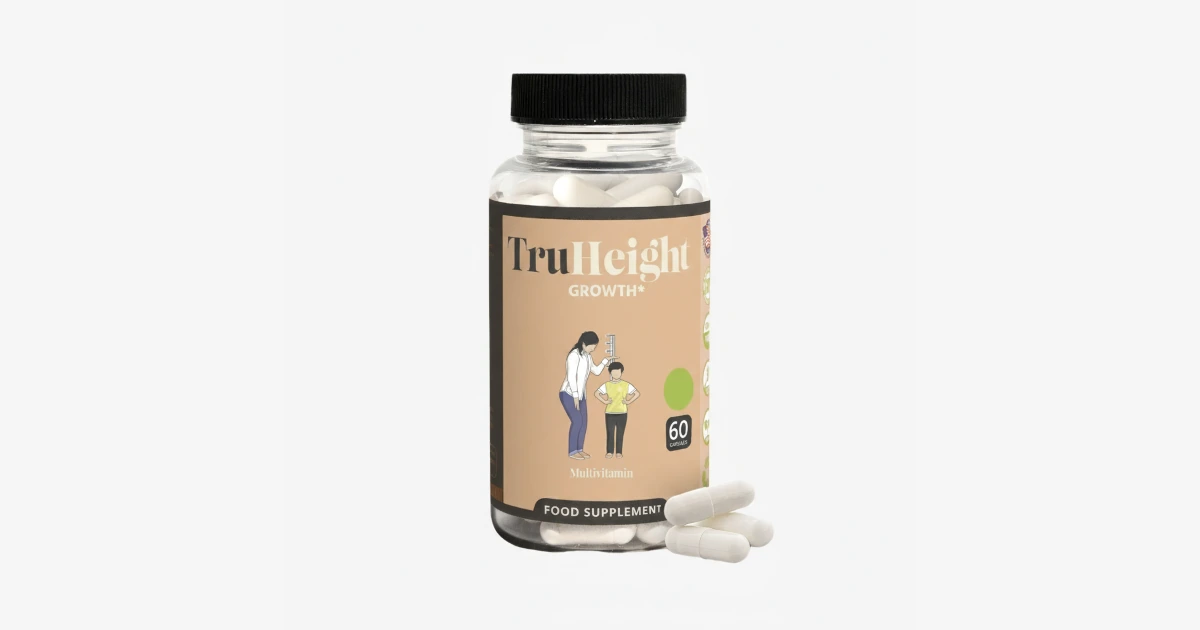
TruHeight markets a line of dietary supplements including Growth Gummies and Capsules, aimed at "Ages 5+" with the tag line that the product "supports healthy growth and development" and "supports normal bone growth and function." The gummies are taken two per day with a meal. Their key ingredients are grouped into a proprietary blend totaling about 113 mg per serving, which includes Ashwagandha Root Extract, Spirulina Powder, L-Arginine, L-Glutamine, Astragalus Root Extract, and Vitamin K.
The company's language is carefully hedged. Words like "supports" are used instead of "causes" or "increases," which is standard practice for supplement marketing because the FDA does not permit unproven disease or growth claims. TruHeight has also attracted regulatory attention: the FTC has issued a decision and order regarding its marketing, and a class action lawsuit alleged that a claimed growth study result was not substantiated and was later removed or changed. This context matters when you are weighing what to believe about their promotional copy.
How height growth actually works
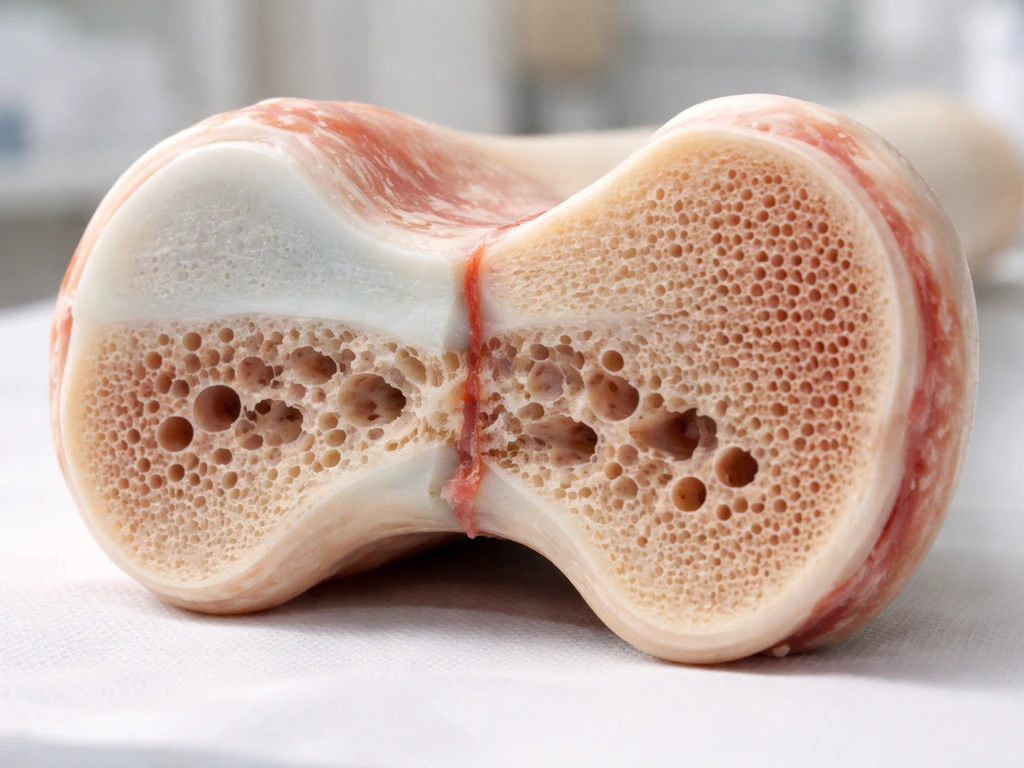
Height is determined by the length of your bones, and bones grow longer only while epiphyseal plates (growth plates) are open. These are soft cartilage zones located near the ends of long bones. During childhood and adolescence, hormones like growth hormone and IGF-1 signal those plates to produce new bone tissue. Once puberty winds down, estrogen and testosterone cause the plates to harden and close permanently, forming what is called the epiphyseal line. Testosterone mainly affects when growth plates close during puberty, rather than making someone grow taller after they are already nearing closure. After that point, no supplement, exercise, or food can make bones longer.
Growth plate closure happens at different times for different people. For most girls, plates close somewhere between ages 14 and 16. For most boys, the range is closer to 16 to 18, sometimes extending to 20. Genetics sets the upper boundary on your height potential, but factors like chronic illness, caloric restriction, and protein or micronutrient deficiencies can prevent a child from reaching that genetic ceiling. Conversely, well-nourished, well-rested children with healthy hormonal environments are more likely to reach their potential. The question of which specific hormones drive this process is worth understanding in more depth, and the roles of testosterone and growth hormone are particularly relevant for adolescents.
If you are uncertain whether your growth plates are still open, the standard clinical test is a bone age X-ray of the left hand and wrist. A clinician reads the X-ray to estimate skeletal maturity and how much more growth time remains. This is not something a supplement label can tell you.
Expected inches: realistic outcomes vs. marketing
Here is the clearest way to frame realistic expectations. A randomized placebo-controlled trial example in children with short stature used height velocity and height gain endpoints and reported a trial difference in height change compared with placebo height velocity and height gain endpoints and a trial difference compared with placebo. There is no published randomized controlled trial demonstrating that TruHeight as a complete product produces a statistically significant increase in height compared to placebo. Without that evidence, any specific inch or centimeter claim is not supported.
For context, even interventions that do have clinical trial data produce modest results. A Cochrane review looking at vitamin D supplementation in children under five found a pooled mean difference of roughly 0.66 cm (about a quarter of an inch) in linear growth, and classified the evidence as low certainty. A multicenter RCT on an Astragalus extract mixture (an ingredient TruHeight includes) did find statistically significant effects in children with mild short stature, but that was an isolated extract at a studied dose, in a specific clinical population, not a multi-ingredient gummy.
The realistic scenario for most users looks like this: a child or teen who is genuinely deficient in one of TruHeight's micronutrients and who still has open growth plates might recover some growth potential they were losing due to that deficiency. That is not the supplement "making you taller," that is correcting a problem that was holding you back. For someone without a deficiency, the effect is essentially zero.
| Scenario | Growth plates open? | Nutritional gap? | Realistic height impact |
|---|---|---|---|
| Child (5-12), poor diet | Yes | Possibly | Small benefit possible if deficiency exists |
| Teen (13-17), balanced diet | Likely still open | Unlikely | Minimal to none |
| Teen (13-17), poor diet | Likely still open | Possibly | Modest if deficiency corrected |
| Young adult (18-21) | Closing or closed | Varies | Very unlikely |
| Adult (22+) | Closed | Irrelevant to height | None |
Evidence on TruHeight's ingredients

Let's go through what the research actually says about each active ingredient in TruHeight's blend, because the picture is more nuanced than either the marketing or the skeptics suggest.
Ashwagandha Root Extract
Ashwagandha is the most prominent ingredient in TruHeight's blend. It is an adaptogen with reasonably good evidence for reducing cortisol and stress. The proposed growth connection is that chronic stress suppresses growth hormone secretion, so lowering stress could indirectly support the pituitary's normal function. That chain of reasoning is biologically plausible, but the evidence that ashwagandha supplementation translates to measurable height gains in children is not established.
Spirulina Powder
Spirulina is a nutrient-dense algae providing protein, iron, and B vitamins. A systematic review and meta-analysis on spirulina supplementation and growth in children and adolescents exists, but the overall evidence for linear growth impact is limited. It may be more helpful for children who are protein or micronutrient deficient than for those who are already well-nourished.
L-Arginine and L-Glutamine
These are amino acids involved in protein synthesis and, for arginine, in stimulating growth hormone release. Observational research, including a study from the Copenhagen School Child Intervention Study, has linked dietary arginine intake to growth velocity in normally growing children. However, this is observational data, and it does not establish that adding arginine in supplement form to a non-deficient child reliably increases height. The dose in TruHeight's blend (split across multiple ingredients totaling 113 mg) is also quite small.
Astragalus Root Extract
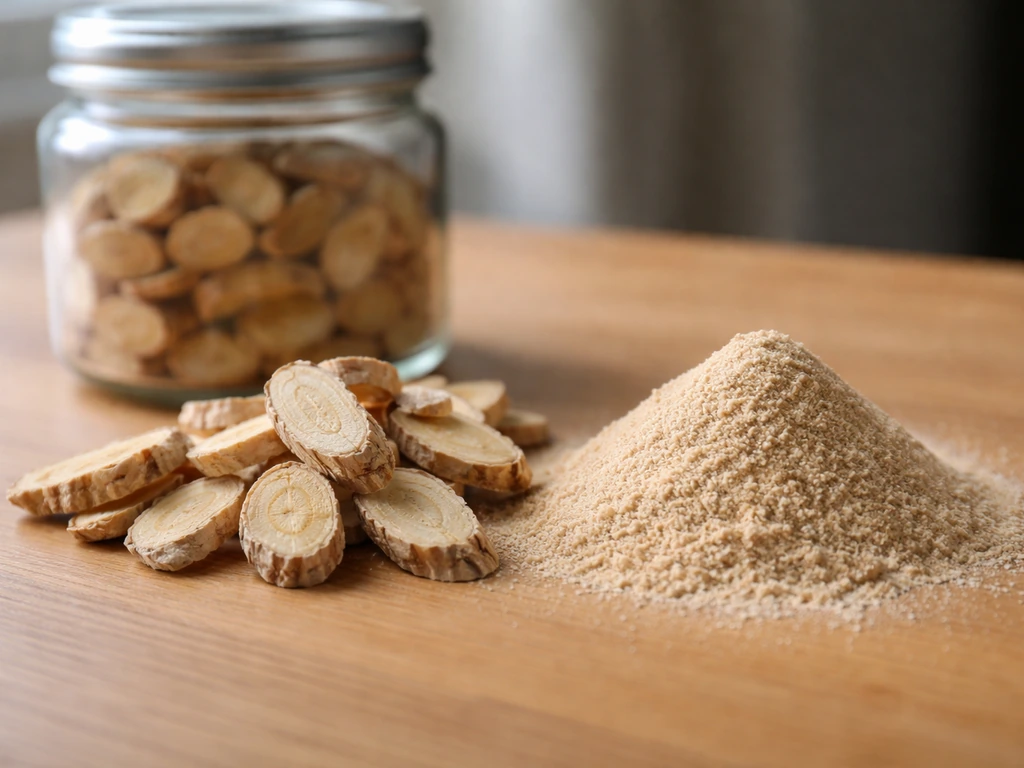
This is the ingredient with the most direct clinical trial evidence for height. A multicenter RCT on Astragalus extract mixture HT042 found statistically significant effects on height growth in children with mild short stature. The important caveat: that trial used a specific concentrated extract at a studied dose, and TruHeight uses a 10:1 extract within a multi-ingredient proprietary blend at a total of 113 mg. Whether the dose present in TruHeight's product is clinically equivalent to what was studied is not established.
Vitamin K
Vitamin K plays a real role in bone mineralization, supporting proteins like osteocalcin that help bones develop properly. Correcting a Vitamin K deficiency in a growing child is genuinely beneficial for bone health. But adequate bone mineralization is not the same as growing taller. It supports bone quality, not necessarily bone length.
When TruHeight could matter (and when it won't)
The honest use case for TruHeight is narrow. If a growing child or early teenager has a documented or suspected nutritional shortfall, particularly in protein, certain micronutrients, or amino acids, and they are picky eaters or have a limited diet, then a supplement targeting bone and growth nutrition might help them get closer to their genetic potential. The American Academy of Pediatrics does not recommend multivitamins or supplements for healthy children who eat a varied diet, and the National Center for Complementary and Integrative Health (NCCIH) advises discussing any supplement use with a health care provider.
TruHeight will not help in these situations: if growth plates are already closed, if the user is an adult, if the user already eats a well-balanced diet and has no nutrient gaps, or if there is an underlying medical cause of short stature (like a thyroid issue, growth hormone deficiency, or celiac disease) that needs actual medical treatment. The Endocrine Society is explicit on this point: for most cases of short stature, there is no specific food, diet, or exercise that can improve growth. The focus needs to be on identifying and treating underlying causes.
What to actually do if you want to grow taller
If you or your child still has open growth plates, the most powerful things you can do are the basics. These are not exciting, but they are genuinely evidence-based and free.
Sleep

The majority of growth hormone is secreted during slow-wave sleep. Testosterone mainly affects puberty and muscle development, and it does not make someone’s feet or bones grow longer after growth plates are closed does testosterone make your feet grow. Children aged 6 to 12 need 9 to 12 hours per night; teenagers need 8 to 10 hours. Chronic sleep restriction lowers growth hormone output meaningfully. This is probably the highest-leverage, zero-cost intervention available for a growing child.
Nutrition
Adequate total calories and protein are non-negotiable for reaching height potential. Protein targets for growing children are roughly 0.85 to 1.0 g per kg of body weight per day, and higher during the adolescent growth spurt. Calcium (around 1,000 to 1,300 mg per day for ages 9 to 18) and Vitamin D (600 IU per day minimum, more if deficient) support bone development. A systematic review found that vitamin D supplementation may make little to no difference in linear growth among children under five Vitamin D (600 IU per day minimum, more if deficient) support bone development.. Zinc and iron deficiencies can impair growth too. Getting these from whole foods is preferable; supplement if there is a documented gap.
Exercise
Regular physical activity, particularly weight-bearing exercise and sports, stimulates growth hormone release and supports bone development. It also improves sleep quality, which feeds back into growth hormone secretion. There is no evidence that any specific exercise makes you taller beyond these indirect mechanisms, but staying active is broadly supportive of healthy growth.
Posture
Poor posture, particularly a forward-rounded upper back, can make someone appear 1 to 2 inches shorter than they actually are. Wearing bigger shoes will not make your feet grow, though it can help comfort and prevent problems from ill-fitting footwear. Strengthening core and posterior chain muscles and working on thoracic extension does not increase skeletal height, but it does allow you to express your actual height fully. For adults where skeletal growth is off the table, posture is the most practical height-related intervention available.
Safety, side effects, and when to see a doctor
TruHeight's ingredients are generally considered safe at typical doses for most healthy children and teens, but "generally safe" does not mean risk-free. Ashwagandha has some evidence of gastrointestinal side effects and should be used cautiously in children with autoimmune conditions. Herbal extracts like Astragalus can interact with medications. The NCCIH specifically notes that herbal and natural products carry additional risks for children, and the evidence for safety and effectiveness is often incomplete in pediatric populations.
Always discuss supplements with your child's pediatrician before starting, particularly for children under 12. The American Academy of Pediatrics and the NCCIH both recommend this. If a child is not growing at the expected rate for their age and sex, that is a clinical signal, not a supplement problem. A pediatrician can check growth velocity, and if it is slow, will refer to a pediatric endocrinologist for a proper workup including labs (IGF-1, thyroid function, CBC, celiac screening) and a bone age X-ray. Conditions like growth hormone deficiency, hypothyroidism, or celiac disease all affect height and all have actual treatments. Reaching for a gummy supplement instead of getting a workup delays a diagnosis that could matter.
- See a pediatrician if a child's growth has slowed noticeably or they are significantly shorter than peers
- Ask for a bone age X-ray if you want to know how much growth potential remains
- Request labs (IGF-1, thyroid panel, celiac screen) if growth failure is a concern, not just a supplement
- Discuss any supplement use with your child's provider before starting, especially for kids under 12
- Do not use supplements as a substitute for evaluating an underlying cause of short stature
FAQ
How much height can a child realistically gain from TruHeight in inches or centimeters?
For most children, the realistic expectation is essentially none from the supplement alone. The article notes there is no reliable product-specific trial evidence showing a statistically significant height increase versus placebo, so any “inches gained” claims cannot be verified. The only plausible scenario for some improvement is correcting a specific nutritional deficiency, which may help the child reach their genetic potential rather than produce a measurable extra growth spurt.
Does TruHeight help if my child is already eating well and their height is still below average?
If diet is already varied and there is no nutritional shortfall, TruHeight is unlikely to add measurable height. Sub-typical height may still be due to normal genetic variation or an underlying medical issue, so the more useful next step is assessing growth velocity with a pediatrician instead of relying on supplementation.
What if my child’s growth plates are still open, but they do not seem to gain much height?
Open growth plates mean the potential for growth exists, but it does not guarantee growth will happen. If growth velocity is slow, the article recommends medical evaluation (often including labs and possibly a bone age X-ray), because problems like thyroid disorders, celiac disease, or growth hormone deficiency require treatment. Supplements are not a substitute for identifying the cause.
Can TruHeight delay the need for a doctor visit if we try it first?
Yes, that is a real risk. The article emphasizes that inadequate growth can be a clinical signal, and delaying workup can postpone diagnoses that have effective treatments. If your child is falling off their growth curve, prioritize pediatric assessment before or alongside any supplement trial.
How long should we try TruHeight before deciding it is not working?
There is no validated “trial length” for proving height benefit from this specific product, especially since there is no confirmed, product-specific RCT evidence. Practically, clinicians focus on growth velocity measured over months, usually via repeated check-ins of height and percentiles, rather than expecting noticeable changes after a few weeks.
Will the age on the label (ages 5 and up) apply to my child’s situation?
Label age does not determine whether it will help. The key factor is whether there is an actual nutritional gap and whether the child is still in the growth-plate window. For younger children, the article advises extra caution and emphasizes checking with a pediatrician before starting supplements.
Is it safe to combine TruHeight with a multivitamin or other supplements?
Be careful with overlap. TruHeight includes ingredients like vitamin K, and other products may also contain fat-soluble vitamins or herbal components. Combining multiple supplements can increase side-effect risk and makes it harder to tell what is causing benefit or harm, so it is best to review the full list with a pediatrician.
Does TruHeight help more if we take it with food, or is timing important?
The article specifies the gummies are taken with a meal and that the dose is small due to the proprietary blend. However, timing is not established as a driver of height outcomes. The bigger determinants are addressing deficiencies, ensuring sleep and calories are adequate, and identifying medical causes if growth is slow.
What should we do first if we are unsure whether growth plates are open?
You generally cannot determine growth plate status from a supplement label. The article notes the standard clinical method is a bone age X-ray of the left hand and wrist, read by a clinician to estimate skeletal maturity and remaining growth time.
Are there signs that short stature might be due to a medical condition rather than diet?
Yes. The article points to causes like thyroid issues, growth hormone deficiency, and celiac disease. A key practical trigger is falling growth velocity or crossing percentiles, which warrants lab evaluation and possibly bone age assessment rather than assuming a supplement will fix it.
If TruHeight does not increase bone length, could it still improve bone health in a noticeable way?
Potentially, it could support bone quality if a child is deficient in something like vitamin K, but that is different from increasing height. Improved mineralization does not necessarily translate into taller bone length, especially once plates are closing.
What is the biggest mistake parents make when using supplements for height?
The most common mistake is treating a growth problem as “a product problem.” The article stresses that if a child is not growing as expected, it should be treated as a medical signal. The safer, higher-leverage step is getting growth velocity reviewed and ruling out treatable conditions.
Next Article
Does Wearing Bigger Shoes Make Your Feet Grow?
No. Shoes won’t make feet grow; only growth in childhood/teens changes size. Learn how proper fit and foot issues affect