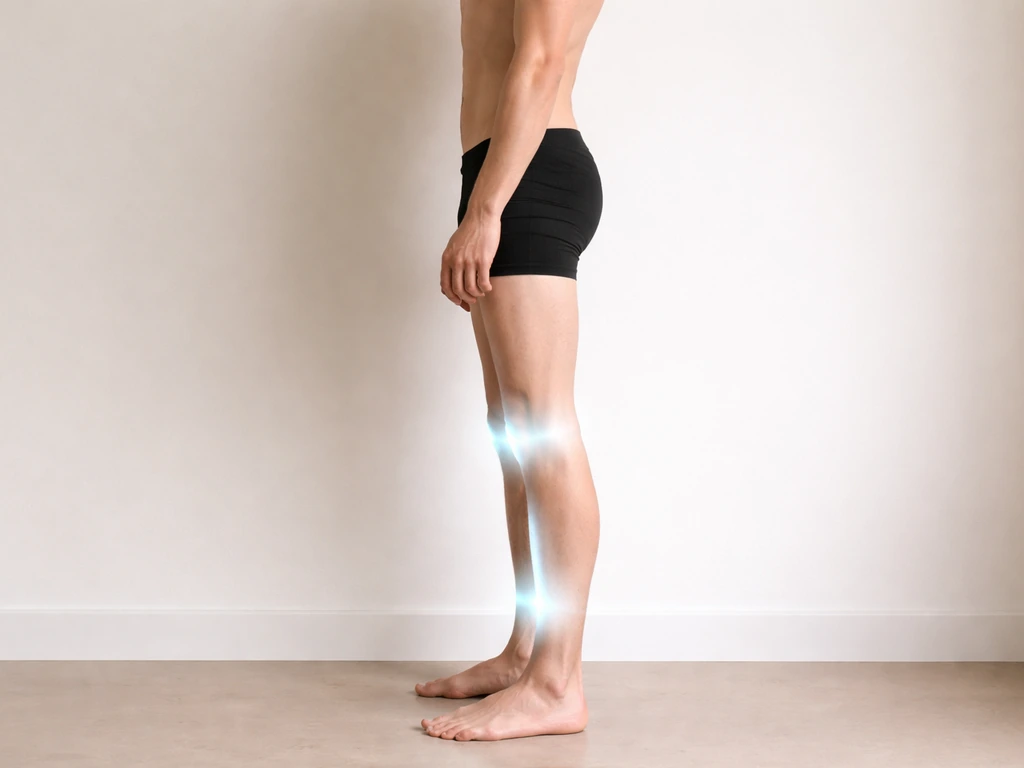
Grow Taller Dynamics is a digital program that promises at least 3 inches of height gain in 6 weeks through a video exercise series, and claims it works even past age 25. That promise does not hold up to basic human biology. Once your growth plates have closed, no exercise program, stretch routine, or supplement can make your bones longer. If your plates are still open, the right nutrition, sleep, and general health habits can genuinely support the remaining growth your genetics allow. The difference between those two situations is everything, and it is what most "grow taller dynamics reviews" fail to explain clearly.
Grow Taller Dynamics Reviews: Does It Work and Why

Marcus Reeves
2 Jun 2026
What Grow Taller Dynamics actually claims

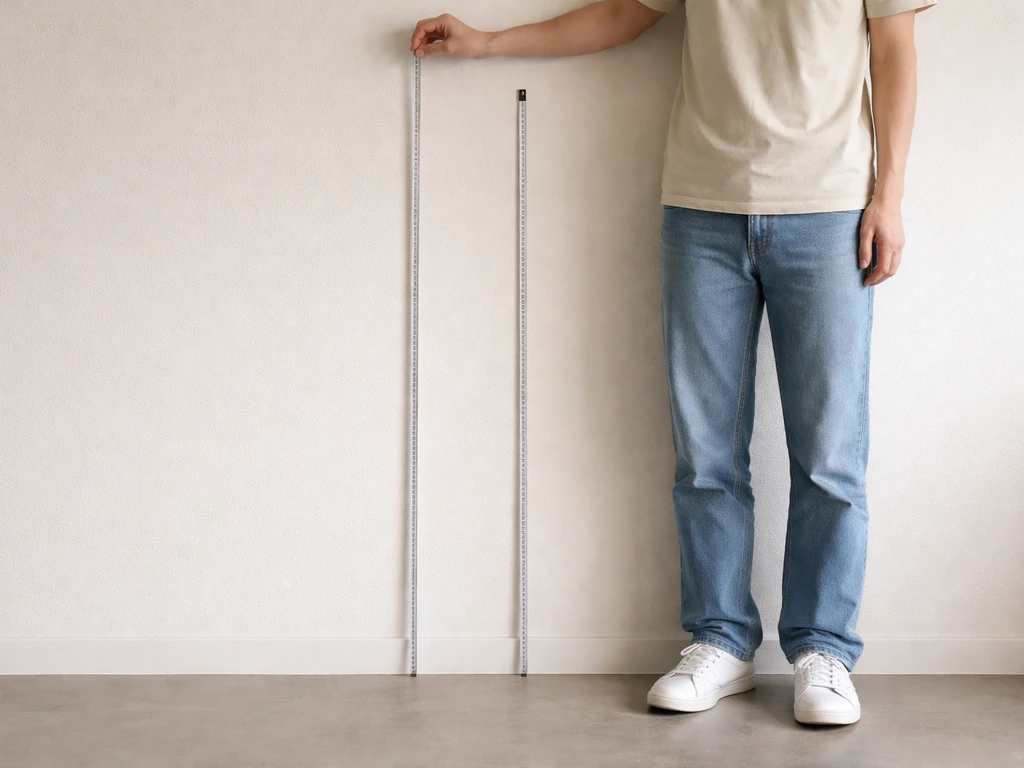
The program is sold as a digital product built around a 16-video exercise series. Its sales page promises a minimum of 3 inches of height increase within 6 weeks and backs this with a "60 Day, 100% Money Back Guarantee" tied directly to that outcome. It also includes a testimonial claiming the creator's daughter grew 4 inches in the first 6 weeks, then another 2 inches after that. Critically, the marketing targets adults who have already stopped growing, stating the program works "even if you're over 25 years of age."
Third-party reviews of the program describe additional claims about "reactivating human growth hormones" to drive height increases. A circulated PDF version of the program content similarly claims effectiveness both for "growing children" and adults who "stopped growing for a long time." The marketing, in other words, positions the program as a method that can reverse or bypass the normal biology of skeletal maturation. That is the claim worth examining against the evidence.
What the science actually says about growing taller
Human height increase through bone elongation depends entirely on growth plates, also called epiphyseal plates, located near the ends of long bones. During childhood and adolescence, these cartilage-rich zones allow bones to lengthen in response to growth hormone, IGF-1, and the sex steroids that surge during puberty. Puberty itself accelerates linear growth velocity substantially, and the increased sex steroids during this phase amplify the GH/IGF-1 axis. But those same sex steroids eventually cause the growth plates to fuse and ossify. Once fused, there is no cartilage left to expand, and no exercise, stretch, or supplement changes that structural reality.
The idea of "reactivating growth hormone" to grow taller as an adult sounds plausible in marketing copy, but growth hormone in adults does not elongate bones with closed growth plates. It influences body composition, metabolism, and tissue repair. The claim that exercises can "reopen" fused growth plates has no support in physiology or clinical literature. This is one of the most persistent myths in the height niche, and it is the foundation on which programs like Grow Taller Dynamics build their adult-targeting marketing.
A claim of 3 inches in 6 weeks for adults is especially telling. So if you are wondering whether do ftm grow taller, the key issue is whether your growth plates are still open. To put that in context, the Endocrine Society flags a growth rate of less than 2 inches per year as a sign of poor growth in children who are supposed to be growing. A child with open growth plates growing at peak pubertal velocity gains roughly 3 to 4 inches per year. Gaining 3 inches in 6 weeks would require bone elongation at roughly 6 times peak pubertal velocity, in a person with closed growth plates. That is not a plausible claim.
Who can still actually grow taller

The honest answer is: people whose growth plates are still open. That is primarily children and adolescents in active puberty or pre-puberty. Puberty onset for girls typically begins between ages 8 and 13, and boys tend to follow somewhat later. The rapid height gain associated with puberty, often called the pubertal growth spurt, happens during this window. After puberty completes and growth plates fuse, structural height increase is no longer biologically possible through natural means.
The most reliable way to assess remaining growth potential is a bone age x-ray, typically taken of the left hand and wrist. Clinicians use established methods like the Greulich-Pyle atlas to compare the maturity of the bony growth plates against chronological age. This tells you not just how mature the skeleton is, but roughly how much growth time remains. A teen with a bone age significantly younger than their chronological age may have more growth ahead than average. Someone whose bone age shows fully fused plates has none. This is the kind of objective assessment that no online program can replace.
Adults who are frustrated with their height and considering a program like Grow Taller Dynamics almost certainly have fused growth plates. If you are being asked to believe the grow taller law of assumption can change adult height, the biology of growth plates is still the limiting factor. Any measurable height changes they experience from exercise or stretching will reflect posture improvements, spinal decompression, or diurnal variation in spinal disc hydration, not actual bone elongation.
The real levers: nutrition, sleep, and overall health
For people who are still growing, the evidence on what supports healthy skeletal development is fairly consistent. It comes down to not getting in the way of what the body is already programmed to do. Chronic nutritional deficits, poor sleep, and unmanaged illness can all suppress growth. Fixing those things gives the body room to reach its genetic potential.
Nutrition

Protein, calcium, and vitamin D are the three nutrients most associated with bone development and linear growth. Protein provides the amino acid building blocks for bone matrix and IGF-1 synthesis. Calcium is the primary mineral in bone, and adequate intake during the growth years supports proper mineralization. Vitamin D facilitates calcium absorption and has a role in bone metabolism.
It is worth noting that the evidence on supplementing these nutrients in well-nourished populations is more modest than the marketing around height products suggests. A Cochrane-level review of vitamin D supplementation in children under five found it made little to no difference in linear growth in populations that were not deficient. The lesson is that adequate intake matters, but more-than-adequate does not stack additional height on top of genetic potential.
Sleep
Growth hormone secretion is strongly tied to sleep, particularly slow-wave sleep. Teens are the demographic most likely to be still growing and most likely to be chronically sleep-deprived. The American Academy of Pediatrics and Sleep Foundation both recommend 8 to 10 hours of sleep per night for adolescents aged 13 to 18. This is not a trivial range. Consistent short sleep disrupts the natural GH pulsatility that supports growth. Getting adequate, consistent sleep is probably the single most actionable and underappreciated factor in supporting a growing teen's height potential.
General health
Chronic illness, poorly managed conditions like celiac disease or inflammatory bowel disease, and prolonged caloric restriction during childhood can all suppress linear growth. The Endocrine Society and clinical guidelines emphasize that poor growth rate, defined as less than about 4 cm per year before puberty or less than 2 inches per year more broadly, warrants evaluation rather than supplementation. Addressing underlying health issues is the intervention in those cases, not a video exercise program.
Exercise and posture: what actually helps
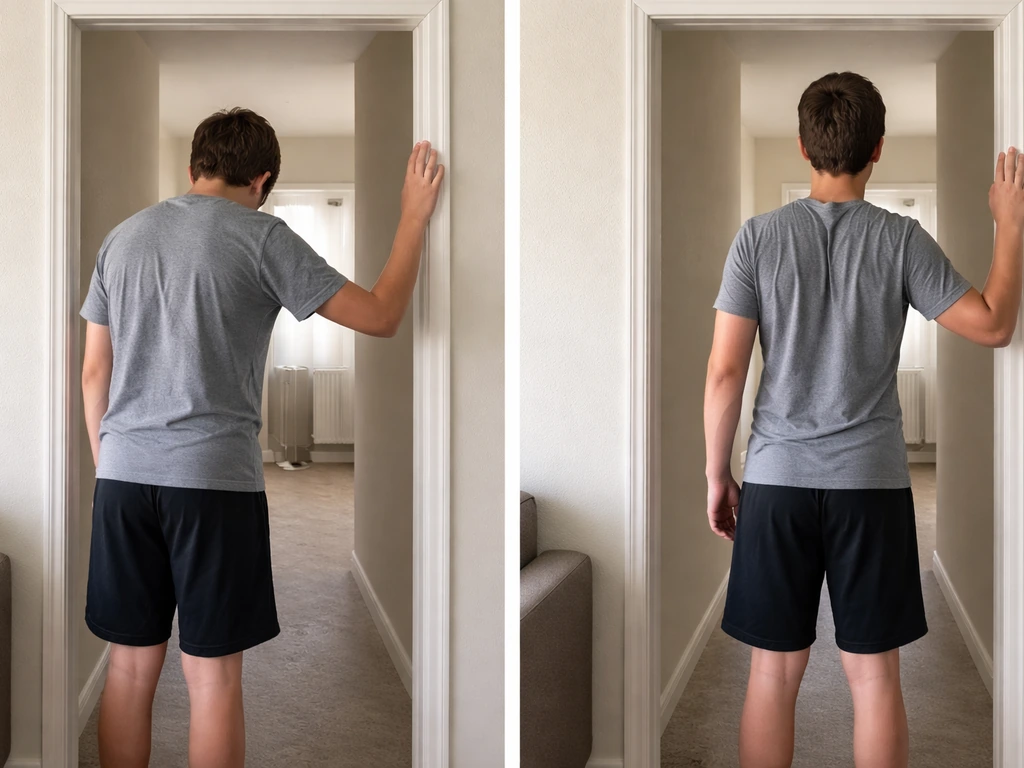
Exercise matters for growing people, but not in the way height programs typically frame it. Weight-bearing exercise and resistance training during the growth years support bone density and healthy musculoskeletal development. There is no well-designed study showing that specific exercises force growth plates to remain open longer or produce additional bone elongation beyond what genetics and hormones drive. What exercise can genuinely do is support posture, spinal alignment, and overall body mechanics.
Posture is where exercise legitimately changes how tall you look and sometimes how tall you measure. Research on kyphosis and posture-targeted training shows that spine-strengthening and posture interventions can reduce spinal curvature measures over time. A person with pronounced thoracic kyphosis (rounded upper back) who straightens their posture through targeted training may gain a visible and measurable centimeter or two in standing height. That is real and worth pursuing, but it is not bone growth. It is spinal alignment.
There is also the diurnal factor. MRI studies confirm that intervertebral disc height and water content vary throughout the day due to spinal loading. You are typically tallest in the morning after a night of horizontal rest, and shortest in the evening after hours of compression. This can account for roughly 1 to 2 cm of daily variation. Some "height increase" claims from stretching programs likely capture this diurnal rebound rather than structural change.
| Intervention | Effect on actual bone growth | Effect on measured/apparent height |
|---|---|---|
| Specific "grow taller" exercises (adult) | None (growth plates closed) | Minimal; may reflect posture or diurnal change |
| Posture training / spine strengthening | None | Potentially 1–2 cm from better spinal alignment |
| General weight-bearing exercise (growing) | Supports bone density, not elongation | Indirect benefit by supporting healthy development |
| Adequate sleep (teen/growing) | Supports GH pulsatility | Yes, if deficiency was limiting growth |
| Adequate nutrition (growing, deficit present) | Supports growth if deficiency present | Yes, if malnutrition was limiting growth |
| Medical treatment (GH deficiency, diagnosed) | Clinically significant | Meaningful height gain in eligible patients |
Genetics and realistic height expectations
Genetics accounts for roughly 60 to 80 percent of variation in adult height across populations. The most commonly used quick estimate for height potential is the mid-parental height calculation: add both parents' heights in inches, add 5 inches for boys or subtract 5 inches for girls, then divide by two. The result gives a target range of roughly plus or minus 2 inches around that midpoint. This is a population-level estimate, not a precise ceiling, but it is a realistic frame.
The reason this matters when evaluating programs like Grow Taller Dynamics is that a person already growing at a healthy rate in a well-nourished, well-rested state is already likely to approach their genetic ceiling. No program provides height on top of what genetics and normal physiology will deliver. What good health habits do is ensure you actually reach that ceiling instead of falling short due to avoidable deficits. That framing is less marketable than "3 inches in 6 weeks," but it is accurate.
Programs like "Grow Taller for Idiots" make similar structural claims and face the same biological limits. If you are wondering, “grow taller for idiots does it work,” the answer depends on whether your growth plates are still open and growing is biologically possible. The marketing patterns across this category are remarkably consistent: broad promises, adult targeting, testimonials, and money-back guarantees that are unlikely to be systematically redeemed. That consistency is itself informative.
Practical next steps: how to evaluate this, track what matters, and when to get a real assessment
How to critically read any "grow taller" review
Most third-party reviews of programs like this are affiliate-driven, meaning the reviewer earns a commission if you purchase. The review format that summarizes program features and then declares it "worth trying" with a link to buy is the standard affiliate template, not independent analysis. When evaluating any such review, ask whether the reviewer addresses growth plate biology directly, whether they distinguish between growing teens and adults, and whether any claimed results are verified rather than anecdotal. A review that skips the biology and leads with the testimonial is not giving you useful information.
What to actually track if you are trying to maximize your growth
If you are a teen or have a growing child and you want to take a systematic approach, track the things that have actual biological leverage. Measure height at the same time of day, ideally in the morning, every 3 to 4 months. Track sleep hours and consistency. Assess dietary intake of protein, calcium, and vitamin D against age-appropriate recommendations. Note general energy, health, and any signs of chronic issues. Height growth is slow and steady even at its fastest, so expecting measurable changes in weeks is unrealistic. Tracking over months gives meaningful signal.
When to see a clinician
There are clear triggers that should prompt a visit to a pediatrician or pediatric endocrinologist rather than a program purchase. For children, a growth velocity below about 4 cm per year before puberty, or falling across height percentiles on a growth chart over time, warrants evaluation. For teens, delayed puberty onset or an unusually slow pubertal growth spurt is worth discussing with a doctor.
Bone age x-ray, growth hormone testing, and a full clinical picture are the tools used to distinguish normal variation from treatable growth disorders like growth hormone deficiency.
Endotext describes standard evaluation of short stature, including observing growth pattern over time and excluding other causes, with tools such as growth hormone criteria and bone age assessment (left hand and wrist radiograph) [Bone age x-ray, growth hormone testing, and a full clinical picture are the tools used to distinguish normal variation from treatable growth disorders like growth hormone deficiency. ](https://www. nbi. nlm.
nih. gov/books/NBK596800/). Some of these conditions respond to medical treatment with meaningful height gains when caught early. A digital exercise video series cannot do what targeted medical intervention can for a child with an actual growth hormone deficiency.
- Child's height velocity falls below 4 cm per year before puberty or below 2 inches per year more broadly
- A child or teen is falling consistently downward across growth chart percentiles over 6 to 12 months
- Puberty has not started by age 13 in girls or by mid-teens in boys
- A teen's pubertal growth spurt seems absent or much smaller than peers
- You want an objective assessment of remaining growth potential via bone age x-ray
The bottom line is straightforward. Grow Taller Dynamics targets a real desire with a biologically implausible promise for the adults it mainly markets to. For people still in active growth phases, the program's exercise content is at best a roundabout way to reach advice that sleep, nutrition, and general health habits already cover for free.
If height growth is a genuine concern for yourself or a child, the most useful step is a conversation with a clinician who can actually assess where in the growth trajectory you are, rather than a purchase driven by a money-back guarantee you are unlikely to redeem. If you are wondering whether does grow taller dynamics work, this article breaks down the biological limits and what exercise can and cannot do.
FAQ
How can I tell if I still have growth potential, not just wishful thinking from reviews?
If you want to know whether a program claim could ever be true for you, the practical step is to get a bone age x-ray (often left hand and wrist) and ask the interpreting clinician to translate it into “estimated remaining growth time,” not just a rating. Without that, any prediction of inches gained is guesswork, especially for adults.
Does the 60-day, 100% money-back guarantee in grow taller dynamics reviews mean the result is realistic?
No, “money-back” usually does not mean independent verification of the specific 3 inches in 6 weeks promise. You should check whether the refund is contingent on a measurable, clearly defined height protocol (same time of day, same measurement method, and starting baseline) and whether eligibility excludes the main group it targets, like adults with closed growth plates.
If I measure a little taller after starting, does that mean my bones lengthened?
Exercise can improve how tall you look by changing spinal alignment and posture, and it can also change measurements because of day-to-day spinal disc hydration. If you track, use a consistent routine (measure first thing in the morning after rest, same footwear or none, same wall setup) and look for changes over months, not after a single week of stretching.
Can stretching or the “reactivating growth hormone” idea really reopen growth plates?
Most growth plate stories in these programs rely on the idea that “growth hormones” can restart skeletal elongation in adults. In reality, growth hormone in adults primarily affects metabolism and tissue repair, it does not replace closed growth plates. If an exercise plan claims it can reopen fused plates, treat it as a marketing claim, not a medical mechanism.
What should I compare myself against before spending money on a height program?
Height products often ignore that growth is limited by genetics and hormone timing. A better decision aid is to compare your current height trajectory to expected norms using growth charts for children or mid-parental height estimates for rough adult potential, then decide whether you need lifestyle changes or medical evaluation.
When should I stop reading reviews and talk to a doctor instead?
In children and teens, slow growth can be a sign of an underlying issue that is treatable. If height velocity is low (for example, around or below roughly 4 cm per year before puberty), if percentiles are dropping, or if puberty is delayed, a pediatrician or pediatric endocrinologist evaluation should come before any video program.
If supplements are mentioned in grow taller dynamics reviews, what’s the sensible nutrition approach?
If the goal is “grow taller,” the most useful nutrition strategy is meeting age-appropriate intake of protein, calcium, and vitamin D, especially if there is known deficiency or limited sun exposure. Don’t assume that large supplement doses will add extra height beyond genetic potential, and avoid escalating doses without clinician guidance.
What’s the most practical factor I can change right now to support height in a still-growing teen?
Sleep is a high-leverage variable for growth in adolescents because it supports natural hormone pulsatility. If a teen is sleeping far below the recommended range or has inconsistent schedules, improving sleep hygiene may be more impactful than adding more stretching routines.
How do I spot low-quality grow taller dynamics reviews versus ones that are actually useful?
Be cautious with “affiliate-driven” review patterns that summarize features then recommend buying without independently addressing growth plate biology. A higher-quality review usually explains who the method could theoretically help (open growth plates) and who it cannot (post-fusion), and it would flag the measurement and timeline limits.
What timeline should I use to evaluate whether anything is truly changing my height?
A common mistake is expecting 1 to 3 inches in weeks. Even at peak pubertal growth, linear growth happens on the scale of months, and typical measurable structural change is slow. Track for at least 3 to 4 months with consistent morning measurements before concluding the program is working or failing.
Next Article
What Amino Acids Make You Grow Taller
Know which amino acids support growth via protein and IGF-1, why they can’t extend height after closure, and practical t