
Some FTMs do grow taller after starting testosterone, but whether that happens depends almost entirely on one thing: whether your growth plates are still open. If you're a teenager whose bones haven't fully fused yet, testosterone can drive real linear growth, sometimes several inches. If you’re looking at whether testosterone or other treatments can help you grow taller, the key factor is whether your growth plates are still open real linear growth. If your growth plates have already closed (which typically happens by the late teens), testosterone will not lengthen your bones. What it can do at any age is improve posture and body composition in ways that affect your measured standing height. So the honest answer is: age and puberty status matter more than anything else.
Do FTM Grow Taller? Timing, Testosterone, and Realistic Expectations

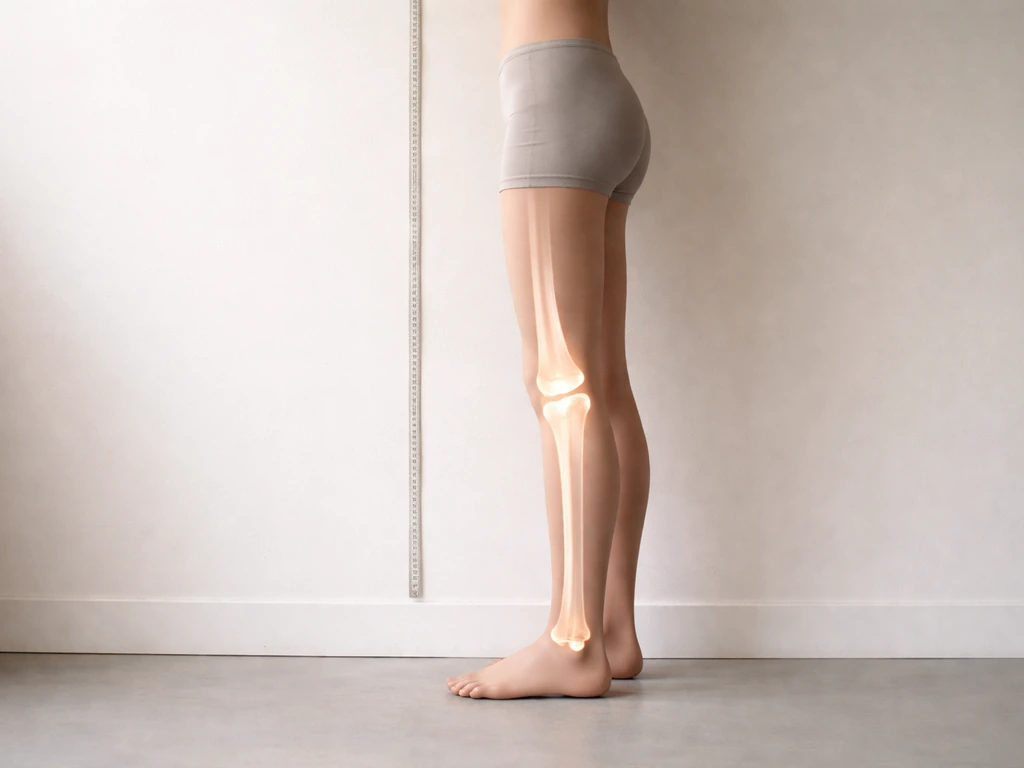
What 'growing taller' actually means for FTM people

There are two distinct things people mean when they say 'grow taller.' The first is true linear bone growth, where the long bones in your legs and spine actually get longer. That only happens at growth plates, the cartilaginous zones near the ends of your bones where new bone tissue is produced. The second is apparent height, meaning how tall you measure due to posture, spinal alignment, and how you carry yourself. These are very different mechanisms, and confusing them leads to a lot of disappointment.
Growth plates stay open during childhood and puberty, then gradually close (fuse) as sex hormones, particularly estrogen, accumulate. This matters for FTM people because estrogen is the primary driver of growth plate closure in everyone, including people assigned female at birth (AFAB). Testosterone itself doesn't close growth plates directly. Instead, it's converted to estrogen in peripheral tissues through a process called aromatization, and that estrogen signal is what eventually tells your growth plates to stop producing new bone. This is why the timing of hormonal changes, whether natural puberty or testosterone therapy, is so central to height outcomes.
Prepubertal growth in transgender and gender-diverse youth generally doesn't differ from cisgender peers. The meaningful differences in height trajectory typically start once sex steroids enter the picture, which is why the puberty stage you're at when you start testosterone matters so much.
Typical height outcomes at different ages and stages
There's now a reasonable body of research on this, mostly from cohorts in the Netherlands and other clinical programs. The short version is that starting testosterone earlier in puberty generally leads to taller adult heights, and using puberty-suppressing medications (GnRH analogues) before testosterone can preserve additional height potential.
Early to mid-puberty (roughly ages 10-15)

If you're still in active puberty with open growth plates, testosterone can drive a genuine pubertal growth spurt. Research from the Amsterdam cohort found that trans boys who received puberty suppression in early puberty followed by testosterone ended up slightly taller on average than those who received testosterone alone without prior suppression. The puberty suppressor essentially pauses estrogen-driven plate closure, giving more time before testosterone-derived estrogen closes things down. That said, the effect is described as mild, not dramatic, and individual results vary based on genetics and timing.
Later puberty (roughly ages 15-18)
If you start testosterone after most of the female-pattern puberty growth spurt has already happened, there's less remaining growth potential. Growth plates begin closing progressively through late puberty, and by the time many people start testosterone in this window, some plates may already be fused. Research shows the adult heights in this group tend to be closer to typical female height norms than male norms, though some additional height gain is still possible if any plates remain open. One study found that advancing bone age at testosterone onset didn't necessarily impair final height, but the onset timing relative to the natural puberty trajectory is the bigger variable.
Adults with closed growth plates
If you're an adult who has been through full puberty, your growth plates are almost certainly fused. Testosterone will not make your bones longer. This is biology, not a gap in research. What can change is body composition (testosterone builds muscle and reduces fat in ways that affect posture and perceived stature), and deliberate posture work can genuinely add measurable centimeters to your standing height, as discussed below.
Nutrition, sleep, weight, and overall health: the levers that actually matter

If your growth plates are still open, these factors are not optional extras. They're the permissive conditions that determine whether your growth potential gets fully expressed or gets cut short. Think of it this way: genetics sets the ceiling, but nutrition, sleep, and health status determine how close you get to that ceiling.
Nutrition
Adequate calories and protein are the foundation. During active linear growth, your body needs a surplus of both. Protein supports the actual production of new bone and muscle tissue, while calories provide the energy to run the whole process. Key micronutrients that are specifically relevant during adolescent growth include calcium (for bone mineralization), vitamin D (for calcium absorption and bone metabolism), zinc, iron, and folate. Deficiency in any of these can impair growth velocity even when calories look adequate on paper. Correcting a deficiency matters more than supplementing above normal levels: research shows that vitamin D supplementation in replete populations has little meaningful effect on height-for-age scores, so the goal is sufficiency, not megadosing. Disordered eating is a real and underrecognized growth concern in adolescents, particularly in transmasculine youth, and it's worth screening for if growth seems to be lagging.
Sleep
Most of your growth hormone (GH) is secreted in pulses during slow-wave sleep. This isn't a myth or a marketing claim; it's basic physiology. GH-releasing hormone drives those nocturnal pulses, and chronic sleep deprivation blunts them. For actively growing adolescents, 8-10 hours of quality sleep isn't optional. If you're chronically undersleeping, you're directly limiting the hormonal signal that drives linear growth.
Underlying health conditions
Chronic or serious illness can meaningfully compromise growth, and this is worth taking seriously rather than dismissing. Untreated hypothyroidism, celiac disease, inflammatory bowel disease, anemia, and other conditions can all suppress growth velocity. The Endocrine Society is explicit that one of the goals of evaluating growth concerns is to distinguish a treatable medical cause from a normal variant. Treating hypothyroidism, for example, can restore normal growth trajectory. If your growth seems slow or you're concerned, lab screening matters, not just waiting and hoping.
Exercise and posture: what actually helps
Exercise will not make your bones grow longer once your plates are closed. Full stop. No amount of stretching, hanging, yoga, or impact training changes that. But the relationship between exercise and height isn't purely zero either, because posture and spinal alignment can genuinely affect your measured standing height.
Research on hyperkyphosis (excessive rounding of the upper back) is relevant here. A systematic review of posture-corrective interventions in adults found measurable improvements in spinal alignment from targeted stretching and strengthening. A randomized controlled trial of yoga in adults with hyperkyphosis reported improvements in thoracic kyphosis angle and standing height measurements after 6 months. The mechanism is straightforward: reducing forward spinal curvature and improving thoracic extension lets you stand closer to your full skeletal height. These are real centimeters, not imaginary, but they come from reaching your existing potential, not exceeding it.
Spinal disc hydration is another real phenomenon. Intervertebral discs lose some fluid compression throughout the day, which is why you're slightly taller in the morning than at night. Stadiometry and MRI studies confirm that spinal positioning and loading affect measured height readings. A clinical measurement study found that sustained lumbar flexion positions can change “spine height” measurements, consistent with the idea that posture and spinal loading influence what height you record spinal positioning and loading affect measured height readings. This is the mechanism behind most 'height gains' claimed by morning stretching routines online: you're re-hydrating discs, not growing bone.
For practical purposes, prioritize exercises that strengthen your posterior chain (glutes, spinal extensors, mid-back muscles), stretch tight hip flexors and pectoral muscles, and cue upright thoracic posture. Wall posture drills, rows, and thoracic extension work are all useful. This is the honest, grounded version of what 'exercise for height' actually does.
A note on shoe lifts
Heel lifts or insoles add a small but real amount to standing height, typically 1-4 cm depending on the lift, and they work immediately. They don't affect bone or posture long-term, but for people who want an immediate practical solution while working on everything else, they're a legitimate option. Just make sure the lift doesn't change your gait mechanics in a way that causes knee or hip strain.
Testosterone, timing, and your growth potential
Testosterone's relationship with height is more nuanced than most people expect. It's not a simple 'more T equals more height' equation. The mechanism runs through aromatization: testosterone converts to estrogen in peripheral tissues, including the growth plate cartilage itself, and it's that estrogen signal that drives both the growth spurt and, eventually, growth plate fusion. This is the same mechanism in cisgender males, where high testosterone during puberty drives rapid growth followed by plate closure.
For FTM people, this means testosterone introduced during early puberty (with open plates) can drive real linear growth, mimicking a male pubertal growth pattern to some degree. However, it also means testosterone introduced at any stage will eventually accelerate plate closure through estrogen signaling. The timing window matters enormously: the earlier plates are still open when testosterone starts, the more growth potential exists. Once plates have fused, the aromatization pathway is irrelevant to height because there's no active growth tissue to stimulate.
Research on the dose-escalation relationship between testosterone and height in transmasculine youth is still incomplete, so there's genuine uncertainty about optimal dosing protocols for maximizing height outcomes. It’s also important to be realistic about what the grow taller law of assumption can and cannot do for your physical height. What is clear is that bone age monitoring is essential when starting testosterone in adolescence, because bone age (not chronological age) tells you how much growth potential actually remains.
Medical options and when to see an endocrinologist
If you're an adolescent who is concerned about height, or a parent navigating this for a transmasculine teenager, a pediatric endocrinologist is the right specialist. General practitioners often don't have the tools to evaluate growth potential comprehensively. Here's what a proper evaluation actually involves.
Bone age X-ray
A plain X-ray of the left hand and wrist, interpreted using either the Greulich-Pyle atlas or Tanner-Whitehouse method, gives a skeletal (bone) age that tells you how mature your growth plates are. This is different from your chronological age. If your bone age is significantly younger than your actual age, you have more growth potential than you might think. If it's at or above your chronological age, less growth is likely remaining. Clinical guidelines from WPATH SOC-8 and Endotext monitoring protocols recommend bone age X-rays every 1-2 years for adolescents on gender-affirming hormonal interventions. The Amsterdam cohort studies used bone age thresholds (bone age of 14 or above, using female Greulich-Pyle standards) as part of their adult height criteria.
Lab screening
A basic evaluation for anyone concerned about growth should include thyroid function, complete blood count (anemia), IGF-1 (a proxy for GH activity), celiac antibodies, and basic metabolic markers. These screens catch treatable conditions that suppress growth. Standard monitoring for adolescents on hormonal therapy also includes height, weight, sitting height, blood pressure, and Tanner stage every 3-6 months.
Growth hormone therapy
Growth hormone (GH) therapy is a real medical option, but it has narrow appropriate indications. In the US, recombinant human GH is FDA-approved for a range of pediatric indications including GH deficiency, idiopathic short stature (typically defined as height at or below -2.25 standard deviations), and several other specific conditions. It is not a general-purpose height-booster. It requires open growth plates to work, and it's discontinued when growth velocity drops to roughly 2-2.5 cm per year or plates are fused. If an endocrinologist identifies a true GH deficiency or IGF-1 axis abnormality, GH therapy becomes a legitimate conversation. Without that clinical indication, it's not appropriate and won't be prescribed responsibly.
Some FTM adolescents who started on puberty suppression may have specific bone density concerns related to the duration of suppression, separate from height. Longer periods on GnRH analogues have been associated with lower bone mineral density, which is another reason that medical monitoring (not just height tracking) matters throughout this process.
Realistic expectations, myths, and what to do next
There's a lot of height-related misinformation floating around online, some of it aimed specifically at trans communities, some at the broader 'grow taller' market. Products claiming to stretch your bones or 'reopen' growth plates in adults are not real. The communities discussing these ideas often confuse posture improvements with bone growth, or morning height variation with actual growth. If you're wondering is grow taller dynamics real, the key point is that real height change depends on open growth plates, not on programs marketed to reopen them. The same skepticism applies to supplements marketed specifically for height: unless you're correcting a documented deficiency, there's no evidence they add centimeters.
You'll sometimes see claims about specific programs or systems promising height increases through stretching or exercises. If you are looking at grow-taller programs or supplements, you should review their evidence and safety details before trusting any marketing claims grow taller programs or supplements. The evidence base for those claims doesn't hold up when you separate posture and disc hydration effects from true bone growth. Being realistic about this isn't defeatist; it's what lets you focus energy on what actually works.
Common myths, directly addressed
| Myth | Reality |
|---|---|
| Testosterone always makes FTMs taller | Only if growth plates are still open. Adults with fused plates won't gain bone length from testosterone. |
| Stretching and hanging can lengthen bones in adults | No. These improve posture and temporarily decompress discs. They don't stimulate growth plate activity. |
| Growth plates reopen with the right supplement or hormone | Growth plates do not reopen once fused. This is a biological fact, not a limitation of current supplements. |
| More testosterone means more height | The dose-response for height is not linear and is incompletely understood even in clinical research. Timing matters far more than dose. |
| If you start T late, you'll never gain any height | Late starters may still have some open plates and gain height, especially if bone age is younger than chronological age. |
| GH therapy is available to anyone who wants to be taller | GH therapy has strict clinical indications. Without GH deficiency or a qualifying diagnosis, it's not appropriate or obtainable responsibly. |
Your practical next-steps checklist

- Get a bone age X-ray (left hand/wrist) if you're an adolescent or young adult who hasn't been evaluated. This is the single most useful piece of information for knowing your actual growth potential.
- Ask your doctor for basic lab work: thyroid, CBC, IGF-1, celiac antibodies, and vitamin D levels. Rule out anything that might be suppressing your growth.
- Prioritize sleep. Aim for 8-10 hours if you're a teenager. This directly affects GH secretion and is non-negotiable for growth.
- Audit your nutrition honestly. Are you eating enough calories and protein for your activity level? Are you getting enough calcium and vitamin D? Fix deficiencies before adding supplements.
- Start a posture program. Focus on thoracic extension work, posterior chain strengthening, and hip flexor stretching. Measure your standing height consistently at the same time of day (morning is most reproducible) to track real changes.
- If you're an adolescent starting or already on testosterone, make sure your monitoring includes height and sitting height measurements every 3-6 months, and bone age imaging roughly every 1-2 years.
- Ask your endocrinologist specifically: 'What does my current bone age suggest about remaining growth potential?' and 'Is there anything on my labs that could be suppressing my growth?'
- Set realistic expectations for your age. If you're 22 with fully fused plates, your honest focus should be on posture, composition, and how you present, not bone length.
- Be skeptical of any product, program, or online community claiming to reopen growth plates or grow bone in adults. No peer-reviewed evidence supports these claims.
The bottom line is that height outcomes for FTM people are real and meaningful, especially for those who start testosterone while still in active puberty. The science supports that with appropriate timing and medical monitoring, transmasculine adolescents can achieve adult heights within a reasonable range for their genetics, and in some cases, approaches like early puberty suppression followed by testosterone can mildly increase final height. For adults, the honest work is in optimizing posture, overall health, and how you carry yourself. If you want to understand whether your specific situation can support growth, it helps to review how timing and growth plate status affect “does grow taller dynamics work.”. That's not a consolation prize; those things genuinely affect how tall you look and feel every day.
FAQ
How can I tell if my growth plates are still open without guessing based on age?
The most practical way is bone age imaging, usually a left hand and wrist X-ray read with a standard atlas method. Chronological age can be misleading, especially if puberty started early or late, so a bone age result closer to (or above) your chronological age suggests limited remaining height potential.
Does taking testosterone longer automatically increase final height?
Not necessarily. Once growth plates fuse, additional time on testosterone cannot lengthen long bones. Also, testosterone can accelerate closure indirectly through estrogen created via aromatization, so the timing relative to pubertal stage and your remaining bone age is what matters more than duration.
If I already had most of my growth spurt, is any further height gain still possible on testosterone?
Often there can be a small amount of remaining growth if any growth plates are still open, but outcomes are usually closer to typical female height norms if most estrogen-driven growth has already occurred. Bone age monitoring is the best decision aid here, because it helps estimate whether residual growth tissue remains.
Will puberty blockers (GnRH analogues) make me “guaranteed taller”?
They can preserve growth potential in early puberty, but they are not a guarantee and effects are described as mild rather than dramatic. Individual genetics, how early suppression starts, duration, and how bone age progresses all influence final height.
Can I use stretching, yoga, or hanging to grow taller after my growth plates close?
These can improve posture and thoracic alignment, which may increase measured standing height, but they do not create new bone length once plates are fused. If you want to gauge what is real, compare morning versus evening height and track if changes are consistent with posture and disc hydration rather than a steady upward trend.
Why am I taller in the morning, and does it mean my discs are the limiting factor?
Intervertebral discs compress during the day, so you can lose height with activity and regain some overnight. That effect can explain a few centimeters of day-to-day variation, but it does not indicate ongoing bone growth, and it will not be fixed by “bone-reopening” routines.
What posture and training approach actually helps most with height measurements?
Focus on spinal extension and back support muscles, not just general “core” work. Practical targets include thoracic mobility plus strength for glutes and spinal extensors, and then practicing an upright thoracic posture, because improving alignment can raise the measured standing height more than isolated stretching.
Are there specific lab tests I should ask my doctor for if my growth seems slow?
Common high-yield screens include thyroid function tests, a complete blood count for anemia, IGF-1 as a GH axis proxy, and celiac-related antibodies. If there are growth concerns, these are usually paired with growth monitoring data like height velocity rather than height alone.
Should I ask about growth hormone therapy if I’m short but my growth plates might be open?
Growth hormone is appropriate only for narrow medical indications, such as confirmed GH deficiency or specific criteria like idiopathic short stature based on standardized height cutoffs. It is typically not a general height-booster, and an endocrinologist will also consider whether growth velocity is currently low enough to justify treatment.
How does sleep affect height outcomes during puberty, and what counts as “enough”?
Most growth hormone pulses occur during slow-wave sleep, so chronic undersleep can blunt the hormonal signal that supports linear growth. For actively growing adolescents, the article’s guideline of roughly 8 to 10 hours of quality sleep is a useful target, and consistent sleep timing matters too.
If I take supplements marketed for height, could they still help me grow?
Supplements help only when they correct a deficiency. If you are already sufficient in vitamin D and key minerals, adding more usually will not translate into meaningful height gain and can create unnecessary risk. The most efficient next step is testing if you suspect deficiency, especially when growth velocity is slow.
Does improving body composition on testosterone change my standing height measurement?
Yes, indirectly. Increased lean mass and reduced fat can affect how you stand, how you breathe, and how you carry your pelvis and spine, which can change measured stature. This is not bone lengthening, so it helps your perceived and sometimes measured height even when growth plates are closed.
When should a parent seek specialist evaluation for height concerns?
Seek evaluation when height velocity is clearly slow, puberty timing seems abnormal, or there are symptoms suggesting an underlying condition (like fatigue, GI symptoms, or signs of thyroid issues). A pediatric endocrinologist can interpret bone age and growth patterns, whereas primary care may focus on simpler averages.
What’s the biggest mistake people make when trying to “grow taller” on testosterone?
They focus on testosterone alone, without checking bone age or pubertal stage, and they treat posture changes as if they prove bone growth. A better approach is to separate measurable posture effects from genuine length changes and use bone age plus growth velocity to guide expectations and decisions.
Does Grow Taller Dynamics Work? Evidence and Real Limits
Does grow taller dynamics work? Get real limits, evidence, risks, and what can increase height by age.