
Yoga will not make your skeleton longer. It cannot add centimeters to your bones or reopen growth plates that have already fused. What it genuinely can do is help you stand closer to your full height by improving posture, reducing spinal compression, and building the core and back strength that keep you upright. For some people, especially those with rounded shoulders or a forward head posture, that functional change can translate to looking and measuring noticeably taller without a single millimeter of new bone growth.
Does Yoga Help Grow Taller? What to Expect by Age

Marcus Reeves
27 May 2026

How height actually increases (and why it stops)

True height gain comes from one thing: bones getting longer. That process happens at the epiphyseal plates, the soft cartilaginous zones near the ends of long bones and vertebrae where new bone tissue is laid down during childhood and adolescence. Once those plates fuse and harden, linear bone growth is over. No exercise, stretch, or supplement changes that biology.
The timing of fusion varies by sex and individual development. MRI-based research shows that at least half of females have fused growth plates somewhere between ages 14 and 17, with near-complete fusion by 15 to 18. For males the window is about 15 to 18 for the 50th percentile and 17 to 20 for 90th percentile fusion. The adolescent growth spurt, which peaks around ages 13 to 14 in boys and slightly earlier in girls, can add more than 10 centimeters in a single year. By the end of puberty, the Endocrine Society is direct: height growth stops. For most people that means the window for true skeletal height gain is fully closed before age 20, sometimes earlier.
This is the single most important context for anything you read about yoga and height. If your plates are open, you are still growing and lifestyle habits genuinely matter. If they are closed, you are working with the skeleton you have, and the question becomes how well you express that height through posture and alignment.
What yoga actually does for your height
The Cleveland Clinic puts it plainly: yoga is not going to lengthen your skeleton. What the research does support is that yoga changes the soft-tissue and neuromuscular contributors to how tall you appear and measure on any given day. The mechanism centers on three things: strengthening spinal erectors and core muscles, stretching tight hip flexors and chest/shoulder muscles that pull your posture forward, and retraining the postural habits that compress your spine unnecessarily.
blank" rel="noopener noreferrer">A 6-month randomized controlled trial on adults over 60 with hyperkyphosis (excessive rounding of the upper back, a common cause of apparent height loss) found statistically significant improvements in kyphosis angle in the yoga group compared to controls: roughly 4.blank" rel="noopener noreferrer">4% greater improvement in flexicurve kyphosis angle and 5% greater improvement in kyphosis index. Those numbers translate to a measurable reduction in the forward curve of the upper spine, which means participants were literally standing straighter. A separate cross-sectional study comparing yoga practitioners to non-practitioners found that regular yoga training is associated with better habitual postural alignment overall. These are posture outcomes, not bone-length outcomes, but for many people they produce a real, visible difference.
Think of it this way: if you currently have a 20-degree forward lean from tight hip flexors, rounded shoulders, and weak spinal erectors, correcting that posture expresses height that was already there. You are not growing taller. You are finally standing at the height you already are.
Children and teens vs. adults: realistic outcomes by age

The age question matters a lot here, because the answer is genuinely different depending on where someone is in their development.
Still growing (roughly under 18)
If growth plates are still open, the body is actively adding bone length. During this window, general physical health habits including regular movement, adequate nutrition, and quality sleep support normal growth, and yoga fits well as one part of that picture. It builds body awareness, improves posture early before bad habits calcify, develops core stability, and keeps the spine mobile. There is no direct evidence that yoga specifically accelerates bone-length growth in children or teens, but it does nothing to harm growth either, and the postural habits built early tend to persist into adulthood. For a growing adolescent, yoga is a genuinely useful practice, just not for the reason most people assume.
Growth plates closed (roughly 18 and older)

For adults, true height gain through yoga is not on the table. But the posture and spinal alignment benefits are arguably more valuable here, because adults are the ones most likely to have accumulated years of sitting, slouching, and anterior pelvic tilt that compress apparent height. The kyphosis RCT cited above was in adults over 60, and it still showed meaningful postural improvement in just 6 months. Adults with desk jobs, chronic low back tension, or forward head posture have a real opportunity to recover height that poor posture has been stealing from them.
Yoga routines that actually help you stand taller
The most effective yoga practices for posture and spinal alignment focus on thoracic extension, hip flexor lengthening, core strengthening, and shoulder opening. The following poses are well-supported by the mechanisms studied in postural research and are accessible to most people without advanced yoga experience.
- Mountain Pose (Tadasana): The foundation of good standing posture. Stand with feet hip-width apart, weight evenly distributed, tailbone slightly tucked, shoulders rolled back and down, crown of head reaching toward the ceiling. Hold for 30 to 60 seconds while breathing. This trains the neuromuscular pattern of upright posture more than almost any other pose.
- Cat-Cow (Marjaryasana-Bitilasana): On hands and knees, alternate between arching and rounding the spine with each breath. 8 to 10 rounds. This mobilizes thoracic and lumbar segments that become stiff from sitting, directly targeting spinal compression.
- Cobra Pose (Bhujangasana): Lying face down, press through the hands to lift the chest while keeping the pelvis on the floor. Strengthens the spinal erectors and counteracts thoracic kyphosis. Hold 20 to 30 seconds, 3 repetitions.
- Bridge Pose (Setu Bandha Sarvangasana): Lying on your back with knees bent, lift the hips while squeezing the glutes. Strengthens the posterior chain including glutes and lower back while opening the hip flexors. Hold 30 seconds, 3 repetitions.
- Low Lunge (Anjaneyasana): A deep hip flexor stretch targeting the psoas, which when tight pulls the pelvis into anterior tilt and flattens lumbar lordosis. Hold 45 to 60 seconds each side.
- Downward-Facing Dog (Adho Mukha Svanasana): Decompresses the spine by creating length through the entire posterior chain. Hold 30 to 60 seconds, focusing on lengthening the spine rather than forcing the heels to the floor.
- Seated Twist (Ardha Matsyendrasana): Gently rotates the thoracic spine to maintain rotational mobility. This is a gentle rotation, not a deep torque, especially important for anyone over 50 or with back history.
A practical routine combining these poses takes about 20 to 25 minutes. Doing it 3 to 4 times per week is enough to see posture changes within 6 to 12 weeks, based on the clinical timelines from postural intervention research. Daily practice accelerates results, particularly for people starting with significant kyphosis or tight hip flexors.
Measuring progress, realistic timelines, and safety cautions
How to track your posture gains
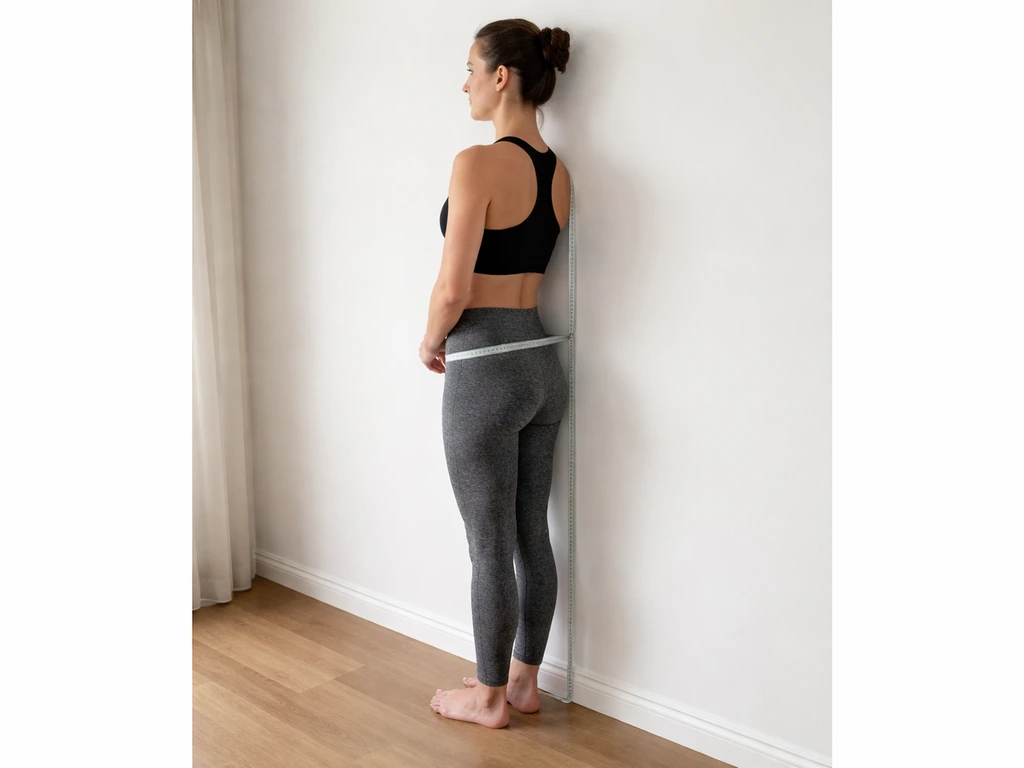
The simplest way to measure posture-related height changes is a wall test: stand with your heels, glutes, upper back, and head touching a wall. Note the gap at your lower back (ideally about the width of one hand) and how much effort it takes to achieve that position. Photograph your side profile monthly. Some people also find a wall-mounted height measurement useful, taken first thing in the morning (when spinal discs are least compressed) versus end of day to see how posture and compression affect the number throughout the day. A clinician or physical therapist can use tools like a flexicurve ruler or inclinometer for more precise kyphosis angle measurements, the same approach used in the RCT referenced above.
For most people with postural contributors to apparent height loss, meaningful improvements in posture show up within 4 to 8 weeks of consistent practice. More significant kyphosis correction, as in the 6-month RCT, takes closer to 3 to 6 months. Expect gradual change, not overnight results.
Common mistakes
- Forcing range of motion: Going deeper into a pose than your mobility allows creates injury risk, not faster progress. Especially in spinal forward folds and twists.
- Practicing without qualified instruction early on: NCCIH specifically recommends learning yoga under a qualified instructor to reduce injury risk, particularly when you are new to the practice.
- Expecting skeletal change: If you are tracking progress hoping for actual bone-length growth after your growth plates have closed, you will be disappointed and may miss the real benefit happening.
- Inconsistency: Postural muscles adapt slowly. Two sessions per month will not produce the changes seen in trials where participants practiced multiple times per week over months.
When to be cautious or modify
Yoga has a generally good safety profile when practiced appropriately, but it is not risk-free for everyone. NCCIH notes that people with lumbar spine disease, severe high blood pressure, balance issues, or glaucoma need modifications or medical clearance first. The most important safety flag for the height-focused context is bone health: Mayo Clinic guidance advises people with osteoporosis to avoid bending forward at the waist and twisting at the waist because of vertebral compression fracture risk, and explicitly cautions about certain yoga poses for this reason. A Mayo Clinic case series also identified that yoga involving significant spinal flexion, extension, or torsion could contribute to vertebral compression fractures in at-risk individuals. If you have been diagnosed with osteopenia, osteoporosis, or have a history of vertebral fractures, work with a physio or qualified yoga therapist before attempting any spinal loading poses. If you have scoliosis and are wondering about yoga's role in height, that is worth a separate and more individualized conversation with a clinician. If you have scoliosis, it can also affect how tall you appear, so it helps to discuss your specific curve and safety limits with a clinician.
Where yoga fits in the bigger height picture
Yoga is one piece of a larger picture, and understanding how it fits with other factors gives you a more complete strategy regardless of age.
| Factor | Role in height | What yoga does here |
|---|---|---|
| Genetics | Determines roughly 60-80% of your final height potential | No effect on genetic ceiling |
| Nutrition | Essential during growth years; deficiencies can reduce height attainment | No direct effect, but yoga's stress reduction may support hormonal balance indirectly |
| Sleep | Growth hormone is predominantly released during deep sleep; critical during growth years | Regular yoga practice is associated with improved sleep quality in some research |
| Exercise (general) | Supports bone density, healthy growth hormone levels, and postural muscle development | Yoga contributes here through strength and mobility work |
| Posture and spinal alignment | Compressed or poor posture can reduce apparent height by 1-3 cm in adults | Yoga's strongest, most direct contribution |
For a growing child or teen, sleep and nutrition are the non-negotiables. Getting less than 8 to 10 hours of sleep during the adolescent growth spurt directly affects growth hormone output. Adequate protein, calcium, vitamin D, and overall caloric intake all feed into whether a child reaches their genetic height potential. Yoga is a solid complement to those habits, not a replacement for them. For adults, the posture-and-alignment benefits of yoga are the most meaningful lever available and worth pursuing consistently.
It is also worth knowing that inversion tables and massage are sometimes mentioned alongside yoga as ways to decompress the spine and potentially affect height. Like yoga, any temporary spinal decompression from these approaches does not produce lasting skeletal change in adults, though some people find them useful for comfort and mobility.
When to see a clinician
If you are a parent concerned that your child does not seem to be growing at a normal rate, the clinical benchmark worth knowing is approximately 4 centimeters (about 1.5 inches) of growth per year as a general minimum threshold during childhood. Falling off the growth curve or tracking at or below the 3rd percentile for age warrants a pediatric endocrinology evaluation, which typically includes bone age imaging and a review of growth velocity over time. Delayed puberty is another reason to seek evaluation, since the pubertal growth spurt is when most adolescent height gain happens and delays can affect final height if left unaddressed. Yoga has nothing to offer here. A clinician does.
For adults experiencing new back pain, noticeable height loss over time (more than the gradual 1 to 2 centimeter reduction that is normal with aging after about 40), or pain during or after yoga, those are signals to get a clinical assessment before continuing or intensifying any spinal exercise program. Some people also ask whether chiropractors can help, but the safest approach is to focus on posture and growth-plate reality can chiropractors help you grow taller.
The practical takeaway
Yoga will not make you taller in the biological sense. But if your posture is compressing your height, which is true for a significant portion of people who spend long hours sitting, yoga is one of the most evidence-supported tools available for getting that height back. Massage also may help with relaxation and posture comfort, but it cannot lengthen bones or reopen fused growth plates massage can help with posture comfort. Start with the 7 poses above, practice 3 to 4 times a week, give it 6 to 12 weeks to see consistent change, and make sure your technique is solid before pushing deeper into any spinal pose. If you are still growing, treat yoga as one part of a broader habits stack alongside sleep, nutrition, and consistent activity. If your plates are closed, yoga's posture benefits are real and worth the effort even if they will never change the number on your bone scan.
FAQ
How soon can I see a height or posture difference from yoga?
Most people notice changes in how tall they look within 4 to 8 weeks, using consistent practice (3 to 4 times per week). For more pronounced rounded upper-back cases, it can take closer to 3 to 6 months, so avoid judging results after a couple of sessions or comparing end-of-day measurements only.
Does yoga help you measure taller in the morning, afternoon, or both?
Posture compression changes throughout the day, so you may measure taller in the morning and drift shorter later without good alignment habits. If you want to track what yoga is actually changing, measure first thing after waking for several days, then repeat at end of day, and look for trends rather than a single reading.
Will stretching alone (without core or chest/hip work) make me taller?
Stretching can temporarily reduce tightness, but lasting “stand taller” results usually require strength and habit retraining too, especially core stability and thoracic extension. If you stretch only, you may feel looser without improving spinal support, and the posture relapse can be fast.
Can yoga make you taller if you already have fused growth plates?
It can improve apparent height by reducing spinal compression and correcting alignment patterns (like rounded shoulders or forward head posture). It will not lengthen bones, so you should expect changes mainly in posture, not bone length, and the best results usually come from ongoing practice.
What if my height stays the same but my posture feels better?
That can still be a win. Pain relief, easier breathing, better shoulder position, and a smaller “effort to stand tall” signal improved spinal mechanics even if the ruler measurement changes only slightly. Focus on repeatable wall-test alignment and comfort, not just one number.
Is it normal to lose height during a yoga routine?
Sometimes yes, especially if your body is stiff and you temporarily compress discs during certain flexion, twisting, or deep forward bending positions. If you feel sharp pain, radiating symptoms, or noticeable post-yoga height loss that persists into the next day, stop those movements and get assessed by a clinician or qualified yoga therapist.
Which yoga poses are most likely to help apparent height, and which should I be careful with?
Poses that emphasize thoracic extension, shoulder opening, hip-flexor lengthening, and controlled core engagement are most aligned with the posture mechanism discussed. If you have bone health risk (osteopenia, osteoporosis, prior vertebral fractures), be cautious with significant spinal flexion, extension, or twisting, and prioritize a modified, clinician-guided approach.
I have osteoporosis or osteopenia, can I still do yoga for posture?
Often yes, but it needs modifications and guidance. A key caveat is avoiding or carefully limiting forward-at-the-waist bending and loaded twisting/extension that increase vertebral compression fracture risk. Work with a physio or qualified yoga therapist to choose safer variations and pacing.
How does scoliosis change the “can yoga make me taller” question?
Scoliosis can alter how height is expressed through uneven spinal curvature, rib position, and muscle imbalance. Because the safest movements depend on your curve pattern and stability, it’s worth a clinician conversation so your routine targets alignment without provoking symptoms.
Can inversion tables or massage make yoga unnecessary for height concerns?
They may provide temporary decompression or comfort, but they do not create lasting skeletal change. Yoga’s main value is retraining strength and posture habits so your improved alignment persists, so think of decompression tools as short-term relief, not a replacement for posture work.
If my child or teen does yoga, could it affect their actual growth height?
Yoga is not known to accelerate bone-length growth, but it can support posture and mobility while your child is still growing through normal biological processes. If you’re worried about growth rate, the next step is clinical evaluation, because factors like sleep, nutrition, and pubertal timing matter more than yoga for height velocity.
What signs mean I should stop and get medical evaluation before continuing yoga for height or posture?
Get assessed if you have new back pain, sudden or progressive height loss beyond typical age-related changes, pain during or after yoga that lingers, numbness or weakness, or any history of vertebral fractures. These are safety signals that require a medical look rather than pushing through stretches.
What is the most practical way to track progress so it doesn’t become frustrating?
Use a consistent wall test monthly (same time of day, same setup), photograph the side profile, and track the ease of achieving a straighter posture and the lower-back gap. If you want more precision, a clinician can measure kyphosis angle with tools like an inclinometer or a flexicurve ruler.
Next Article
What Amino Acids Make You Grow Taller
Know which amino acids support growth via protein and IGF-1, why they can’t extend height after closure, and practical t