
Peanut butter does not directly make you taller, but for a child or teenager who is under-eating or nutritionally deficient, adding calorie-dense, nutrient-rich foods like peanut butter can help restore the conditions needed for normal growth. If you are an adult, your growth plates are closed, and no food, including peanut butter, will add height. The honest answer is that peanut butter is a genuinely useful food for supporting growth in people who still have growing to do, but only because good nutrition matters broadly, not because there is anything magical about peanut butter specifically.
Does Peanut Butter Help You Grow Taller? Science and Limits

Marcus Reeves
4 Jun 2026

How height actually happens

Height comes from your bones getting longer, and bones get longer at the growth plates. Growth plates are thin strips of cartilage near the ends of long bones like the femur and tibia. As long as those plates are open and active, your body can still add height. Once they fuse, usually sometime in the mid-to-late teens for girls and a little later for boys, that is it. No nutrition change, exercise, or supplement can reopen them.
What drives growth plate activity is your hormonal system. The growth hormone and IGF-1 axis does most of the heavy lifting, but thyroid hormone, sex steroids, glucocorticoids, and vitamin D all play coordinating roles. A 2026 review on growth plate physiology makes this clear: dietary changes affect linear growth only indirectly, by preventing deficiencies or undernutrition that disrupt these endocrine systems. Food does not override genetics or hormones. It just prevents your body from being short-changed by lack of fuel or nutrients.
Genetics set the ceiling. A pediatric endocrinologist will estimate your target height range based on your parents' heights, and in well-nourished, healthy children, most end up close to that range. The gap between your genetic ceiling and where you actually land is where nutrition, sleep, and health status have their influence.
What peanut butter actually brings to the table
Two tablespoons of peanut butter gives you roughly 190 calories, 7 to 8 grams of protein, 16 grams of mostly unsaturated fat, about 3 grams of fiber, and meaningful amounts of magnesium, phosphorus, potassium, zinc, and B vitamins. That is a solid nutritional package in a very small volume of food, which is exactly why it shows up in calorie-density strategies for kids with faltering growth.
The protein content matters because amino acids are the raw material for bone matrix, muscle, and the IGF-1 signaling that the growth plate responds to. The healthy fat content supports fat-soluble vitamin absorption, including vitamins A, D, and K, all of which are involved in bone development. And the sheer calorie density means a child who struggles to eat large volumes of food can get more fuel from a small serving. None of this is unique to peanut butter, but peanut butter does these things very well compared with most snack foods.
Who peanut butter can actually help, and who it won't
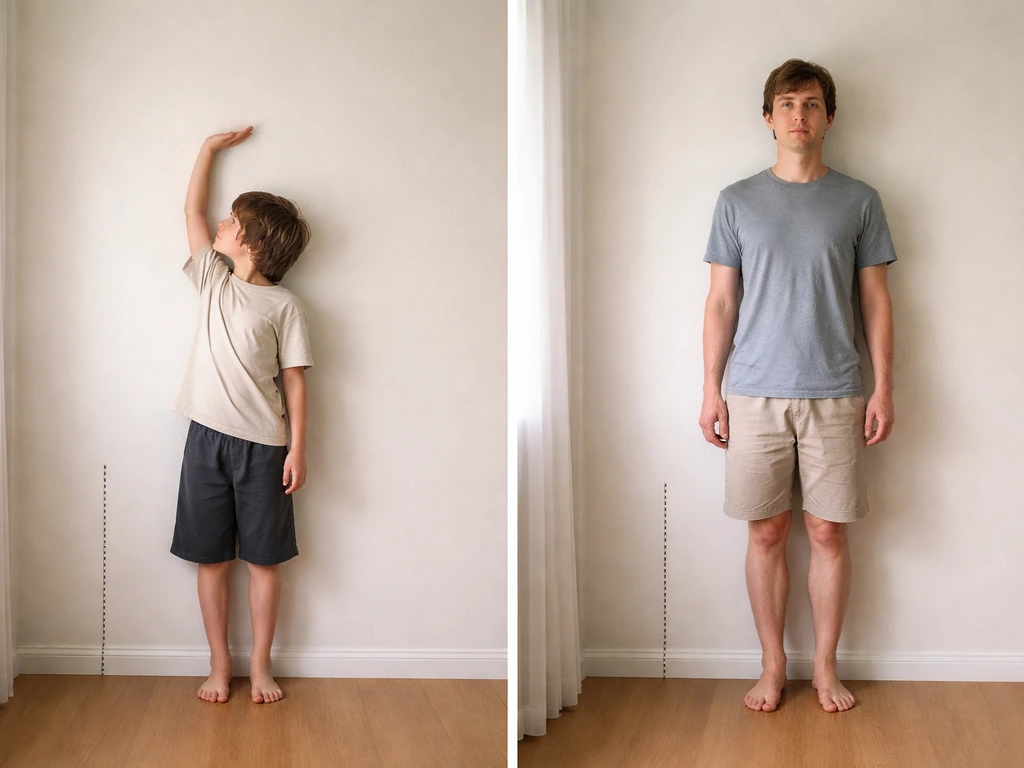
This is the part that matters most, so here it is plainly.
| Who you are | Can peanut butter help with height? | Why |
|---|---|---|
| Child or teen, well-nourished, growing normally | Unlikely to add extra height | Genetic potential is already being met; more calories alone won't push past it |
| Child or teen, under-eating or nutritionally deficient | Yes, as part of a broader nutrition fix | Restoring adequate nutrition allows catch-up growth toward genetic potential |
| Child or teen, growth hormone deficiency or medical condition | No, not on its own | Needs medical treatment; food is supportive but not the solution |
| Adult (growth plates closed) | No | Linear growth is biologically impossible once plates fuse, regardless of diet |
The concept of catch-up growth is relevant here. When a child's growth falters due to undernutrition or illness, then nutrition is restored, the body can accelerate growth upward toward where it should be on the growth curve. This is a recovery mechanism, not a bonus. The American Academy of Pediatrics and WHO both frame this as correcting inadequate intake, not as adding a specific height-promoting food. Peanut butter can be part of that correction, but it is the overall calorie and nutrient adequacy that does the work. The AAP describes a stepwise nutrition approach for growth faltering that focuses on providing adequate nutrition for catch-up growth by addressing inadequate intake or undernutrition rather than using a growth “superfood” correcting inadequate intake, not as adding a specific height-promoting food.
What the research actually says about food and height
The honest read of the evidence is humbling. A meta-analysis of randomized trials looking at animal-source protein supplementation in children found that increasing protein and calories improved weight, but had limited effects on attained height or stunting. That is a meaningful finding: even in populations where undernutrition is a real problem, simply bumping protein does not reliably translate into more height unless the deeper nutritional and environmental drivers of stunting are also addressed.
WHO guidance on supplementary feeding in moderately undernourished children focuses on height-for-age as the goal metric, but is careful not to claim that any single food raises height. The effect, when it exists, comes from correcting systemic undernutrition, not from any ingredient's special properties. This same principle applies to peanut butter. There is no clinical trial showing that adding peanut butter to a well-nourished child's diet makes them taller. What you do have is solid mechanistic reasoning: if a child is under-fueled, providing calorie-dense, nutrient-rich food helps, and peanut butter fits that role well.
It is worth noting that similar questions come up around other popular supplements and foods. You might also wonder whether ashwagandha helps with growth, but evidence for height effects is limited and it should not replace basic nutrition and sleep supplements and foods. The evidence base for most single-item interventions (whether vitamins, herbs, or protein sources) tends to show the same pattern: benefit in deficiency, minimal effect when nutritional status is already adequate. This same pattern applies to questions like do Flintstone vitamins help you grow, since supplements only help if they correct a real deficiency.
What you can actually do today
Get the nutrition fundamentals right
If you are trying to support growth in a child or teenager, the goal is meeting total calorie and protein needs consistently, not adding a single food. General targets for school-age children run around 1,600 to 2,200 calories per day depending on age, size, and activity level, with protein needs around 0.85 to 1 gram per kilogram of body weight. Adolescents in peak growth spurts often need more. Peanut butter is a practical way to increase both calories and protein without a lot of volume, especially for picky or low-appetite eaters. Two to four tablespoons a day added to meals or snacks is a reasonable contribution.
Make sure the diet also covers zinc (found in meat, legumes, seeds), calcium and vitamin D (dairy, fortified foods, sunlight), and iron. Deficiencies in any of these can slow growth independently of total calorie intake.
Sleep more than you think you need to

Growth hormone is secreted primarily during deep sleep, especially in the first few hours after falling asleep. Children aged 6 to 12 need 9 to 12 hours per night. Teenagers need 8 to 10 hours. Consistently short sleep is one of the underappreciated ways kids fall short of their growth potential, and it is fixable. Earlier bedtimes and limiting screen exposure before sleep are the two levers that tend to work best in practice.
Move, lift, and stretch regularly
Physical activity supports bone density and stimulates the hormonal environment that promotes growth. Weight-bearing exercise and resistance training, even bodyweight movements, help. Stretching and activities like swimming or hanging do not literally elongate bones in adults with closed growth plates, but they can improve posture, which affects how tall you appear. In actively growing kids, regular physical activity contributes to healthy bone development alongside good nutrition.
When to talk to a doctor
See a pediatrician if a child is consistently falling further behind on the growth chart (dropping centile lines over time), if they seem to have delayed puberty, or if there is a noticeable gap between their height and what you would expect from family history. A pediatric endocrinologist can evaluate growth hormone status, thyroid function, bone age via X-ray, and other factors that nutrition cannot fix. Earlier evaluation leads to better outcomes when a medical cause is present. If your child is otherwise healthy and eating well, there is likely no cause for concern, and dietary tweaks like more peanut butter will not change the trajectory meaningfully.
The bottom line: peanut butter is a genuinely good food that earns a place in a growth-supportive diet, particularly for children and teens who need more calories and nutrients without a lot of food volume. But it works as part of an overall nutritional strategy, not as a height hack. Genetics and hormones run the show. Jacking off does not help you grow because height is driven by growth plate activity, hormones, and overall nutrition, not by sexual activity. Your job is to make sure they have the raw materials they need to do it properly.
FAQ
Does peanut butter help you grow taller if you are already eating normally?
If a child is already meeting calories and key nutrients, peanut butter usually will not increase height. It can still be useful as a “calorie add-on” for kids who struggle to eat enough, but the growth effect comes from overall adequacy and correcting undernutrition, not from peanut butter itself.
Can adults use peanut butter to increase height?
In general, it matters most during childhood and teen years when growth plates are still open. After growth plates fuse, extra calories and nutrients do not add new bone length, so peanut butter will not make an adult taller.
What should I do first if my child is not growing as expected?
If growth is lagging, the priority is to check whether the child is under-eating or missing nutrients (for example, calcium and vitamin D, iron, zinc) and whether sleep and overall health are adequate. Peanut butter can help you reach calories and protein targets, but it should not replace a complete diet.
How much peanut butter is reasonable to try for growth support, and for how long?
A practical approach is to add 2 to 4 tablespoons per day for a short trial while watching appetite, stool quality, and weight trend. If weight is not improving or height is still dropping percentiles, that suggests the issue may be something beyond food volume, like an underlying medical or hormonal factor.
Will peanut butter cover calcium and vitamin D for growth?
Peanut butter is not a reliable substitute for dairy or other calcium sources. Even though it contains some minerals, calcium and vitamin D still need to come from foods like yogurt/cheese, fortified alternatives, and sensible sun exposure, because deficiencies can slow growth even when total calories are okay.
If peanut butter has protein, does adding more guarantee more height?
Too little protein can slow growth, but “more” is not automatically better once needs are met. The goal is hitting daily requirements consistently, then ensuring micronutrients and overall health are covered, since research suggests extra protein alone often has limited impact on attained height when broader drivers of stunting are unresolved.
Could peanut butter still help if my child is very active or trying to lose weight?
Heavy activity like sprinting or soccer is generally fine, but extremely restrictive diets, frequent vomiting, or disordered eating can reduce calories and nutrients and impair growth. If a teen is trying to “diet to be healthy” but growth is stalling, that is a red flag to address intake immediately.
What if my child is allergic to peanuts?
If a child has a peanut allergy, peanut butter is not an option. Growth support should come from allergy-safe calorie and protein sources such as egg, dairy (if tolerated), soy, legumes, or peanut-free nut butters, while still targeting the same overall nutrition needs.
If we add peanut butter, but sleep is poor, will growth still improve?
For many kids, the biggest “growth-limiting” hidden factor is inadequate sleep. If sleep duration is consistently below age targets, improving nutrition alone may not translate into better height. Pairing better sleep routines (earlier bedtime, limiting screens before bed) with nutrition changes is usually more effective.
When should we see a doctor instead of trying more peanut butter?
If your child is dropping height percentiles over time, has delayed puberty compared with peers, or your family expects a higher range, it is worth seeing a pediatrician promptly. A pediatric endocrinologist can assess things like thyroid function and bone age, which nutrition tweaks cannot correct.
Next Article
What Amino Acids Make You Grow Taller
Know which amino acids support growth via protein and IGF-1, why they can’t extend height after closure, and practical t