
Yes, eating well can help you grow taller, but only up to the height your biology allows. Nutrition is not a height multiplier. What it does is protect your growth potential. If your body is getting the right nutrients during the years your growth plates are open, you're more likely to reach the height encoded in your genes. If you're consistently under-eating or missing key nutrients during those critical windows, you may fall short of that potential. Food doesn't add height beyond what your genetics set up, but it absolutely can prevent you from losing it.
Does Eating Help You Grow Taller? Nutrition and Height

Marcus Reeves
6 May 2026

What eating healthy actually means for growth
When researchers talk about nutrition and height, they're not talking about eating more pizza. They're talking about specific nutrients that directly feed the biological machinery of linear growth. The biggest players are protein, zinc, calcium, vitamin D, and a handful of other micronutrients. A 2017 meta-analysis of nutrition interventions in children found that protein showed the strongest effect on linear growth (mean effect size around 0.68), with multiple micronutrients together coming in second (~0.26), and zinc (~0.15) and vitamin A (~0.05) also contributing meaningfully. The effect was largest in kids who were already growth-restricted, meaning the children most deficient had the most to gain from better nutrition.
Here's what each major nutrient is doing in your body during growth:
- Protein and amino acids: These are the primary raw materials for linear growth. Your growth plates rely on chondrocyte (cartilage cell) proliferation and differentiation, and amino acids are essential to that process. Inadequate protein intake is one of the clearest nutritional causes of stunted height.
- Zinc: Directly involved in cell division and growth hormone signaling. A randomized controlled trial in school-aged children found that zinc supplementation produced gross height gain of 5.6 cm versus 4.7 cm in the placebo group over the study period, a statistically significant difference.
- Calcium and vitamin D: Critical for bone mineralization. Calcium builds the bone matrix, and vitamin D regulates how efficiently your gut absorbs it. Dairy studies show that around 500 mL of cow's milk daily can meaningfully improve age-adjusted height in children, partly because of the combined protein and calcium load.
- Iron: Iron deficiency (anemia) is linked to impaired growth, though the research is more nuanced here. Iron supplementation effects vary by context, and some data from developed countries has shown unexpected results, so iron is best addressed through food and testing rather than blanket supplementation.
- Vitamin A and other micronutrients: These play supporting roles in growth hormone metabolism, immune function, and overall cellular health. A stack of micronutrients together shows a stronger effect than any one in isolation, which is why dietary variety matters more than chasing a single supplement.
The common thread is that deficiency hurts growth, and correcting deficiency helps. Well-nourished children who aren't deficient in anything don't get taller by adding more zinc on top of adequate zinc. That's an important distinction that most people miss.
Age matters more than most people realize
The window during which nutrition can influence your height is defined by your growth plates. Growth plates are areas of actively dividing cartilage cells near the ends of your long bones. When they're open, linear growth is happening. When they close (fuse), the game is over for height, regardless of what you eat. Nutrition shapes how well those plates do their job while they're active.
Childhood (roughly 2 to 10 years)

This is when consistent, adequate nutrition has the most straightforward impact. Stunting, defined by WHO as height-for-age below minus 2 standard deviations of the growth median (roughly the 3rd percentile), is almost entirely a nutrition and illness story in this age group. Children who recover from nutritional deficits early can show catch-up growth, though the evidence suggests the first two years of life matter most, and recovery gets harder the longer deficiency persists. That said, research on critical windows argues that meaningful catch-up can still occur beyond age two, including into adolescence.
Adolescence (puberty through late teens)
Puberty is the second major growth surge, and it's when nutrition requirements jump significantly. Energy, protein, calcium, zinc, iron, and folate all have elevated demands during this phase. Growth plate activity is intense, bone mass is rapidly accumulating, and hormones like growth hormone and IGF-1 are doing a lot of the driving. Nutrition here is still important, but endocrine control takes on a larger role than it did in early childhood. The practical takeaway is that under-eating or micronutrient deficiency during puberty can still cost you height, because you're missing the raw materials the hormonal surge needs to work with.
Adulthood (growth plates closed)
Once growth plates fuse, which typically happens somewhere between 16 and 21 years depending on sex and individual variation, no amount of food, protein, or supplementation will add to your standing height. Bone age, measured by an X-ray of the hand and wrist, is the actual way to assess whether growth plates are still open, and a doctor can check this if there's any uncertainty. Nutrition still matters enormously for adults (bone density, posture, spinal disc health all affect how tall you look and feel), but the linear growth chapter is closed.
When eating helps versus when it doesn't change much
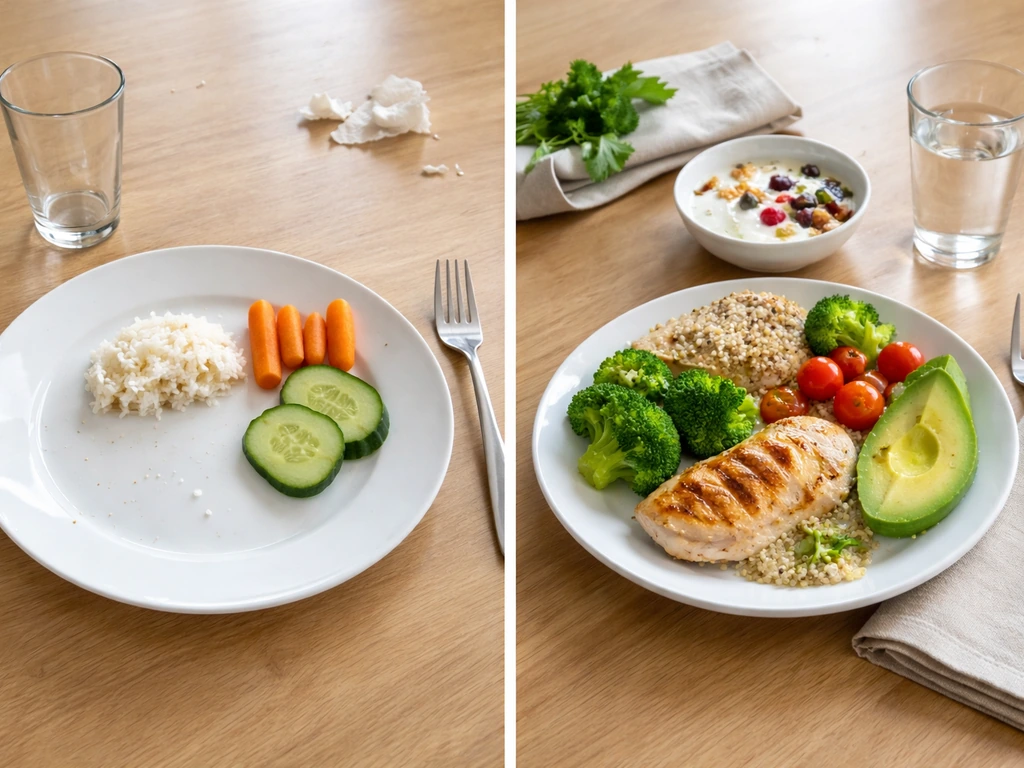
This is where honest expectations matter. Nutrition has the biggest measurable impact on height when someone is deficient or severely restricted. The research is very consistent on this: the children who benefit most from nutritional interventions are those who start from a lower height-for-age z-score, meaning they were already behind. For a well-nourished child eating a varied diet in a food-secure environment, there's much less height to be recovered from better eating because the deficiency gap doesn't exist.
Genetics still accounts for the majority of height variation between individuals. Estimates generally put heritability of adult height at around 60 to 80 percent in well-nourished populations. Sleep and growth hormone secretion (most of which happens during deep sleep) also play a significant role, as does overall health status. Conditions like celiac disease illustrate this clearly: children with undiagnosed celiac typically show poor growth, and after starting a gluten-free diet, most experience catch-up growth at supranormal velocity, not because of a magic diet, but because the underlying malabsorption blocking their nutrition was removed. Illness, not food choices, was the barrier.
The practical summary: if your growth plates are open, you're in a food-insecure or deficient situation, or you have an undiagnosed condition affecting absorption, nutrition can significantly affect your height outcome. If you're already well-nourished and growing at a normal rate, eating more won't make you taller than your genetics allow.
How much to eat: the under-eating risk, the overeating trap, and what's realistic
Under-eating is a real and well-documented risk to height. The signs that nutrition is likely holding back growth include: dropping percentiles on a growth chart over several months, chronic fatigue or poor recovery from illness, thin hair or brittle nails suggesting micronutrient deficiency, and any history of very restrictive eating, a limited diet, or food insecurity. If a child's height drops below the 3rd percentile or falls by 2 or more major percentile lines over time, that warrants a clinical evaluation, not just more food at home.
Overeating has its own complications that are often misunderstood. A common assumption is that more calories means more height, but this is not how it works. Excess calories, particularly when they drive obesity, are actually linked to earlier puberty onset, especially in girls. Earlier puberty means an earlier growth spurt, but also earlier growth plate closure.
A meta-analysis found strong evidence that overweight and obese children are significantly more likely to experience early puberty. A longitudinal study on overweight young adults found that gaining excess BMI from ages 2 to 8 was associated with only tiny height differences later (about 0. 23 cm in boys and 0. 29 cm in girls), and those associations were mixed rather than clearly positive.
More body weight is not the same as more height, and it can actually compress the growth timeline.
Realistic expectations look like this: good nutrition during growth years may help you reach the top of your genetic height range rather than the bottom. For most people in developed, food-secure settings, that difference might be a couple of centimeters. For children in food-insecure or deficiency-heavy contexts, the recoverable height gap is much larger. Broccoli is one of the foods that can help you hit those key nutrients, but it won't override your genetics or the timing of growth plate closure. No eating pattern can push you meaningfully above your genetic ceiling.
A simple, practical approach to eating for growth

You don't need a complicated protocol. The goal is consistent adequacy across the nutrients that actually matter for growth, without over-engineering anything. Here's what that looks like day to day:
- Hit protein at every meal. Growing children and teens need somewhere around 0.85 to 1.5 grams of protein per kilogram of body weight per day, with higher needs during puberty. Eggs, meat, fish, dairy, legumes, and tofu are all practical sources. Don't let protein be the meal's afterthought.
- Include a calcium-rich food daily. Dairy (milk, yogurt, cheese) is the most bioavailable source, and the research on dairy and height in children is fairly consistent. If dairy isn't an option, fortified plant milks, sardines, and leafy greens like bok choy contribute meaningfully.
- Get vitamin D status checked, especially in low-sunlight environments or if the diet is low in fatty fish and fortified foods. Deficiency is extremely common and quietly undermines calcium absorption and bone growth.
- Eat zinc-rich foods regularly: beef, shellfish (especially oysters), pumpkin seeds, lentils, and chickpeas are all good sources. Zinc deficiency is particularly common in diets that are low in animal foods.
- Eat a variety of vegetables and fruit. This is where folate, vitamin A, and dozens of other micronutrients come from. The multi-micronutrient research shows that the combined effect is greater than any single nutrient, which is exactly what a varied diet delivers.
- Don't let under-eating fly under the radar. If a child is a very picky eater, eating very small amounts, or has had unexplained slow growth, a pediatrician can run basic labs (zinc, vitamin D, ferritin, CBC) to catch deficiencies early.
- Protect sleep. This isn't nutrition, but it belongs in any growth conversation. Most growth hormone is released during deep sleep, so chronic sleep deprivation undermines what good nutrition is trying to accomplish.
A simple day of eating that covers the bases
| Meal | Key nutrients covered |
|---|---|
| Breakfast: eggs with whole grain toast and a glass of milk or fortified plant milk | Protein, vitamin D, calcium, zinc, B vitamins |
| Lunch: chicken, lentil, or tuna wrap with leafy greens | Protein, zinc, iron, folate, vitamin A |
| Snack: yogurt with fruit, or a handful of pumpkin seeds | Calcium, protein, zinc, vitamin C |
| Dinner: salmon or beef with roasted vegetables and rice or potatoes | Protein, omega-3s, zinc, vitamin A, vitamin C, energy |
This is not a rigid plan. It's a pattern. The goal is that protein, calcium, zinc, and micronutrients show up consistently across the day rather than appearing once and disappearing.
When to talk to a doctor
If a child is consistently tracking below the 3rd percentile on a growth chart, or if their height trajectory has clearly dropped across two or more percentile lines over several months, that's worth a clinical evaluation, not a nutrition fix at home. A doctor can assess bone age via wrist X-ray to determine how much growth time remains, check for endocrine causes (thyroid, growth hormone deficiency), screen for malabsorption conditions, and run labs for common deficiencies. The Endocrine Society recommends a full growth evaluation in these cases, because some causes of slow growth (hormone issues, celiac, chronic illness) require medical treatment, not just better meals.
Specific nutrients like protein and zinc have the strongest evidence for supporting linear growth, which is covered in more depth in related topics on whether protein helps you grow and what vitamins help you grow. The nutrients in that last section include vitamins, and vitamin D in particular is one of the key what vitamins help you grow options to focus on.
If you're specifically wondering about individual foods like broccoli, or about the impact of habits like running or coffee consumption on growth, those are worth looking at separately since the evidence varies quite a bit by factor. If you are wondering does coffee help you grow, the key idea is that growth depends more on overall nutrition adequacy during your growth years than on any single drink. Broccoli is often discussed for growth, but it mainly matters if it helps you meet your overall nutrient needs rather than acting like a direct height booster.
For example, the question does coffee help you grow is usually answered by looking at whether caffeine displaces key nutrients or affects sleep rather than expecting a direct height boost coffee consumption. Running can be great for overall health, but when it comes to height, nutrition and your growth plates matter much more. If you’re wondering, does running help you grow, the evidence points to nutrition and your growth plates as the real drivers Running can be great for overall health.
The bottom line is simple: eat enough, eat varied, correct any deficiencies, protect sleep, and if something seems off with growth velocity, get it checked early. Vegetables can be a helpful part of getting the nutrients your body needs to support healthy growth. That's the full, honest picture of what eating can and can't do for height.
FAQ
If eating more helps, how much more should a child eat to grow taller?
Not directly. If a child is already meeting nutrient needs and growing along their usual percentile, extra food usually will not increase height beyond what genetics and open growth plates allow. The more useful question is whether they’re deficient or under-eating for their age and activity level.
Should I rely on supplements to help with height, or is food better?
Focus on meeting requirements for protein, calcium, zinc, vitamin D, and overall calories for normal growth, plus micronutrients from a varied diet. Supplements help only when they correct a proven gap, because “more” of one nutrient without deficiency typically does not translate into extra height.
Can my child be eating enough calories but still not grow?
You can have adequate calories but still stall if the diet lacks key micronutrients or if the body cannot absorb them. If growth slows despite “healthy eating,” consider medical causes like celiac disease, chronic gastrointestinal issues, or other malabsorption rather than assuming it’s a food quantity problem.
Do meal timing or skipping breakfast affect height growth?
Yes, but it’s usually not a “food timing” issue. Missing nutrients during the months when growth plates are active matters, however consistent daily inadequacy (skipping meals, very restrictive diets) is more likely to impair growth than an occasional missed snack.
When should slow growth be checked by a doctor instead of trying to change the diet?
If height percentiles drop by about two or more major percentile lines over several months, or they fall below the 3rd percentile, that’s a strong reason to get evaluated. A doctor may check bone age (hand and wrist X-ray), growth velocity, and labs for deficiencies or endocrine and absorption problems.
How does sleep relate to the question of whether eating helps you grow?
Sleep affects growth hormone release, especially during deep sleep, so poor sleep can indirectly reduce growth even if nutrition is adequate. A practical target is consistent bedtime, enough total sleep for age, and addressing sleep disruptions like apnea symptoms or restless sleep.
Does gaining weight in childhood help you grow taller, or can it backfire?
If puberty starts early, growth can be compressed because growth plates often fuse sooner. Over-nutrition and rapid weight gain can be linked with earlier puberty timing, so “more eating” is not the strategy to maximize final height.
Can teens still grow taller if they improve their diet now?
For adolescents, the key variable is whether growth plates are still open. Once they fuse, height will not increase with diet or supplements, though nutrition still matters for bone density and posture. If unsure, bone age assessment can clarify the remaining growth window.
Does coffee affect height growth through diet or sleep?
Coffee and other caffeine sources don’t act like direct height blockers for most people, but they can matter if they reduce appetite, replace nutrient-dense foods, or worsen sleep. The practical approach is moderation and making sure caffeine does not displace meals or harm bedtime routines.
Is running or sports enough to help you grow taller, or do you still need specific nutrients?
Exercise like running supports overall health, but it is not a substitute for nutrition during the growth years. For height outcomes, ensure adequate energy and key nutrients, and treat persistent pain, under-eating, or overtraining as potential reasons growth could be compromised.
Next Article
Does Running Help You Grow Taller? Evidence and Safe Tips
See if running can help you grow taller at different ages, what it can and can’t do, plus safe tips and myths.