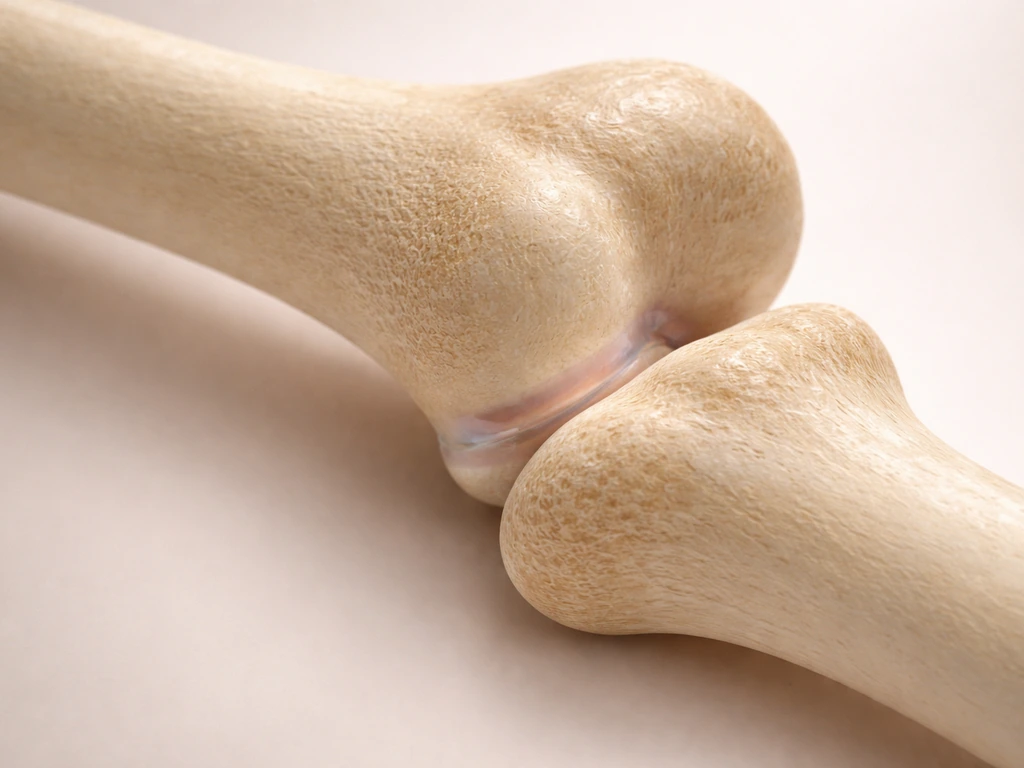
Protein helps you grow muscle, yes, but it does not make you taller once your growth plates have closed. For kids and teenagers who are still actively growing, getting enough protein is genuinely important because a deficiency can limit linear growth. But for adults, extra protein will build and repair muscle tissue, not add centimeters to your height. That distinction matters a lot depending on where you are in life, and it shapes everything about how you should be thinking about protein intake.
Does Protein Help You Grow Muscle and Height?

Marcus Reeves
23 Apr 2026
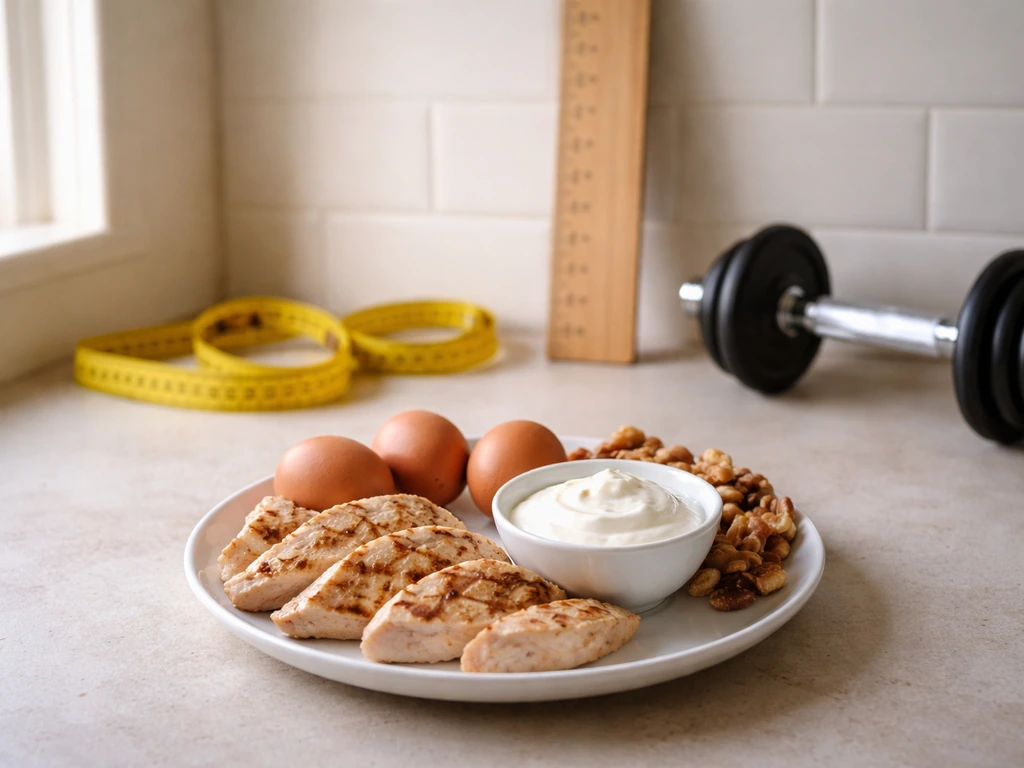
Protein and 'growing': height vs muscle
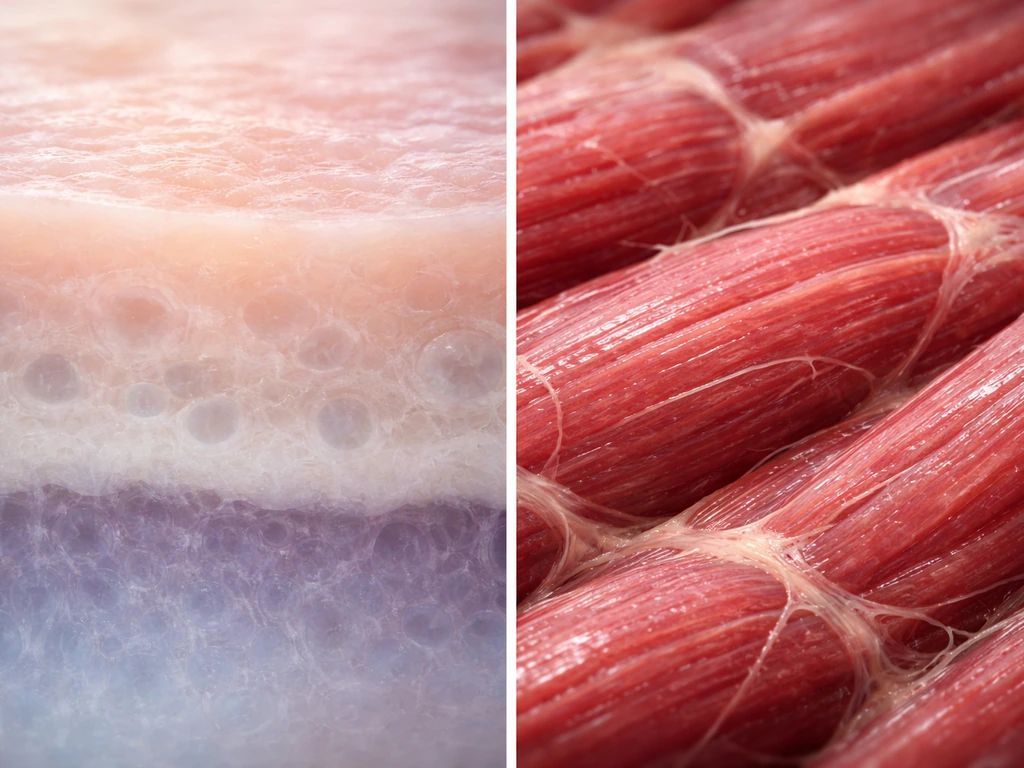
When people ask whether protein helps you grow, they usually mean one of two very different things. The first is height, which is driven by growth plates (the cartilaginous zones near the ends of long bones) responding to growth hormone and IGF-1 signals during childhood and adolescence. The second is muscle size, which is a completely separate biological process involving the repair and synthesis of muscle protein fibers after mechanical loading. Protein plays a role in both, but in completely different ways and with very different limits.
For height, the research is clear: protein matters most when intake is inadequate. Studies in young children in low-income settings show that protein or amino acid supplementation can support physical growth when deficiency exists, but if protein needs are already being met, adding more does not meaningfully accelerate height.
Studies and evidence synthesized in a systematic review of young children in low-income countries indicate that protein or amino-acid supplementation can support physical growth when baseline protein is inadequate [protein or amino acid supplementation can support physical growth when deficiency exists](https://pmc. ncbi. nlm. nih.
gov/articles/PMC5914345/). Energy availability, sleep, genetics, and key micronutrients all play essential roles alongside protein. So protein is a necessary ingredient for normal growth during development, but it is not a lever you can pull to grow taller beyond your genetic potential. Once growth plates fuse (typically in the late teens), that chapter closes entirely regardless of how much protein you eat.
Vitamins, vegetables, and overall diet quality matter alongside protein during development, and those interactions are worth understanding separately. If you are wondering what vitamins help you grow, focus first on micronutrients that support normal development and bone health rather than trying to exceed your basic protein needs Vitamins, vegetables, and overall diet quality.
For muscle, the story is more actionable. Protein is genuinely the key macronutrient for building and repairing muscle tissue, and eating enough of it, especially when combined with resistance training, produces measurable gains in muscle mass and strength. That is well-supported by multiple systematic reviews and meta-analyses.
How protein actually builds muscle
Muscle protein synthesis (MPS) is the process by which your body assembles new muscle proteins from amino acids, and it is the engine behind muscle growth. When you eat protein, your digestive system breaks it down into amino acids that enter the bloodstream. Certain essential amino acids, especially leucine, act as direct triggers for a signaling pathway called mTORC1, which switches on the machinery for building new muscle tissue.
Leucine is particularly important here. Research shows that the anabolic response to a protein-containing meal is largely driven by how much leucine is present. Once you hit a threshold amount, the mTORC1 signal is maxed out, and extra leucine in that same meal does not produce additional MPS. This is one reason why spreading protein across meals tends to work better than eating most of it in one sitting.
There is also a meaningful point about amino acid availability and insulin: insulin alone does not stimulate MPS if blood amino acid levels are low. You need both the hormonal environment and the raw materials (amino acids) to be present at the same time for the anabolic signal to translate into actual muscle building.
One nuance worth knowing: as you age, this process becomes less efficient. Older adults experience what researchers call anabolic resistance, meaning it takes a larger dose of essential amino acids to produce the same MPS response that a younger person gets from a smaller amount. This is why protein recommendations for older adults are higher than for younger people, and it is also relevant to the height growth conversation since this kind of hormonal and metabolic shift accelerates after the growth period ends.
Protein alone won't do it: training is the other half

Protein without resistance training will not build meaningful muscle. Training is the stimulus that tells your body muscle tissue needs to be repaired and reinforced. A single bout of resistance exercise elevates MPS for up to 24 to 48 hours afterward, creating a window where incoming amino acids are prioritized for muscle building rather than other metabolic tasks. Repeated training bouts over weeks and months stack these windows into actual measurable hypertrophy.
Training volume, meaning the total number of sets you perform per muscle group per week, has a dose-response relationship with hypertrophy. More weekly sets generally produce more muscle growth up to a point. Research on training frequency shows that when total weekly volume is matched, spreading sessions across more days does not automatically produce more muscle growth. What matters most is accumulating enough total volume with enough mechanical tension. Protein is the raw material your body uses to respond to that stimulus. One without the other is far less effective.
Timing matters too, though perhaps less than the fitness industry suggests. Distributing your protein intake across the day in roughly equal doses, something like every 3 to 4 hours, appears to support MPS better than eating the same total amount in one or two large meals. The ISSN nutrient-timing position stand suggests that ingesting 20, 40 g protein about 0.25, 0.40 g/kg per dose every 3 to 4 hours most favorably affects muscle protein synthesis rates. One well-cited study found that 20 grams of whey protein every 3 hours across a 12-hour recovery window produced greater myofibrillar protein synthesis than a pulse or bolus pattern, even when total protein was matched.
How much protein to eat and where to get it
The right amount of protein depends on your age, body weight, and whether you are training. Here is a practical breakdown based on current evidence and major nutritional guidelines.
| Population | Recommended Daily Protein | Notes |
|---|---|---|
| Sedentary adults (maintenance) | 0.83 g/kg body weight | EFSA population reference intake; minimum for nitrogen balance |
| Active adults / recreational exercisers | 1.4 to 2.0 g/kg body weight | ISSN recommendation to optimize training adaptations |
| Serious strength / hypertrophy focus | 1.6 to 1.8 g/kg body weight | Upper range where dose-response plateaus around 1.5 to 1.6 g/kg |
| Older adults (60+, sedentary) | At least 1.0 g/kg body weight | ESPEN guideline to preserve lean mass |
| Older adults (60+, training) | 1.2 to 1.6 g/kg body weight | Higher need due to anabolic resistance |
| Children and teens (growing) | Adequate intake per age-based DRI | Deficiency impairs linear growth; excess above needs does not increase height |
The research on dose-response is pretty clear that gains in muscle mass start to plateau at around 1.5 to 1.6 grams per kilogram of body weight per day. Going significantly above that range provides diminishing returns for most people, though individual variation exists. A 75 kg person aiming for muscle growth is therefore looking at roughly 112 to 135 grams of protein per day as a practical target.
Best food sources of protein
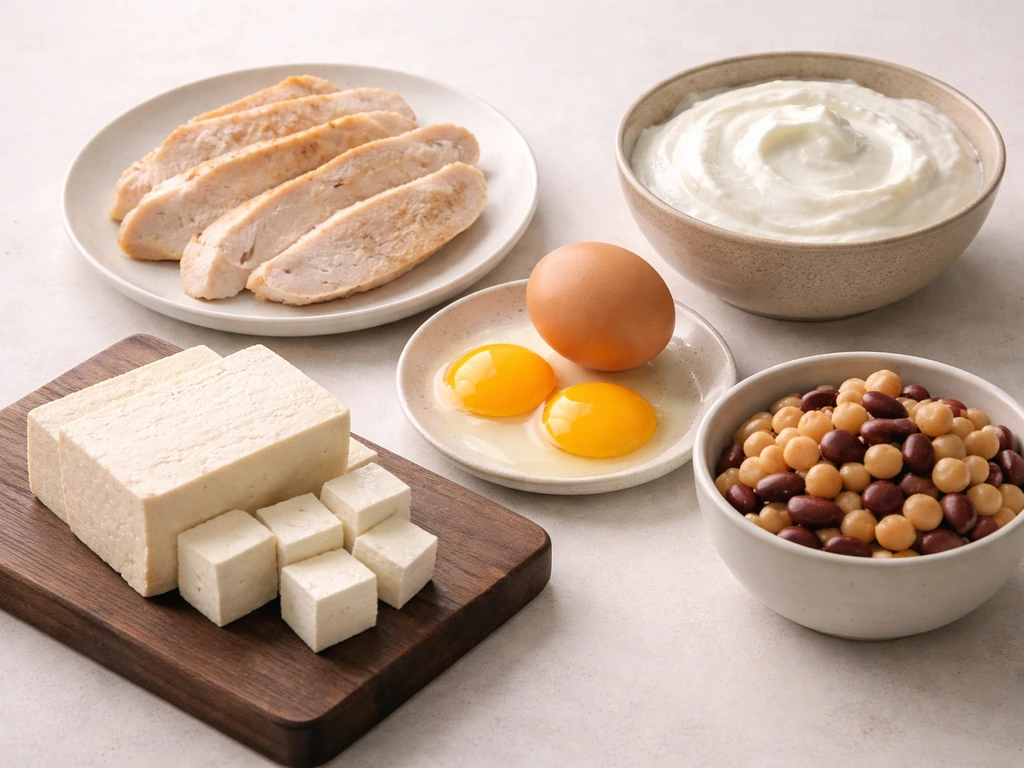
- Chicken breast: about 31 g protein per 100 g cooked
- Eggs: about 6 g per large egg, with excellent leucine content
- Greek yogurt: 15 to 20 g per 170 g serving depending on brand
- Cottage cheese: about 25 g per cup, contains slow-digesting casein
- Salmon and tuna: 25 to 30 g per 100 g cooked, with added omega-3 benefit
- Lean beef: about 26 g per 100 g cooked
- Lentils and beans: 15 to 18 g per cooked cup, lower leucine but useful for volume
- Tofu and tempeh: 10 to 20 g per 100 g depending on firmness
Animal-based proteins are generally higher in leucine and are considered complete proteins, meaning they contain all essential amino acids in adequate ratios. Plant-based proteins can absolutely meet your needs, but you may need to eat slightly more total protein or combine sources (like rice and legumes) to match the essential amino acid profile of animal proteins. Whey protein in particular stands out in research because of its high leucine content and rapid digestion rate, which makes it well-suited for the post-exercise window.
Does protein powder actually help, and how to use it safely
Protein powder can be a legitimate and practical tool for hitting your daily protein targets, but it is not magic and it is not mandatory. Multiple meta-analyses confirm that protein supplementation combined with resistance training does augment gains in muscle mass and strength compared to training without supplementation. A randomized controlled trial that matched total calories and total protein across groups still found that whey supplementation produced greater lean mass gains than soy or a carbohydrate control, pointing to something specific about whey's amino acid profile and digestion speed beyond just the total protein number.
In practice, powder is most useful when you are struggling to hit your protein target from whole foods alone, when you need a fast and portable post-workout option, or when appetite is low (common in older adults trying to meet higher protein needs). It is not superior to whole food protein in most contexts, and relying on it exclusively at the expense of nutrient-dense meals misses the broader dietary picture.
Safety: what to look for in a protein powder
The supplement industry is not pre-tested or pre-approved the way conventional food is, and independent testing has found detectable levels of heavy metals including lead in multiple popular protein powders. This does not mean all powders are dangerous, but it does mean you should not assume a product is clean just because it is sold in a reputable store. The most practical step is to choose products that carry third-party certification from organizations like NSF International or Informed Sport. These certifications involve independent testing for contaminants and label accuracy, which meaningfully reduces your risk compared to uncertified products.
- Look for an NSF Certified for Sport or Informed Sport logo on the label
- Avoid products with long lists of artificial fillers, thickeners, or proprietary blends that obscure actual doses
- Start with a simple product: whey concentrate, whey isolate, or a plant-based blend with a clear amino acid profile
- Treat powder as a supplement to your diet, not a replacement for whole protein foods
What realistic results look like and what protein cannot do
Muscle growth is slow. Even under ideal conditions, with consistent resistance training, adequate protein, good sleep, and a slight caloric surplus, most people gain somewhere between 0.5 and 2 pounds of lean mass per month in early training. Studies capturing hypertrophy typically run 6 weeks to 6 months, and that is the realistic window in which you start to see and measure meaningful changes. There is no version of protein intake that shortens this timeline significantly. You will notice strength improvements within weeks, but visible muscle size changes take longer.
For height specifically, the answer is straightforward. If you are a child or teenager who is not meeting protein requirements, improving your diet will support normal growth, alongside total calories, sleep, and other nutrients. Some people wonder if coffee helps you grow, but protein and total calories matter far more for height during development improving your diet will support normal growth.
Broccoli is a nutritious vegetable, but it does not replace the need for enough protein and overall calories to support height growth during development protein and total calories matter far more for height during development. But eating more protein than you need will not push height above your genetic potential. And if you are an adult with closed growth plates, no amount of protein, no supplement, and no dietary strategy will increase your height.
The question of whether other factors like running or specific eating habits influence height during development is worth exploring, but protein's role is enabling normal growth when it is deficient, not unlocking extra growth beyond your biology. Running can influence overall fitness, but when it comes to height, protein is not what determines whether you grow taller.
What protein genuinely does for adults is help you build and maintain muscle mass, support recovery from training, and preserve lean body mass as you age. Those are real, meaningful benefits. They just have nothing to do with getting taller. Understanding that distinction lets you use protein strategically for what it actually does, rather than expecting it to do something it cannot.
Your practical starting point
If your goal is muscle growth, start by estimating your body weight in kilograms and multiply by 1.6. That gives you a daily protein target in grams that is well within the research-supported range for most training individuals. Build your meals around protein-first choices, aim to spread intake across 3 to 4 meals, and prioritize resistance training 3 or more times per week. If whole food alone is not getting you there, a certified protein powder is a reasonable addition. Give it at least 8 to 12 weeks of consistent effort before evaluating results, because meaningful muscle adaptation does not show up overnight regardless of how much protein you eat.
FAQ
If I’m a teen, will more protein make me taller faster?
Only if you are not currently meeting your protein needs. Once overall calories, protein, sleep, and key micronutrients are adequate, extra protein usually does not accelerate height. Height speed is mainly limited by your growth plates and genetics, so the practical goal is “enough,” not “more.”
Does protein help with height if I’m an adult?
No. If your growth plates are closed, protein cannot increase bone length. For adults, protein’s real job is supporting muscle repair and preserving lean mass, which can improve body composition and posture but not your measured height.
How can I tell if I’m protein deficient as a kid or teenager?
Common signs include falling behind on growth compared with peers, persistent low weight for height, low overall intake, or a diet that consistently lacks protein foods (meat, fish, eggs, dairy, legumes, soy, or mixed plant proteins). The best next step is tracking daily intake for several days and comparing it to age-appropriate targets, ideally with a clinician if growth concerns exist.
Does eating protein close to bedtime matter for muscle growth?
It can. If you train in the evening or go long periods without protein, a protein dose at night can help maintain amino acid availability for muscle protein synthesis. However, the largest driver remains total daily protein plus consistent resistance training.
Is whey protein better than plant protein for growth goals?
Whey often works well because it is rich in leucine and is quickly digested, which can make hitting the anabolic “signal” easier. Plant proteins can absolutely support muscle, but you may need to combine sources or eat a bit more total protein to match essential amino acid profiles, especially leucine content.
Do I need to hit a specific protein dose per meal or is total daily protein enough?
Both matter, but per-meal dose helps you stay within the anabolic response window. Spreading protein across 3 to 4 meals typically improves results compared with one or two large meals, because it reduces the chance that any single meal is “wasted” once leucine and amino acid availability exceed the signaling threshold.
Will protein help if I’m not doing resistance training?
Not meaningfully for muscle gain. Without mechanical loading, extra protein mainly supports maintenance and normal metabolic needs, not hypertrophy. Protein is a necessary input, but the training stimulus is what tells your body to build and adapt.
How much protein is too much for muscle building?
For most people, gains tend to plateau around roughly 1.5 to 1.6 g per kg per day. Higher intakes can still be tolerated by many healthy adults, but the return usually diminishes, and very high intakes can crowd out nutrient-dense foods or increase GI discomfort.
Can I use protein powder to replace meals?
You can use it strategically, but replacing whole meals entirely can be a mistake. Whole-food protein usually brings additional nutrients (fiber, micronutrients, fats) that support health and, for growing kids, overall development. If you use powder, consider pairing it with fruits, vegetables, and carbohydrate sources appropriate to your training and goals.
What’s a safer way to choose protein powder?
Look for third-party testing that verifies label accuracy and contaminant screening. Also check for ingredient transparency and avoid products without independent certification, since contamination and label errors are possible even from mainstream brands.
If I don’t see muscle growth after increasing protein, what should I check first?
Recheck training quality and total weekly volume (sets per muscle group), consistency over at least 8 to 12 weeks, and whether you are actually in a slight surplus if your goal is growth. Also confirm you are meeting total daily protein and not only adding powder while missing overall calories.
Next Article
What Vitamins Help You Grow: Evidence and Safe Guidance
Evidence on vitamins for height: how deficiency correction and nutrients like D support normal growth, safe dosing guida