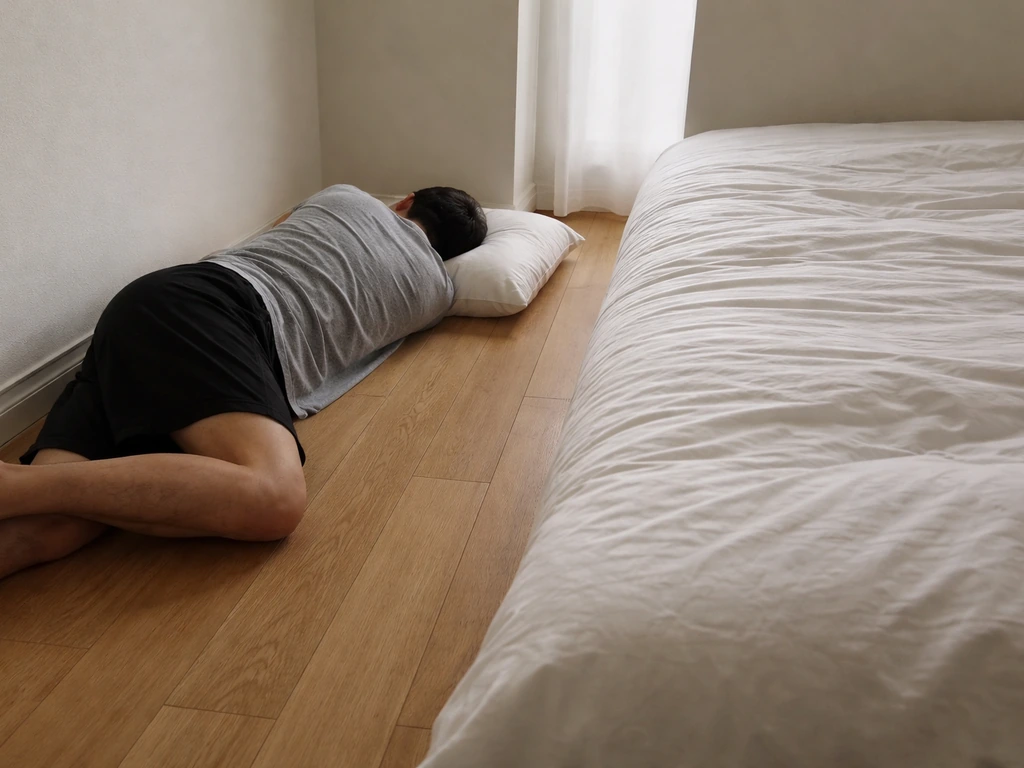
No single sleeping position will make you taller, but back sleeping and side sleeping both support the conditions your body needs to grow well: good sleep quality, proper spinal alignment, and uninterrupted deep sleep where growth hormone is actually released. If you are wondering, “does sleeping make you grow,” the key is that sleep supports growth mainly by helping growth hormone peak during deep sleep. If you want to pick one position today, sleeping on your back with a supportive pillow under your neck (or on your side with a pillow between your knees) gives your spine the best chance to stay neutral overnight, reduces sleep disruptions, and keeps the hormonal machinery of growth running properly.
What Sleeping Position Helps You Grow Safely

Marcus Reeves
8 Jun 2026
How much sleeping position can (and can't) affect height growth
Let's be direct: sleeping position does not control how tall you grow. It doesn't stretch your bones, signal your growth plates to stay open, or add centimeters to your frame. The factors that actually determine your adult height are genetics (the single biggest driver), the timing and duration of your pubertal window, nutrition across your growing years, and whether chronic illness or stress interrupted development. Sleeping position sits nowhere near the top of that list.
What posture during sleep can do is indirect but still worth paying attention to. A position that keeps your spine neutral reduces overnight compression and lets intervertebral discs rehydrate properly, which means you wake up closer to your true standing height instead of compressed and stiff. A position that doesn't collapse your airway or trigger acid reflux protects your sleep quality, which protects your deep sleep stages, which is exactly when growth hormone peaks. So posture matters, just not in the magic-trick way the question sometimes implies.
The growth science: what actually drives height vs what sleep posture can support
Height comes from bone lengthening at the growth plates, the cartilaginous tissue near the ends of long bones. During childhood and adolescence, those plates are open and actively adding length. Once puberty is complete, the plates fuse and that mechanism closes permanently. No supplement, stretch, or sleep trick reopens them. This is the biological ceiling that any conversation about growing taller has to start with.
[The link between sleep and growth is real, but it runs through hormones, not body position. ](https://pmc. ncbi. nlm.
nih. gov/articles/PMC8730357/) Growth hormone (GH) secretion peaks at the onset of deep, slow-wave sleep. Research tracking plasma GH levels has confirmed that the largest GH pulse of the day appears right when slow-wave sleep begins. GH works alongside IGF-1 to stimulate tissue growth, and reviews of the GH/IGF-1 axis have shown that sleep loss or sleep disorders can reduce both GH and IGF-1 secretion.
So if you want to do sleeping help you grow taller in a real way, focus on improving sleep quality and avoiding disruptions sleep loss or sleep disorders. Separately, one study on total 24-hour GH secretion in sleep-deprived subjects found the relationship is more complex than a simple daily deficit model, so we shouldn't overstate it either.
The practical takeaway is this: sleeping position helps growth indirectly by protecting the quality and duration of sleep, particularly the deep sleep stages where GH does its work. If you're wondering whether does sleeping on the floor help you grow taller, focus on how it affects your sleep quality and deep sleep rather than the mattress surface itself. A position that causes snoring, reflux, or neck pain is one that fragments sleep, shortens deep sleep, and therefore quietly undermines the hormonal environment that growing bodies depend on.
Best sleeping position for sleep quality and spinal alignment: back vs side
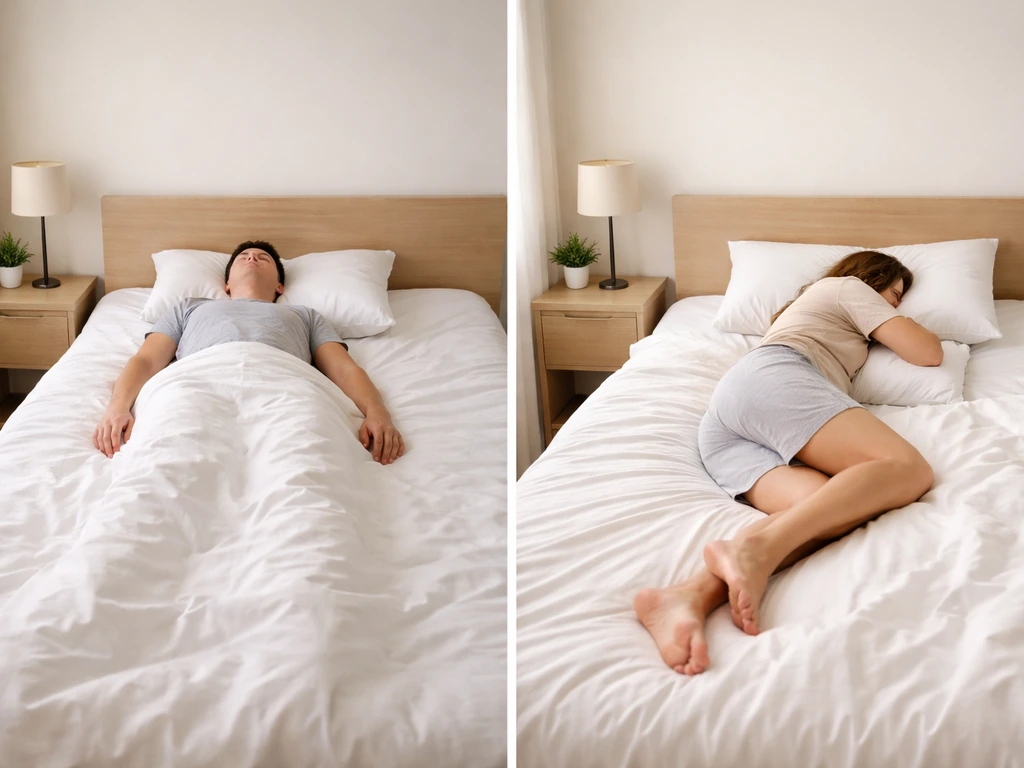
Both back sleeping and side sleeping can work well, and the right choice depends partly on your individual anatomy, whether you snore, and whether you have reflux. Here's how they compare across the things that matter for growth-related sleep.
| Factor | Back sleeping (supine) | Side sleeping (lateral) |
|---|---|---|
| Spinal alignment | Excellent when pillow height is correct; spine stays neutral | Good with pillow between knees to prevent pelvic tilt |
| Snoring / sleep apnea risk | Higher; airway more likely to collapse in supine position | Lower; side position reduces apnea index significantly |
| GERD / acid reflux | Moderate risk; acid can pool at esophageal junction | Left side is best; right side can worsen reflux |
| Spinal decompression overnight | Very good; gravity distributed evenly across the back | Good; less compression than stomach sleeping |
| Pillow setup complexity | Moderate; pillow height is critical for neck neutrality | Moderate; need pillow between knees and under neck |
Back sleeping is often described as the gold standard for spinal alignment because it distributes weight evenly and keeps the cervical spine in a neutral arc, provided the pillow isn't too high or too low. Ohio State University's Wexner Medical Center specifically cites back sleeping as the best position for a neutral spine. The downside is that supine positioning significantly increases snoring and obstructive sleep apnea events. Research in children with sleep apnea found the apnea index was 4.6 events per hour in the supine position compared to 2.7 per hour on the side. For anyone who already snores or has suspected sleep apnea, back sleeping can actively undermine growth-relevant sleep quality.
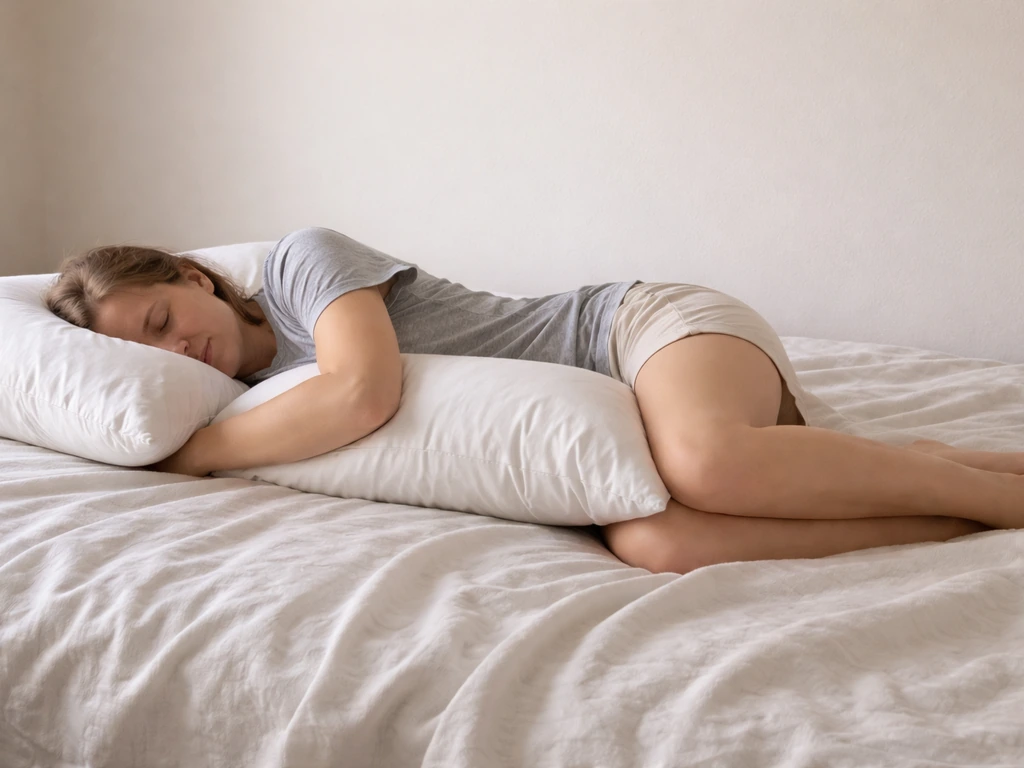
Side sleeping, particularly on the left side, handles most of those problems. The lateral position reduces airway collapse, dramatically lowers apnea events, and (on the left specifically) reduces acid exposure to the esophagus overnight. A systematic review and meta-analysis confirmed that left lateral decubitus sleeping is associated with fewer reflux symptoms compared with right-side or supine positions. The trade-off is that overlapping legs can create a pelvic tilt that loads one hip and the lower spine, which is why using a pillow between the knees is a standard recommendation, not an optional one.
Stomach sleeping (prone) is the one position worth avoiding. It forces the neck into an extended rotation, compresses the lumbar spine, and provides no alignment benefits. Some older data even showed higher apnea indices in prone positioning than side sleeping in children with OSA. There is no scenario where prone sleeping is the right choice for growth or spinal health.
How to set up pillows and mattress for a neutral spine
Pillow height is one of the most underappreciated variables in sleep quality. Biomechanics research on cervical pillow design found that pillow height is a critical design parameter for supporting neutral head and neck posture in the supine position. Too high and your neck flexes forward; too low and it hyperextends. Either way you get muscle tension, interrupted sleep, and a neck that hurts in the morning.
For back sleepers
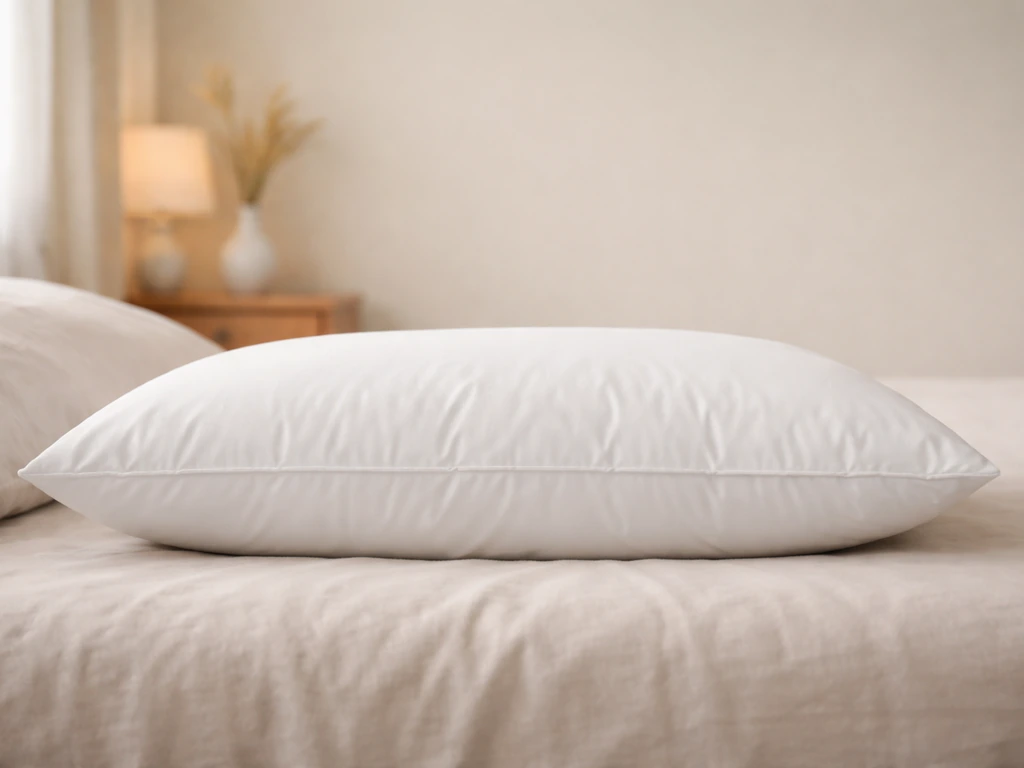
- Choose a pillow that keeps your head level with your chest and upper back, not pushed forward. A medium-loft pillow (roughly 3 to 5 inches for most adults) works for most people, but broader shoulders or a thicker neck may need more loft.
- Place a second pillow or rolled towel under your knees to slightly flex the hips. This reduces lumbar tension and keeps the natural lumbar curve intact.
- Your mattress should be firm enough to support your weight without letting the hips sink and arch the lower back, but not so hard that it creates pressure points on the sacrum. Medium-firm is the most commonly recommended range for neutral spinal alignment.
- Avoid stacking multiple thick pillows. This is the most common back-sleeping mistake and it cranks the neck into forward flexion for hours.
For side sleepers
- Use a pillow between your knees, not just under them. The goal is to keep the top leg from dropping forward and rotating the pelvis, which strains the lumbar spine and hip. Mayo Clinic guidelines for back pain specifically recommend this setup.
- Your head pillow needs to be higher than a back-sleeping pillow, because it's now filling the gap between your ear and the mattress. Without enough height, your neck tilts downward and the cervical spine bends laterally for hours.
- Hug a body pillow or place a regular pillow against your chest and abdomen to prevent the torso from rotating forward into a near-prone position while you sleep.
- Left-side preference matters if you have reflux. If you only have snoring concerns, either side reduces apnea risk compared with back sleeping.
If you're a teen vs an adult: what 'growing' means for your age
If you're a teenager, you are in the window where sleep quality genuinely connects to measurable growth. Your growth plates are open, GH is pulsing during deep sleep, and you are physically building height. The American Academy of Sleep Medicine and the American Academy of Pediatrics both recommend 8 to 10 hours of sleep per 24-hour period for adolescents aged 13 to 18. That number isn't arbitrary.
It reflects the amount of sleep time that allows for sufficient deep-sleep cycles, and therefore sufficient GH secretion, to support normal development. Getting 6 hours instead of 9 is not just a lifestyle trade-off; it's potentially cutting short the hormonal peak that drives growth. Your sleep position matters because anything that fragments your sleep (snoring, discomfort, reflux) steals time from those deep-sleep cycles.
If you're an adult, the growth plate conversation is largely over. Bone lengthening stopped when your plates fused after puberty, and no sleeping position changes that. What adults experience with height day-to-day is mostly related to spinal disc hydration and posture. You're about half an inch to three-quarters of an inch taller in the morning than in the evening due to disc compression from being upright all day, and that's true for everyone regardless of sleep position. A neutral sleeping position helps your discs rehydrate fully overnight, which means you maintain your true height rather than compressing it further. Adults also benefit from good sleep for recovery, immune function, and mood, even if the growth-plate window is closed.
Common sleep-position issues that hurt rest (and therefore growth-related recovery)
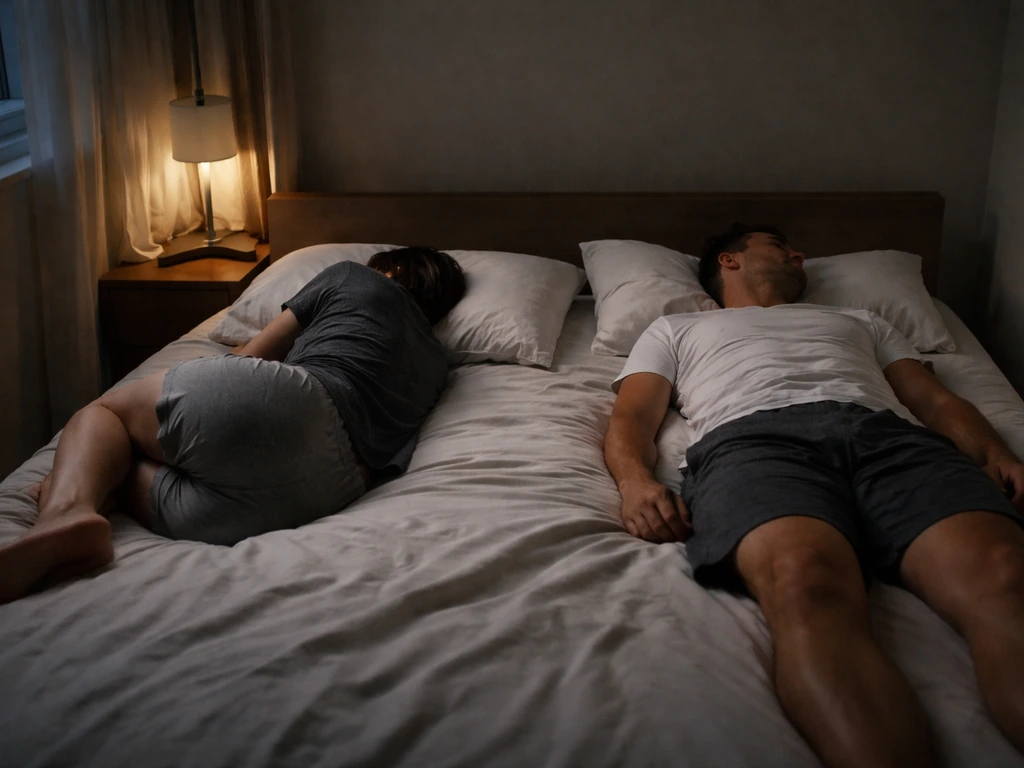
Several common sleep problems are position-dependent and worth addressing directly because they interrupt the deep sleep that matters most for growth hormone release.
- Snoring and obstructive sleep apnea: Back sleeping increases airway collapse, especially in children and teens. If you or your child snores loudly or wakes up tired despite enough hours in bed, positional changes toward side sleeping are a reasonable first step, but persistent snoring in children warrants medical evaluation. The AAP recommends screening all children for snoring and, when sleep apnea is confirmed, adenotonsillectomy is typically the first-line treatment with CPAP as an alternative for some patients.
- Acid reflux (GERD): Right-side and supine sleeping both increase esophageal acid exposure. Left lateral sleeping is the evidence-backed position for reducing nocturnal reflux events, confirmed by both pH monitoring studies and randomized trials. If reflux is waking you or your child up, switching to the left side is worth trying tonight.
- Neck and upper back pain: Almost always a pillow-height problem. A pillow that is too flat for side sleeping or too thick for back sleeping forces the cervical spine out of neutral for hours. The fix is adjusting pillow loft before buying a new mattress or seeing a specialist.
- Lower back pain: Back sleepers without knee support and side sleepers without a between-knee pillow both create lumbar loading that builds through the night. Adding the appropriate pillow support, as described above, often resolves this within a few nights.
- Shoulder pain: Side sleepers frequently develop shoulder pain on the down-side arm if the mattress is too firm and creates a pressure point. Either softening the surface locally (a mattress topper) or switching to the opposite side temporarily can help.
Immediate next steps to maximize growth-related sleep quality
Here's what you can actually do starting tonight and over the next few days to make sleep work as hard as possible for growth and recovery.
- Pick your position: If you snore or have reflux, move to your left side tonight with a pillow between your knees and a properly lofted pillow under your neck. If you don't have those issues and prefer back sleeping, set up a pillow under your knees and confirm your head pillow keeps your neck level with your spine.
- Hit the sleep duration target: For teens, that means 8 to 10 hours, consistently, not just on weekends. For younger children it's even more. Adults need 7 to 9 hours. Duration matters more than position for GH secretion.
- Keep a consistent sleep schedule: Going to bed and waking at the same time every day keeps your circadian rhythm stable and maximizes how much slow-wave sleep you get. Irregular schedules reduce deep sleep even when total hours look adequate.
- Hydrate and eat before the sleep window closes: Your intervertebral discs rehydrate during sleep partly because you're horizontal and partly because of adequate systemic hydration. Don't go to bed dehydrated. Also, adequate protein and micronutrients (calcium, zinc, vitamin D) across the day feed the same hormonal systems that GH activates overnight.
- Reduce light and screen exposure before bed: Bright light and blue light suppress melatonin, delay sleep onset, and push back your slow-wave sleep window. Dimming screens an hour before bed is one of the cheapest interventions for improving deep sleep quality.
- If snoring, poor growth, or persistent fatigue is a concern in a child or teen, bring it to a pediatrician: Sleep apnea in children is underdiagnosed and directly interferes with the GH-secretion window. The gold standard diagnosis is a nocturnal polysomnography (sleep study), and effective treatments exist. Don't manage this with pillow tricks alone.
The broader picture is worth keeping in mind. Sleep position is one piece of a system that includes sleep duration, sleep consistency, nutrition, physical activity, and genetics. Questions about whether naps add to your growth window, whether sleeping without a pillow helps or hurts, or whether the floor versus a mattress makes a difference all connect back to the same core mechanism: protecting deep sleep so GH can do its job.
For more detail on whether do naps help you grow, see our guide to how daytime sleep affects growth hormone and deep sleep stages naps add to your growth window. Getting the fundamentals right on position and setup is a practical starting point, but it works best when the rest of the system is working too.
FAQ
What sleeping position helps you grow the most if I snore?
If you snore, prioritize side sleeping over back sleeping, since supine positioning tends to worsen airway obstruction. Use a pillow height that keeps your neck neutral, and consider elevating your head slightly if snoring is louder when lying flat. If snoring is frequent or you suspect sleep apnea, get evaluated, because poorer deep sleep can outweigh any position benefits.
Is left-side sleeping better for growth-related sleep than right-side sleeping?
Often, yes for comfort and reflux control, because left lateral positioning is more associated with fewer reflux symptoms. Reflux that fragments sleep can reduce deep sleep time, which is the stage tied to growth hormone pulses. That said, if left side causes shoulder or hip pain, choose the side you can maintain without waking.
How do I choose the right pillow height for better growth-related deep sleep?
Aim for a neutral neck position where your head is not tipped forward or pushed backward. A practical test is whether you can breathe comfortably and wake up with the same neck comfort you had before bed. If you consistently wake with a stiff neck, your pillow is likely too high or too low, and the resulting discomfort can cut into deep sleep cycles.
Should I sleep on the floor or on a mattress to help me grow?
The surface type matters less than whether your spine stays neutral and your sleep stays uninterrupted. If the floor forces awkward alignment or increases pressure points, you may wake more often, reducing deep sleep. Choose what lets you maintain back or side positioning comfortably for the whole night.
Does sleeping without a pillow help or hurt growth?
It can hurt if it changes your head and neck angle so much that you get muscle strain, snoring, or micro-awakenings. Neutral neck alignment supports uninterrupted deep sleep, and discomfort often fragments sleep. If you try no-pillow, do it only if your neck remains neutral and you do not wake with pain.
Can stomach sleeping reduce my chances of growing taller safely?
It can, mainly because it increases neck strain and worsens spinal alignment, which can fragment sleep and reduce deep sleep time. Since prone positioning offers no growth or alignment advantage, the safer choice is to switch to back or side.
What if I fall asleep on my back but keep rolling onto my side?
That is usually fine, as long as the time you spend on your back does not trigger snoring, reflux, or discomfort. If you notice snoring when you are supine, you can use a positioning aid like a body pillow to make side sleeping easier to maintain without fully restraining movement.
I wake up frequently at night. Does changing my sleeping position help?
Position can help indirectly, but frequent awakenings often come from airway issues (snoring), reflux, temperature, or pain. If side sleeping reduces snoring or reflux, it may improve deep sleep. If you still wake many times, address the likely driver, such as reflux habits or sleep apnea risk, rather than relying on position alone.
How much sleep should I get, and does position change the requirement?
For adolescents, 8 to 10 hours per 24 hours is typically recommended, and position mainly supports getting quality deep sleep within that time. If you are short on sleep, no position can replace missing hours. The goal is both duration and continuity, because deep sleep needs enough time to occur repeatedly.
Do naps help me grow if I’m still a teenager?
Naps can contribute to total sleep, which may help protect deep sleep time, but they can also shift your nighttime sleep quality if they are too long or too late. If you nap, keep it shorter and earlier in the day so you do not reduce your ability to get deep sleep at night.
As an adult, does sleeping position affect how tall I appear in the morning?
Yes, but mostly through spinal disc compression and rehydration, not through new bone growth. A neutral sleeping posture helps you wake closer to your true height and stay comfortable. If you have morning back pain or stiffness, adjust pillow support and side placement, because pain-related sleep fragmentation can reduce recovery even if height changes are mostly normal.
When should I talk to a doctor instead of changing positions?
If you have loud or frequent snoring, choking or gasping during sleep, suspected sleep apnea, or reflux symptoms that wake you, talk to a clinician. Those issues can significantly disrupt deep sleep, and the best position may not fully fix the underlying problem. Also seek help if you have persistent neck or back pain from sleeping despite reasonable pillow and positioning changes.
Next Article
Does Sleeping on the Floor Help You Grow Taller?
Find out if sleeping on the floor boosts height or just improves posture, plus practical steps for real growth support.