
Sleeping on the floor will not make you grow taller in any biological sense. Sleeping with your legs straight does not make you grow taller, but your sleep quality and posture can still affect how tall you look during the day. No sleep surface, whether it's a firm floor, a plush mattress, or anything in between, can stimulate your growth plates or add millimeters to your bones. What floor sleeping can do for some people is temporarily decompress the spine and improve posture, which may make you stand a fraction taller in the short term. But that effect has nothing to do with bone growth, and it reverses the moment normal spinal loading resumes during the day.
Does Sleeping on the Floor Help You Grow Taller?

Marcus Reeves
5 Jun 2026
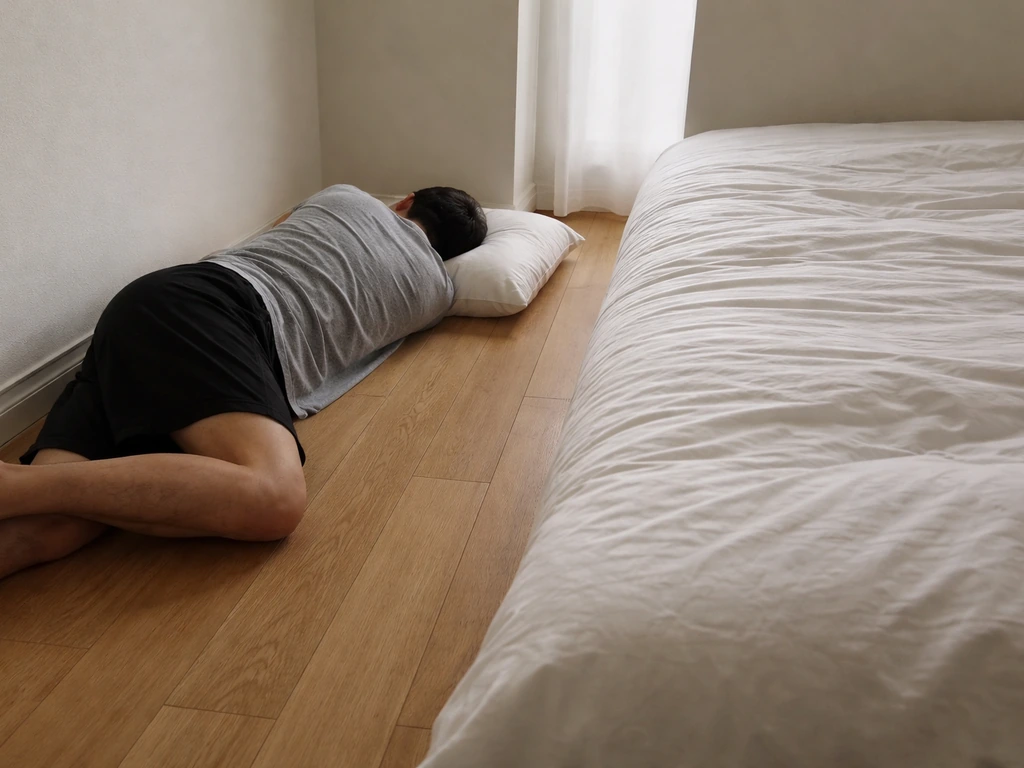
Myth vs science: what sleeping on the floor can and can't change
The idea that sleeping on a hard floor helps you grow taller is persistent, but it doesn't hold up physiologically. Does sleeping make you grow? The evidence suggests a hard floor might influence posture and spinal alignment, but it does not change growth plates or create true height increase. The myth likely comes from a kernel of truth: sleep surface firmness does affect spinal alignment. A 2023 MRI study found measurable differences in lumbar spinal alignment when subjects lay on a mattress versus a rigid surface in the short term. Research also shows that sleep surface properties can influence posture mechanics and, for some people, reduce back pain. So the floor isn't irrelevant to your spine. It just has nothing to do with growing taller.
Height is determined by the length of your bones, primarily the long bones of your legs and your spine. Those bones grow at specialized regions called growth plates. No sleep surface changes the activity of those plates. What a firm surface might do is reduce overnight spinal compression slightly, letting you wake up marginally closer to your true maximum standing height. But that effect, if it even occurs consistently, is temporary and measured in millimeters at most. It is not the same as growing taller.
How height actually grows: growth plates, puberty, and genetics
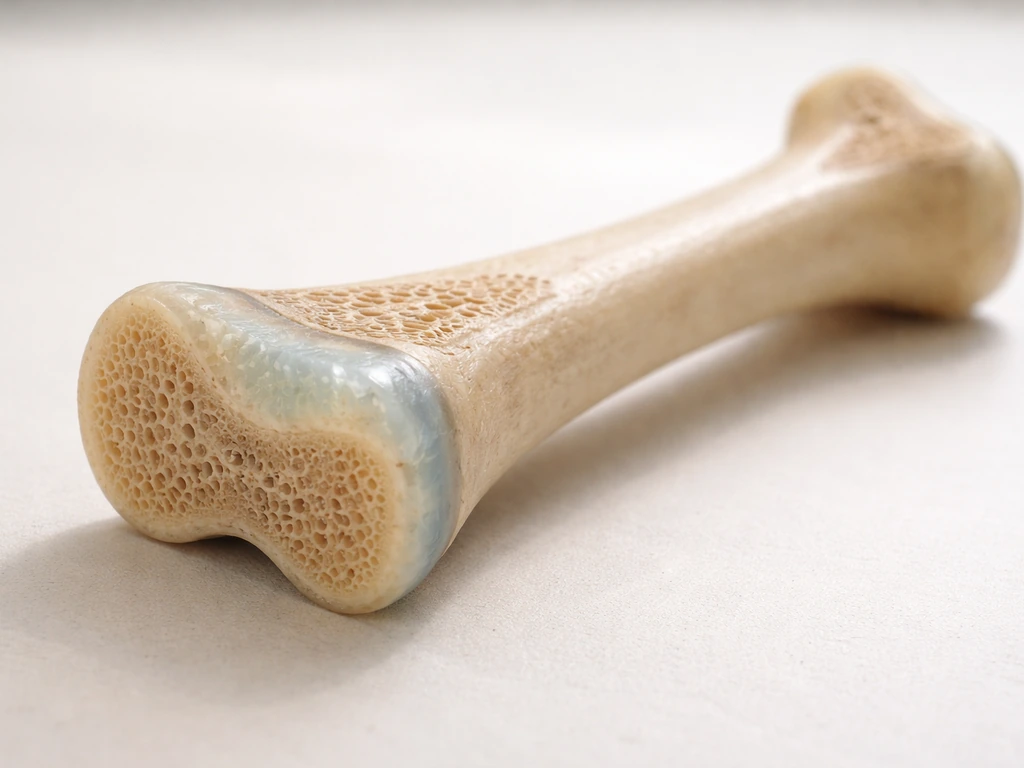
Bone length increases through growth plates, which are areas of cartilage tissue near the ends of long bones. During childhood and adolescence, cells in these plates divide and produce new cartilage that gradually hardens into bone, pushing the bone ends further apart. That's how you get taller. Growth plates close, typically by the late teens to early twenties, after puberty triggers a surge in sex hormones. Once they close, the bones can no longer lengthen, and no lifestyle change, including sleep position or surface, can reopen them.
Genetics accounts for roughly 60 to 80 percent of your final adult height. The standard way to estimate a child's height potential is midparental height calculation: add both parents' heights, adjust for sex (add 5 inches for boys, subtract 5 inches for girls), and divide by two. The result gives a target range, usually plus or minus about two inches. Puberty timing matters too. Children with constitutional delay in growth and puberty (CDGP) may look shorter than peers for years, then catch up. Most children with short stature turn out to have normal variants like familial short stature or CDGP, not treatable disease.
Sleep's real role in growth (duration, quality, and hormones)
Sleep does matter for growth, just not in the way the floor-sleeping myth suggests. Do naps help you grow? The key is that growth hormone secretion is tied to sleep quality and deep sleep, not the nap itself or where you sleep. The key mechanism is growth hormone (GH). Research going back to the 1960s established that in prepubertal children, the majority of daily growth hormone secretion happens during sleep, particularly during slow-wave (deep) sleep. This is why chronic sleep deprivation in growing children is a legitimate health concern: it disrupts the hormonal environment that supports development.
That said, the relationship is not a simple equation where more sleep always equals more GH equals taller child. Research on sleep deprivation and overall 24-hour GH secretion suggests the picture is more complex, and some studies have found that total daily GH output can be partially compensated even with disrupted sleep. Still, the weight of evidence supports prioritizing sleep quality and duration during growing years. The American Academy of Sleep Medicine recommends 9 to 12 hours per night for children ages 6 to 12, and the AAP echoes approximately 9 to 11 hours for school-age children. Adolescents 13 to 18 need at least 8 to 10 hours.
Sleep quality matters as much as duration. Conditions like obstructive sleep apnea (OSA) can fragment sleep and suppress deep-sleep stages where GH release is concentrated. If a child is not getting restorative sleep, it doesn't matter much whether they're on a firm floor or a premium mattress. The surface is the least important variable. This connects to related questions about whether specific sleep positions or sleep habits help you grow, which comes down to the same core principle: it's the quality of sleep, not the surface or posture, that ties into GH secretion. If you are wondering about a specific sleeping position, the main factor is still getting high-quality sleep that supports growth-hormone release.
Posture and spinal alignment: why it might make you look taller
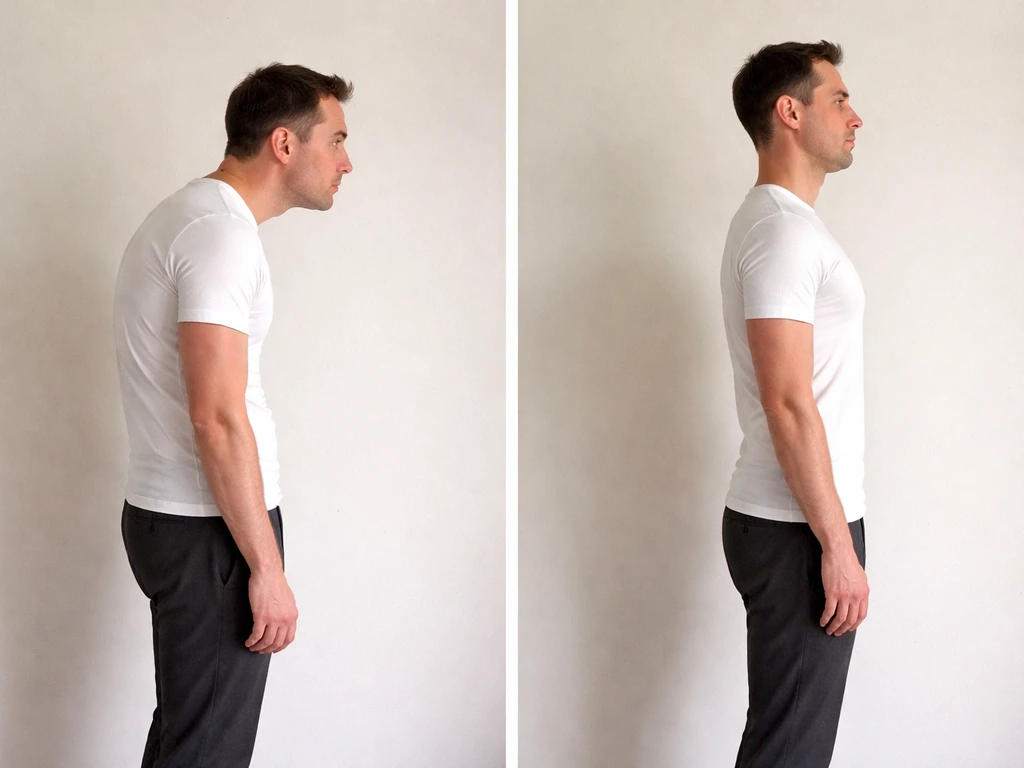
Here's where floor sleeping has a genuinely plausible, if modest, effect. Throughout the day, gravity compresses your intervertebral discs, and by evening you can be up to half an inch shorter than you were in the morning. This is normal and completely reversible. When you sleep on a firm surface, some people experience slightly less spinal flexion compared to sinking into a very soft mattress, which may allow the discs to rehydrate and decompress more effectively overnight. You might wake up holding a little more of that morning height.
Beyond overnight decompression, there's a posture angle worth understanding. Poor posture, especially forward head posture, rounded shoulders, and excessive thoracic kyphosis, can make you appear shorter than your actual skeletal height. Research confirms that sagittal spinal alignment changes meaningfully during childhood development. If sleeping on a firmer surface helps someone maintain better neutral spine alignment over time and they also actively work on daytime posture, they may genuinely stand taller in appearance. But again, this is a postural correction, not biological growth.
A systematic review found that sleep posture can play a role in managing low back pain, and other controlled studies show that the right sleep surface can reduce waking pain and stiffness. So a firm surface isn't without merit for spinal comfort. Whether the floor specifically is appropriate depends entirely on the individual. Some people with back problems find relief on firmer surfaces; others find it aggravates pain. There's no universal prescription here.
What to do instead: evidence-based steps to maximize height potential
If you're serious about supporting healthy growth (especially for children still in their growth years), the levers that actually move the needle are well established. None of them involve the firmness of your mattress.
- Prioritize sleep duration and quality: Hit age-appropriate sleep targets consistently. Protect sleep schedules, limit screens before bed, and create a dark, cool sleep environment. This is the one sleep-related factor that genuinely connects to GH secretion.
- Optimize nutrition, especially calcium and vitamin D: Calcium and vitamin D are foundational for bone mineralization. While vitamin D supplementation doesn't consistently drive linear growth in children who aren't deficient, severe deficiency causing nutritional rickets absolutely impairs bone development. Make sure dietary intake and sun exposure are adequate.
- Get regular physical activity: Children and adolescents should aim for at least 60 minutes of moderate-to-vigorous activity daily, per CDC and AAP guidance. Weight-bearing and impact exercise supports bone mineral content during growing years. An 8-year longitudinal study found that impact exercise increased bone mineral content during childhood growth. Importantly, normal youth sports participation does not appear to negatively affect height.
- Address nutrition broadly: Protein, zinc, and overall caloric adequacy support normal growth velocity. Chronic undernutrition is one of the most reliable ways to suppress growth. If a child's diet is consistently inadequate, that's a higher priority than any sleep surface choice.
- Work on active posture habits: If appearing taller is the goal, deliberate posture work during waking hours (strengthening the posterior chain, stretching hip flexors, practicing neutral spine) will do far more than any sleep surface change.
- Rule out underlying conditions: Hypothyroidism, celiac disease, kidney disease, and growth hormone deficiency are all treatable causes of impaired growth. These require clinical evaluation, not lifestyle tweaks.
Age-specific guidance: kids and teens vs adults
Children and teenagers (still growing)

If growth plates are still open, the interventions above genuinely matter. This is the window where sleep quality, nutrition, and activity can influence how close a child gets to their genetic height potential. The CDC’s archived Youth Physical Activity Guidelines, based on the Physical Activity Guidelines for Americans, recommend that ages 6, 17 get at least 60 minutes of moderate-to-vigorous physical activity every day blank" rel="noopener noreferrer">at least 60 minutes of moderate-to-vigorous physical activity daily for ages 6–17. It won't override genetics, but it can prevent falling short of it. The priority is: blank" rel="noopener noreferrer">enough sleep (9 to 12 hours for ages 6 to 12, 8 to 10 hours for teens), a nutrient-dense diet, and regular physical activity. Floor sleeping is irrelevant to these goals. If a teenager wants to try sleeping on a firmer surface for back comfort, that's a personal choice, but it shouldn't be framed as a growth strategy.
Adults (growth plates closed)
For most adults, growth plates fuse by the late teens to early twenties, and true height increase after that point is not physiologically possible through any sleep surface, supplement, or exercise. The only realistic path to appearing taller as an adult is posture improvement. If floor sleeping helps someone maintain better spinal alignment and reduces back discomfort, that's a legitimate benefit. But it should be evaluated on the basis of comfort and back health, not height. Some adults genuinely do better on firmer surfaces; others find the floor too hard and end up sleeping in compensatory positions that worsen spinal alignment.
| Factor | Children/Teens (Open Growth Plates) | Adults (Closed Growth Plates) |
|---|---|---|
| Sleep surface (floor vs mattress) | No effect on bone growth; choose for comfort and spinal alignment | No effect on bone growth; choose based on back comfort and sleep quality |
| Sleep duration | Critical: 9-12 hrs (ages 6-12), 8-10 hrs (teens) | Important for health; no direct height effect |
| Nutrition (calcium, vitamin D, protein) | Directly supports bone development and growth velocity | Supports bone density but won't increase height |
| Physical activity | Supports bone mineral content and overall health | Supports posture, bone density, and appearance of height |
| Posture habits | Secondary to growth; helps standing appearance | Primary tool for appearing taller |
| Medical evaluation | Recommended if growth velocity is low or percentiles drop | Relevant only for pain, back conditions, or sleep disorders |
When to get help: signs to see a doctor or sleep specialist

Most of the time, a child's short stature or slow growth turns out to be a normal variant, familial short stature or constitutional delay, not a medical problem. But there are signals that warrant a clinical evaluation, and catching them early matters because the window to intervene is time-limited.
For growth concerns, see a pediatrician or pediatric endocrinologist if a child's height is consistently below the 3rd percentile, growth velocity is slowing (dropping across growth chart percentiles), puberty is delayed significantly compared to peers, or there are symptoms pointing to thyroid, kidney, or gastrointestinal disease. The initial workup typically includes a detailed history, parental height, growth curve analysis, and a bone age x-ray of the left hand and wrist to estimate how much growth time remains. Blood tests may screen for conditions like hypothyroidism, celiac disease, or anemia. The Endocrine Society, AAFP, and Children's Mercy all support this evaluation pathway.
For sleep concerns, talk to a doctor or sleep specialist if a child snores frequently, has pauses in breathing during sleep, wakes repeatedly, or shows daytime sleepiness, learning problems, or behavioral issues. The AAP recommends polysomnography (a sleep study) as the gold standard for diagnosing obstructive sleep apnea in children, which is relevant here because OSA disrupts the deep sleep stages where growth hormone is primarily secreted. In adults, persistent back pain that disrupts sleep, or waking pain and stiffness that doesn't improve with surface changes, also warrants evaluation rather than continued self-experimentation with different floors and mattresses.
The bottom line: if you're hoping floor sleeping is a growth hack, it isn't. If you're trying to genuinely support height potential in a growing child, focus on sleep quality, nutrition, and activity. These habits matter because they affect growth-related hormones and overall development sleep quality, nutrition, and activity. If you're an adult trying to stand a little taller, work on your posture during the day. The floor can be part of a sleep setup that works for some people's backs, but it belongs in the category of personal comfort preference, not growth science.
FAQ
If sleeping on the floor does not increase bone length, what should a child actually do to support height potential?
If you are still in your growth years, focus on total sleep time and uninterrupted sleep, because those are the main drivers of growth-hormone secretion. A firmer surface may only change how you feel (less waking stiffness for some people) and how you look when you wake up, by a small, temporary amount.
Could I measure myself in the morning and see I’m taller if I sleep on the floor?
Yes, a temporary height difference can happen from overnight spinal decompression, even on a mattress. The key is that it will reverse during normal daytime loading, so do not treat morning-versus-evening changes as evidence of permanent growth.
Does sleeping on the floor help adults grow taller or just appear taller?
For adults, growth plates are closed by the late teens to early twenties in most people, so sleeping on the floor cannot create new height. Any “taller” effect is usually posture-related, plus reduced back pain that lets you stand straighter.
When might sleeping on the floor make back or joint pain worse instead of better?
Try it as a comfort experiment, not a height strategy. If you have hip, shoulder, or low-back pain, pressure points can worsen symptoms, and you may end up in a compensatory position that hurts alignment.
What if the floor is too hard, is there a safer way to test a firmer sleeping setup?
You can have the decompression benefit with or without the floor. If the floor is too hard, consider a very thin supportive layer or a firmer mattress that still keeps your spine close to neutral, since extreme hardness can increase discomfort for some people.
How do I know whether my sleep surface is the real problem, versus possible sleep apnea?
If you wake up frequently, snore, or struggle with daytime sleepiness or behavioral changes, surface firmness is unlikely to fix the core issue. Talk to a clinician about sleep-disordered breathing because fragmented sleep can reduce the deep-sleep stage tied to growth hormone.
If posture is the main benefit, what should I do during the day to make the “taller” effect last?
Posture improvements during the day matter more than sleep surface for lasting appearance. Combine good sleep with daytime habits like neutral-spine sitting, minimizing forward-head posture, and strengthening the upper back and core, because those support alignment when you are upright.
At what point should I stop experimenting with sleep and get a child checked for short stature?
If a child is falling behind on growth, the priority is evaluation rather than floor-sleep trials. Clinical red flags include consistently dropping percentiles, delayed puberty, or being below the 3rd percentile, in which case a pediatrician can assess growth rate and consider bone age and lab work.
Is it worth changing my child’s sleeping surface if they already get enough hours of sleep?
If a child is already getting adequate sleep, changing the floor will not meaningfully reopen growth plates. Consider a firmer surface only if it improves comfort and does not reduce sleep quality, because the goal is restorative sleep, not increased firmness.
Should I keep changing sleep surfaces if I still wake up in pain?
For adults with chronic waking pain, especially pain that persists despite changing firmness, keep testing limited and get evaluated. Persistent pain can reflect spine or musculoskeletal issues where the right “best surface” varies and sometimes needs targeted treatment.
Next Article
Does Sleeping With Legs Straight Make You Grow Taller?
Learn if straight-leg sleep can affect height, how growth plates, genetics, and sleep matter, plus tips and next steps.