Watermelon will not make you taller on its own. No single food can. But watermelon does contain nutrients (vitamin C, potassium, magnesium, and the antioxidant lycopene) that support the overall nutritional environment your body needs to grow as tall as your genetics allow. Think of it as one useful piece of a much larger puzzle, not a height booster.
Does Watermelon Help You Grow Taller? Evidence-Based Answer

Marcus Reeves
20 May 2026

How height actually increases
Height comes from bone growth, and bone growth happens at the growth plates, which are thin layers of cartilage near the ends of your long bones. While those plates are open and active, your bones can get longer. Once they fuse (typically in the late teens for girls and early-to-mid twenties for boys), you stop growing taller, full stop.
The process is driven by hormones, not food. Growth hormone (GH), released by the pituitary gland under instructions from the hypothalamus, stimulates the liver to produce IGF-1. IGF-1 is the main signal that tells growth plates to multiply and elongate. During puberty, sex steroids spike alongside IGF-1, producing the adolescent growth spurt. Before puberty, most kids grow at a fairly steady 4 to 7 cm per year. At peak puberty, that rate can briefly double.
Nutrition matters here, but in a supporting role. Severe malnutrition can blunt GH secretion and delay puberty, cutting into the height a child could otherwise reach. Adequate nutrition, by contrast, keeps the hormonal engine running at full capacity. That is where food, including watermelon, enters the picture.
What's actually in watermelon
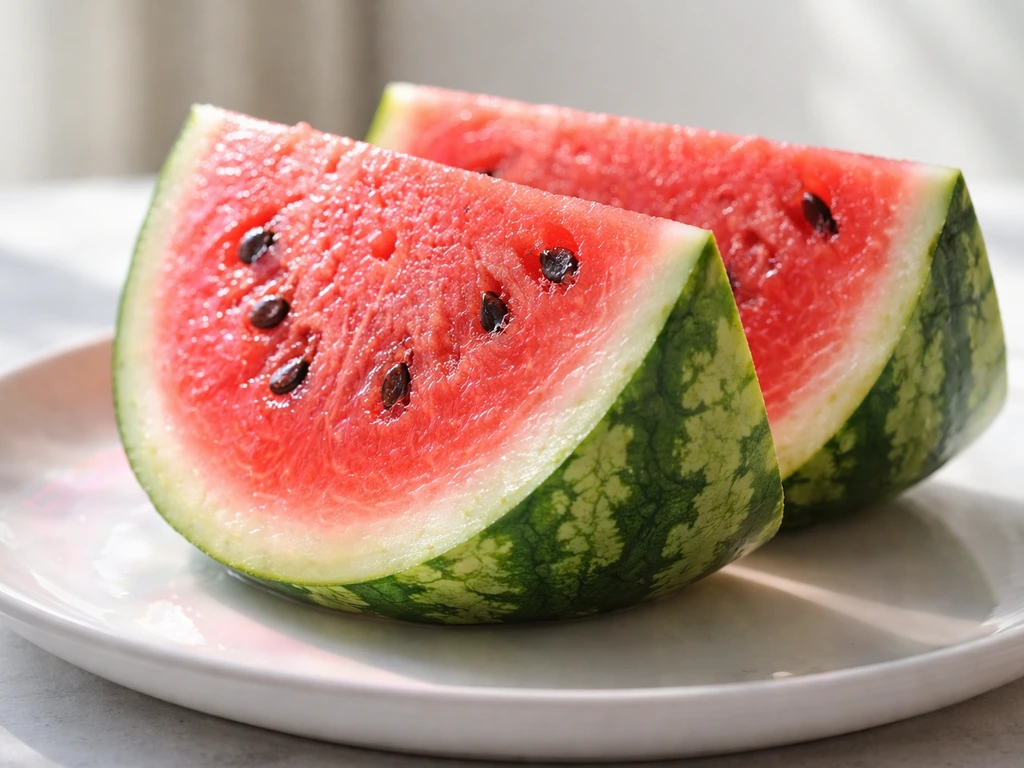
A 100 g serving of raw watermelon provides around 8 mg of vitamin C, 112 mg of potassium, small amounts of magnesium and folate, plus a meaningful dose of lycopene (roughly 4,500 to 7,000 mcg per 100 g depending on ripeness). It is also about 92 percent water, which makes it a practical hydration source alongside a meal.
Here is how those nutrients connect, indirectly, to growth:
- Vitamin C is needed to synthesize collagen, the structural protein in cartilage and bone. Research has explored its relationship to growth, and deficiency (scurvy) famously stunts development. Getting enough vitamin C keeps this pathway working normally.
- Potassium and magnesium support general cellular function and bone mineralization, both of which matter during active bone growth.
- Lycopene is an antioxidant with studied effects on vascular health and oxidative stress. It does not directly stimulate growth plates, but reducing systemic inflammation keeps the body in a better environment for normal development.
- Hydration keeps blood volume and nutrient transport running efficiently. Chronic dehydration can impair physical performance and general health, which in growing kids is worth avoiding.
None of this translates to 'eat watermelon, get taller.' It translates to 'watermelon contributes to the nutrient adequacy that allows normal growth to proceed.' That is genuinely different, and the distinction matters.
Why no single food can make you taller
This is worth saying plainly: no pill, formula, or specific food has been shown to increase height beyond what your genetics and overall health allow. Nemours KidsHealth states this directly, and the physiology backs it up. Your maximum height potential is set by your DNA and unlocked by your hormones. Nutrition can prevent you from falling short of that potential if it's inadequate, but adding extra watermelon (or any superfood) on top of an already adequate diet does not signal the pituitary to release more GH or push growth plates to stay open longer.
The same logic applies to vitamin C specifically. Studies have examined whether vitamin C supplementation affects growth, and while deficiency clearly harms development, supplementing beyond adequacy in already-nourished children shows no meaningful boost. A Cochrane review on micronutrient supplementation in young children found little to no effect on linear growth when kids were not deficient to begin with. More is not more, once you have enough.
What actually moves the needle: nutrition, sleep, and exercise

If your goal is reaching full genetic height potential, the strategy is not about any one food. It is about consistently covering several evidence-based bases.
Nutrition that genuinely supports growth
Total calories and protein come first. A growing child or teen who is chronically undereating will not grow optimally, regardless of micronutrient intake. After that, calcium and vitamin D are the most critical targeted nutrients for bone growth. The NIH recommends 1,300 mg of calcium per day for ages 9 to 18, and 600 IU of vitamin D daily. Most teens in the US fall short of both. Dairy, fortified plant milks, leafy greens, and fatty fish cover these better than watermelon does.
Zinc and iron also matter, particularly for growth hormone function and oxygen delivery to tissues. A varied diet including lean meat, legumes, nuts, and whole grains covers these. Watermelon fits well as a hydrating, vitamin C-containing addition to that broader diet, but it is not a substitute for calcium-rich or protein-dense foods.
Sleep: the most underrated growth tool

Growth hormone is predominantly released during deep sleep, particularly in the first few hours of the night. Sleep is not just rest: it is when a large portion of your daily GH pulse actually happens. The American Academy of Pediatrics recommends 9 to 12 hours per night for children ages 6 to 12, and 8 to 10 hours for teenagers. Research from King's College London found a weak but measurable negative association between shorter sleep duration and height in children aged 5 to 11. Consistently cutting sleep short is a concrete, avoidable way to limit growth hormone output during the years it matters most.
Exercise and movement
Physical activity, especially weight-bearing exercise like running, jumping, and sports, stimulates bone remodeling and supports healthy GH secretion. There is no evidence that specific exercises 'stretch' you taller, but staying active keeps the hormonal and skeletal environment favorable for growth during childhood and adolescence. Good posture also matters practically: slouching can compress spinal discs enough to make a measurable but reversible difference in standing height.
Age-specific picture: kids and teens vs adults

| Life Stage | Growth Plate Status | What Nutrition Can Do | Realistic Expectation |
|---|---|---|---|
| Young children (under 9) | Open, steady growth 4–7 cm/year | Support full genetic potential through adequate calories, protein, calcium, vitamin D | Prevent nutritional stunting; cannot exceed genetic ceiling |
| Preteens and teens (9–18) | Open, puberty-driven growth spurt | Maximize spurt amplitude with optimal protein, calcium, vitamin D, zinc, sleep | Biggest window; consistent nutrition and sleep matter most here |
| Young adults (18–25) | Closing or recently closed | Bone density consolidation; nutrition supports bone mass, not new height | Height unlikely to increase; focus shifts to bone health |
| Adults (25+) | Fused | General health maintenance | No new linear height growth possible through nutrition |
If you are a parent reading this about a young child, the childhood years are when dietary quality lays the foundation. If you are a teenager, you are in the window where nutrition and sleep have the clearest impact on whether you hit your genetic ceiling. If you are an adult, watermelon is still a healthy food choice for dozens of reasons, but adding it will not reverse fused growth plates.
Hydration is worth mentioning separately for all ages. Because watermelon is about 92 percent water, it contributes to daily fluid intake, which matters for overall physical health. Hydration matters for overall health, but it does not directly make you grow taller. If you are curious about how water and hydration more broadly connect to growth physiology, that is a topic closely tied to this one and worth exploring on its own. If you wonder does water help you grow, the hydration angle explained in this guide connects to growth physiology in more detail water and hydration for growth. Water needs vary by age, body size, activity, and climate, so the best way to estimate your daily target is to use thirst and current intake as guides or ask a clinician for a personalized range how much water should i drink to grow taller.
When to talk to a doctor about growth
Most children who are short are simply following familial patterns or a slower-than-average growth timeline, what clinicians call constitutional delay in growth and puberty. Both are normal variants that often resolve without treatment. But there are situations where a medical evaluation is worth pursuing sooner rather than later.
Talk to a pediatrician if you notice any of the following:
- A child who has dropped significantly across growth chart percentiles over time (not just a single low measurement)
- Growth velocity that appears to have slowed noticeably, falling below the typical 4–7 cm per year for a prepubertal child
- No signs of puberty by age 13 in girls or age 14 in boys
- Height that seems out of proportion to both parents' heights with no obvious nutritional or lifestyle explanation
- A child with a chronic illness, gastrointestinal issues, or other conditions that might affect nutrient absorption
The Endocrine Society emphasizes that the goal of growth evaluation is to identify treatable underlying conditions, things like growth hormone deficiency, thyroid problems, or other endocrine disorders, that are genuinely limiting height. These conditions exist, they are diagnosable, and in many cases they are treatable. No amount of watermelon or dietary optimization addresses a hormonal deficiency that requires medical management. A pediatric endocrinologist is the right resource when growth velocity or puberty timing raises a flag.
The bottom line: watermelon is a genuinely nutritious food that fits well into a diet designed to support healthy growth. Its vitamin C, potassium, and lycopene content contribute to the broader nutritional picture, and its high water content supports hydration. What it cannot do is override genetics, substitute for calcium and protein, or replace the deep sleep where most of your growth hormone actually gets released. Eat it because it is good for you, not because it will make you taller.
FAQ
How much watermelon should a child or teen eat if height is the goal?
There is no height-specific “dose.” Use watermelon like a normal fruit serving (for example, about 1 cup chopped for many kids) and focus first on protein, calories, calcium, and vitamin D. If watermelon is replacing milk, yogurt, or other protein foods, it can indirectly hurt growth.
If watermelon has vitamin C, does eating more vitamin C help kids grow taller?
Vitamin C helps when someone is deficient, but extra beyond adequacy has not been shown to create additional growth. Instead, make sure vitamin D and calcium are covered, since those nutrients are more directly tied to bone growth and mineralization.
Can watermelon help if a child is already eating well?
It can support overall health, but it will not “turn on” more growth hormone or keep growth plates open longer. In a well-nourished child, the limiting factors are usually genetics, sleep, overall energy intake, and any medical or endocrine issue.
What signs suggest a short child might need medical evaluation instead of more watermelon?
Consider seeing a pediatrician if growth has slowed (for example, crossing percentiles downward), puberty starts much earlier or later than peers, or height is far below expectations based on family patterns. Also seek help if there are symptoms like fatigue, weight change, headaches, or delayed bone-age concerns.
Does watermelon help adults grow taller?
No. After growth plate fusion, which usually occurs in late teens for girls and early to mid twenties for boys, height cannot increase through nutrition. Watermelon is still healthy for hydration and micronutrients, but it will not increase bone length.
Could watermelon make someone taller indirectly by improving hydration?
Staying hydrated helps energy, digestion, and exercise capacity, which supports healthy routines. However, hydration does not directly lengthen bones or reopen fused growth plates, so it cannot replace sleep, adequate calories, and bone-support nutrients.
Are there any risks to eating lots of watermelon to “maximize growth”?
Yes. Large amounts can crowd out higher-impact foods like calcium-rich dairy or protein sources. It can also add significant natural sugars and calories, which may be an issue for weight management. Portion control matters even for healthy foods.
Does watermelon help posture or make you look taller?
Good posture can make standing height look better, and active lifestyles can support core strength and flexibility. But watermelon itself does not correct posture. If slouching is persistent, targeted physical activity or physiotherapy is usually the more direct fix.
What is more effective than adding watermelon for reaching genetic height potential?
A practical priority order is: consistent sleep, enough total calories and protein, then calcium and vitamin D, followed by a varied diet that includes iron and zinc. Watermelon can be a helpful fruit addition, but it is not the core growth strategy.
Next Article
Does Water Make You Grow? What Hydration Can and Cant Do
Does water make you grow in height? It cannot directly, but hydration helps health, sleep and performance for growth pot