
Testosterone does not directly make your feet grow in the way you might think. During puberty, rising testosterone levels contribute to a growth surge that includes your feet, but the actual mechanism driving bone elongation involves growth hormone, IGF-1, and ultimately estrogen (which testosterone partially converts into). Growth is driven by growth hormone working through IGF-1, which is why these signals matter most for bone elongation. Testosterone can contribute to a growth spurt during puberty, but it cannot make you grow after your growth plates have closed. Once your growth plates close at the end of puberty, no amount of testosterone, whether from therapy or an over-the-counter booster, can make your feet or any other bones longer. What you might notice instead is soft-tissue changes like slight shifts in arch shape or foot width, but that is not new skeletal growth.
Does Testosterone Make Your Feet Grow? What to Know


How feet actually grow: bones vs soft tissue
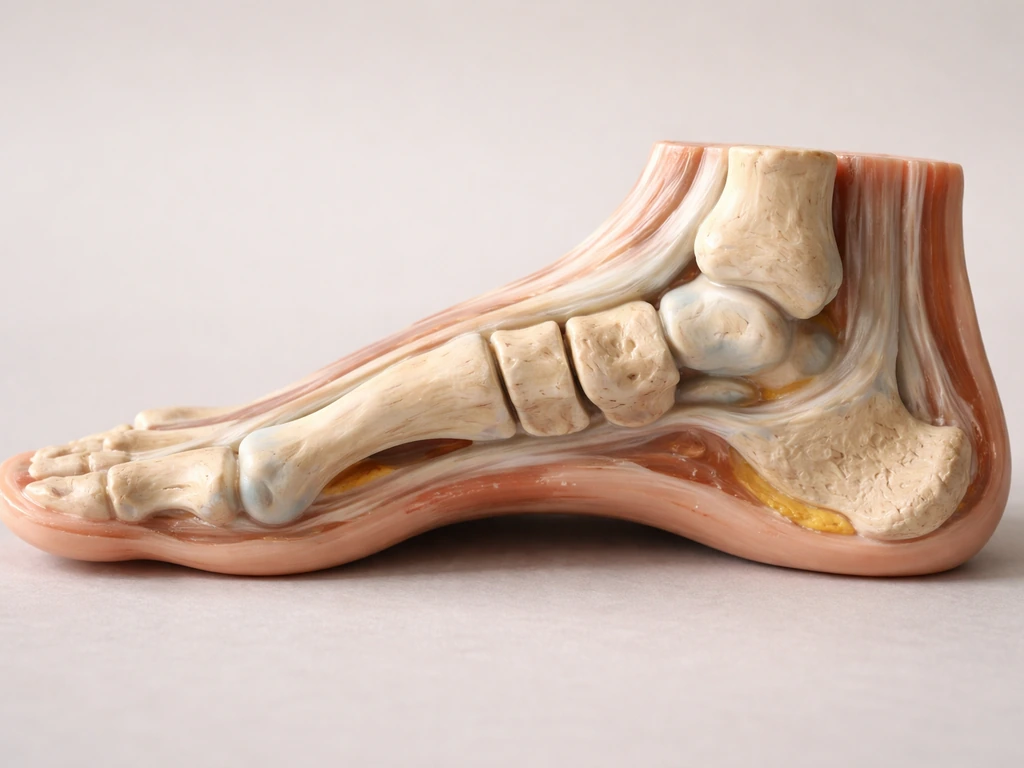
Your foot is not one bone. It is a complex structure of 26 bones, along with cartilage, ligaments, tendons, and fat padding. Growth in foot length is primarily driven by lengthening of those bones, which happens at growth plates, the same cartilage zones responsible for all long bone growth in your body. Research tracking children from age one to five found foot size can change roughly half a shoe size every four months in that early window, with width staying proportional to length. That gives you a sense of how actively the skeletal architecture is being remodeled during early childhood.
Foot shape is more complicated than just length. The medial longitudinal arch, the inner curve that rises as kids stop being flat-footed, shows relatively stable behavior until around age 10 and then continues evolving through adolescence. So a foot can change apparent size or shape through arch development and soft tissue maturation, not just bone length. This distinction matters because soft tissue can shift slightly in adulthood, but that is categorically different from growing longer bones.
Puberty, testosterone, and what actually limits how much you grow
Testosterone's role in puberty-driven growth is real but indirect. As testosterone rises during male puberty, it amplifies the growth hormone and IGF-1 signaling that drives bone elongation. Studies have confirmed that foot length velocity is one of the early markers of pubertal onset, which is why many teens notice their shoe size jumping before their height catches up visibly. This is testosterone doing its job as part of the normal puberty cascade.
Here is the part most people get backwards: it is actually estrogen, not testosterone, that ends growth. Testosterone converts to estrogen through a process called aromatization, and that estrogen is the primary signal that tells your growth plates to fuse and shut down. The same hormone that drives some of the early growth spurt is, in higher concentrations later in puberty, responsible for closing the door on further bone lengthening. This happens in both males and females. Once those growth plates are fused, the game is over for skeletal length, full stop.
Growth plate closure follows a timeline closely tied to pubertal stage, not just calendar age. That is why bone age (assessed from an X-ray of the left hand and wrist) is the clinical tool doctors use to evaluate remaining growth potential. A teenager with delayed puberty might have open growth plates well into their late teens. A child with early puberty might have plates closing younger than expected. The plates themselves, not your hormone levels at any given moment, are the physical limiting factor.
Adults vs teens: a clear dividing line
If you are still in puberty with open growth plates, testosterone is doing meaningful work. It is contributing to the growth acceleration that affects your whole skeleton, including your feet. In cases of constitutional delay of growth and puberty, clinical testosterone therapy has been shown to improve first-year height velocity, helping teens catch up on the growth they were behind on. However, even in those cases, clinical studies report that testosterone therapy does not appear to improve final adult height, it just helps teenagers grow at a more typical rate sooner rather than later.
Once your growth plates have fused, which typically happens somewhere between the mid to late teens in girls and late teens to early twenties in boys, testosterone has no pathway to make bones longer. The growth plates are gone. Testosterone therapy in adults is associated with modest improvements in bone mineral density (one meta-analysis found roughly a 4% gain at the femoral neck), which helps bone strength but does not translate to added height or foot length. Your feet are the size they are.
| Factor | Teen with open growth plates | Adult with closed growth plates |
|---|---|---|
| Testosterone's effect on foot bone length | Indirect contribution via GH/IGF-1 signaling | None (no growth plates to act on) |
| Growth plate status | Open, actively lengthening | Fused, no further elongation possible |
| Foot size change possible? | Yes, bone length and arch shape still developing | Only soft tissue or arch shifts (minor) |
| Testosterone therapy impact on height/feet | May improve growth velocity, not final height | No change in skeletal size |
| Estrogen's role | Drives fusion toward end of puberty | Already completed fusion |
Testosterone therapy and boosters: what you actually get (and what you risk)
Prescription testosterone therapy has legitimate medical uses. For men with hypogonadism (clinically low testosterone due to a medical condition), it restores secondary sex characteristics, improves bone density, and supports overall health. The Endocrine Society's guidelines are explicit that this is treatment for a deficiency, not a tool for creating new skeletal growth. The FDA reinforces this: testosterone products are approved for men with low testosterone caused by specific medical conditions, not for anti-aging, performance, or growth purposes.
Over-the-counter testosterone boosters are an entirely different and much weaker category. These are typically supplements marketed with ingredients like zinc, vitamin D, or herbal extracts. There is no clinical evidence that they reopen growth plates, meaningfully raise testosterone to levels that would drive skeletal change, or add any measurable length to feet or height in adults. If you are considering TruHeight for growth, the available evidence still does not show that it can reopen growth plates or add measurable length to feet or height in adults. The FDA does not regulate them the same way it regulates prescription drugs, which means the claims on the label are largely unverified.
The risks of unsupervised testosterone use are real and worth knowing. Prescription testosterone therapy carries documented risks including elevated cardiovascular risk (the FDA has issued drug safety communications warning about potential increased risk of heart attack and stroke), suppression of your body's natural testosterone production, fertility impacts through spermatogenesis suppression, elevated hematocrit (thicker blood), and potential prostate concerns. In teenagers, using testosterone without medical supervision can actually accelerate growth plate fusion through aromatization to estrogen, which could reduce final height rather than increase it. Using hormones without proper evaluation and monitoring is not a shortcut; it is a way to create problems that did not exist before.
What to actually do today if you are worried about foot size or height potential

The most useful thing you can do right now depends heavily on your age and where you are in development. Here is how to think through it practically.
If you are a teenager or the parent of one
The single most actionable step is getting a bone age assessment from a pediatrician or endocrinologist. A simple X-ray of the left hand and wrist tells you whether growth plates are still open and roughly how much growing time remains. This is the only reliable way to know if there is real growth potential left. If puberty seems delayed or growth has stalled, a clinician can evaluate for constitutional delay or other causes and discuss whether low-dose testosterone therapy is appropriate. Do not self-prescribe or use supplements without that evaluation.
- Track height every 3 to 6 months and compare to growth charts; stalled growth is worth discussing with a doctor
- Prioritize sleep: growth hormone is secreted primarily during deep sleep, and chronic poor sleep can blunt the growth process
- Eat enough protein and calories: undernutrition is one of the most preventable suppressors of growth potential
- Avoid testosterone supplements marketed to teens; they carry real risks and zero evidence of improving final height
- Ask your doctor about bone age if you are concerned about delayed puberty or unusual growth patterns
If you are an adult
If your growth plates have closed, no intervention will make your feet or your skeleton longer. What matters now is maintaining the bone health and foot structure you have. Testosterone therapy for a diagnosed deficiency can improve bone mineral density and quality of life, but it will not change your shoe size. If you are experiencing symptoms that suggest low testosterone (fatigue, reduced muscle mass, low libido, mood changes), see a doctor for a proper evaluation rather than reaching for an OTC booster. The correct path is a blood test, a clinical evaluation, and if therapy is appropriate, medically supervised treatment.
- Get tested by a doctor before assuming you have low testosterone; symptoms overlap with many other conditions
- Understand that foot size in adults can shift slightly due to arch flattening, weight changes, or soft tissue aging, but this is not bone growth
- Resistance training and adequate calcium and vitamin D intake support bone density in adulthood, which is the realistic bone health goal
- Skip OTC boosters; save the money and the potential side effects
- If you have been prescribed testosterone therapy, follow the Endocrine Society's monitoring guidance: hematocrit and testosterone checks at 3 to 6 months, 12 months, and annually, plus appropriate prostate monitoring
The broader question of what drives height and growth potential, including the roles of different hormones, is worth understanding if this topic matters to you. Testosterone is one piece of a much larger system that includes growth hormone, IGF-1, thyroid hormone, nutrition, and genetics. Focusing on any single hormone in isolation misses how interconnected these systems are. The best outcomes, whether for a teen still growing or an adult maintaining what they have, come from supporting the whole system rather than chasing one lever.
FAQ
If I take testosterone, can it make my feet longer even if I’m done growing taller?
Most of the time, no. Once growth plates are fused, there is no mechanism for testosterone (or testosterone boosters) to lengthen foot bones. If you think you might still have growth potential, the deciding factor is an X-ray bone age to check whether the plates are open, not your height pattern alone.
How can I tell whether my growth plates are still open without guessing from age?
Doctors use bone age (usually an X-ray of the left hand and wrist) to estimate remaining growth potential based on growth plate status. Pubertal timing can vary widely, so two teens the same age can have very different plate status, which is why clinicians do not rely on calendar age.
Do testosterone injections or gels work differently than pills for increasing foot size?
Any testosterone form works through the same biology, so the limitation is still growth plate closure. Delivery method may change blood testosterone levels, side effects, and monitoring requirements, but it does not create a way to reopen fused plates or add measurable skeletal length in adults.
Could testosterone make my feet look bigger even if it does not increase bone length?
Yes. Testosterone can affect soft tissue and body composition, which may change perceived foot size through arch mechanics, swelling, or changes in muscle tone around the foot and lower leg. That can alter how shoes fit, but it is not true bone elongation.
If estrogen closes growth plates, does that mean blocking aromatization could help?
Not as a safe DIY option. Aromatization is a normal step in growth regulation, and interfering with it can have serious risks, including changes in bone health and hormone balance. Any consideration of aromatase inhibitors belongs with a pediatric endocrinologist who can weigh benefits and harms and monitor labs and bone density.
Are over-the-counter testosterone boosters any safer or weaker than prescription testosterone?
They’re typically weaker for raising testosterone meaningfully, but “OTC” does not mean risk-free. Many boosters have variable ingredients and potency, and they are not held to the same standards as prescription products, so you may not know what you are actually taking or whether it affects your endocrine system.
What symptoms should prompt an evaluation for low testosterone rather than trying a booster?
Common reasons include persistent fatigue, reduced libido, erectile dysfunction, loss of muscle mass, increased body fat, and mood or sleep issues. The practical next step is a clinician-ordered blood test (timing matters), plus evaluation for other causes, because those symptoms can come from conditions unrelated to testosterone.
If testosterone therapy helps bone density, could that indirectly increase shoe size over time?
Generally, no. Improved bone mineral density strengthens bones but does not lengthen them. Shoe size changes in adults are more likely from weight changes, arch and tissue remodeling, or activities that affect swelling and biomechanics, not from new bone growth.
Is it true that taking testosterone in a teen could reduce final height?
It can be, depending on growth plate status and how testosterone is converted to estrogen in the body. If a teen uses testosterone without medical supervision while still growing, it may accelerate epiphyseal maturation, which can reduce the time available for total height and foot bone length gain.
What is the most useful step to take if I’m still growing and want to understand my options?
Ask for a bone age assessment through a pediatrician or pediatric endocrinologist, and discuss whether there is evidence of delayed puberty, nutritional issues, or other underlying causes. If testosterone is considered, it should be for a diagnosed deficiency with monitored dosing and follow-up, not for “growth” as a goal by itself.
Does Testosterone Make You Grow Taller? Evidence-Based Guide
Evidence on testosterone and height: increases growth in puberty if needed, but won’t add inches after growth plates clo