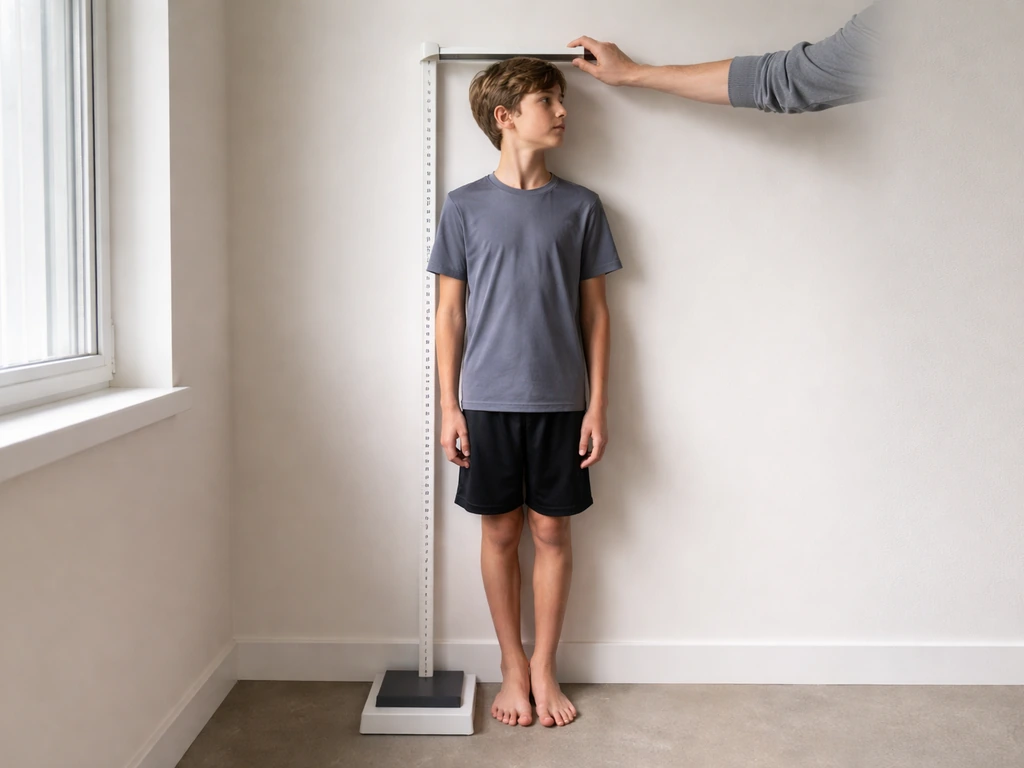
Basketball players are not tall because basketball made them grow. They are tall because tall people are actively recruited, selected, and retained at every level of the sport. The average NBA player stands around 6'6" (about 78.4 inches), and that is overwhelmingly a product of genetics and scouting bias, not training secrets. That said, the lifestyle habits common among serious young athletes (consistent nutrition, adequate sleep, appropriate training) do support a growing body in reaching its genetically determined ceiling. So if you are a kid or teenager asking how to grow as tall as possible, there are real, evidence-backed things you can do. But no exercise, supplement, or stretching routine will push you past what your biology has already set.
Do Basketball Players Grow Taller? Why and What Works


Why basketball players are so tall (and it's mostly about selection)

Look at any NBA roster and the height distribution is striking. Most players fall somewhere between 6'5" and 6'8", with the overall average sitting around 6'6.4". That concentration does not happen by accident. Basketball rewards height in very specific ways: longer reach for rebounding, easier shot release over defenders, wider defensive coverage. Coaches at every level of the pipeline, from youth leagues through college scouts to NBA front offices, prioritize tall athletes. A 2023 systematic review of basketball talent identification confirmed that blank" rel="noopener noreferrer">height and anthropometric measurements are among the most consistently assessed factors in scouting processes. blank" rel="noopener noreferrer">A 2024 study on 3x3 basketball selection found that body height and maturity status were significant selection variables.
This is classic selection bias. You are not seeing basketball create tall people. You are seeing a sport that filters for tall people at every competitive stage, so only the tallest athletes survive to the professional level. The correlation between playing basketball and being tall is real, but the causation runs in exactly the opposite direction from what people assume. Healthline and most sports science sources make this point plainly: there is no credible evidence that playing basketball causes people to grow taller. The sport selects for height; it does not produce it.
Genetics and puberty: what actually determines how tall you get
Genetics accounts for roughly 60 to 80 percent of your final height, depending on which research you look at. The most common estimate is that your height will fall somewhere near the midparent height formula: take the average of both parents' heights, add 2.5 inches if you are male or subtract 2.5 inches if you are female, and that gives a rough target range. In practice, most people land within about 4 inches of that prediction.
Height also depends heavily on puberty timing. Growth happens throughout childhood, but the most dramatic increases come during puberty-driven growth spurts, when growth hormone and sex hormones (particularly estrogen and testosterone) work together to accelerate bone lengthening. The key biological constraint is the growth plate, or epiphyseal plate, the cartilage near the end of long bones where new bone tissue forms. Once puberty concludes and these plates fuse (typically in the late teens, though timing varies), linear height growth stops entirely. No lifestyle intervention changes that. This is why age matters so much when you are thinking about any strategy for supporting height growth: the earlier in puberty you are, the more room there is to influence the outcome.
The lifestyle factors that genuinely support growth
Calories and overall energy intake

The single biggest lifestyle lever for height in a growing child or teenager is eating enough. Chronic undernutrition, even mild, suppresses growth hormone signaling and slows bone development. This is well established in global pediatric health data: populations with better food security consistently trend taller over generations. For a young athlete training heavily, energy needs are substantially higher than for a sedentary peer. Consistently eating at a caloric deficit during active growth years can genuinely limit how tall you end up, even if your genetics would have supported more.
Protein
Protein is the structural raw material for bone matrix and muscle. Growing children and teenagers need adequate daily protein, and this need is amplified by athletic training. General guidelines from pediatric nutrition bodies suggest around 0.85 to 1.0 grams per kilogram of body weight per day for children, rising toward 1.2 to 1.7 grams per kilogram for adolescents in heavy training. Consistently hitting those targets from whole food sources (meat, fish, eggs, legumes, dairy) supports normal development. Excess protein above these ranges does not appear to accelerate growth further, so focus on consistent adequacy rather than maximizing intake.
Key micronutrients

Calcium and vitamin D are the two most directly tied to bone development. Calcium provides the mineral density that makes bones strong and long. Vitamin D regulates calcium absorption and bone metabolism. Deficiency in either during childhood and adolescence is associated with stunted bone growth and conditions like rickets. Zinc and iron also matter: zinc is involved in cell division and growth hormone function, and iron deficiency (common in young female athletes) can impair overall growth and development indirectly through its effects on energy and red blood cell function. A varied, whole-food diet typically covers these bases, but growing athletes should have their levels checked if there is any concern.
Sleep and growth hormones: this connection is real
Growth hormone (GH) is not secreted evenly throughout the day. The largest and most consistent pulses happen during sleep, specifically during slow-wave (deep) sleep. Classic physiology research has documented reproducible GH pulses shortly after sleep onset that are directly coupled to slow-wave sleep stages. The Nature Index notes that GH secretion dynamics are closely tied to circadian biology and sleep architecture. In plain terms: the deeper and longer you sleep, the more growth hormone your body releases overnight.
For a child or teenager in active growth, consistently short or fragmented sleep is not just a recovery problem. It directly reduces the hormonal signal that drives bone and tissue growth. The American Academy of Sleep Medicine recommends 9 to 12 hours per night for school-age children (6 to 12 years) and 8 to 10 hours for teenagers. Most kids and teens fall short of these targets. Prioritizing sleep, keeping consistent bedtimes, and avoiding screens before bed are all practical and meaningful interventions during growth years, not just good habits in the abstract.
Exercise and training: what helps and what does not
Regular physical activity supports healthy growth indirectly. Weight-bearing exercise stimulates bone formation and density. General fitness activity keeps the hormonal environment favorable for development. Basketball, running, jumping, and similar sports all count here and provide real developmental benefits. There is also some evidence that resistance training, done appropriately for age and with proper supervision, is safe and beneficial for adolescents and does not harm growth plates as was once feared.
What exercise does not do is add centimeters to your final height. Hanging from a bar, doing pull-ups, or practicing yoga postures does not lengthen your bones. Jumping drills and plyometrics improve athletic performance but do not change your skeletal growth trajectory. Claims that specific basketball drills or training systems grow you taller are not supported by any credible evidence. The legitimate benefit of physical activity for growth is that it supports the overall biological environment, alongside sleep and nutrition, in which your genetically programmed growth can fully express itself. It is an enabling condition, not a growth driver on its own.
The truth about stretching, posture, and "NBA secrets"
This is where the myths are thickest, and they are worth addressing directly. Stretching does not make you taller. Hanging exercises do not make you taller. Inversion tables do not make you taller. Posture improvement can recover a small amount of apparent height (because slouching compresses the spine), but this is not real growth. It is essentially stopping a bad habit, and the effect is a centimeter or two at most. The "NBA secrets" genre of content online is almost entirely fabricated. No current or former professional player attributes their height to a specific training protocol.
Supplements are similarly unreliable. If you are wondering what supplements basketball players take to grow taller, the key point is that there is no reliable supplement that can override genetics and closed growth plates. Human growth hormone supplements, if we are talking about actual pharmaceutical HGH, require a prescription for a diagnosed medical deficiency and are not safe or legal for general use. Over-the-counter products marketed as "height supplements" or "growth boosters" are not regulated as drugs and have no clinical evidence behind them for height gain in otherwise healthy people. Some athletes do take certain supplements for performance or recovery reasons, and that is a separate topic. But if a supplement is being sold on the promise of making you taller, treat that claim with serious skepticism.
Practical action plan by age
What you should actually do depends heavily on where you are in development. The strategies that matter for an 11-year-old are different from those relevant to a 17-year-old, and both are different from what an adult should focus on.
| Life Stage | Growth Potential | Priority Actions |
|---|---|---|
| Children (under 12) | High: growth plates fully open, long runway ahead | Consistent whole-food diet with adequate calories and protein; 9–12 hours of sleep per night; regular physical activity; routine pediatric checkups to track growth curves |
| Early–mid teens (12–16) | Moderate to high: actively in or approaching peak growth spurt | Maximize nutrition during the growth spurt (increased caloric and protein needs); protect sleep (8–10 hours); avoid extreme dieting or weight-cutting; limit stimulant use that disrupts sleep |
| Late teens (17–19) | Low to moderate: growth slowing as plates approach fusion | Continue good nutrition for bone density consolidation; sleep remains important; accept that the window for height gains is narrowing and focus on performance and health |
| Adults (20+) | Essentially none: growth plates closed | Focus on posture and spinal health for appearance and comfort; weight-bearing exercise for bone density maintenance; no intervention meaningfully increases height |
For young players who are serious about basketball specifically, the practical takeaway is that the same habits that support healthy athletic development (eating well, sleeping enough, training intelligently) are also the habits that let a growing body reach its full height potential. There is no separate "grow taller" protocol. If you are asking whether can youth players grow taller, the answer depends on puberty timing, genetics, and whether the basics like nutrition and sleep are covered grow taller protocol. If you want the practical answer to how do athletes grow taller, focus on the same evidence-backed lifestyle foundations that support healthy growth. The overlap is almost complete.
When to talk to a doctor about growth
Most children and teenagers who are worried about their height do not need medical intervention. But there are specific situations where seeing a pediatrician or pediatric endocrinologist is genuinely warranted, and it is worth knowing what those are.
- A child's height has been consistently tracking below the 3rd percentile on standard growth charts, especially if parents are not unusually short
- Growth velocity has noticeably slowed or stopped before age-appropriate puberty has completed
- Puberty is significantly delayed (no signs of development by age 13 in girls or 14 in boys) or progressing much more slowly than peers
- A child has dropped percentile lines on their growth chart over time, rather than tracking steadily along one curve
- There are other symptoms alongside slow growth: fatigue, weight changes, bowel problems, or frequent illness, which could suggest an underlying condition affecting growth
- A teenager who has been dieting heavily or under-eating for athletic weight categories and whose growth seems to have stalled
A pediatrician can order a bone age X-ray (typically of the wrist and hand) to assess where the growth plates are in their maturation process. This gives a much clearer picture of remaining growth potential than age alone. If there is a true growth hormone deficiency or another diagnosable condition, early treatment makes a significant difference. The window matters: treatment before plates close can affect final height, while the same treatment after fusion does nothing for height. If you have genuine concerns, earlier is always better for getting answers.
The bottom line is straightforward: basketball did not make LeBron James or any other player tall. Tall genetics, favorable puberty timing, and a selection system that screens for height at every level explain the NBA's rosters. What basketball training environments do well, incidentally, is create conditions where growing athletes eat consistently, sleep seriously, and train regularly. Those habits support full height expression during growth years. Many people wonder whether Cristiano Ronaldo grew taller due to training or age, but his height is best understood through genetics and puberty timing. That is worth replicating, not because it is a secret, but because it is genuinely what works.
FAQ
Can basketball make a teenager grow taller if they start playing at a late age?
Basketball can support healthy growth only through basics like enough calories, sleep, and overall training load. It will not reopen closed growth plates, so if a teen is already late in puberty, the remaining height potential may be small even with perfect basketball habits.
At what point in puberty should I stop expecting height gains?
In most people, linear height gain slows markedly after the main puberty growth spurt, and it stops after growth plates fuse (often in the late teens, but timing varies). A bone age X-ray can estimate how much potential remains, which is more useful than guessing from birthday age.
Is it safe for teens to do resistance training if they are worried about growing taller?
When programmed appropriately, resistance training is generally safe for adolescents and does not “damage” growth plates in the way older myths claimed. The key is supervision, proper technique, age-appropriate loads, and avoiding extreme volume or poor recovery.
Do protein, calcium, or vitamin D supplements help if my diet is already good?
Extra intake beyond meeting needs usually does not add height, especially if you are not deficient. Supplements matter most when bloodwork or history suggests low vitamin D or low calcium intake, so consider discussing targeted testing rather than taking high doses blindly.
How much sleep is “enough” for height, and does weekend catching up help?
Most school-age children need 9 to 12 hours, and teenagers need 8 to 10 hours nightly. Consistent timing matters, weekend “catch-up” helps some, but large shifts in bedtime can reduce sleep quality and deep sleep even if total hours look adequate.
Can poor posture make me seem shorter, and can exercise fix it?
Posture work can improve appearance by reducing slouching and may recover a small amount of measured height, because the spine is less compressed. It does not lengthen bones, so do not expect posture routines to produce the same change as puberty-driven growth.
Does being leaner or dieting help you get taller or more athletic?
Chronic calorie restriction, even if you are still eating “healthy” foods, can reduce growth by limiting energy available for growth processes. If height is a priority, avoid cutting calories during active growth years, and aim for energy sufficiency alongside training.
Are there any signs that I should see a pediatrician or endocrinologist about height?
Consider evaluation if growth has slowed dramatically compared with prior years, if you are significantly below peers, if puberty seems unusually early or late, or if symptoms suggest endocrine or nutritional issues. A bone age X-ray can clarify remaining growth potential.
Does jumping, stretching, or hanging from a bar actually increase final height over time?
No. These may change mobility, muscle tone, or apparent posture, but they do not create new bone length. Athletic gains from plyometrics are real for performance, not a change in skeletal growth trajectory.
Do “height pills” or HGH products marketed online work?
Over-the-counter “height boosters” are not proven to increase height in otherwise healthy people, and they are often not regulated like drugs. Pharmaceutical HGH is only appropriate under medical care for specific diagnoses and is not a safe general solution.
How Do Athletes Grow Taller? Growth Science and Safe Steps
How athletes grow taller: growth plates, puberty, nutrition, sleep, training safety, RED-S barriers, and realistic heigh