
LeBron James did not meaningfully grow taller after entering the NBA in a biological sense. The most credible barefoot measurement on record, taken at the 2003 NBA Draft Combine, puts him at 6'8.25" without shoes. His current official NBA listing is 6'9", but that difference is almost entirely explained by measurement context, roster-reporting inconsistencies, and the fact that the NBA only standardized its height measurement policy (barefoot) starting with the 2019-20 season. There is no verified, time-stamped evidence showing LeBron added real bone length as an adult professional.
Did LeBron Grow Taller in the NBA? Evidence Explained

Marcus Reeves
16 May 2026

LeBron's listed heights over the years
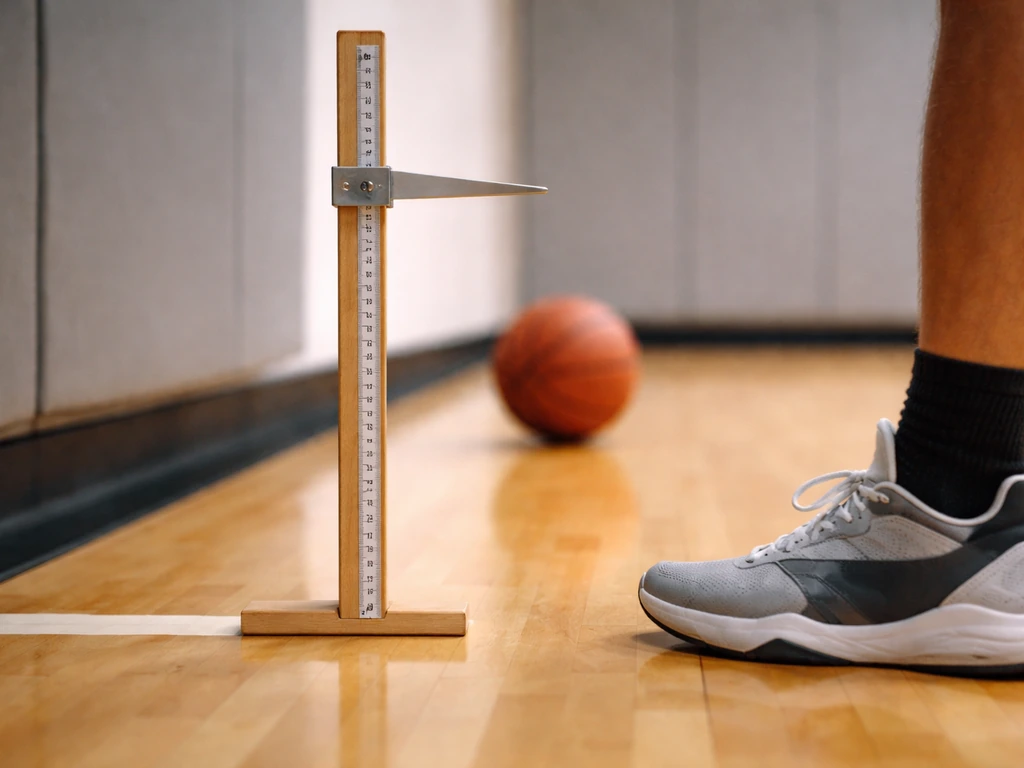
If you dig into historical rosters, you will find a frustrating mix of numbers. Basketball-Reference's 2003-04 Cleveland Cavaliers roster lists LeBron at 79 inches (6'7"), while StatMuse lists him at 6'9" for the same season. StatMuse’s 2003-04 Cleveland Cavaliers roster lists LeBron James at 6'9". NBA.com currently has him at 6'9" (2.06 m). That is three different numbers for essentially the same player at roughly the same point in time, and none of them contradict each other in any meaningful physiological way. They are just the result of inconsistent data entry, different sources using different measurement protocols, and decades of teams self-reporting player heights however they saw fit.
The most reliable single data point is the 2003 NBA Draft Combine, where LeBron was measured barefoot at 6'8.25". That measurement is documented and standardized: the combine has always collected both barefoot height and height in shoes as separate figures. So when people say LeBron went from 6'7" to 6'9", they are almost certainly comparing apples to oranges, not two genuine biological measurements taken at the same standard.
Real growth vs. roster updates and measurement noise
Before the 2019-20 season, the NBA had no standardized rule on whether player heights were measured with shoes on or off. Teams self-reported, and there was no league-wide verification process. A player listed at 6'9" in one era might have been measured in sneakers adding an inch or more, while the same player listed at 6'8" in another context might have been measured barefoot. The NBA changed this before the 2019-20 season, requiring all teams to submit precise heights measured without shoes. When that policy hit, several players' official listings shifted, not because they shrank or grew, but because for the first time the number actually meant something consistent.
Perceived height changes also come from less obvious sources: camera angles, posture at different stages of life, the height of the people standing next to a player in a given photo or video, and even the quality of footwear. LeBron wearing a high-top sneaker with a thick sole looks noticeably taller on camera than LeBron in flip-flops at a post-game presser. None of that is biology. It is optics, and it generates a lot of "he got taller" conversations that have no physiological basis.
LeBron's age and puberty: how much real growth was even on the table

LeBron was born in December 1984 and entered the NBA in the fall of 2003, making him 18 years old at the start of his rookie season. For boys, the peak growth spurt typically hits around ages 13 to 14, with the fastest rate averaging roughly 10.5 cm per year at peak velocity, and the spurt broadly occurring between ages 12 and 16. By 18, most males have completed the vast majority of their height gain. Some late developers continue adding small amounts into their early 20s, but by the time LeBron stepped onto an NBA court, he had almost certainly already reached or was very close to his adult height.
That said, it is not physiologically impossible for an 18-year-old to add a fraction of an inch over the next year or two if their growth plates have not yet fully closed. Given LeBron's combine measurement of 6'8.25" at 18 and his current listing of 6'9", a small amount of residual biological growth in his late teens is at least plausible. But the gap is also entirely explainable by measurement rounding, shoe-height discrepancies in later roster listings, and record-keeping differences. There is no documented second measurement taken years later under the same controlled barefoot conditions that would confirm any real increase.
What science says about growth plates and height after puberty
Height growth depends on the epiphyseal growth plates, cartilaginous zones near the ends of long bones where new bone tissue is produced. Once those plates close and ossify, bone length is set. For most males, this happens somewhere between ages 16 and 21, with closure timing influenced by genetics, hormonal activity, and to some degree physical stress on the skeleton.
Healthline notes that for most people height does not meaningfully increase after about ages 18 to 20 because the growth plates close growth plate closure after about ages 18 to 20. MRI-based research confirms that closure correlates with puberty progression and varies considerably between individuals, which is why some people keep growing into their early 20s while others are done at 16 or 17.
After growth plate closure, bone length does not increase. Full stop. What can change slightly is posture: stronger core and back muscles, better spinal alignment, and improved flexibility can recover some height lost to habitual slouching, and this can genuinely make someone appear taller even on a stadiometer. But that is not the same as growing. It is recovering standing height that was already there, compressed by posture habits. Medical sources are clear on this distinction: posture and alignment changes can affect how tall you measure, but once growth plates are closed, you are not adding bone.
Does NBA training actually make players taller?
This is one of the most persistent myths in basketball circles, and the honest answer is: no, not in any meaningful, lasting way. In general, do basketball players grow taller, and the available evidence suggests any changes are usually explained by timing, posture, or measurement differences rather than new bone growth. The idea that weight training, jumping, or professional conditioning adds height has no solid scientific support. Resistance training does not lengthen bones in adults, and there is no credible evidence that the physical demands of NBA training stimulate growth plate activity in players who are already past peak puberty.
Some people point to the fact that many NBA players arrive as teenagers and appear taller a few years later. But that observation is doing most of the work here: those players were often still in their late teenage years when they were drafted, meaning they had legitimate residual growth left from puberty. The NBA training did not cause it; time and biology did. The same phenomenon applies to any late-teen male athlete in any sport. The training environment coincides with growth; it does not produce it.
There is also no meaningful evidence that the supplements commonly taken by professional athletes stimulate height growth in post-pubertal individuals. There is also limited evidence on what supplements basketball players take to grow taller, especially after puberty supplements commonly taken by professional athletes. Protein, creatine, and standard performance supplements help with muscle mass, recovery, and strength. They do not reopen growth plates or trigger new bone elongation in adults.
How to actually verify competing height claims

When you see conflicting numbers about any athlete's height across different years or sources, run through this checklist before concluding they "grew" as a professional:
- Check whether each measurement specifies barefoot or with shoes. Shoes alone account for 0.75 to 1.5 inches depending on the style.
- Look for the measurement source. Official draft combine data is the gold standard for basketball players because it uses a standardized protocol. Roster listings, Wikipedia entries, and team bio pages are not controlled measurements.
- Note the age at each measurement. A player measured at 18 and again at 20 could show real biological growth; a player measured at 22 and again at 28 almost certainly did not.
- Consider when the measurements were taken relative to the 2019-20 NBA policy change. Heights listed before that season were not subject to a uniform barefoot standard; heights after it are more comparable.
- Look for a single controlled comparison: same protocol, same approximate time of day (height fluctuates slightly through the day due to spinal compression), with clear documentation of both measurements.
For LeBron specifically, applying this checklist reveals there is no valid controlled comparison showing him taller as a professional than he was at his 2003 combine measurement. The numbers that look like an increase almost always fail at step one or two: different shoe conditions or different source credibility.
| Source | Listed Height | Measurement Condition | Reliability |
|---|---|---|---|
| 2003 NBA Draft Combine | 6'8.25" | Barefoot, standardized | High |
| Basketball-Reference (2003-04 roster) | 6'7" (79 in.) | Unknown, self-reported era | Low |
| StatMuse (2003-04 roster) | 6'9" | Unknown, self-reported era | Low |
| NBA.com (current bio) | 6'9" | Post-2019 barefoot policy | Moderate-High |
What this means for your own height potential
LeBron's case is a useful lens for thinking about your own situation. The science is consistent: the window for meaningful height increase is tied to growth plate activity, which is driven by puberty timing and genetics. For can youth players grow taller, this is why puberty timing and genetics matter more than hoping for extra height from later training window for meaningful height increase.
If you are still in your teens and going through puberty, real factors like sleep, nutrition, and avoiding chronic stress can genuinely support you in reaching your genetic ceiling. Growth hormone is primarily secreted during deep sleep, adequate protein and micronutrients fuel bone development, and chronic caloric restriction during the growth years can permanently limit final height.
If you are in your early 20s, there may still be a small window depending on where your growth plates are, but you are almost certainly in the final innings. After that, the honest answer is that you are working with what you have in terms of bone length. What you can do is maximize standing height through posture work, core strength, and spinal health, and ensure you are not losing height prematurely through disc compression, poor posture habits, or inadequate nutrition.
Age-based breakdown of what is actually actionable
| Age Range | Growth Potential | Most Useful Actions |
|---|---|---|
| Under 16 | High (active growth phase) | Prioritize sleep (8-10 hrs), balanced nutrition with adequate protein and calcium, avoid excessive chronic stress |
| 16-20 | Low to moderate (plates often still open) | Continue sleep and nutrition focus, strength training is safe and supports posture, avoid height-supplement hype |
| 20+ | Minimal biological growth expected | Posture and core strength for standing height, maintain bone density with weight-bearing exercise and calcium/vitamin D |
The broader pattern you see with athletes like LeBron, and which applies to basketball players generally, is that the sport attracts people who are already tall by genetics, and those who enter the league as teenagers naturally add some height because they are still teenagers, not because of anything specific to NBA training. That same biology also drives how athletes grow taller during puberty, even before any sport-specific training comes into play. If you are exploring questions about how youth athletes specifically develop, or whether training environments influence growth timing, those are genuinely interesting physiological questions worth digging into separately.
The bottom line on LeBron: the best available barefoot measurement puts him at 6'8.25" at age 18. His current listing of 6'9" is plausible given minor residual growth and measurement rounding, but it is not evidence of a dramatic post-NBA growth spurt. That is the closest answer to whether did Ronaldo grow taller, since official listings and measurement context can create the same kind of misleading impression not evidence of a dramatic post-NBA growth spurt. The more you know about how NBA heights are recorded and reported, the less mysterious the variation becomes. It is mostly data quality, not biology.
FAQ
Did LeBron really gain a whole inch after joining the NBA?
A full inch is not supported by controlled barefoot measurements. The clearest number (the 2003 combine barefoot height) and today’s roster listing can differ due to rounding, different listing sources, and measurement standards changing over time, so it is safer to treat any increase as possibly small or mostly reporting-related.
Why do his heights conflict between sites for the same season?
Different databases often use different raw inputs (team self-reports, historical roster documents, or later re-measurements) and then display them with their own rounding rules. If the measurement conditions differ, the “same year” comparison can be misleading even if the player did not change at all.
Does the NBA’s current height policy prove LeBron’s exact height today?
It improves consistency going forward because heights are submitted without shoes, but it still does not retroactively validate older measurements. Also, official listings are still administrative data, not repeated clinical measurements on the same day under identical conditions.
Could LeBron have gotten taller from better posture or training in adulthood?
Yes, standing height can look different when posture improves, for example better spinal alignment and reduced slouching, and that can even change how tall someone measures on a stadiometer. But that is not new bone growth, and it will not increase maximum bone length once growth plates are closed.
Is it possible for an NBA player to grow after late teens?
It is possible to add a small amount if growth plates have not fully closed yet, which varies by person. However, there is no verified, repeated barefoot measurement for LeBron under the same controlled conditions that would confirm a meaningful biological increase after he became a pro.
Do shoes, including high-tops, explain why LeBron looks taller in games?
They explain part of the visual effect, but not roster-listing discrepancies. High-top or thicker-soled shoes can change apparent height in photos and broadcast footage, while official heights are supposed to follow a defined measurement protocol (especially since the policy standardization in the late 2010s).
Does weight training, jumping, or NBA conditioning increase height for adults?
No strong evidence supports bone-length increases from resistance training or basketball-specific conditioning after puberty. The sport may improve muscle balance and posture, which can change measured or photographed height, but it does not reopen growth plates in adults.
Could supplements or protein help LeBron grow taller as an adult?
Standard sports nutrition can support muscle, recovery, and overall health, but it does not reliably trigger new bone elongation after puberty. If someone still has remaining growth potential, that would be tied to biology and growth plate status, not supplements that universally reopen growth plates.
If I want to verify whether any athlete “grew,” what should I look for?
Use comparisons that share the same measurement conditions, ideally barefoot, and from reliable standardized sources. Be skeptical of single numbers that come from different protocols, rounding practices, or non-uniform roster-reporting, especially when the “increase” is around one inch.
Can you measure height differently and get a bigger number without real change?
Yes. Timing of measurement (time of day), hydration status, posture on the stadiometer, and even footwear remnants can shift results slightly. That is why repeated controlled measurements under consistent conditions matter more than comparing one casual measurement to another.
Next Article
Does L-Arginine Help You Grow Taller? Evidence and Safety
Evidence on whether L-arginine can increase height, its biology, limits by growth plates, and safe, better alternatives.