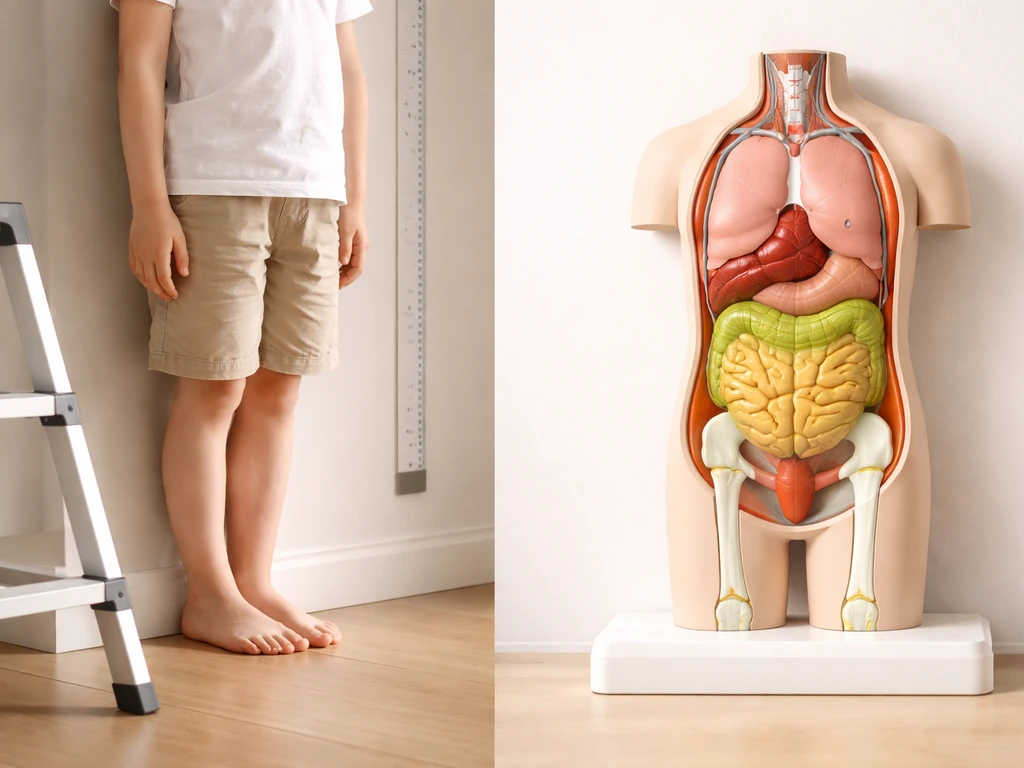
Ginseng does not help you grow taller. There is no credible human evidence showing that ginseng, in any form or dose, increases height, stimulates growth plates, or meaningfully boosts the hormones responsible for skeletal growth. If you are still growing (typically under 18, with open growth plates), the factors that actually move the needle are nutrition, sleep, physical activity, and managing any underlying health issues. If your growth plates have closed, no supplement, including ginseng, can add inches to your height.
Does Ginseng Help You Grow Taller? Evidence, Safety, and What Works

Marcus Reeves
7 Jul 2026
How height actually grows
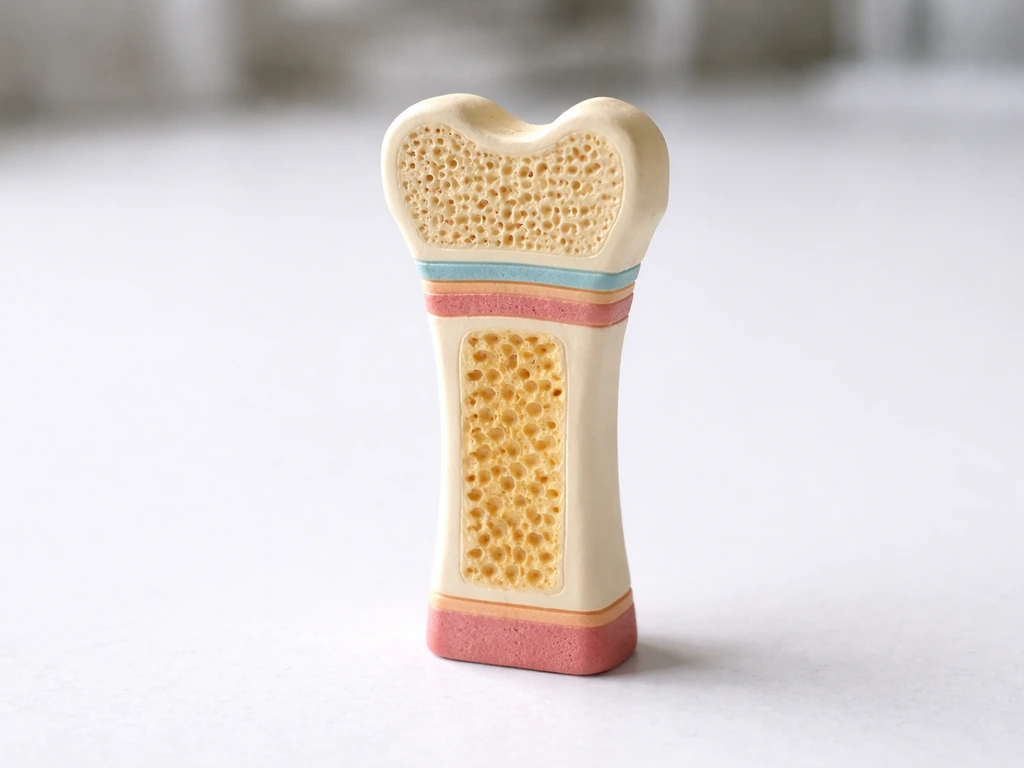
Your height is determined almost entirely by what happens at your growth plates, which are thin layers of cartilage near the ends of your long bones, like your femur and tibia. These plates are where new bone tissue is laid down during childhood and adolescence. As long as they stay open (cartilaginous), you can grow taller. Once they fuse into solid bone, usually in your mid to late teens for most people, that window closes permanently.
The main hormonal driver of this process is growth hormone (GH), released by the pituitary gland. GH triggers the liver to produce insulin-like growth factor 1 (IGF-1), which is what actually stimulates the growth plates to produce new cartilage and bone. Sex hormones (estrogen and testosterone) also play a role: they drive the pubertal growth spurt and ultimately cause the growth plates to fuse. Thyroid hormone, cortisol, and insulin all interact with this system too. Getting the physiology right matters here, because any honest evaluation of ginseng has to ask: does it actually affect any of these mechanisms in a meaningful way in humans?
What the science actually says about ginseng and growth

Ginseng's active compounds are called ginsenosides, and some cell and animal studies have looked at whether they interact with IGF-1 signaling or bone metabolism. There are also a handful of studies suggesting ginseng might modestly influence GH release in certain contexts. But here is the critical gap: none of this has translated into demonstrated height increases in human trials. The National Center for Complementary and Integrative Health (NCCIH, part of NIH) states plainly that there is currently no conclusive evidence that Asian ginseng provides health benefits for most purposes. That includes anything related to bone growth or height.
The marketing around ginseng and height often leans on indirect logic: ginseng may support energy or stress reduction, which might improve sleep, which might support GH release. That chain of reasoning is too thin and too speculative to act on. Even if ginseng had a small effect on GH pulse amplitude, the body tightly regulates growth through multiple feedback loops. A supplement cannot override genetics, nutritional deficits, growth plate status, or puberty timing.
It is also worth noting that the ginseng supplement market has significant quality control issues. Products vary widely in ginsenoside content, and some contain contaminants or mislabeled doses. What you buy may not match what was studied.
Kids and teens vs. adults: who can realistically change their height?
This is the most important distinction to make. For children and adolescents with open growth plates, the potential to grow more is real, and how you support that biology matters. Your height is largely limited by your growth plates, which only have open potential for height gain while you are still growing how you support that biology matters. Deficiencies in protein, calcium, vitamin D, or zinc can genuinely impair growth. Chronic illness, stress, poor sleep, and certain medications can all suppress growth velocity. Fixing any of these issues can allow a child to grow closer to their genetic potential. That is meaningful.
For most adults over 18 to 21, the growth plates have fused. The honest answer is that no supplement, herb, or lifestyle intervention will increase your bone length at that point. What adults can realistically change is posture and spinal compression. Improving core strength, reducing habitual slouching, and addressing tight hip flexors can help you stand at your actual height rather than an inch or two shorter than it. That is not trivial, but it is not the same as growing taller.
| Factor | Still growing (open plates) | Adult (closed plates) |
|---|---|---|
| Ginseng | No evidence of benefit | No effect on bone length |
| Protein intake | Directly supports growth | Supports muscle/posture, not height |
| Sleep (deep sleep) | Drives GH release at night | Supports recovery, not height |
| Vitamin D + Calcium | Essential for bone mineralization | Maintains bone density |
| Impact/resistance exercise | Stimulates bone growth | Supports density and posture |
| Posture correction | Minor but real | Can recover 0.5 to 2 inches visually |
Evidence-based levers that can actually affect height

If you or your child are still growing, these are the areas where the science is genuinely solid.
Nutrition: the foundation
Adequate protein is non-negotiable for growth plate activity and IGF-1 production. Most children and teens need 0.85 to 1.2 grams of protein per kilogram of body weight per day, and active adolescents need more. Calcium (around 1,000 to 1,300 mg per day depending on age) and vitamin D (600 to 1,000 IU daily, or enough to keep serum 25-OH vitamin D above 30 ng/mL) are essential for bone mineralization. Zinc deficiency specifically has been linked to growth impairment in children. Overall caloric intake also matters: chronic undereating suppresses GH secretion and growth velocity.
Sleep: when the growth hormone actually releases

The largest pulses of growth hormone happen during deep (slow-wave) sleep, particularly in the first few hours after falling asleep. Children and teenagers who are chronically sleep-deprived are, in a very literal sense, shortchanging their own GH output. School-age children need 9 to 11 hours, and teens need 8 to 10 hours. Consistent sleep timing also matters because GH release is partly circadian.
Physical activity: specifically weight-bearing and impact
Mechanical loading of bones, through running, jumping, and resistance training, promotes bone density and may support growth plate activity during development. Sports like basketball, volleyball, and gymnastics involve high-impact loading. Swimming and cycling, while great for cardiovascular fitness, provide less bone-stimulating mechanical load. This does not mean impact sports make you tall, but sedentary behavior during peak growing years is a missed opportunity.
Managing chronic illness and stress
Poorly controlled asthma, celiac disease, inflammatory bowel disease, and other chronic conditions can significantly impair growth in children. Chronic psychological stress elevates cortisol, which suppresses GH. If a child is growing slowly, checking for these underlying causes is more productive than adding supplements. The same goes for medications: long-term corticosteroid use is one of the better-documented suppressors of growth velocity in children.
How to check your growth potential and when to see a doctor

If you are a parent concerned about your child's height, or a teenager wondering whether you are done growing, the most useful tools are a growth chart and a bone age x-ray. Growth charts (plotting height over time) reveal whether a child is tracking along a consistent percentile or falling off their curve. A slow growth velocity, typically less than 4 to 5 cm per year in a school-age child, is more meaningful than being short at one point in time. The Pediatric Endocrine Society notes that slow growth can signal a health problem even when a child seems otherwise healthy.
A bone age x-ray (usually of the left hand and wrist) shows how mature your growth plates are compared to your chronological age. If bone age is significantly delayed, there may be more growth time left than expected. If it is advanced, growth is likely nearly complete. The Endocrine Society uses this test routinely to estimate remaining growth potential and to distinguish between constitutional delay (a normal variant with a late growth spurt) and pathological causes.
You should consider seeing a pediatric endocrinologist if: a child falls below the 3rd percentile for height, growth velocity drops significantly (dropping percentile channels on a growth chart), there is no pubertal development by age 13 in girls or 14 in boys, or there is a family history of hormone deficiencies. The evaluation goal, as the Endocrine Society explains, is to determine whether the growth pattern is due to a treatable condition like GH deficiency or is simply a normal variation like familial short stature. That distinction matters enormously because GH deficiency is treatable with hormone therapy, while familial short stature is not.
For teens curious about their own growth, a simple first step is plotting your height on a standard growth chart and comparing it to your parents' heights. Most adults end up within about 10 cm of the midpoint between their parents' heights (adjusted for sex). If you are far below that range and still growing, that is worth a conversation with a doctor.
Ginseng safety, dosing, and how to avoid supplement traps
Even setting aside the lack of height benefit, ginseng is not risk-free, especially for younger users. NCCIH notes that some experts specifically recommend against ginseng use in infants and children, partly because safety data in this age group is limited and partly because ginsenosides can have hormonal activity. That is not a population you want to experiment with unproven supplements, particularly ones with estrogenic properties during development.
For adults who use ginseng for other reasons (fatigue, cognitive function, immune support, though the evidence there is also mixed), there are real interactions to know about. NCCIH flagged mixed results in studies examining ginseng with blood-thinning medications like warfarin, and advises consulting a clinician before combining them. Ginseng can also interact with stimulants, diabetes medications, and certain antidepressants.
On dosing: most research on Asian ginseng (Panax ginseng) has used doses of 200 to 400 mg of standardized extract per day in adults, typically standardized to 4 to 7 percent ginsenosides. American ginseng (Panax quinquefolius) and Siberian ginseng (Eleutherococcus senticosus, not a true ginseng) have different ginsenoside profiles and should not be assumed interchangeable. The broader supplement market conflates these freely, which is one reason buying from a third-party tested brand matters if you are going to use any of them.
The larger pattern to watch for is the supplement category that promises to 'boost growth hormone naturally.' These products often feature ginseng alongside arginine, ornithine, GABA, or various adaptogens. The logic is that these compounds individually have shown some effect on GH in isolated studies, so together they must work. In practice, no such combination product has demonstrated meaningful height gains in humans. They lean on the same speculative chain of reasoning described earlier, and they are rarely tested in the populations (growing children) where height changes are even biologically possible.
If you are exploring herbal supplements and height claims more broadly, the same skepticism applies across the board. Whether it is ginseng, ashwagandha, or any other herb marketed for growth, the evidence standard should be the same: human trials showing actual height changes, not cell studies or animal models. That bar has not been cleared. The evidence-based path to maximizing height potential, for those who still have growth plates open, runs through food, sleep, movement, and medicine when it is genuinely needed, not through any supplement aisle. If you are wondering whether rice can help with height, the evidence is that it is not a direct way to grow taller compared with focusing on growth plates, nutrition, sleep, and overall health.
FAQ
My child is still growing, but can I safely use ginseng to help them reach their potential?
If you are under 18 and growth plates might still be open, ginseng could still be a waste of money because it has not shown height gains in human studies. The practical approach is to check growth velocity and sleep and nutrition first, then consider medical evaluation if tracking is slowing.
How do I tell if my teen’s slow height growth is normal variation or something that needs treatment?
Yes, some people are short and still healthy, like constitutional delay or familial short stature. What matters is growth velocity over time, not one height measurement, and a bone age x-ray can clarify whether growth potential remains.
Why do ginseng brands differ so much for the same product dose on the label?
For supplements, “standardized extract” matters, because ginsenoside content can vary widely between brands. Without third-party testing, you may not get the dose or composition that corresponds to any research.
Is American or Siberian ginseng the same thing when it comes to height claims?
Ginseng is not interchangeable across types, and “ginseng” on a bottle may refer to American or Siberian products that have different active profiles. If a product is not Asian ginseng (Panax ginseng) extract, you should not assume any effects claimed for Asian ginseng apply to it.
What red flags should I look for in supplements that claim to boost growth hormone for taller height?
If a product promises to “boost growth hormone naturally,” it often uses ingredients with weak or indirect evidence for GH and never demonstrates increased height in humans. Treat these as marketing claims unless there are credible human height outcomes.
If ginseng cannot make me taller, what can realistically change my measured height as an adult?
Height gains from ginseng are not supported, but you can change how tall you look by reducing spinal compression. Focus on posture, core strength, and addressing habits like prolonged slouching, which can affect measured height by an inch or two.
Could my child’s medications or chronic illness explain short stature more than ginseng ever could?
If your child uses long-term corticosteroids or has chronic conditions that affect inflammation or absorption, growth may be suppressed regardless of supplements. The higher-yield step is to review the medical plan with their pediatrician, since the underlying cause often determines growth more than any herb.
If my kid eats well, can poor sleep still be the main reason they are not growing?
Before assuming a height issue is nutrition, confirm sleep consistency and timing. Growth hormone output is tied to deep sleep and circadian rhythm, so irregular schedules and chronic sleep debt can reduce growth velocity even when calories seem adequate.
When should we stop experimenting with supplements and ask for endocrine testing?
Start with the growth chart and growth velocity, then seek evaluation if key thresholds are met, such as falling below the 3rd percentile, losing percentile channels, or not showing expected pubertal development. A bone age and clinician labs can distinguish treatable endocrine problems from normal variants.
What should adult height goals focus on after growth plates have fused?
If growth plates are closed, the goal shifts to bone health and function rather than trying to change height. Ask a clinician about vitamin D status and overall skeletal health, but do not expect supplements or ginseng to lengthen bones.
Next Article
Does Fiber Help You Grow Taller? Science, Limits, Tips
Does fiber boost height? Learn how it supports gut health, not growth plates, plus realistic diet tips and when to see a