Can you actually grow shorter? The direct answer
Yes, it is possible to become shorter in height, but not in the way most people picture it. You cannot intentionally shrink your skeleton or dial your height downward on command. What does happen, very reliably, is that height decreases with age due to spinal compression, posture changes, and bone density loss. It can also happen temporarily throughout the day, or more permanently from injury, illness, or spinal deformity.
But if you are a child still growing, there is no safe or known method to deliberately reduce your eventual adult height. If you are already an adult, the height you reach at skeletal maturity is essentially fixed, though you can lose some of it over time through natural or pathological processes. That distinction matters a lot, so let's walk through it properly.
How height changes at different life stages
During childhood and adolescence
Height gain follows a predictable pattern across childhood. As children grow, their bodies increase in height through changes in growth plate activity and overall growth velocity During childhood. Growth velocity is fastest in infancy, slows through middle childhood, then surges again during the adolescent growth spurt. After that spurt, growth plates (the cartilaginous zones at the ends of long bones) gradually fuse, and linear height gain stops entirely.
Bone age, which reflects skeletal maturity rather than calendar age, is the most reliable predictor of how much growing a person has left to do. Once the growth plates are fused, typically in the mid-to-late teens for girls and slightly later for boys, upward growth is over. Importantly, during this growing period, height is increasing, not decreasing. Barring a serious illness, malnutrition, or a specific medical condition, children do not spontaneously become shorter while they are still developing.
In young and middle-aged adults
Once growth plates fuse, your height is set at its peak. In your twenties and thirties, that number stays relatively stable. Minor day-to-day variation exists because the intervertebral discs in your spine compress slightly under gravity during the day, then re-hydrate overnight, In your twenties and thirties, that number stays relatively stable. Minor day-to-day variation exists because the intervertebral discs in your spine compress slightly under gravity during the day, then re-hydrate overnight, meaning you are measurably taller first thing in the morning than before bed. This is normal and not a true change in height. Lasting height loss in young adults is almost always tied to a specific cause: poor posture, a spine injury, or a medical condition.
In older adults
This is where height loss becomes genuinely significant. Data from the Baltimore Longitudinal Study of Aging found that from age 30 to 70, men lose an average of about 3 cm and women about 5 cm. By age 80, those numbers grow to roughly 5 cm for men and 8 cm for women. A separate 34-year longitudinal cohort study found a mean height loss of 3.8 cm across its participants (from a mean of 157.4 cm down to 153.6 cm). This is real, measurable shrinkage, and it accelerates as you age. The causes include disc compression, reduced bone density (particularly with osteoporosis), vertebral compression fractures, and changes in posture and muscle tone.
Why you cannot choose to grow shorter
Height is primarily determined by your genetics and by the biological program your growth plates follow during development. Your bones grow longer because cartilage at the growth plate is converted into bone through a tightly regulated process involving growth hormone, IGF-1, thyroid hormone, and sex hormones. This process runs on a biological clock, not a preference dial. There is no supplement, exercise, or intervention that can instruct your growth plates to stop early or instruct your bones to get shorter while you are still developing, without also causing serious harm.
Once growth plates are fused, the situation is different but still not something you can reverse voluntarily. The skeleton is mineralized, rigid bone. You cannot compress, reshape, or reduce it through lifestyle choices. Any legitimate height reduction in adults happens passively, through the gradual processes described above, not through anything you can intentionally do. This is a hard biological boundary, and it is worth being clear-eyed about it.
What can actually make you shorter
There are real, evidence-supported mechanisms that cause people to lose height. Understanding them is useful whether you are concerned about height loss or just curious about what is happening to your body.
Posture and spinal alignment
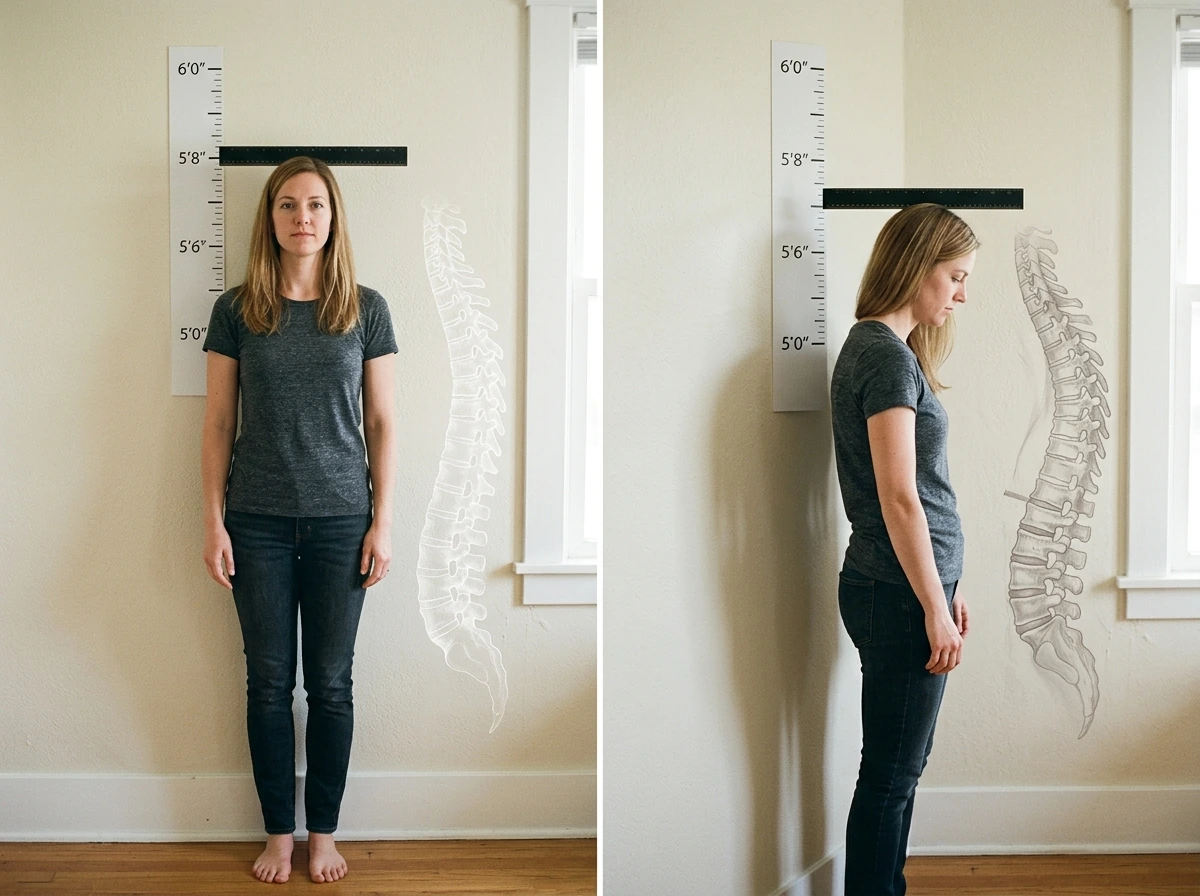
Poor posture, especially persistent forward head posture, rounded shoulders, and thoracic kyphosis (an exaggerated upper back curve), can make a person appear and measure noticeably shorter. This is not an illusion. When the spine is not held in its natural alignment, the vertical distance from head to heel is genuinely reduced. The encouraging part: postural height loss is largely reversible. Improving core strength, back extensor strength, and thoracic mobility can restore several centimeters in apparent and measured height for people with significant postural problems.
Spinal disc compression and degeneration
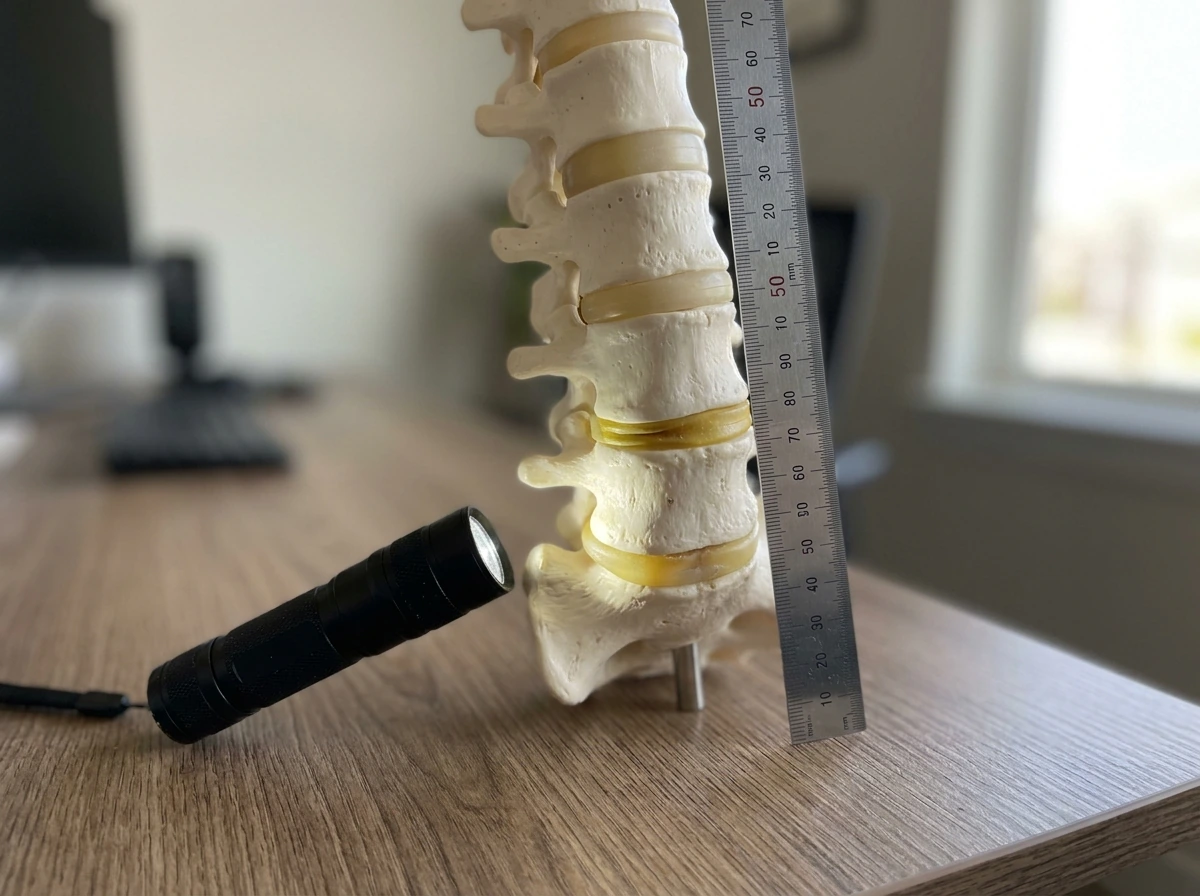
The intervertebral discs sit between each vertebra and act as shock absorbers. Over time, they lose water content and thin out. Disc degeneration is a normal part of aging and contributes meaningfully to the height loss documented in longitudinal studies. Compression fractures of the vertebral bodies, which are most common in people with osteoporosis, can cause more sudden and significant height loss, sometimes collapsing a vertebra enough to reduce standing height by a centimeter or more in a short period.
Medical causes
Several medical conditions can contribute to height loss beyond normal aging. Osteoporosis is the most common, reducing bone density to the point where vertebrae fracture under everyday loads. Scoliosis (lateral spinal curvature) and kyphosis can both reduce standing height. Adult spinal deformity, which encompasses a range of alignment problems that develop or worsen in adulthood, has a documented relationship with measurable height loss, as shown in the longitudinal cohort study mentioned earlier. Certain hormonal disorders, prolonged corticosteroid use, and malabsorption conditions affecting calcium and vitamin D can also accelerate bone loss and subsequent height reduction.
Practical next steps you can take today
Self-check: what might be going on with your height
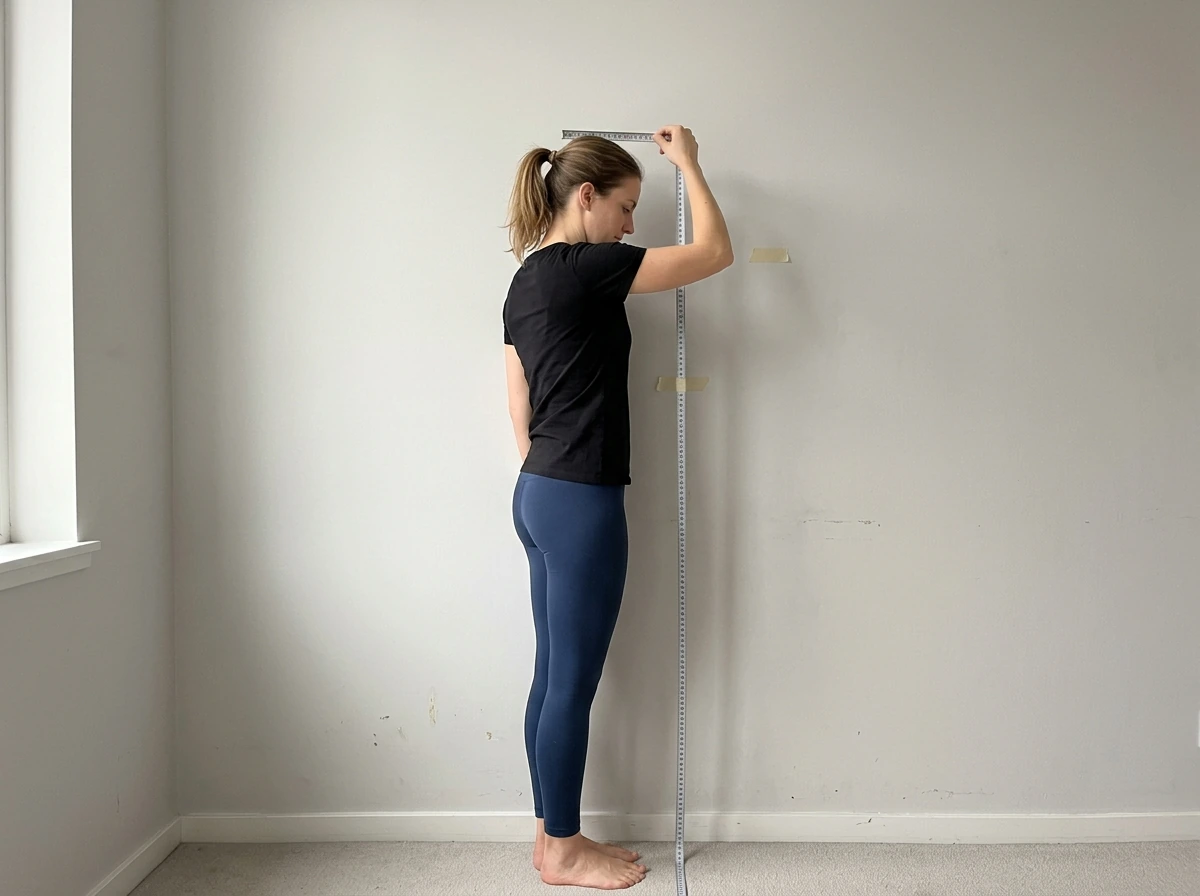
If you feel shorter than you used to be, or you are concerned about height, a useful first step is a straightforward self-assessment. Stand against a wall with your heels, calves, shoulder blades, and the back of your head touching it. If that position is noticeably different from your natural relaxed standing posture, you likely have a postural component contributing to apparent height loss.
If you cannot deliberately shrink your skeleton to reduce your height, the related question becomes whether you are simply losing a bit of posture-related height instead, which is often reversible can you grow smaller. Have someone measure your standing height both in that corrected posture and in your normal stance. A difference of more than 1 to 2 cm suggests posture is playing a significant role.
Think about your daily habits too. Do you sit for extended periods with a rounded spine? Do you carry a heavy bag on one shoulder? Are you sleeping on a mattress that leaves you waking up with back stiffness? These factors do not change your bone structure, but they contribute to the muscular imbalances and postural patterns that affect your measured height over time.
What you can realistically do
- Strengthen your core and back extensors: exercises like deadlifts, rows, and prone back extensions directly support spinal alignment and reduce postural height loss.
- Work on thoracic mobility: consistent thoracic extension exercises and upper back stretches can reduce kyphosis and restore several centimeters of apparent height in people with significant rounding.
- Protect your bone density: adequate calcium (about 1,000 mg per day for most adults, rising to 1,200 mg for women over 50 and men over 70) and vitamin D (1,500 to 2,000 IU per day is commonly recommended for deficient adults) support bone health. Weight-bearing exercise is also essential.
- Maintain a healthy weight: excess body weight increases compressive load on the spine and can accelerate disc degeneration over time.
- Improve sleep posture: sleeping on a supportive mattress with appropriate pillow height reduces overnight strain on the spine.
- If you are still growing and concerned about your height trajectory, track your growth against age-appropriate growth charts and discuss any concerns with a pediatrician or endocrinologist.
When to see a doctor
Most gradual height loss in older adults is a normal part of aging, but certain patterns warrant a medical evaluation. See a doctor if you notice any of the following:
- Rapid or sudden height loss of more than 1.5 to 2 cm in a short period (months rather than years), which can indicate a vertebral compression fracture.
- Back pain accompanying height loss, especially if it is new, severe, or worsened by movement.
- Visible changes in spinal curvature, such as a pronounced hump forming in the upper back or a noticeable lean to one side.
- Height loss in a child or teenager, which is not expected during growth and should always be evaluated promptly.
- Known risk factors for osteoporosis (early menopause, long-term steroid use, family history, low body weight) combined with any measurable height loss.
- Height that seems disproportionate relative to your limb length, which can suggest a hormonal or skeletal condition worth investigating.
A standard evaluation for concerning height loss typically includes a detailed history, physical exam, spine X-rays to check for compression fractures or curvature, and a DEXA scan to measure bone density. Blood work can check calcium, vitamin D, and relevant hormonal levels. These are routine tests that provide a clear picture quickly.
Myths versus science: supplements, hormones, and 'height reduction' hacks

There is a consistent stream of misinformation around height manipulation in both directions, and the 'grow shorter' angle is no exception. If you are asking what make you grow taller, the key is understanding growth plates and when they are still open. Here is what the evidence actually says.
| Claim | What the science says |
|---|
| Taking certain supplements or herbs can reduce your height | No supplement has any demonstrated ability to reduce skeletal height. Bone structure does not respond to herbal compounds or common nutritional supplements in a way that reduces stature. |
| High-impact exercise or heavy lifting during adolescence stunts growth | There is no good evidence that age-appropriate resistance training stunts growth. Serious injuries to unfused growth plates can theoretically affect local bone growth, but this is a risk from injury, not from exercise itself. |
| Hormonal treatments can make a tall child shorter | Growth hormone deficiency or excess is treated medically, but there are no safe hormonal interventions specifically designed to reduce height in healthy tall children. Some research has examined high-dose estrogen therapy in very tall adolescent girls, but this is controversial, now largely abandoned, and carries significant health risks. |
| Yoga or stretching can reduce your height | Stretching and yoga cannot reduce bone length. They can improve posture and spinal alignment, which may actually increase measured height slightly in people with significant postural problems. |
| Carrying heavy loads compresses your spine permanently | Temporary spinal compression from load-bearing reverses with rest. Chronic heavy loading contributes to disc degeneration over decades, but it is not a reliable or recommended method of reducing height. |
| Surgery can make you shorter | Surgical height reduction (bone shortening procedures) exists but is extremely rare, high-risk, and reserved for specific medical indications like severe limb length discrepancy. It is not a cosmetic option. |
The honest summary is this: you cannot meaningfully grow shorter through any safe, intentional lifestyle or supplement approach. The height reduction that does happen is a result of biological aging, medical conditions, or injury, not something you can reliably engineer. If you want a practical, safer angle on the same issue, see the section on posture and spinal alignment that can make you look and measure shorter without changing bone length grow shorter. If height is causing you distress, whether because you feel too tall, too short, or are noticing loss with age, talking to a doctor or a mental health professional is a far more productive path than searching for hacks that do not work and could cause harm.
Understanding what actually drives height, from growth plate biology to the factors covered in related topics like what makes you grow taller or why do we grow taller, gives you a much clearer picture of why voluntary height reduction is biologically off the table. Understanding what actually drives height, from growth plate biology to the factors covered in related topics like what makes you grow taller or why do we grow taller, gives you a much clearer picture of why voluntary height reduction is biologically off the table. Height is one of the most genetically determined traits we have, and the mechanisms that govern it are simply not responsive to the kinds of interventions people often hope for. If you are asking what makes a person grow taller, the answer starts with growth plates during development, which is why voluntary height reduction is biologically off the table.