
Sleeping on your back does not directly make you grow taller. There are no studies showing that a specific sleep position, including back-sleeping, increases bone length or stimulates growth plates in any meaningful way. What sleep position can do is affect spinal alignment and posture, which can change how tall you appear, and overall sleep quality does matter for growth hormone release during childhood and adolescence. So the honest answer is: back-sleeping is not a growth hack, but it is a reasonable position for spinal comfort, and getting enough high-quality sleep is genuinely important for kids and teens who are still growing.
Does Sleeping on Your Back Help You Grow Taller?

Marcus Reeves
17 May 2026

Myth vs reality: does back-sleeping actually change your height
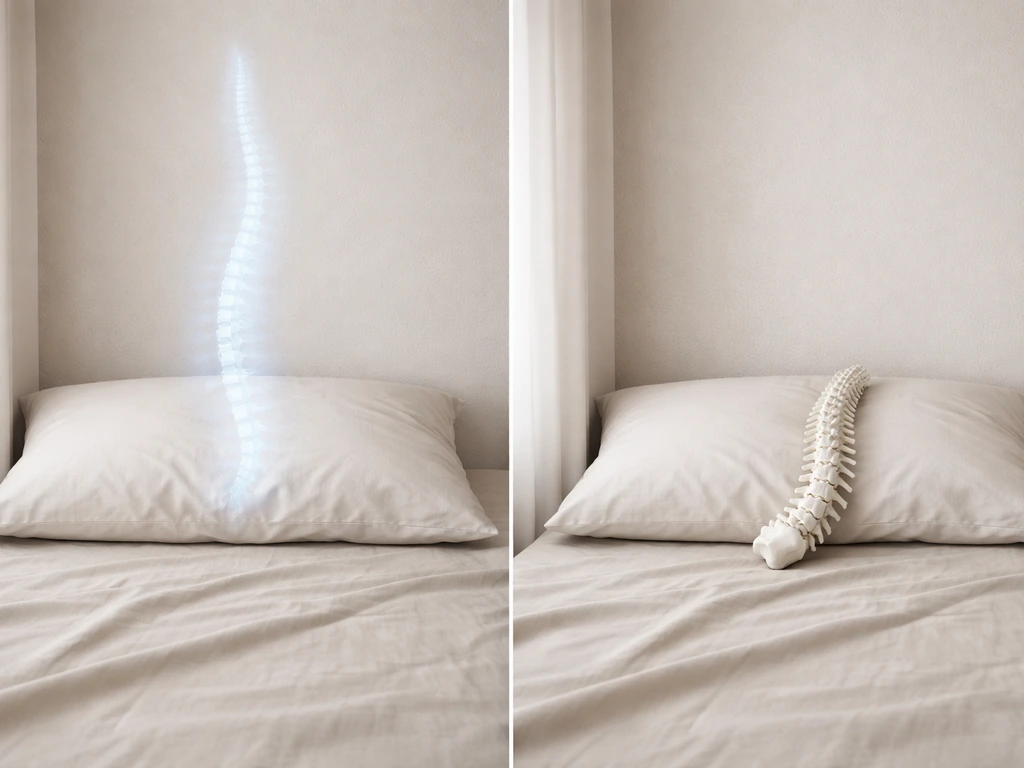
The claim floating around is that sleeping flat on your back somehow helps you grow taller, usually tied to the idea that your spine can decompress and lengthen overnight. There is a kernel of truth buried in there, but it is being seriously oversold. Yes, your spine does decompress when you lie flat because gravity is no longer compressing the intervertebral discs the way it does when you are upright. Research using stadiometry and MRI confirms that spinal height can change measurably with posture and disc compression states. But this is a temporary, fluid-driven effect. By the time you stand up and go about your day, the discs compress again and you return to your normal standing height. No sleep position is changing the actual length of your bones.
The Sleep Foundation is direct on this: there are no studies demonstrating that switching to a specific sleep position increases adult height. The broader body of research on sleep position, including observational work on how position and position shifts vary across age groups, is about comfort and physiology, not longitudinal bone growth. Growth plates, also called epiphyseal plates, are where real height gains happen in children and teens, and they respond to hormonal signals, nutrition, and genetics, not to whether you slept face-up or face-down. If you are asking, “does sleeping make you grow,” the key takeaway is that sleep helps growth in children mainly through growth hormone and overall sleep quality, not by changing the sleeping position.
Height growth vs posture: why you might look taller (or not)
This is where it gets genuinely interesting. While back-sleeping cannot add permanent inches to your skeleton, posture absolutely affects how tall you appear and even how tall you measure on a stadiometer. Someone with forward head posture or rounded shoulders can lose a noticeable amount of apparent height compared to when they stand fully erect. Research on postural education and corrective exercise shows that targeted programs can improve craniovertebral angle (basically, how far your head juts forward), and that improvement translates into looking and measuring taller, even though no bone grew.
Back-sleeping can play a small supporting role here. Sleeping in a position that keeps your spine in a neutral, aligned position, rather than one that reinforces hunching or twisting, may help you maintain better posture habits over time. It is not a substitute for intentional postural work, but it is not hurting you either. Think of it as one small piece of a much larger picture.
What sleep actually does for growth, and what it cannot
Kids and teens: sleep quality genuinely matters here

For children and adolescents with open growth plates, sleep is legitimately important for growth, just not because of position. The mechanism is growth hormone (GH). The biggest pulse of GH release every day happens during slow-wave (deep) sleep. Classic research published in the Journal of Clinical Endocrinology and Metabolism confirmed this sleep-related GH release pattern in children, and reviews on sleep and GH reinforce that healthy sleep physiology supports the hormonal environment that drives bone elongation. Disrupted sleep, whether from poor habits, sleep-disordered breathing, or chronic sleep deprivation, can blunt those GH pulses. Animal studies have even shown that obstructive sleep breathing specifically impairs juvenile growth through these mechanisms.
So for a growing child or teenager, the goal is not to engineer a specific sleep position. It is to get enough high-quality sleep so those GH pulses fire properly. The American Academy of Pediatrics and NHLBI provide clear age-based targets: ages 3 to 5 need 10 to 13 hours (including naps), ages 6 to 12 need 9 to 12 hours, and teens need 8 to 10 hours, with some NIH sources noting adolescents average a need closer to 9.5 hours per night. Most teenagers are running on significantly less than that.
Adults: the growth plate window is closed
For adults, growth plates have fused, typically by the late teens or early twenties, and no sleep position or sleep duration is going to reopen them. True skeletal height gain is not on the table. What remains realistic for adults is posture improvement, which can recover some of the height they may be losing to slumping, and spinal disc health, which affects comfort and long-term function. Back-sleeping with good support can help with both, but it is a comfort and alignment story, not a growth story.
How to sleep on your back safely and comfortably

If you want to sleep on your back, setting it up correctly makes a real difference in whether it actually helps your alignment or just leaves you uncomfortable. The Sleep Foundation recommends a mattress that supports your spine's natural curves without being so firm that it creates pressure points. A medium-firm mattress generally works well for back-sleepers. Your pillow matters too: it should fill the space between your neck and the mattress so your head is not tilted too far forward or dropping back. If you are wondering does sleeping without a pillow help you grow, the key takeaway is that sleep position does not make your bones grow. A contoured or cervical pillow can help with this.
One practical addition that many back-sleepers find useful: placing a pillow under your knees. This reduces strain on the lower back by allowing a slight bend in the hips and keeping the lumbar spine from flattening excessively against the mattress.
There is one real caveat here. If you snore or have been told you have sleep apnea, back-sleeping is probably the worst position for you. When you lie flat on your back, gravity pulls tongue tissue toward the back of the throat, which narrows the airway and worsens snoring and apnea events. Harvard Medical School and the American Medical Association both flag this clearly. If snoring or sleep apnea is an issue, poor sleep quality from disrupted breathing is far more damaging to growth (in kids) or overall health (in everyone) than any postural benefit from back-sleeping. In that case, sleeping on your side is the better call.
A simple back-sleeping setup
- Medium-firm mattress that supports natural spinal curves without hard pressure points
- A pillow sized to fill the gap between your neck and the mattress, keeping your head neutral
- A pillow under your knees to reduce lower back tension
- Avoid very thick pillows that push your chin toward your chest
- If you snore or have acid reflux, consider a wedge pillow or a slight head elevation rather than completely flat
Sleep habits that genuinely support growth potential
If you are a parent trying to optimize your child's growth, or a teenager trying to give yourself the best shot at reaching your genetic height potential, these are the habits that actually move the needle. Sleep position is a distant secondary concern compared to these.
| Habit | Why it matters for growth | Target |
|---|---|---|
| Consistent sleep and wake time | Stabilizes circadian rhythm and protects deep sleep stages where GH pulses occur | Same time daily, including weekends |
| Hit age-appropriate sleep duration | Adequate total sleep ensures enough slow-wave sleep for GH release | Ages 6-12: 9-12 hrs; Teens: 8-10 hrs |
| Limit screens before bed | Blue light suppresses melatonin and delays sleep onset, cutting into deep sleep | No screens 60-90 minutes before bed |
| Keep the room cool and dark | Supports sleep quality and helps maintain healthy sleep architecture | Around 65-68°F (18-20°C) |
| Address snoring or breathing issues | Sleep-disordered breathing blunts GH pulses and disrupts deep sleep | Evaluate with a doctor if snoring is regular |
| Nutrition and physical activity | Adequate protein, calcium, vitamin D, and weight-bearing exercise all support bone development | Daily balanced meals and activity |
It is worth connecting the dots here: sleep, nutrition, genetics, and physical activity all interact. None of them operate in isolation. A child who sleeps 10 hours but eats poorly is leaving growth potential on the table. A teenager who eats well but chronically sleeps 6 hours is disrupting the hormonal environment that growth depends on. Other articles on this site explore how overall sleep, napping, and specific positions like sleeping without a pillow or sleeping with legs straight relate to growth, and the same principle runs through all of them: sleep quality and quantity matter far more than any specific positional trick. Naps can be one helpful way to reach the total sleep kids and teens need, especially when nighttime sleep falls short napping.
When to worry or get help: growth concerns and next steps
If sleep position is not the answer you were hoping for and you are genuinely concerned about a child's growth, here is what to actually pay attention to. Growth velocity, meaning the rate at which a child is growing over time, is more informative than a single height measurement. Crossing height percentiles downward after age 3, or a noticeably slowing growth rate, are the signals that warrant a conversation with a pediatrician or pediatric endocrinologist.
A standard evaluation includes plotting growth on a chart, calculating mid-parental height (which estimates a child's genetic height potential based on both parents' heights), checking bone age via an X-ray of the left hand and wrist (which shows whether growth plates match the child's chronological age), and running blood tests to screen for conditions that slow growth. The Endocrine Society and Pediatric Endocrine Society both outline these steps, and the Endocrine Society specifically lists treatable conditions like celiac disease, inflammatory bowel disease, and diabetes that can suppress growth rates. These conditions require medical treatment, not a change in sleep position.
Most cases of shorter stature turn out to be normal variants, either constitutional delay (growing on a slower timeline) or familial short stature (reflecting family genetics). But ruling out treatable causes early matters, because interventions like addressing nutritional deficiencies or managing a chronic illness are most effective when growth plates are still open.
Practical next steps based on your situation
- If you are a parent of a young child: track height every 6 months and bring the measurements to your pediatrician. Ask specifically about growth velocity, not just current height percentile.
- If you are a teenager: prioritize hitting your sleep duration target consistently, eat enough protein and calcium, and stay physically active. These are the levers you actually control.
- If you are an adult: growth plates are closed, but posture work, regular stretching, and good sleep alignment can help you look and feel taller. A physical therapist can assess and correct forward head posture or thoracic kyphosis.
- If snoring, frequent waking, or daytime tiredness are present at any age: talk to a doctor about a sleep study. Treating sleep-disordered breathing protects both sleep quality and long-term health, and in growing children it removes a real obstacle to normal growth.
- If growth appears to be slowing or has stopped earlier than expected: request a bone age X-ray and bloodwork through your pediatrician or a pediatric endocrinologist before assuming the cause is something lifestyle-based.
The bottom line is straightforward: back-sleeping is a fine choice for spinal comfort and alignment, and there is no harm in it if it suits you. But it is not a growth strategy. If you want to support real growth potential, especially in children and teenagers, the evidence points consistently toward total sleep quality, adequate sleep duration, nutrition, and addressing any underlying health issues. Those are the things worth your energy.
FAQ
If back-sleeping does not increase bone length, why do some people look taller in the morning?
It is usually posture and fluid shifts. When you are lying down, discs unload and the spine can slightly lengthen, but that effect reverses after you are upright. If you consistently notice changes, it can also point to muscle tightness or slumping during the day, which back-sleeping may temporarily counter.
Should adults who sleep on their back expect better posture automatically, or do they need exercises?
They still need postural work. Back-sleeping can help you avoid reinforcing a hunched pattern at night, but it does not strengthen the muscles that maintain upright posture during sitting, walking, and desk time. If posture is your goal, pair it with a consistent program like thoracic mobility and scapular strengthening.
Does sleeping on your back help children grow if they cannot stay in that position all night?
Total sleep quality matters more than maintaining one position. Occasional side or stomach sleep is unlikely to meaningfully affect growth plate activity. Focus on consistent total sleep duration, good breathing (no snoring or frequent mouth-breathing), and calming sleep routines to protect deep sleep.
What if my child snores at night but sleeps on their back, should I try changing position before seeing a doctor?
Do not rely on position changes. Snoring or suspected sleep apnea needs evaluation because back-sleeping can worsen airway narrowing. Improving breathing and reducing sleep disruption is often the priority for health and, in children, for normal growth hormone signaling.
Can back-sleeping reduce back pain enough that I might measure taller?
It can. Less discomfort can lead to more upright posture and better standing alignment during the day. However, the likely gain is apparent height from improved mechanics, not actual growth, so track pain and functional improvement rather than expecting permanent inches.
How do I know if my pillow setup is helping my alignment when I sleep on my back?
Check whether your neck stays neutral. If your chin is pulled up (too high) or your head falls back (too low), your upper neck and shoulders may tighten and you might wake with stiffness. A quick self-test is to see if your eyes feel level with the ceiling when you are lying down.
Is a firmer mattress always better for back-sleepers who want spinal support?
Not necessarily. Too-firm can create pressure points and cause you to subconsciously shift, which interrupts sleep. Medium-firm is often a better starting point because it supports the natural curves without forcing your spine to flatten or your hips to sink too deeply.
Should I worry about sleeping without a pillow if I’m trying to support posture and comfort?
Only if it keeps your neck neutral and you do not feel strain. Sleeping without a pillow can sometimes exaggerate neck extension or flexion for people with different body shapes. If you wake with neck pain or headaches, switch to a pillow that fills the gap between mattress and neck.
If growth concerns me, is a single height measurement enough to decide whether to talk to a pediatrician?
Usually no. Growth velocity over time is more informative. If a child drops across percentiles, slows noticeably compared with past patterns, or has signs like persistent fatigue, poor appetite, or delayed puberty, schedule an evaluation rather than trying a sleep-position change.
For teenagers who are already short, does back-sleeping help them reach their genetic height potential?
It can support sleep quality and posture, but it cannot reopen fused growth plates. The most helpful levers for maximizing genetic potential are consistent sleep duration, adequate calories and protein, managing stress, and screening for medical issues that can suppress growth.
Next Article
Do Naps Help You Grow Taller or Build Muscle? Evidence-Based Guide
Evidence on whether naps help you grow taller or build muscle by age, hormones, recovery, plus safe nap timing tips.