Yes, you can suddenly grow taller, but whether that's real long-bone growth or something temporary depends entirely on your age and what's actually happening in your body. Kids and teenagers can and do experience genuine growth spurts that feel almost overnight, sometimes gaining close to 10 cm or more in a single year during peak puberty. Adults, on the other hand, can't grow new bone length once their growth plates have fused, but they can absolutely look and measure noticeably taller by improving posture, spinal alignment, and core strength. Knowing which category you're in changes everything about what you should do next.
Can You Suddenly Grow Taller? Real Causes and What Helps

Marcus Reeves
1 Jul 2026

What "suddenly grow taller" really means
When people say they suddenly grew taller, they're usually describing one of two very different things: a real increase in long-bone length, or a temporary change in how tall they measure at any given moment. Both are real, but only the first one is permanent growth.
Your height actually fluctuates across every single day. Research shows you can lose up to almost 2 cm of standing height between morning and evening, purely because gravity compresses the fluid-filled discs between your vertebrae throughout the day. One study measured a mean diurnal volume decrease of about 16% in the lower three lumbar discs. You recover that height overnight while lying down. So if you measure yourself in the morning and again at night, you'll almost always be shorter in the evening. This isn't growth, it's basic spinal mechanics.
Other things that can make your measured height shift temporarily include posture changes, hydration status, footwear, how you're standing during measurement, and even minor swelling. Measurement technique itself introduces error: a properly used stadiometer has an error margin of around 0.2 to 0.3 cm, while laser measurement devices have been shown to have higher error (around 0.35 cm). That means a 0.5 cm apparent gain between two casual measurements could easily be noise, not growth.
True height gain is something different. It comes from longitudinal bone growth at the epiphyseal growth plates, the cartilage zones near the ends of your long bones. When those plates are active, your bones can get longer. When they close, they don't reopen. That's the biological line between "I might still grow" and "this is my height."
How growth actually works: growth plates, puberty, and timing
Longitudinal bone growth happens at the epiphyseal plate, a layer of cartilage near the end of each long bone. Cartilage cells in this zone divide and then mineralize, pushing the bone longer. This process is tightly regulated by hormones, especially growth hormone, IGF-1, and sex steroids like estrogen and testosterone. Puberty dramatically accelerates this process, which is why teenagers shoot up so fast, and it also triggers the eventual closure of those plates.
Once the growth plates close, the cartilage transforms into bone and a permanent, radiographically visible line called an epiphyseal scar remains. After that point, your long bones can still change in density, width, and structural strength under mechanical stress, but they cannot get longer. This is a structural, irreversible event, not something that can be reset by supplements, stretching, or exercise.
What determines when your plates close? Skeletal maturity, which doesn't line up perfectly with your calendar age. A bone age X-ray of the left hand and wrist is the standard clinical tool used to assess how mature your skeleton is and how much growth potential remains. Growth plate closure can be delayed in certain endocrine conditions, and in rare cases involving panhypopituitarism and other hormone disorders, plates have been documented to remain open into adulthood. These are exceptions, not the norm.
Can kids and teens really grow suddenly? What growth spurts look like
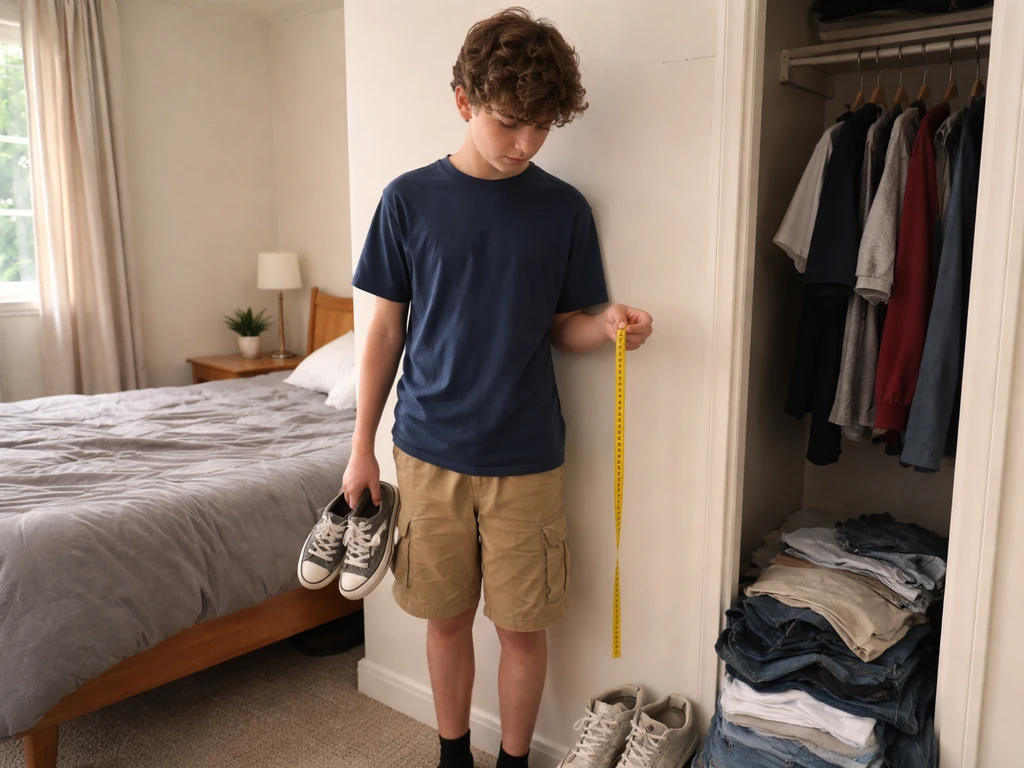
Yes, genuinely and dramatically. The adolescent growth spurt is one of the fastest periods of human growth outside infancy, and it can feel sudden to both the person growing and the people around them. Research puts peak height velocity (PHV), the point of fastest growth, at around 12.3 years for girls and 13.9 years for boys on average. At that peak, girls grow at roughly 8 cm per year and boys at roughly 9.9 cm per year. In the year of peak growth velocity, a gain of more than 10 cm is possible.
But the timing window is wide. Girls can hit peak velocity as early as age 10, and some boys don't reach theirs until 16 or 17. Boys typically experience their spurt about two years later than girls, which explains why many boys who seemed shorter than their female classmates in middle school eventually catch up and surpass them. The growth pattern isn't linear either: it accelerates to a peak and then decelerates, so you don't grow at the same rate throughout the entire spurt.
One key point worth understanding: pubertal stage (Tanner stage) is a better predictor of growth timing than chronological age alone. A 14-year-old boy who is in early puberty has a different growth trajectory than a 14-year-old boy who is in late puberty. If you're a teenager trying to figure out where you are in your growth curve, looking at your stage of pubertal development matters more than just your birthday.
If you're wondering why a growth spurt happened, or trying to make sense of a sudden change in your own body, the sibling topic on why you suddenly grew taller goes deeper into the physiological triggers behind these spurts. If you're trying to make yourself grow, the key is understanding whether your growth plates are still open and what actually supports growth at your age.
Can adults get taller after growth plates close?
Not in terms of bone length. Once your epiphyseal plates have fused, your long bones are done lengthening. No pill, supplement, inversion table, or stretching routine changes that. The FTC has taken enforcement action against companies making unsupported adult height-increase claims, and there's a clear scientific reason those products don't work: they can't reopen fused bone plates.
That said, adults can genuinely measure taller through changes that don't involve bone growth. The most significant is posture correction. One study of older adults found that acute postural exercises produced a measurable stature increase of about 3.5 cm, not from growing new bone, but from reducing spinal compression, improving thoracic extension, and holding the body more upright. Research in adults with spinal deformity showed that surgical correction of spinal alignment produced meaningful height gains, with 1 degree of improvement in spinal alignment associated with 0.2 mm of height gain.
So for adults, the realistic picture looks like this:
- Posture and core work can reclaim height lost to habitual slouching or spinal compression, sometimes up to a few centimeters
- Treating conditions like scoliosis or kyphosis, either through exercise-based therapy or in severe cases surgery, can restore height that was lost to spinal deformity
- Maintaining spinal disc health through movement, hydration, and avoiding prolonged static loading preserves your daily maximum height
- No supplement, pill, or stretching protocol has been shown to actually lengthen fused adult long bones
How to tell if you're actually getting taller
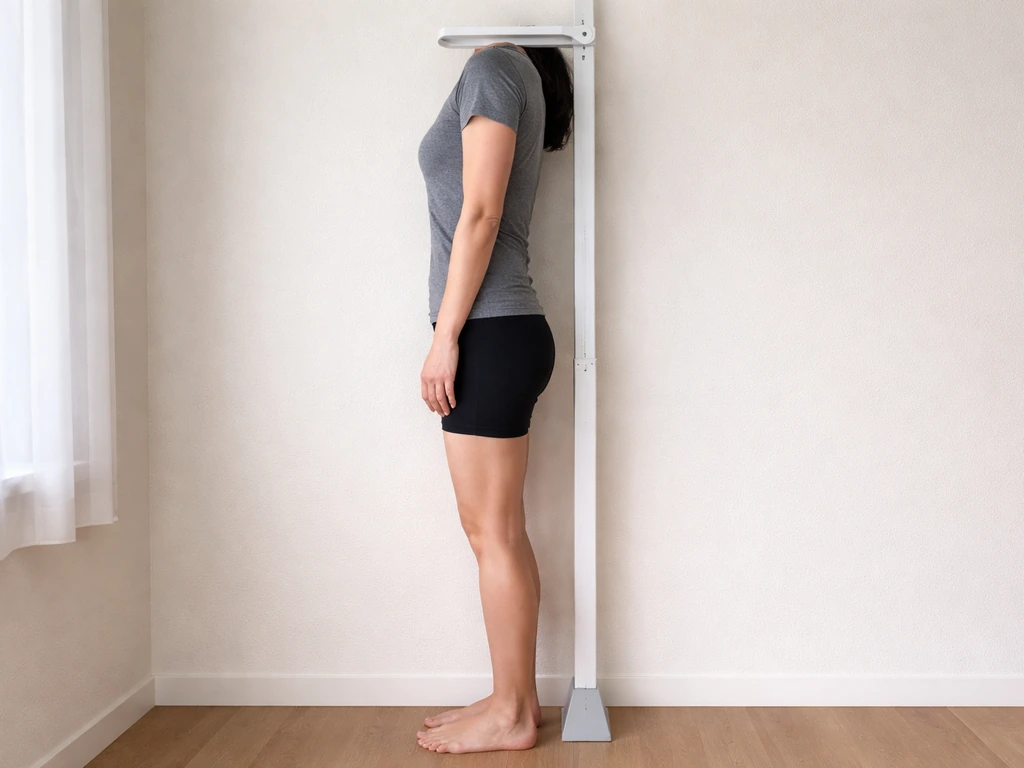
Measuring yourself correctly and consistently is harder than it sounds, and plenty of people convince themselves they've grown based on measurements that were just taken differently. Here's how to do it in a way that actually means something.
- Use a proper stadiometer or a flat wall-mounted measuring setup, not a tape measure held by hand
- Measure at the same time of day, every time (morning is best, before spinal compression builds up from daily activity)
- Stand barefoot with your heels together against the wall, head in the Frankfort horizontal plane (eyes level, not tilted up or down)
- Step away from the wall between repeated trials and re-measure two or three times to reduce positioning error
- Record the average, not the highest reading
- Track over weeks and months, not days, because short-term fluctuations are noise
A stadiometer has a measurement error of around 0.2 to 0.3 cm under ideal conditions. That means a difference of less than half a centimeter between two measurements is not meaningful on its own. For children and teenagers being tracked medically, growth charts use percentile bands and z-scores to interpret change over time, not single-point readings. If you're a parent tracking a child's growth, plotting multiple measurements on an age- and sex-appropriate growth chart over at least several months gives you something actionable.
What actually supports your growth potential
If your growth plates are still open, these are the evidence-based factors that genuinely influence how well you grow. None of them are magic, but together they create the conditions your body needs to hit its genetic height ceiling.
Sleep
Growth hormone is secreted primarily during deep sleep, especially in the early part of the night. Consistently short or disrupted sleep in childhood and adolescence is associated with reduced growth hormone output. Getting 8 to 10 hours of quality sleep per night during the growth years isn't optional if you want to maximize your potential: it's when a large portion of the hormonal work driving bone growth actually happens.
Nutrition

Adequate protein, calcium, vitamin D, and overall caloric sufficiency are all necessary for bone growth. Chronic malnutrition or micronutrient deficiencies during childhood can permanently reduce adult height by limiting bone development during critical windows. The specifics matter: calcium and vitamin D directly support bone mineralization, while protein provides the raw materials for tissue growth. This doesn't mean extra supplementation beyond adequate intake accelerates growth in a well-nourished child, but deficiency genuinely stunts it.
Exercise and physical activity
Weight-bearing physical activity supports bone health and is generally associated with healthy growth patterns in children. For adults, resistance training and core-focused exercise won't add bone length, but they do support posture, spinal alignment, and disc health, which affects how tall you actually stand and measure day to day. Yoga and stretching improve flexibility and postural alignment, which can make you look and measure slightly taller, but they don't reopen fused growth plates or lengthen bone.
Managing chronic illness and stress
Chronic illness, prolonged high stress, and conditions like untreated hypothyroidism or poorly controlled inflammatory disease can suppress growth in children. If a child is growing more slowly than expected, ruling out underlying medical causes is more important than adding supplements or changing diet.
When to see a doctor and what to ask

Most growth questions don't need a doctor's visit, but some patterns are worth taking seriously. For children and teenagers, the red flags that warrant evaluation include:
- Height that is significantly below what you'd expect based on both parents' heights (more than 2 standard deviations below mid-parental height)
- A drop of two or more height centile spaces on a growth chart over time
- Very slow growth velocity (less than 4 to 5 cm per year during childhood, outside of the normal late-growth deceleration)
- Signs of delayed or very early puberty
- Symptoms suggesting an underlying condition: fatigue, weight gain, cold intolerance (hypothyroidism), or unusual headaches and visual changes (pituitary issues)
- Disproportionate body measurements, such as arm span significantly greater than height, which can point to connective tissue disorders
For adults who feel they've suddenly changed height, it's worth seeing a doctor if the change is unexplained and significant, particularly if it's a loss rather than a gain. Unexplained height loss in adults can signal vertebral compression fractures (often from osteoporosis), progressive spinal deformity, or other structural changes.
When you see a doctor for growth concerns in a child, here's what a proper evaluation typically involves: a detailed medical and family history, physical exam including body proportions (arm span, upper-to-lower segment ratio), plotting on a growth chart, and usually a bone age X-ray of the left hand and wrist to assess skeletal maturity and estimate remaining growth potential. Blood work to check thyroid function, IGF-1 levels, and other hormones may follow depending on what the history and exam suggest. Imaging beyond bone age X-ray is only ordered when specifically indicated, not as a routine screen.
Height myths vs what the science actually says
There's a lot of noise in this space, and some of it is actively misleading. Here's where the evidence actually lands.
| Claim | What the science says |
|---|---|
| Height growth pills and supplements can make adults taller | No supplement can reopen fused growth plates. Bone length is determined by epiphyseal biology, not nutrition beyond baseline adequacy. No pill has evidence for adult height increase. |
| Stretching can add inches to your height as an adult | Stretching improves flexibility and posture, which can improve how tall you stand and measure, but it does not lengthen bone or reopen growth plates. |
| Hanging or inversion tables decompress your spine and cause lasting height gain | Spinal decompression temporarily reduces disc compression and may improve posture-related height, but the effect is not permanent and does not constitute bone growth. |
| You can still grow several inches in your 20s if you try hard enough | For most people, growth plates are fused by the late teens to early 20s. Any apparent height gain in adulthood is posture or measurement-related, not new bone length. |
| Growth spurts can happen overnight | True long-bone growth is gradual, even during a fast spurt. The "overnight" feeling comes from how infrequently we notice or measure incremental changes, not from bones literally lengthening in a day. |
| Short parents mean you can't grow tall | Genetics strongly influences height, but it's not a hard ceiling from any single parent. Both parents, your broader family, and the environment all contribute to your genetic height potential. |
The realistic picture is this: if you're a child or teenager with open growth plates, good sleep, nutrition, and overall health genuinely support reaching your genetic potential. If you're an adult, the meaningful improvements are postural, not skeletal. And if something feels genuinely off about your growth pattern, a clinical evaluation with bone age assessment is far more useful than anything you'll find in a supplement aisle.
If you're a teenager still in the middle of this process, the question of whether a teenager can still grow taller and what factors shape the final outcome is worth exploring in more detail. And if you have short parents and are wondering what that actually means for your ceiling, the genetics angle deserves its own careful look.
FAQ
How can I tell if my height change is just daily fluctuation or real growth over time?
Use repeated measurements in the same conditions (morning after using the bathroom, no footwear, same stadiometer if possible). Track at least every 2 to 4 weeks. A true growth pattern in teens shows a sustained upward trend across months, not a one-off jump of 0.5 to 1 cm.
I measured at night and I was taller, can that mean I actually grew?
More often it means you recovered posture or decreased spinal compression as the day went on, not new bone length. For consistency, measure after waking and before heavy activity, then confirm with a second morning reading later.
What measurement routine gives the most reliable results at home?
Stand with heels together, back against a wall or stadiometer, head in a neutral position (not tilted up). Exhale normally, then record. Keep the same setup each time and avoid measuring over clothing because it adds variability.
If a teen gained, say, 2 cm in a month, is that likely real growth?
It might be part of a growth spurt, but it also could be measurement variance. If you are not using a consistent tool and technique, the change can be partly noise. Confirm by checking whether the trend continues over the next 2 to 3 months.
Can you speed up growth if you sleep more or change diet right away?
Improving sleep and correcting deficiencies can help the body perform within its growth potential, but it does not instantaneously create new bone length. Think “optimize the conditions,” not “trigger growth overnight.” If growth seems to have slowed, the next step is usually evaluation for medical or nutritional issues rather than more supplements.
Do vitamins and protein supplements make adults taller?
They do not reopen fused growth plates, so they cannot create true length gains in adults. In adults, excess supplementation can also be unnecessary or counterproductive. The practical target is posture, spinal health, and addressing any specific deficiency confirmed by testing.
Can a backpack, sports equipment, or scoliosis make me look shorter suddenly?
Yes. Spinal alignment changes, muscle imbalance, and intermittent swelling or posture strain can alter measured height. If the change is accompanied by back pain, asymmetry, or progressive symptoms, it is worth getting assessed for structural or postural causes.
What adult signs suggest height loss rather than normal measurement noise?
Consider medical evaluation if you see a sustained downward trend over time, especially if it is accompanied by new back pain, a hunched posture, height loss of more than you would expect from day-to-day variation, or known risk factors for osteoporosis.
Could my growth plates still be open even if I am done with puberty?
Usually they close around mid to late adolescence, but timing varies person to person. Pubertal stage is a better clue than calendar age, and the only direct way to estimate remaining growth potential is a bone age X-ray assessed by a clinician.
Do growth spurts differ for boys and girls in a way that affects “sudden” height changes?
Yes. Girls often reach peak growth earlier than boys, so a boy may look like he “suddenly” grew later relative to his female peers. Expect acceleration and deceleration rather than a straight-line increase during the spurt.
If my parents are short, can I still grow taller than them?
It depends on your individual growth pattern and your remaining skeletal growth potential, not only parental height. Bone age and pubertal timing can help estimate ceiling, and sometimes people with shorter parents still achieve a significant height if their growth plates remain active for longer and puberty progresses normally.
When should I stop self-tracking and ask a clinician for help?
If a child or teen is not following expected growth velocity on the growth chart, or if there are signs like delayed or very early puberty, systemic illness symptoms, or disproportionate body measurements, a clinician evaluation is more useful than continued “height hacks.” For adults, unexplained sustained height loss or back pain warrants assessment.
Next Article
Can I Grow Tall With Short Parents? Science and Next Steps
Can you grow tall with short parents? Learn the science of growth, real limits, and next steps for kids vs adults.