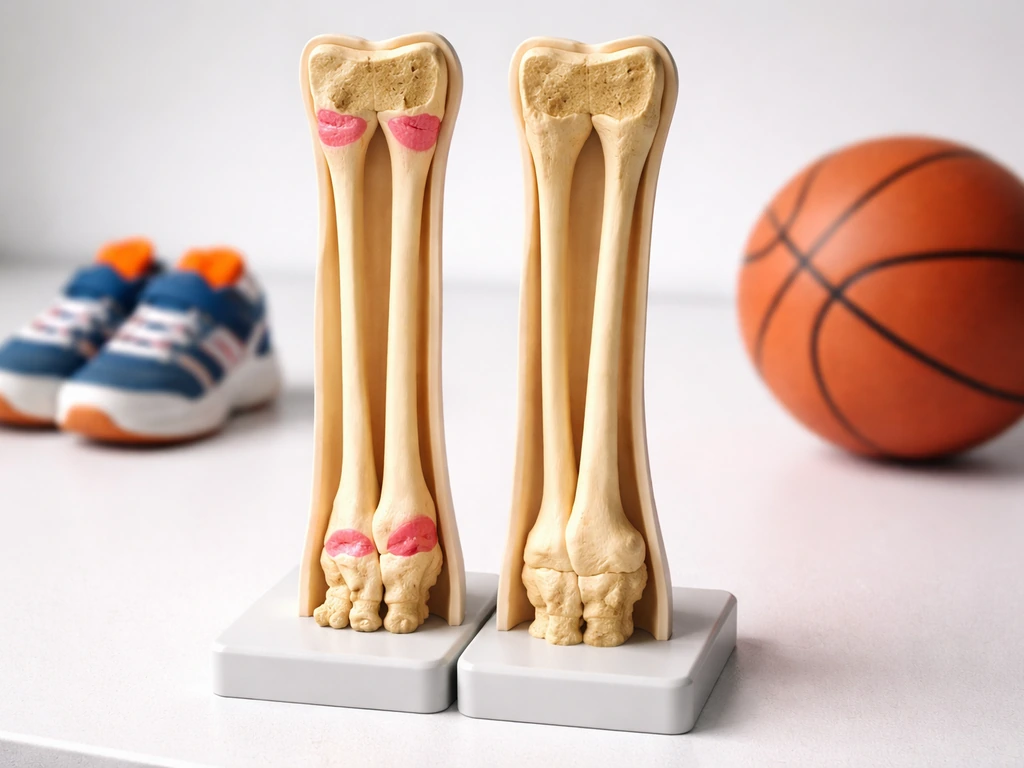
Soccer does not directly make you taller. No amount of sprinting, heading, or kicking will cause your bones to grow longer than your genetics and biology already intend. But that is only half the story. Playing soccer regularly can support the conditions your body needs to reach its full genetic height potential, and that distinction actually matters a lot for a growing child or teenager.
Does Soccer Help You Grow Taller? Science-Based Answer

Marcus Reeves
22 May 2026
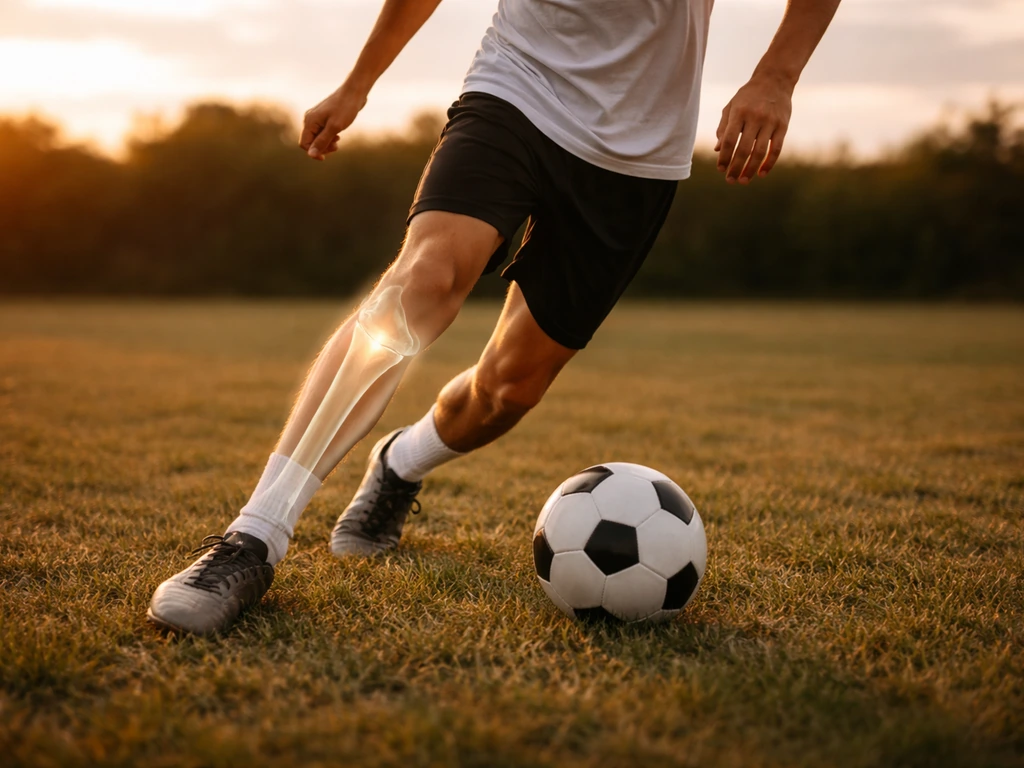
How height actually happens in your body
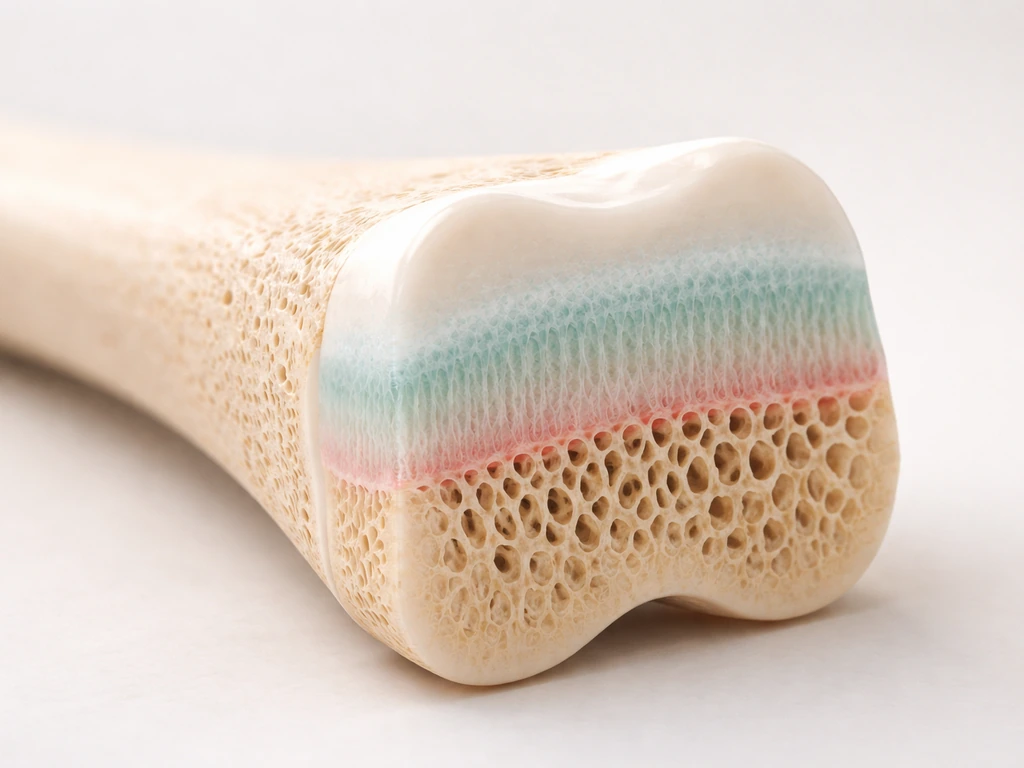
Height is determined almost entirely by what happens at your growth plates, the strips of cartilage near the ends of your long bones (femur, tibia, humerus, and others). While those plates are open and active, they produce new cartilage that gradually ossifies into bone, pushing the bone longer. The whole process is driven by hormones, primarily growth hormone and IGF-1, and it runs on a biological timetable tied to puberty.
Peak height velocity, the period when you grow fastest, occurs around Tanner stage III in girls and Tanner stage IV in boys. During puberty overall, linear growth accounts for roughly 15 to 25 percent of your final adult height. Before that window, typical growth velocity runs at about 5 to 6 cm per year. Once puberty ends, the growth plates fuse, ossify completely, and close for good. After that point, no exercise, stretch, or sport can add bone length. This is why the age at which you are asking this question matters enormously.
If you are a child or early teenager whose plates are still open, the question of supporting healthy growth is genuinely relevant. If your plates have already fused, typically in the late teens for most people, the conversation shifts entirely to posture, body composition, and overall health. Growth and short stature evaluation helps determine whether a child’s growth differences reflect a treatable endocrine condition or normal variation, such as familial short stature or constitutional delay plates have already fused.
What the research actually says about soccer and height
The honest answer from the science is that soccer training does not appear to cause measurable increases in bone length beyond what normal growth would produce. A longitudinal study of boys with increased physical activity (more than 5 hours of sports per week across 3 years) found no significant effects on growth in somatic dimensions, skeletal maturation, or age at peak height velocity. The activity level did not move the needle on how tall those kids ended up or how fast they reached their growth peak.
Research on soccer academies is similarly telling. A longitudinal study of future professional male soccer players found no meaningful differences in stature or body mass trajectories between those who went on to become professionals and those who did not. In other words, playing soccer at a high level did not produce a distinct height outcome. Studies that do examine height in youth soccer players are typically tracking maturity timing and peak height velocity patterns, not demonstrating that soccer caused any additional bone growth.
Reviews of physical activity and epiphyseal growth plates focus mainly on the mechanical effects of load on the cartilage tissue itself, and those findings are about bone quality and physiology, not about making bones longer. The pediatric bone exercise literature similarly concentrates on bone mineral density and bone area rather than long-bone length. Exercise is good for developing bones, but good for bones is not the same as making bones longer.
The secondary effects worth knowing about
Even though soccer will not add centimeters to your skeleton, it does produce real physical changes that can affect how tall you look and how well your body functions. These matter and are worth understanding clearly.
Posture and core strength
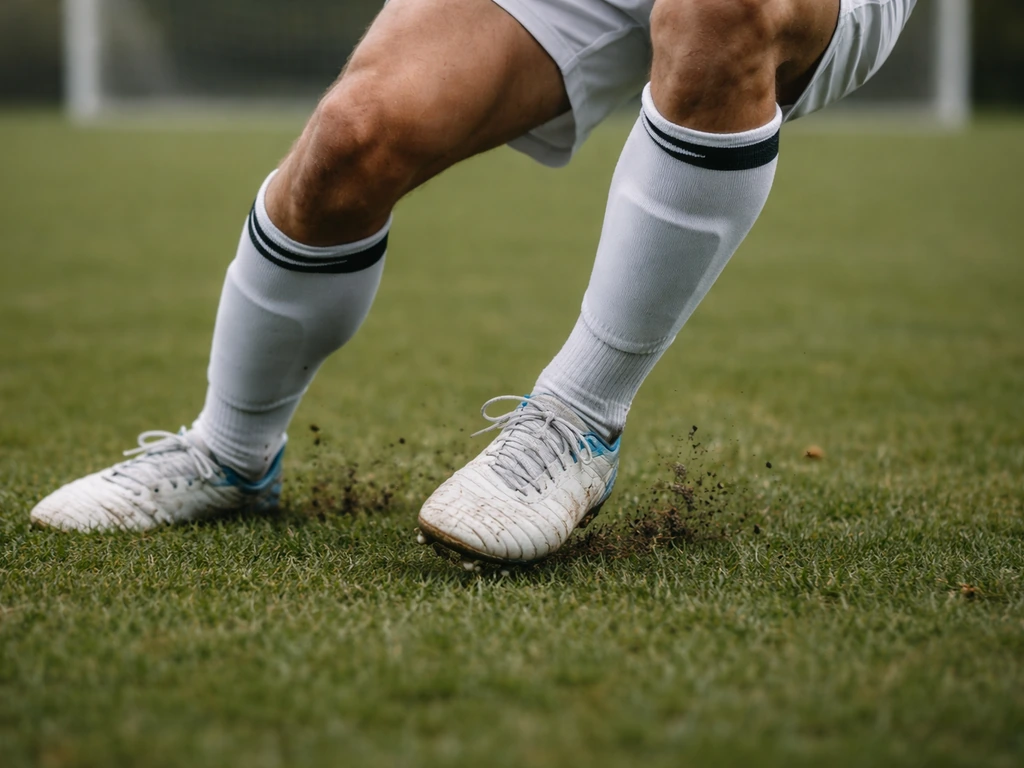
Soccer demands constant core engagement, balance, and dynamic postural control. Research from the Malmö Youth Sport Study found that postural orientation differs meaningfully by sport in youth athletes and relates to lean body mass development. A player who develops strong core muscles, hip stability, and spinal erector strength through years of soccer may carry themselves noticeably more upright than a sedentary peer. That improved posture can make someone appear taller and reduces the slouching that compresses apparent height. This is a real benefit, even if it is not biological height.
Bone density and long-term skeletal health
The impact loading in soccer, running, jumping, changing direction, does stimulate bone mineral accrual. Systematic reviews of impact exercise training across the lifespan show improvements in bone structure and volumetric bone mineral density. For a growing child, building a stronger, denser skeleton is a meaningful health outcome even when it does not translate to additional height. Denser bones are more resilient bones.
Body composition
Physical activity and BMI are inversely correlated in children and adolescents, and soccer burns a significant number of calories. Healthier body composition supports hormonal function, reduces systemic inflammation, and makes training sustainable. A leaner build also contributes to the visual impression of height. None of this adds bone length, but it creates a body that expresses its genetic height potential more fully.
Where soccer can genuinely help you grow to your potential

The most honest case for soccer supporting height is indirect, and it works through three mechanisms: nutrition, sleep, and healthy weight management. If you are also wondering whether dancing can help, the same idea applies since it can support healthy routines but does not directly lengthen bones after the growth plates are closed soccer supporting height is indirect.
- Nutrition: Regular soccer training increases appetite, which for a growing child or teen is actually useful. It creates a natural drive to eat more calories and protein, both of which are required raw materials for growth. Children who train consistently tend to eat more consistently, and adequate caloric and protein intake is non-negotiable for reaching genetic height potential.
- Sleep: Soccer players who train hard sleep more deeply and for longer because physical fatigue demands recovery. Growth hormone is secreted primarily during deep sleep stages. Children aged 6 to 13 need 9 to 11 hours of sleep per night; teens 14 to 17 need 8 to 10 hours. A player who trains in the afternoon and goes to bed earlier because of genuine physical tiredness is indirectly optimizing one of the most important hormonal drivers of growth.
- Weight management: Carrying excess body fat in childhood is associated with earlier puberty onset and earlier growth plate closure in some cases. By maintaining healthy body composition through regular activity, soccer may help preserve the full duration of the growth window rather than shortening it.
These pathways are real but indirect. Soccer creates conditions where the body is more likely to grow optimally. It does not instruct the bones to grow longer.
The risks: injuries and overtraining in young players
Youth athletes, especially those specializing in one sport year-round, face real risks that can work against healthy development. If puberty is stalled or interrupted for more than a year, or if there is no testicular enlargement by about ages 13 to 14, Merck Manual notes that evaluation is warranted. The American College of Sports Medicine notes that growth plates occur at ossification centers and are particularly vulnerable to overuse injury in young athletes. Because growth plate cartilage is structurally weaker than the surrounding bone and ligament during rapid growth phases, repetitive stress, particularly from year-round single-sport specialization, can cause overuse injuries directly at the growth plate.
Conditions like Osgood-Schlatter disease (at the tibial tuberosity) and Sever's disease (at the heel) are classic examples in soccer players. In severe cases, growth plate injuries can disrupt normal bone development at that site. This is the scenario where too much of a good thing becomes a genuine concern for height and skeletal health.
The evidence-backed solution is structured injury prevention, not avoiding sport entirely. The FIFA 11+ program (and its children's version, FIFA 11+ Kids) is a neuromuscular warm-up protocol designed specifically for football players. Multiple randomized controlled trials and meta-analyses show that FIFA 11 and 11+ programs are associated with meaningfully reduced overall injury rates in football. Adding a post-training version on top of the pre-training version has also shown additional injury-rate reduction. If your child plays organized soccer, asking their coach about implementing FIFA 11+ is a concrete, evidence-backed step.
| Risk Factor | What It Means | What To Do About It |
|---|---|---|
| Growth plate overuse injury | Repetitive stress on open growth plates during rapid growth | Limit year-round single-sport specialization; use FIFA 11+ warm-up |
| Overtraining and fatigue | Chronic fatigue suppresses growth hormone output and disrupts sleep | Monitor training load; prioritize 1-2 rest days per week |
| Inadequate caloric intake | High training volume without enough food blunts growth | Ensure caloric intake matches training demands; emphasize protein |
| Sleep deprivation | Late games and travel schedules cut into sleep time | Protect sleep targets: 9-11 hrs for ages 6-13, 8-10 hrs for teens |
Practical steps to maximize height potential while playing soccer
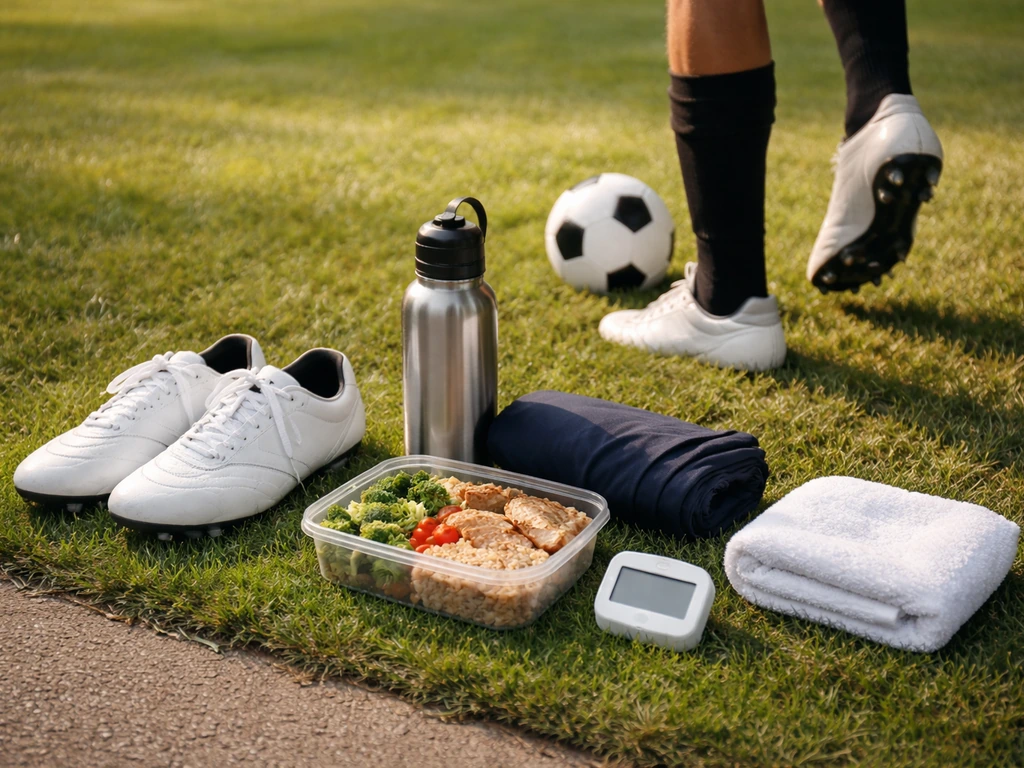
If you want soccer to work with your biology rather than against it, the approach is straightforward. The factors that science consistently links to reaching genetic height potential are nutrition, sleep, and avoiding chronic overtraining. Sauna use has also been discussed as a possible aid for recovery, but it should not be seen as a direct way to increase height beyond your growth potential sleep. Soccer can either support or undermine each of these depending on how it is managed.
- Eat enough total calories and protein. Growing athletes need more than sedentary peers. Aim for adequate protein at each meal (eggs, meat, dairy, legumes) and do not under-eat relative to training load. Restricting food while training hard is one of the fastest ways to limit growth.
- Hit sleep targets every night. Prioritize 9 to 11 hours for kids under 14 and 8 to 10 hours for teenagers. Growth hormone peaks during deep sleep, so cutting sleep to fit in screen time after evening practice is a direct trade-off against growth physiology.
- Get key micronutrients. Calcium and vitamin D are the foundation for bone mineralization during growth. Dairy, fortified foods, leafy greens, and sensible sun exposure cover most needs. If diet is limited, a basic pediatric supplement may be worth discussing with a doctor.
- Use FIFA 11+ as a warm-up. This structured neuromuscular warm-up has strong evidence behind it for preventing injuries in youth soccer. It takes about 20 minutes and is designed for players as young as 7.
- Avoid year-round single-sport specialization in kids under 14. Multisport participation reduces overuse injury risk and allows different muscle groups and joints to develop more evenly.
- Track growth on a CDC-style growth chart. Plotting height every 6 months lets you see whether a child is maintaining their percentile channel. Drifting significantly downward across percentiles, not just being short, is the signal worth paying attention to.
- Know when to see a clinician. If a child's height velocity drops below 4 to 5 cm per year before puberty, if puberty has not started by age 13 in girls or 14 in boys, or if height has been dropping across percentile channels for 12 or more months, those are legitimate reasons to ask for a pediatric endocrinology referral. These patterns can reflect treatable conditions like growth hormone deficiency or constitutional delay, not just normal variation.
Soccer is a genuinely excellent sport for physical development. It builds cardiovascular fitness, coordination, bone density, and healthy body composition, all things that support a growing body. It just does not add bone length directly. Think of it this way: soccer creates a better environment for your genetics to express themselves fully. Whether that environment translates into reaching your maximum genetic height depends on how well you manage nutrition, sleep, training load, and injury prevention alongside it. Those factors, not the sport itself, are the real levers. If you are exploring other activities alongside soccer, similar questions apply to basketball, jump rope, and other physically demanding sports, all of which share the same fundamental biology when it comes to height. Pilates can also be a useful add-on for improving posture and core strength, which may help you look taller. Gymnastics can also be part of a healthy activity routine, but it does not override the timing of growth plates, so it will not reliably make you taller after they close. Jump rope can be a healthy, high-impact exercise, but it still does not instruct growth plates to produce extra bone length beyond your genetic potential. Other sports can also support healthy growth, so it helps to compare what sports help you grow taller in addition to soccer. This is also where basketball can come in, since it is another impact-heavy sport that may help you reach your genetic height potential indirectly.
FAQ
If I play soccer every day, will I grow faster or reach my peak height earlier?
Soccer cannot override your growth-plate timetable. What it can do is help you stay active, maintain a healthier body weight, and avoid chronic inactivity, which supports normal growth velocity during the years your growth plates are still open. However, signs of “growing faster” versus “growing at the normal pace” often come from puberty timing and genetics, not training volume.
Does soccer help more for boys or girls?
The general mechanism is the same in both sexes, growth plates and puberty timing drive linear height. The main difference is timing, girls typically reach peak height velocity earlier than boys. So soccer may be equally beneficial for supporting healthy conditions, but the window when it matters most is usually earlier for girls and later for boys.
How much soccer training is too much for growth-plate health?
There is no perfect universal number, but year-round specialization with high match plus training hours increases the risk of overuse injuries at sites like the tibial tuberosity or heel. A practical approach is to watch for persistent pain, reduced performance, and recurring “same spot” injuries, and then add rest and assess technique and load with a sports medicine clinician.
What should I do if my child has Osgood-Schlatter or Sever’s disease but still wants to play?
These conditions are common in youth soccer, but they need symptom-guided management. The usual next steps are an evaluation to confirm the diagnosis, a plan to reduce aggravating impact temporarily, structured rehab (strengthening and flexibility tailored to the area), and a gradual return to play once pain is controlled and function improves. Playing through worsening pain can increase the chance of prolonged setbacks.
Can soccer improve posture enough that I appear taller even if my bones do not grow?
Yes, especially if the slouch is functional. Core engagement, hip stability, and better dynamic control can improve how your spine and shoulders align during standing and movement. This can increase “measured” height consistency in real life, but it will not change bone length after the growth plates close.
Will adding stretching, hanging, or mobility work with soccer make me taller?
Those activities may temporarily improve flexibility or posture, but they do not reopen growth plates or add long-bone length once fusion begins. If you want the biggest benefit, prioritize posture control and rehab for tight hips, calves, and hamstrings that can affect pelvic tilt, then keep stretching as a support tool rather than a height strategy.
Does the position you play in soccer affect height or growth outcomes?
There is no strong evidence that playing position changes your final adult height through bone lengthening. Some positions may involve different running and impact patterns, but height outcomes still depend mainly on growth plate biology and puberty timing. Position choice can matter for injury risk and training load, so choose based on skill, fitness, and workload balance.
If growth plates are already closed, what can soccer still do for height-related goals?
After closure, soccer can still help with the visual and functional side of height by improving body composition, core strength, and postural control. It can also support bone strength through impact loading, which matters for long-term skeletal health. The goal shifts to appearance, performance, and injury-resistant bones, not adding centimeters.
How can I tell whether my growth plates are still open?
Often you cannot confirm this at home. Clinicians assess it with growth charts plus puberty stage, and they may use imaging when it changes decisions, like for unusual growth patterns or persistent pain. For a child or teen with concerns, the most practical step is a pediatrician or sports medicine evaluation to interpret growth velocity and development.
What are the most important non-soccer factors for reaching genetic height potential?
The article highlights nutrition, sleep, and avoiding chronic overtraining. A practical checklist is: consistent adequate calories and protein for growth, enough sleep on school nights, and regular recovery with training load changes if fatigue or injuries persist. If growth seems off the expected curve, medical assessment matters more than adding extra training.
Next Article
What Sports Help You Grow Taller by Age and Science
Science-backed sports for taller potential by age, including football impact, safe training tips, and growth essentials.