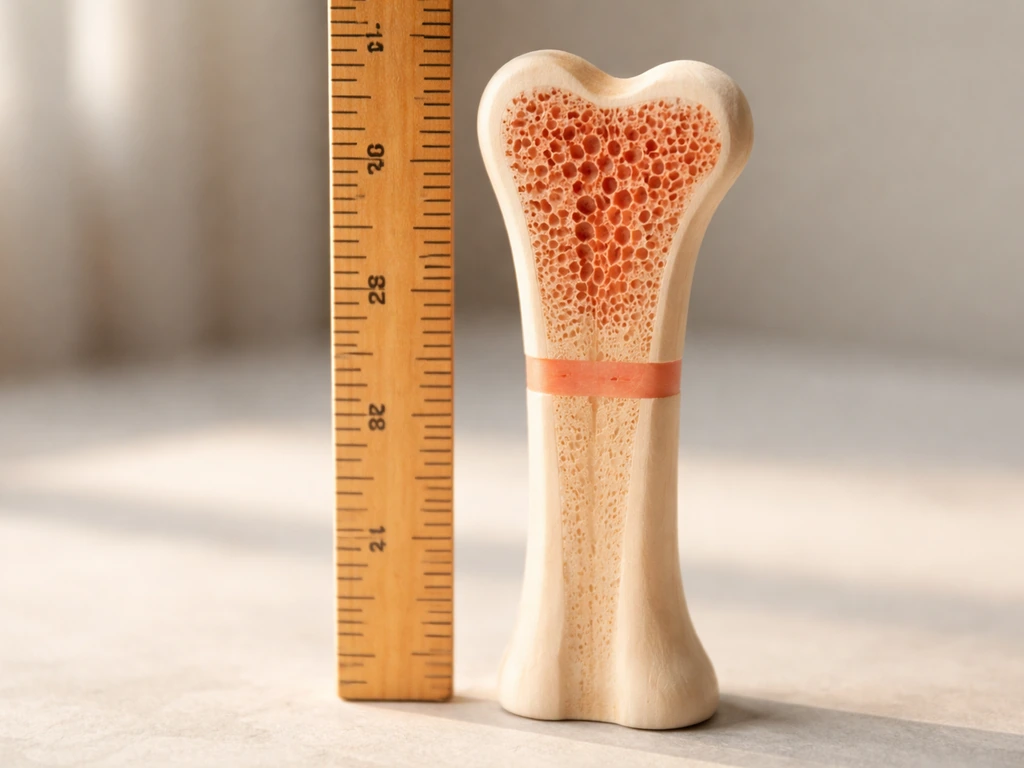
Vitamin D does not directly make you grow taller, but a deficiency can hold back normal growth in children and teenagers who are still developing. Fixing a genuine deficiency removes a real obstacle to reaching your genetic height potential. If your levels are already adequate, taking more vitamin D will not add centimeters. That distinction matters a lot, and the rest of this guide breaks it down practically.
Does Vitamin D Make You Grow Taller? Evidence and Dosage Guide

Marcus Reeves
11 May 2026

What the science actually says about vitamin D and height
The honest summary of the research is this: vitamin D is essential for bone development, but it is not a growth trigger. Your body needs it to absorb calcium, mineralize bone tissue, and support the normal function of growth plates, the cartilage zones at the ends of long bones that drive height increases during childhood and adolescence. Without enough vitamin D, bone mineralization breaks down, and in severe cases that leads to rickets, a condition that causes soft, deformed bones and noticeably stunted growth.
A 2020 Cochrane review looked directly at whether vitamin D supplementation in children under five increased height in centimeters. The findings were underwhelming in the best way: supplementation made little to no difference in actual height gain (mean difference of about 0.66 cm, which was not statistically significant). It probably did improve height-for-age z-scores slightly, suggesting some benefit to growth relative to population norms, but the certainty of the evidence was low. The Endocrine Society's 2024 clinical guidelines frame supplementation in children and adolescents around preventing rickets and respiratory infections, not around gaining height.
So the myth to bust here is clear: vitamin D is not a height supplement in the way some online content implies. It is a nutrient that supports the conditions normal growth requires. If those conditions are already met, there is no extra growth to unlock.
Who vitamin D actually matters for when it comes to growth

The people for whom vitamin D genuinely matters for height are children and teenagers who are deficient and still growing. If a child has chronically low vitamin D, their growth plates cannot function optimally, calcium absorption is impaired, and bone formation slows. Correcting that deficiency removes the brake on normal development. StatPearls (NCBI Bookshelf) notes that vitamin D deficiency is the most common cause of nutritional rickets and that rickets is characterized at the growth plate. The benefit is about restoring the baseline, not surpassing genetic potential.
Adolescents are a particularly important group. The growth spurt during puberty is rapid and nutrient-hungry. Low vitamin D during this window can compromise peak bone mass and potentially limit how fully a teen expresses their genetic height range. After puberty ends and growth plates fuse, typically by the late teens in girls and early twenties in men, no amount of vitamin D will reopen them.
Adults asking this question deserve a straight answer: once your growth plates have closed, vitamin D supplementation cannot increase your height. A bidirectional Mendelian randomization study in a PMC-hosted paper reports genetic evidence for only a modest causal effect of circulating vitamin D levels on adult height, consistent with the idea that supplementation is unlikely to add meaningful centimeters once growth plates have closed [once your growth plates have closed, vitamin D supplementation cannot increase your height](https://pmc. ncbi. nlm.
nih. gov/articles/PMC12401308/). It still matters enormously for bone health, immune function, and overall wellbeing, but height is no longer in play. If you are an adult and height is a concern, the relevant questions shift toward posture, spinal decompression through exercise, and realistic expectations about what is physiologically possible.
How to know if your vitamin D is actually low
The only reliable way to know your vitamin D status is a blood test measuring 25-hydroxyvitamin D, written as 25(OH)D. This is a standard test your doctor can order, and it gives you an actual number to work with rather than guessing based on symptoms.
| 25(OH)D Level | Status | What It Means Practically |
|---|---|---|
| Less than 12 ng/mL (30 nmol/L) | Deficient | Clear clinical deficiency; bone health and growth are at risk |
| 12–19 ng/mL (30–49 nmol/L) | Insufficient | Below optimal; may impair calcium absorption and bone mineralization |
| 20–50 ng/mL (50–125 nmol/L) | Sufficient | Generally adequate for bone health and normal physiological function |
| Above 50 ng/mL (125 nmol/L) | Potentially elevated | Monitor; high doses over time can push into this range |
| Above 125 ng/mL (312 nmol/L) | Toxic range | Risk of hypercalcemia and adverse effects |
Most labs report in ng/mL in the US or nmol/L elsewhere. A level at or above 20 ng/mL is the widely accepted minimum for sufficiency. Many clinicians, especially in pediatrics, aim for 30 ng/mL or higher in growing children to provide a comfortable buffer. If your child's level comes back below 20 ng/mL, that is a clear signal to supplement and retest in about three months.
How much vitamin D to take depending on age

Dosing vitamin D for growth support means thinking about two scenarios: maintaining adequate levels in someone who is not deficient, and correcting a deficiency in someone who is. These require different approaches. The ranges below reflect general guidance from health authorities including the NIH and Endocrine Society, but a clinician should guide treatment-level dosing for confirmed deficiency.
| Age Group | Maintenance (Daily RDA) | Correction Dose for Deficiency | Notes |
|---|---|---|---|
| Infants 0–12 months | 400 IU (10 mcg) | 400–1,000 IU under clinician guidance | Breastfed infants are at highest risk of deficiency |
| Children 1–8 years | 600 IU (15 mcg) | 1,000–2,000 IU; higher doses require clinician oversight | Combine with adequate dietary calcium |
| Children and teens 9–18 years | 600 IU (15 mcg) | 1,500–4,000 IU for documented deficiency | Growth spurt years; retest after 3 months of supplementation |
| Adults 19–70 years | 600 IU (15 mcg) | 1,500–2,000 IU for insufficiency | Height growth no longer applies; bone health focus |
| Adults 71+ years | 800 IU (20 mcg) | Higher doses under clinician supervision | Absorption efficiency declines with age |
If a blood test shows genuine deficiency in a growing child or teenager, a short-term higher dose (sometimes called a loading protocol) may be recommended by a pediatrician or endocrinologist to bring levels up faster, followed by a lower maintenance dose. This is not something to do by guessing. Levels should be retested roughly 8 to 12 weeks after starting supplementation to confirm they have normalized.
One practical note on timing: vitamin D is fat-soluble, so taking it with a meal that contains some fat improves absorption meaningfully. Taking it with breakfast or lunch tends to work better than a standalone empty-stomach dose.
Safety: upper limits, side effects, and when to be careful
Vitamin D toxicity is real but uncommon when staying within recommended ranges. The tolerable upper intake level (UL) set by the NIH is 4,000 IU per day for people aged 9 and older, and 2,500 IU per day for children aged 4 to 8. These are not targets, they are ceilings above which risks begin to increase with chronic use.
The main risk of excessive vitamin D is hypercalcemia, meaning too much calcium in the blood. This happens because vitamin D drives calcium absorption, and when vitamin D is very high for sustained periods, calcium can build up to levels that cause symptoms including nausea, weakness, frequent urination, kidney stones, and in severe cases cardiac issues. This is almost never a concern at standard supplemental doses of 600 to 2,000 IU daily, but it becomes relevant if someone is taking very high doses without testing.
- Do not give infants high-dose supplements without pediatric guidance; their threshold for toxicity is lower
- Avoid supplementing at treatment-level doses (above 4,000 IU daily) without confirmed deficiency from a blood test
- People with certain conditions including granulomatous diseases like sarcoidosis, primary hyperparathyroidism, or certain lymphomas can experience elevated calcium at lower vitamin D doses and should consult a doctor before supplementing
- Retest 25(OH)D levels after 8 to 12 weeks of supplementation to confirm you are in the target range and not overshooting
The bottom line on safety is straightforward: standard supplement doses are safe for most healthy people, but treating a deficiency with higher doses should involve a clinician who can monitor blood levels. Random high-dose supplementation based on hoping for height benefits is not a good plan.
What to do next: the bigger picture of growth support
Vitamin D is one piece of a larger puzzle. B12 can matter for growth indirectly if a deficiency is present, but it does not replace the role of vitamin D in supporting height-related bone development. If you are trying to support normal growth in a child or teenager, or understand your own height development, here is what the evidence actually points to as the full picture of factors that matter.
Sleep
Human growth hormone is released primarily during deep sleep, particularly in the early hours of the night. Children and adolescents who consistently get inadequate sleep are genuinely shortchanging their growth hormone output. School-age children need 9 to 11 hours, teenagers need 8 to 10 hours, and this is not optional for development. Sleep quality matters too, not just total hours.
Calcium and protein

Vitamin D without sufficient calcium does very little for bone growth. The two work together: vitamin D enables calcium absorption in the gut, but if dietary calcium is chronically low, there is nothing to absorb. Dairy, leafy greens, fortified plant milks, and legumes are all good sources. Protein is equally important because bones and growth plates are built partly from collagen, a protein. Children and teenagers with very low protein intake consistently show impaired growth in the research. Meeting calorie and protein needs through whole foods should come before worrying about any single supplement.
Exercise and physical activity
Weight-bearing activity, running, jumping, sports, and resistance training stimulates bone formation and supports healthy growth plate activity in growing kids. It also supports posture development, which affects how tall someone appears and functions. There is no evidence that any specific exercise adds height beyond what genetics permits, but chronic sedentary behavior does not support optimal bone health during the growth years.
Genetics and realistic expectations
Genetics determines the ceiling. Roughly 60 to 80 percent of adult height variation between people is explained by genetic factors. Nutrition, sleep, and vitamin D status determine how close you get to your genetic ceiling, not whether you exceed it. The practical goal of optimizing these factors is to make sure nothing is holding growth back, not to add inches that were never in the blueprint. If a child or teenager is growing consistently along their growth curve and vitamin D levels are adequate, there is no meaningful intervention to make from a supplement standpoint.
If you are exploring other nutrients that interact with growth and bone development, vitamin D3 specifically and its relationship with vitamin K2 is worth understanding since K2 helps direct calcium into bones rather than soft tissue. Other B vitamins including B12 and niacin play supporting roles in cell metabolism and overall development, though none of them drive height the way some supplement marketing suggests. The evidence consistently points back to the same foundation: correct deficiencies, sleep well, eat enough quality food, stay active, and let genetics do its work.
Practical next steps starting today
- Ask your doctor or your child's pediatrician to order a 25(OH)D blood test if growth is a concern or if deficiency risk factors are present (limited sun exposure, darker skin, northern latitude, breastfeeding without supplementation)
- If levels are below 20 ng/mL, start supplementation at an age-appropriate dose and plan to retest in 8 to 12 weeks
- If levels are already sufficient (above 20 ng/mL, ideally above 30 ng/mL), maintain with standard daily intake and focus attention on sleep, calcium, and protein intake
- Review sleep habits and make sure growing children and teenagers are consistently meeting age-appropriate sleep hours
- Do not supplement at doses above 4,000 IU daily without confirmed deficiency and clinician guidance
- For adults with fused growth plates, shift the conversation from height to long-term bone health, where vitamin D remains genuinely valuable
FAQ
My child is taking vitamin D, but their height is still slow. Should we increase the dose to catch up?
It can help indirectly only if a deficiency is present. If your blood test shows enough vitamin D already, additional supplements are unlikely to add height, even in children. In that case, the more productive focus is sleep, calories, protein, calcium intake, and overall health.
Is it safe to use higher-than-recommended vitamin D amounts to boost growth faster?
Yes. A long-term high-dose approach without lab confirmation raises the risk of hypercalcemia (too much calcium in the blood). If you are considering doses above standard ranges, ask for a repeat 25(OH)D test (and often calcium) about 8 to 12 weeks after starting, so treatment is guided by results.
At what age does vitamin D stop affecting height, and how can we tell for my teen?
If growth plates are already fused, vitamin D will not reopen them or increase height. That usually occurs after late teens in girls and early adulthood in men, but the exact timing varies. When a teen is concerned about “late height,” it is reasonable to ask a clinician about growth remaining (often using growth velocity and, when appropriate, imaging).
What vitamin D test should we request, and what if the level is low but the diet looks adequate?
Testing should target 25(OH)D, not vitamin D from symptoms. Also consider whether the child is at risk for low intake or absorption problems, because that changes the plan. If levels are low and there is concern for absorption issues, a clinician may evaluate for dietary insufficiency, gastrointestinal conditions, or medication effects rather than only increasing dose.
Does the time of day or taking it with food change how well vitamin D works?
Because vitamin D is fat-soluble, taking it with a meal containing some fat improves absorption compared with a totally empty stomach. For some families, taking it with breakfast (or lunch) is easier to maintain than evening dosing, but consistency matters more than exact timing.
Can vitamin D make bones stronger if my child does not get much calcium?
Yes, if calcium intake is chronically low. Vitamin D helps your body absorb calcium, but it does not replace calcium. A practical check is whether the child reliably gets calcium from foods or fortified drinks, since low calcium can limit any bone-related benefits of correcting vitamin D deficiency.
What symptoms should make us worry about vitamin D-related calcium problems?
Very high doses of vitamin D can cause hypercalcemia, which may lead to symptoms like nausea, weakness, frequent urination, and kidney stone risk. If your child develops concerning symptoms while on supplements, stop and seek medical advice promptly rather than “waiting it out.”
If vitamin D is normal, what diet factors most commonly limit growth?
Protein and total calories still matter, especially during puberty when growth demands rise. If a child is under-eating or has low protein intake, correcting vitamin D alone will not normalize growth. In practice, it is often more helpful to assess diet quality and growth pattern with a clinician than to keep stacking supplements.
As an adult, if vitamin D cannot increase height, what can actually help height-related concerns?
If height is the concern, posture and functional factors can change how tall someone appears without changing bone length. For example, exercise and physical therapy can improve alignment and muscle tone, and reducing factors that worsen posture (like backpack or screen habits) may improve standing height appearance, even though it will not create new bone growth.
Next Article
Does Vitamin D3 Help You Grow Taller? Evidence-Based Guide
Vitamin D3 can support normal growth if deficient, but it won’t make most people taller after growth plates close.