
Children aged 6 to 12 need 9 to 12 hours of sleep per night, and teenagers aged 13 to 18 need 8 to 10 hours. Those are the ranges recommended by the American Academy of Sleep Medicine and echoed by the CDC and NIH. If you're still growing and you're consistently falling short of those targets, you may be limiting the hormonal activity that drives height gain. Getting enough sleep won't make you taller than your genes allow, but not getting enough can genuinely hold you back while your growth plates are still open.
How Much Sleep Do I Need to Grow Taller? Hours by Age

Marcus Reeves
27 Apr 2026
Sleep and height: what's actually going on
Sleep doesn't directly add centimeters to your frame the way a stretch or a meal might seem to. What it does is create the hormonal conditions your body needs to grow. The majority of growth hormone (GH) your body secretes each day is released during sleep, specifically tied to the deeper stages of slow-wave sleep (stages 3 and 4). Research going back to the late 1960s confirmed that nocturnal sleep is a potent stimulator of GH secretion, with secretory peaks closely correlated with sleep depth. In studies looking at children specifically, roughly 48% of GH secretory peaks occurred during deep slow-wave sleep, with additional pulses happening in lighter and REM stages throughout the night.
So the connection is real and it's physiological: sleep creates the conditions for GH release, GH drives bone and tissue growth during childhood and adolescence, and cutting sleep short disrupts that process. That said, sleep is one input in a system that also depends on nutrition, genetics, and overall health. It's not a magic lever you can pull to override your biology.
How many hours you actually need by age
The most authoritative guidance comes from the American Academy of Sleep Medicine, and it's consistent across every major health body that's weighed in. Here's the breakdown:
| Age Group | Recommended Sleep | "Short Sleep" Threshold |
|---|---|---|
| Children 6–12 years | 9–12 hours per 24 hours | Less than 9 hours |
| Teenagers 13–18 years | 8–10 hours per 24 hours | Less than 8 hours |
| Adults 18+ years | 7–8 hours per day | Less than 7 hours |
For younger children under 6, the recommendations are even higher, but the window where sleep most directly intersects with height growth is the school-age and adolescent years, when growth plates are active and puberty is either approaching or underway. If you're a teenager getting 6 hours a night, you're in the "short sleep" category by a significant margin, and that gap is worth addressing seriously.
Adults technically still produce some growth hormone during sleep, but their growth plates have already fused, so the height-growth window is closed. The 7 to 8 hour recommendation for adults is about overall health, recovery, and hormonal balance, not about getting taller.
How sleep connects to growth hormone and puberty timing

The GH-sleep relationship works through sleep architecture, meaning the structure of your sleep cycles matters, not just the total hours. When you fall asleep and cycle into deep slow-wave sleep in the first few hours of the night, your pituitary gland fires off its largest GH pulse of the day. If you're going to bed very late, cutting sleep short in the morning, or sleeping fragmented hours, you're disrupting that architecture and potentially blunting those pulses.
If you consistently sleep late and end up getting less total sleep, you can reduce the GH pulses that happen during deeper stages of the night. If you’re wondering whether you can grow taller if you sleep late, the key factor is whether that late schedule still gives you enough total sleep.
Sleep also intersects with puberty in a more complex way. During early puberty, there's a sleep-specific increase in pulsatile luteinizing hormone (LH) secretion, one of the key hormones that kicks off pubertal development. Research has found that earlier pubertal timing is associated with shorter sleep duration and later bedtimes.
AAP’s Pediatrics study on shifting adolescents to earlier bedtimes reports evidence that this change can increase total sleep time and influence sleep-architecture related measures earlier bedtimes can increase total sleep time and influence sleep architecture-related measures. Longitudinal studies tracking girls through the pubertal transition found that those who hit puberty earlier tended to have shorter sleep, largely because of later bedtimes.
Whether short sleep causes earlier puberty or the two are just correlated is still being studied, but the link is consistent enough to take seriously. Earlier puberty, while it may produce a temporary growth spurt, is also associated with earlier growth plate closure, which can actually reduce final adult height.
What to do if you're not sleeping enough
The good news is that sleep is a modifiable behavior. Randomized controlled trials of sleep education programs in adolescents have shown that structured interventions genuinely improve sleep duration and timing. You don't need a formal program to apply the same principles.
- Set a consistent bedtime and wake time, including weekends. Your body's GH secretion is tied to your sleep-wake rhythm, so irregular schedules undermine even adequate total hours.
- Work backward from your wake time. If you need to be up at 6: 30 AM and you're a teenager aiming for 9 hours, you need to be asleep (not just in bed) by 9:30 PM.
- Reduce screen light exposure for at least 30 to 60 minutes before bed. Blue light suppresses melatonin and delays the onset of deep sleep.
- Keep your room cool and dark. Sleep quality directly affects how much deep slow-wave sleep you get, which is where most of your GH secretion happens.
- Limit caffeine after early afternoon. Caffeine has a half-life of roughly 5 to 6 hours, so a 4 PM coffee is still partially active at 10 PM.
- If you're making up large sleep debts on weekends, that's a sign your weekday schedule isn't sustainable. Fix the schedule rather than relying on weekend catch-up.
Sleep education studies that tracked adolescents over time found that even modest improvements in bedtime consistency translated into measurable gains in sleep duration. Small, consistent changes tend to outperform dramatic short-term efforts.
Can extra sleep make you taller after you've stopped growing?
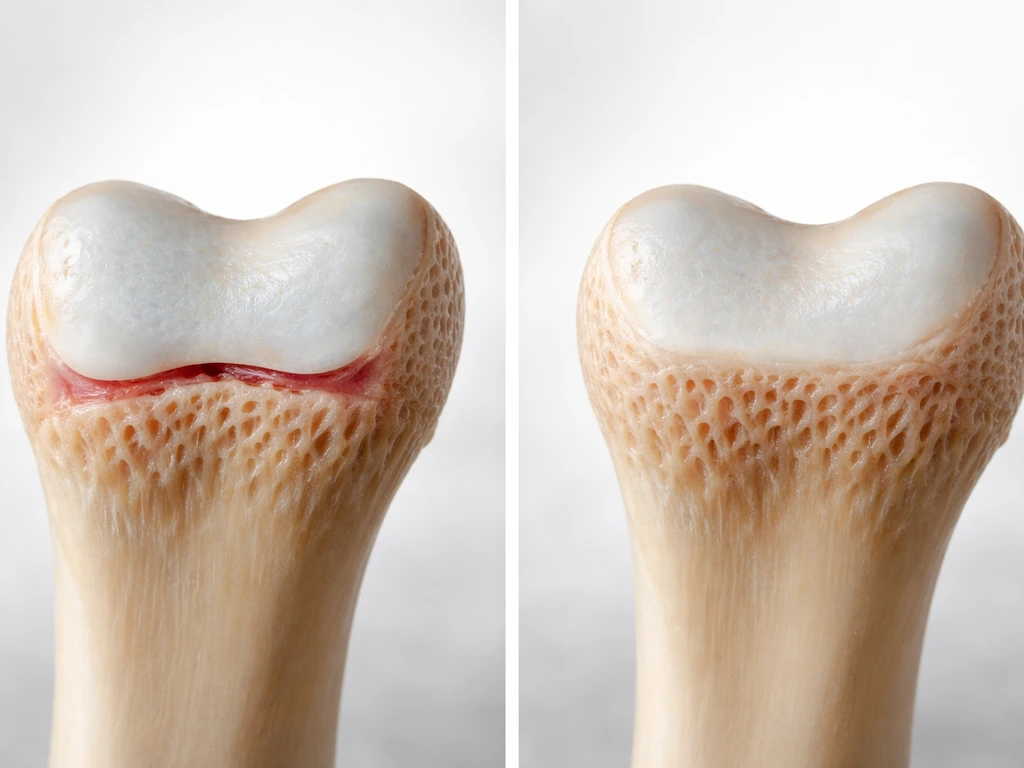
Honestly, no. Once your growth plates (the epiphyseal plates at the ends of your long bones) have fused, your bones cannot lengthen further, regardless of how much you sleep. If you're wondering, "if you sleep more do you grow taller," the best answer is that extra sleep helps only when your growth plates are still open and you're already short on sleep. Growth plate closure is a physiological process that happens at different times for different people.
In girls, the distal tibia tends to close somewhere around ages 12 to 14. In boys, it's typically closer to ages 15 to 18. There's genuine individual variation in those ranges, and they differ by which bone you're measuring, but the principle is the same: once fusion happens, height growth from that bone is done.
If you're well past puberty and your growth plates have closed, optimizing sleep will improve your health, energy, recovery, and hormonal balance in real ways. It won't add height. The question of whether sleep can help you grow is really a question about timing: are your growth plates still open? If yes, sleep quality and duration genuinely matter. If no, sleep is still important, just not for height.
This is also why questions like whether sleeping more after you've already stopped growing will help, or whether sleeping in the afternoon adds meaningful growth hormone activity, deserve honest answers rather than optimistic speculation. Afternoon naps can contribute modest GH pulses, but they don't replicate the architecture of a full night's sleep, and they certainly don't reopen closed growth plates.
Signs your sleep might be inadequate
A lot of teenagers and children are chronically short on sleep without fully realizing it, because sleep deprivation feels normal when it's been the baseline for a long time. Watch for these indicators:
- Difficulty waking up in the morning even after a full night in bed
- Falling asleep within minutes of lying down (this sounds like a good thing but often signals real sleep debt)
- Needing significantly more sleep on weekends to feel rested
- Daytime fatigue, trouble concentrating, or mood irritability
- Loud snoring or pauses in breathing during sleep (this is different from normal tiredness and warrants medical attention)
- Restless sleep or frequent waking through the night
Loud snoring in children especially should not be written off as a quirk. It's a recognized red flag for pediatric obstructive sleep apnea (OSA), a condition where the airway partially or fully obstructs during sleep, fragmenting sleep architecture and massively reducing the restorative deep sleep where GH peaks occur. Children with nightly loud snoring, observed breathing pauses, and behavioral or attention problems should be evaluated for OSA. This isn't a rare edge case; it's a legitimate clinical issue that directly affects the quality of sleep a child is actually getting, regardless of how many hours they're in bed.
If a child or teenager is sleeping the recommended hours but still showing signs of poor sleep quality, waking frequently, snoring heavily, or consistently tired despite adequate time in bed, that's a conversation to have with a pediatrician or sleep specialist. Time in bed and actual restorative sleep are not the same thing.
Myths vs. what the science actually says
There's a lot of optimistic noise online about sleep and height. Here's a straightforward breakdown of what holds up and what doesn't:
| The Claim | What the Science Says |
|---|---|
| Sleeping more than 10 hours will make you grow faster | No evidence supports this. The recommended maximums exist because very long sleep durations in healthy individuals don't produce additional GH benefit and may signal an underlying issue. |
| Going to bed later but sleeping the same total hours is fine | Not quite. GH secretion is tied to sleep architecture and timing. Very late sleep onset can shift and blunt the largest GH pulse of the night, even if total hours are technically met. |
| You only grow during sleep | Growth hormone is primarily secreted during sleep, but the actual physical process of bone growth is continuous. Sleep is the hormonal driver, not the only window. |
| Extra sleep can make an adult grow taller | No. Closed growth plates cannot be reopened by any amount of sleep. This is a hard physiological limit. |
| Not sleeping enough will definitely stunt your growth | Chronic severe sleep deprivation can impair GH secretion and may affect growth trajectory, but the relationship is probabilistic, not deterministic. Genetics, nutrition, and overall health all contribute. |
| A single bad night of sleep will hurt your height | No. Occasional poor sleep does not meaningfully alter long-term growth. Consistent, chronic sleep deprivation is the concern. |
The honest summary: sleep is a genuine, biologically grounded input for height growth during childhood and adolescence. Meeting the recommended hours matters. For healthy adults aged 18 to 60, a joint consensus statement from the American Academy of Sleep Medicine and the Sleep Research Society recommends sleeping 7 or more hours per night regularly to support optimal health Recommended Amount of Sleep for a Healthy Adult. But it's one factor among several, it operates within your genetic ceiling, and it cannot override closed growth plates or undo the effects of malnutrition or illness. Anyone promising a specific number of centimeters from a specific sleep protocol is selling something that isn't supported by evidence.
FAQ
Is it better to sleep more hours on weekends, or keep the same schedule every night for growing taller?
For height-related sleep quality, consistency usually matters more than weekend catch-up. Deep slow-wave sleep is more likely to occur when your body clock is stable. If you sleep longer on weekends but shift bedtime later and cause irregular sleep timing, you can reduce the deep-sleep advantage you would get from earlier, consistent bedtimes.
If I get the recommended total hours but wake up a lot, will I still get enough growth hormone pulses?
Frequent awakenings can fragment sleep architecture, which can blunt the deep slow-wave stages tied to larger growth hormone pulses. Aim for both adequate total time asleep and fewer disruptions (for example, address room noise, temperature, and bedtime screens that delay sleep onset).
How can I tell the difference between “time in bed” and “actual restorative sleep” for a child?
Watch daytime functioning and sleep quality markers. If a child is in bed for 10 hours but wakes unrefreshed, has attention problems, or falls asleep easily, sleep may be insufficient or low quality. In that situation, it is worth evaluating for issues like sleep apnea, restless sleep, or bedtime routines that delay getting into deeper sleep.
Can my child’s snoring still be a problem if they seem to sleep enough hours?
Yes. Loud nightly snoring with gasping, pauses in breathing, or behavioral and school issues is a red flag for pediatric obstructive sleep apnea, which can reduce restorative deep sleep. Sleep hours alone do not guarantee the sleep stages needed for growth hormone secretion.
Should I worry about a teen who sleeps 6 hours, even if they are “healthy” otherwise?
Yes, because 6 hours is typically below the recommended range for ages 13 to 18, and persistent short sleep can interfere with growth-related hormonal conditions and overall recovery. If improving sleep duration is hard, focus first on shifting bedtime earlier and reducing evening light and screen time to make earlier sleep more feasible.
What’s the most realistic way to improve sleep for height-related growth in adolescents?
Use small, repeatable changes rather than extreme bedtime attempts. Examples include moving bedtime 15 to 20 minutes earlier every few nights, keeping wake time consistent, and setting a cutoff for caffeine and screens. The goal is to protect deep sleep in the early part of the night by getting to sleep at a reasonable time.
Does sleeping in the afternoon or taking naps help me grow taller?
Naps can add some growth hormone activity, but they do not replace the full nightly pattern that supports deep slow-wave sleep. If you nap, keep it shorter and earlier in the day, because long or late naps can delay nighttime sleep and reduce overall restorative sleep.
If I missed sleep during my teens, can I “make up” for it later to gain extra height?
Not in a way that can override growth plate timing. Once growth plates are closed, extra sleep cannot lengthen bones. During active growth, earlier and more consistent adequate sleep can help your body reach its potential, but later catch-up cannot reverse completed skeletal maturation.
Can sleep help adults get taller?
Adults generally cannot increase height because growth plates have usually fused. For adults, better sleep mainly supports recovery, metabolic health, and hormonal balance, not bone lengthening. If a person is concerned about adult height changes, it is more often related to posture, spinal conditions, or medical factors than sleep.
Should I ask a doctor about growth plates or puberty timing instead of focusing only on sleep?
If sleep optimization is already in place (recommended hours, good sleep quality, minimal snoring or awakenings) but height seems unusually behind peers, it can be appropriate to discuss evaluation with a pediatrician or endocrinologist. Timing of puberty and growth velocity can be assessed, and sleep is only one piece of the overall picture.
Next Article
When You Sleep Do You Grow Taller? What Science Says
Find out if sleep makes you taller: growth plates, hormones, age differences, and how posture affects height looks