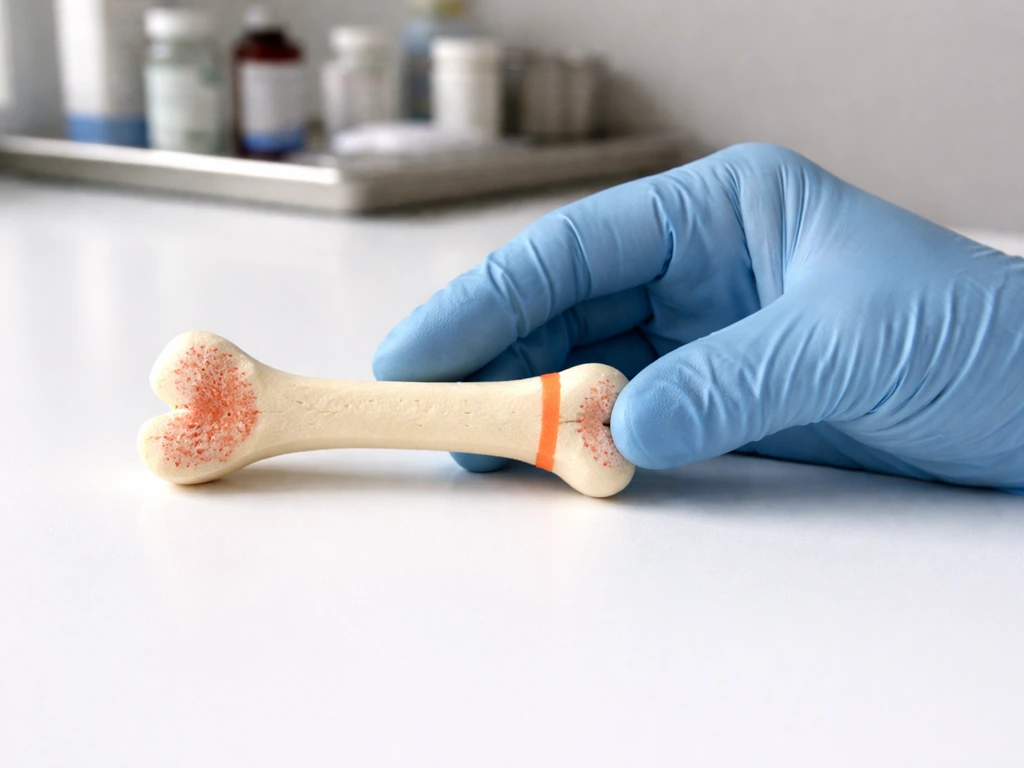
Whether you'll grow taller depends mainly on two things: how far along you are in puberty and whether your growth plates are still open. If you're a girl under about 15 or a boy under about 17, there's a reasonable chance you still have some height left. The further you are from peak puberty, the less growth remains. The most reliable ways to check are tracking your height over several months, comparing where you land on a growth chart, and (if you want hard evidence) getting a bone age X-ray from a doctor. Everything else, including shoe size myths and knuckle-cracking theories, is noise.
How Do I Know If I Will Grow Taller? A Practical Guide

Marcus Reeves
27 Apr 2026

When height can actually still increase
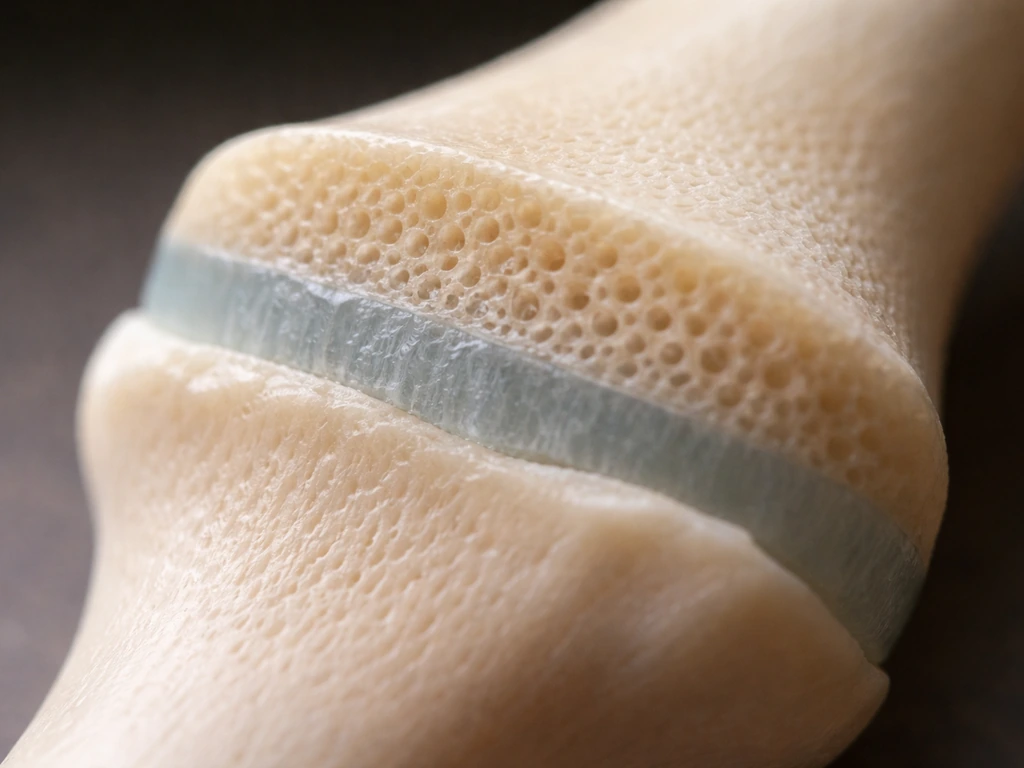
Height increases happen at the growth plates, thin cartilage layers near the ends of your long bones. While those plates are active, new bone tissue is laid down and you get taller. Once estrogen and other hormones push the plates to fuse (a process called epiphyseal closure), that's the end of skeletal height growth. No supplement, stretch routine, or diet can reopen fused growth plates. So the honest answer to "can I still grow?" is entirely about whether your plates are still open.
That closure is driven by puberty, not purely by age. Some people finish puberty and fuse their plates at 15; others are still adding height at 19. This is why age alone is a rough guide and not a definitive answer. Typical ranges: most girls finish growing somewhere between 14 and 16, most boys between 16 and 18, but individual variation is real and meaningful. If you're well inside those windows and still progressing through puberty, growth is very likely still happening.
The growth-stage checklist: age, puberty, and sex
Before anything else, run through this quick framework to estimate where you are in your growth window. It won't give you a final number, but it tells you whether asking the question even makes sense right now. Your genetic potential is influenced by factors like puberty timing and mid-parental height, so asking whether you will grow as tall as your dad is really about where you are in your growth window will i grow as tall as my dad.
| Factor | Girls | Boys |
|---|---|---|
| Average age of fastest growth (peak height velocity) | Around 11.5 years | Around 13.5 years |
| Typical age range for continued growth after peak | Up to ~14–16 | Up to ~16–18 |
| Early puberty marker | Breast development begins | Testicular enlargement begins |
| Mid-puberty marker | Growth spurt in full swing | Growth spurt in full swing |
| Late puberty marker | Periods start (menarche) | Voice has deepened, facial hair present |
| Post-puberty: growth winding down | 1–2 years after menarche | Late-stage Tanner 4–5 |
A few important clarifications here. For girls, getting your first period does not mean you're done growing. Menarche typically arrives near or just after the fastest growth phase, but most girls still add 2 to 5 cm after their first period. However, growth does slow significantly from that point. For boys, the growth spurt peaks later, and the window where significant height gain is still possible extends further into the mid-to-late teens. Boys who are early developers may finish closer to 16; late developers may still be growing at 18 or 19.
The Tanner stages, which describe physical development from 1 (prepubertal) to 5 (fully mature), are what clinicians use to place someone in their puberty timeline. If you're at Tanner stage 2 or 3, you're almost certainly still growing and may be approaching your peak growth rate. At Tanner stage 4 or 5, growth is slowing or near its end. You don't need a clinical exam to roughly estimate this; the physical markers in the table above give a decent approximation.
How to actually measure if you're currently growing

The most practical tool you have right now is height velocity tracking. This just means measuring your height accurately at two points in time and calculating how fast you're growing per year. A normal growth rate during childhood (outside of puberty) is roughly 5 cm per year. During the peak of puberty, that accelerates to 8 to 12 cm per year for boys and 6 to 9 cm per year for girls. After the peak, it declines until it reaches zero at full height.
To do this properly: measure your height first thing in the morning (you're slightly taller then before spinal compression from the day), use a stadiometer or mark on a wall with a flat object on your head, and measure again after 3 to 6 months. A 6-month interval gives you a more reliable read than a 2-month one because small measurement errors get averaged out. If you've gained more than about 0.5 cm over 6 months, you're actively growing. If you see less than 2 cm of gain per year consistently over more than a year, your growth is likely winding down.
One clinical benchmark worth knowing: a height velocity below 4 cm per year is considered a flag for growth failure at any age during childhood and puberty. That's not the same as saying growth has stopped, but it signals something may be interfering with normal growth if it happens during an age when faster growth is expected.
Signs you're still growing vs. signs you're done
Rather than waiting for measurements, there are physical and developmental signs that correlate reasonably well with whether growth is ongoing or finished. If you are looking for signs that you will not grow taller, focus on clues that suggest growth is slowing toward epiphyseal closure, such as late puberty indicators signs you will not grow taller.
Signs that growth is likely still happening
- You're still in mid-puberty (Tanner stage 2–4), with active development of secondary sexual characteristics
- Girls: you got your first period less than 2 years ago
- Boys: your voice has recently changed, you have relatively sparse facial hair, or you're still seeing body shape changes
- Your measured height has increased by at least 1–2 cm over the past 6 months
- Your shoe size has changed in the past year (shoes grow with the feet before height fully stops, though this is a rough signal, not a definitive one)
- You're still within the typical age window: under 16 for girls, under 18 for boys
Signs that growth has likely stopped or nearly stopped
- You're post-puberty (Tanner stage 5): full adult body composition, stable for 1–2 years
- Girls: periods have been regular for 2 or more years, no measurable height change in 6–12 months
- Boys: full beard growth, adult muscle mass, no height change over 12 months
- Multiple measurements over 6–12 months show no change or changes within measurement error (roughly under 0.3–0.5 cm)
- You're 18 or older (girls) or 20 or older (boys), though late developers may still be an exception
It's worth being clear that none of these signs alone are definitive. The only way to confirm with certainty that growth plates are fused is a bone age X-ray, which a doctor can order. But the combination of signs above gives a solid working picture.
Estimating how much height you might have left

If you want a concrete number rather than just a yes/no on whether you're still growing, there are a few approaches that give reasonable (though imperfect) estimates.
The mid-parental height formula
Your parents' heights set the genetic ceiling and floor for your growth. The standard mid-parental height formula gives a target height range. For boys: add both parents' heights in cm, add 13 cm, then divide by 2. For girls: add both parents' heights in cm, subtract 13 cm, then divide by 2. The result is a midpoint, with a range of plus or minus about 8.5 cm (one standard deviation) around it. Most people end up within that range, though lifestyle, health, and nutrition during the growing years influence where inside that range you land.
CDC/WHO growth charts
Plotting your current height on a growth chart for your age and sex tells you your percentile and, more importantly, whether you're tracking consistently along a growth channel. If you've always been at the 40th percentile and you're still there, that's reassurance you're following your expected curve. If your percentile has dropped across two major lines over the past year or two, that's a flag worth discussing with a doctor, regardless of whether you're short or tall in absolute terms. Growth charts also give a rough sense of what final height looks like for someone tracking at your current channel.
Bone age prediction (clinical)

Clinicians use bone age X-rays (typically of the left hand and wrist) alongside methods like the Bayley-Pinneau tables to predict adult height. The method compares your skeletal maturity to your chronological age; if your bone age is younger than your actual age, you likely have more growth remaining than average. This approach is applicable from about age 8 onward and gives a predicted adult height estimate, though it comes with meaningful error margins of several centimeters even in clinical settings. It's the most objective tool available short of waiting to see your final height.
What actually affects how much you grow (while you still can)
If your growth plates are still open, certain factors genuinely influence whether you reach the upper or lower end of your genetic potential. These aren't magic height boosters; they're conditions that allow normal growth to happen as it should.
Sleep
The majority of growth hormone is released during deep sleep. Teenagers need 8 to 10 hours per night. Chronic sleep deprivation doesn't just make you tired; it blunts the hormonal signaling that drives bone elongation. This is one of the more concrete, controllable factors during the growth window.
Nutrition
Adequate total calories matter first. You can't build bone mass and height on a caloric deficit. Beyond that, protein supports tissue growth, calcium and vitamin D are essential for bone mineralization, and micronutrients like zinc play a measurable role: zinc deficiency has been associated with growth failure, and correction of deficiency produces small but real gains in linear growth. The key here is correcting deficiencies, not megadosing supplements when nutrition is already adequate.
Exercise
Weight-bearing exercise and resistance training stimulate bone growth and support healthy hormone levels during puberty. There's no evidence that normal weight training stunts growth in adolescents, despite the persistent myth. However, extreme overtraining combined with insufficient caloric intake can suppress growth hormones and disrupt the hormonal environment needed for growth.
Chronic stress and illness
Elevated cortisol from chronic psychological stress interferes with growth hormone secretion. Unmanaged chronic illnesses, whether gastrointestinal, inflammatory, or endocrine, can significantly impair linear growth even when someone appears otherwise healthy. If someone is eating reasonably but not growing at the expected rate, an underlying health issue is one of the first things a doctor will look for.
Things that won't help (and some that actively hurt)
- Stretching or hanging from bars does not elongate your bones; it may temporarily improve posture but that's not the same as height
- Nicotine and vaping have been associated with disrupted growth hormone signaling and should be avoided during the growth window
- Alcohol and recreational drug use can interfere with hormonal regulation during adolescence
- Over-restriction of calories in an attempt to 'stay lean' during puberty is one of the clearest ways to undercut your genetic height potential
When to see a doctor and what they can actually confirm

You don't need a doctor visit just to know if you might still be growing. The checklist above will get you most of the way there. But there are specific situations where professional assessment is genuinely worthwhile and, in some cases, time-sensitive.
Go sooner rather than later if:
- You've been tracking height over 6 to 12 months and growth velocity is consistently below 4 cm per year during an age when growth should be faster
- Your height percentile has dropped significantly across two major lines on a growth chart over the past year
- You're well within the typical growth window by age but seem to be growing much slower than peers and have been for more than a year
- There are signs of early puberty (before age 8 in girls, before age 9 in boys) or very delayed puberty (no signs by age 13 in girls, 14 in boys)
- You or your child has a chronic illness, history of poor nutrition, or is on long-term medications that could affect growth
What a doctor will actually do
A pediatrician or pediatric endocrinologist will start by reviewing growth history and plotting measurements on standardized charts. They'll look at height velocity over time, not just a single data point, and factor in family history (mid-parental height). From there, the main diagnostic tool for confirming how much growth remains is a bone age X-ray of the left hand and wrist. This shows the maturity of the growth plates directly. If bone age matches or exceeds chronological age and the plates appear near fusion, the growth window is closing. If bone age is meaningfully younger, more growth is likely.
If growth hormone deficiency is suspected (usually based on abnormally low growth velocity plus clinical signs, not just short stature), stimulation testing can measure whether the body produces adequate growth hormone in response to a trigger. Referral thresholds used in clinical practice typically involve height at or below the 1st to 3rd percentile combined with low growth velocity, or height more than 2.5 standard deviations below the mean for age and sex. This is not a test to pursue just because someone is shorter than they'd like; it's appropriate when objective measures suggest something may be interfering with normal growth.
The bottom line is that a doctor can give you the most precise, evidence-based answer to whether you'll grow taller by combining bone age data, growth velocity history, and clinical context. Everything you can do at home, tracking height, estimating puberty stage, applying the mid-parental formula, is a solid first step. If you're wondering whether stopping vaping can help, the same idea applies as with other height factors: how much growth is left depends on where you are in puberty and whether your growth plates are still open, which is why you can also review if i stop vaping will i grow taller. But if something in those checks raises a flag, professional confirmation is the logical and practical next move.
FAQ
If my height percentile went down, does that automatically mean I won’t grow taller?
Not automatically, but a consistent drop across major percentile bands over 12 to 24 months is a meaningful flag. The key is to compare your height velocity to age and puberty expectations, because some people have natural percentile shifts during puberty while others have slowed growth from an underlying issue.
How accurate is measuring height at home, and what mistakes most often mess up height-velocity tracking?
Common issues include measuring at different times of day, inconsistent head positioning, using soft surfaces instead of a hard flat object, and not repeating the same method each time. Use the same setup, measure in the morning, and take multiple readings on the day you measure (then average) to reduce random error.
Is there a specific number for “enough growth” that confirms I’m still growing?
A practical rule is whether you gained more than about 0.5 cm over 6 months (roughly 1 cm per year or more is a helpful direction, but individual variation exists). More important than one measurement is whether growth velocity stays above what you see before puberty and remains consistent across repeated check-ins.
If I got my first period, could I still grow a lot even if my growth slowed after it?
Yes, growth often continues after the first period, but the total remaining amount varies. Many girls add roughly a few centimeters after menarche, and growth generally slows rather than stops immediately, so the best way to judge your personal remaining window is height velocity over the next 3 to 6 months.
For boys, what if I think I’m a late bloomer, but my height isn’t changing much yet?
Late puberty timing can delay the growth spurt, so your growth velocity might look low while puberty is still ramping. Still, if your growth velocity is persistently low (for example, under about 4 cm per year during ages when faster growth is typical), it is worth discussing with a clinician rather than waiting indefinitely.
Can I use Tanner stage at home, or does it need a clinician?
You can use visible secondary sexual development as a rough estimate, but self-assessment can be off. If your physical markers are unclear or you’re making major decisions, a clinician can stage puberty more reliably and connect it to expected growth timing.
Why can two people the same age have very different growth remaining?
Puberty timing varies widely and closure is driven by hormones rather than birthdate. That means one person may fuse growth plates in mid-teens while another continues meaningful height gain later, even if their chronological ages match.
Do “growth supplements” or special diets work once growth plates are close to fusing?
If growth plates are near fused, no supplement or diet can reopen them. Supplements only help when they correct a deficiency or support adequate intake, so if nutrition is already sufficient, they are unlikely to produce large height changes.
Is it ever possible that I’m losing height (like going shorter) and still growing?
Yes in a limited sense. Intervertebral disc compression and posture can change day-to-day and even across weeks. That’s why morning measurements and consistent technique matter, and why you should look for trends over months rather than single-day changes.
When should I consider a doctor visit instead of relying on home tracking?
Consider professional assessment if growth velocity is persistently low compared with expectations, if there is a noticeable downward crossing of growth chart channels, or if puberty timing seems far out of typical ranges. It is also reasonable to seek help if you have symptoms suggesting an endocrine, gastrointestinal, or chronic inflammatory problem.
What specific information should I bring to an appointment to make it useful?
Bring your best height history (dates and measurements), your growth chart notes if you have them, puberty-related milestones (for example, approximate age of first period for girls, voice change or other milestones for boys), and any relevant family height history. Consistent data helps clinicians interpret growth velocity more accurately.
If I get a bone age X-ray, will it definitively tell me my final height?
It can estimate remaining growth window more objectively than age alone, but it does not guarantee an exact final height. Prediction methods have error margins, and final height is still influenced by genetics, nutrition, sleep, and overall health, so bone age is best used to guide expectations and next steps.
Does stopping vaping or another harmful habit change the height outcome?
It might help indirectly if it improves sleep, nutrition, inflammation levels, or overall health, but it cannot reopen fused growth plates. The practical decision is to treat it as a health and optimization step, then monitor height velocity over the following months to see whether growth resumes toward expected ranges.
If my growth plates are still open, how long should I track height before concluding my growth is slowing?
A good minimum is two measurements spaced 3 to 6 months apart, then reassess with another interval if results are borderline. Growth changes gradually, so short intervals can be misleading, while 6-month data averages out small measurement errors.
Next Article
Will I Grow Taller? How to Tell If You Still Can
See if you still can grow taller using puberty timing, growth-plate signs, and nutrition, sleep, and exercise next steps