Yes, astronauts do grow taller in space, and it is well-documented, measurable, and reproducible enough that NASA actually plans for it in spacecraft and suit design. But here is the important caveat upfront: it is not real growth in the biological sense. No new bone is being built. What happens is a temporary physical change driven entirely by the absence of gravity, and it reverses after returning to Earth. Understanding exactly why it happens, how much height change to expect, and how long it lasts tells you something genuinely useful about how your spine works every single day.
Do Astronauts Grow Taller in Space? How Much and Why

Marcus Reeves
22 Apr 2026

How much taller do astronauts actually get?

The numbers are surprisingly consistent across decades of space medicine research. NASA's Human Integration Design Handbook states that standing height increases by approximately 3% in microgravity, and that figure shows up repeatedly across Skylab, Apollo-Soyuz, and International Space Station data. For a person who is 5 feet 10 inches (177.8 cm) tall on the ground, a 3% increase works out to roughly 5 to 6 centimeters, or about 2 inches of additional height.
The range across individuals and studies is 3 to 6 cm for total standing height, with some sources citing spine lengthening specifically in the range of 4 to 7 cm. One classical study (Thornton et al., 1977) found stature settled at roughly 4 to 6 cm above the preflight baseline after just the first day of weightlessness, and it stayed near that level for the rest of the mission. NASA's own educational materials put the average at about 3%, while noting individual variation. The seated height component can show an even larger relative change, with one NASA measurement procedures document reporting a 6% increase in seated height during flight compared to preflight and postflight conditions.
Part of the reason you see slightly different numbers across sources comes down to measurement methods. Studies that use standing stadiometers (a fixed vertical backboard with an adjustable headpiece) capture total standing height, while seated height measurements isolate the trunk and spine. In-flight measurements face unique challenges too, since the instrumentation has to work in a weightless environment where the astronaut cannot simply stand the way they would in a clinic. Researchers increasingly use spinal ultrasound and MRI imaging to get at the structural changes directly, which gives a clearer picture of what is actually shifting in the body.
Why microgravity makes your spine longer
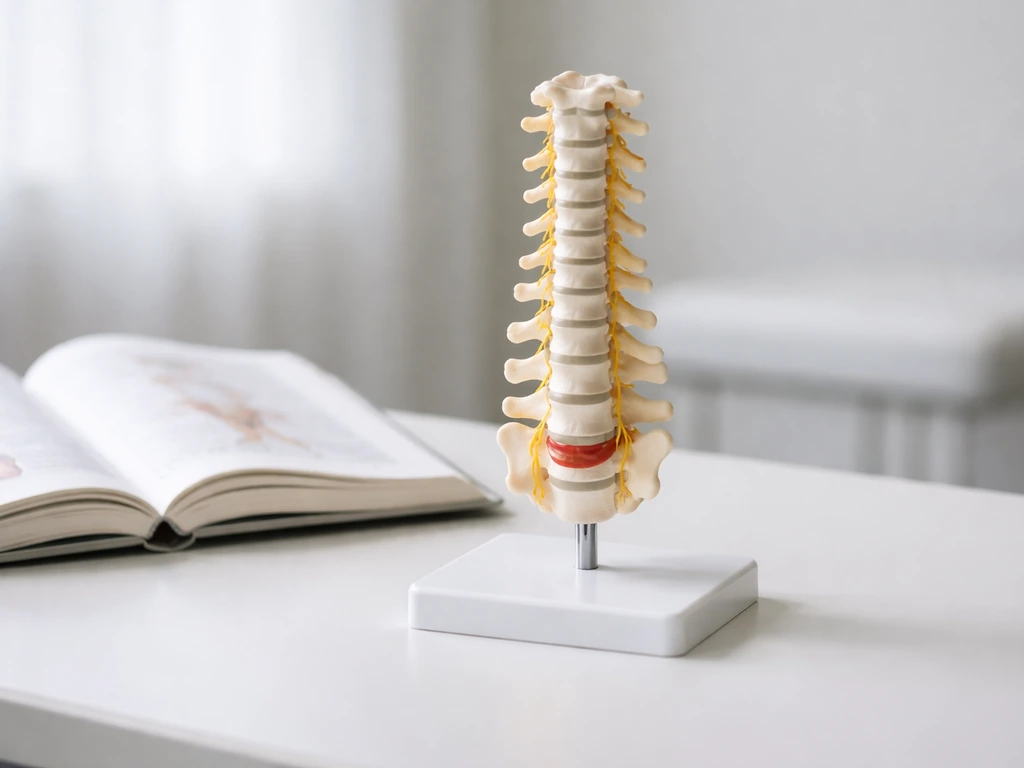
Your spine is not a rigid rod. It is a stack of 33 vertebrae separated by intervertebral discs, which are gel-filled cushions that act as shock absorbers. On Earth, gravity compresses that entire stack every time you stand or sit upright. By the end of a typical day, most people are measurably shorter than they were when they woke up, sometimes by as much as 1 to 2 cm, simply because those discs have been squeezed throughout the day. When you sleep horizontally and gravity stops loading the spine the same way, the discs rehydrate and expand slightly, and you wake up a little taller.
In microgravity, that compressive load disappears almost entirely. With nothing continuously squeezing the intervertebral discs, they absorb fluid and expand more than they ever can on Earth. Simultaneously, the natural curves of the spine, the inward lumbar curve in the lower back and the cervical curve in the neck, tend to flatten out. Both effects add length to the spinal column. There is also a fluid redistribution component: body fluids shift toward the head and trunk in weightlessness (the reason astronauts often get puffy faces early in a mission), which may contribute to postural and disc changes as well. The result is that the spine effectively decompresses far beyond its nightly recovery on Earth, producing that 3 to 6 cm gain in height.
NASA's Spinal Ultrasound research program, led by researchers including Scott Dulchavsky, has used real-time ultrasound to track these structural changes in astronauts during and around missions. Imaging studies comparing lumbar spine MRIs taken before flight, immediately after landing, and again 33 to 67 days post-flight have confirmed that the disc-height changes are objective and measurable, not just a quirk of standing posture in zero gravity.
Temporary decompression, not real growth

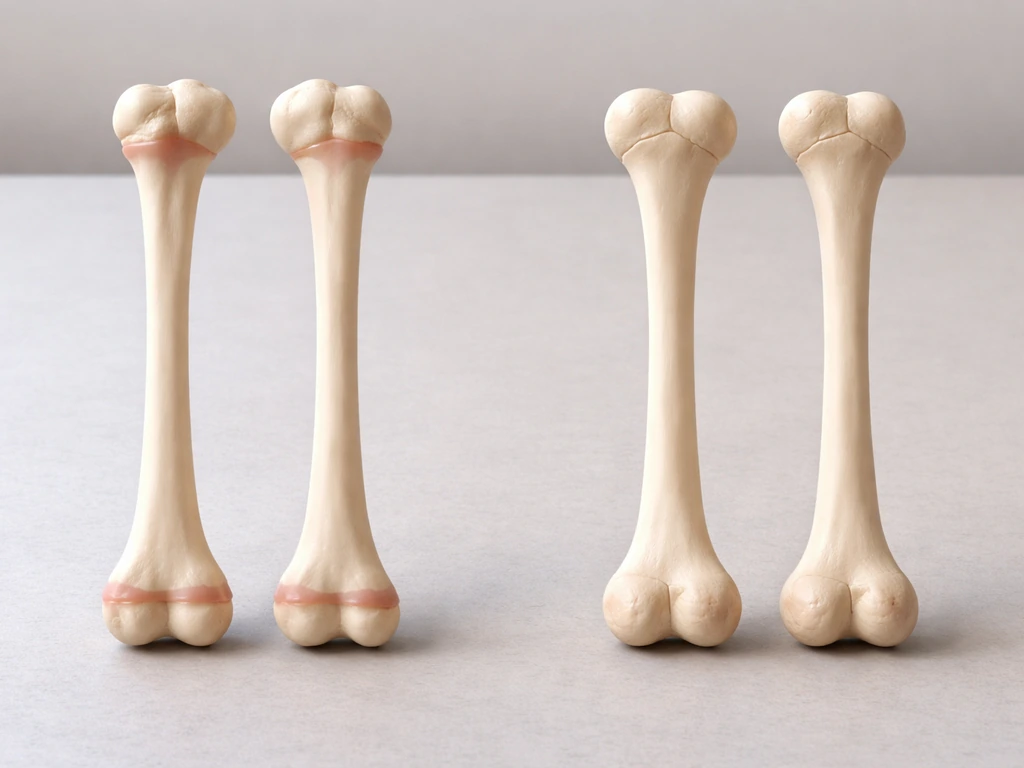
This is the part that matters most for anyone who found this article hoping for a shortcut to being taller. The height gain astronauts experience in space is not permanent, and it is not growth in any biological sense. On Mars, the same microgravity-driven disc expansion could explain temporary height changes, but the results would still be reversible rather than true biological growth would humans grow taller on mars. No growth plates are being activated. No new bone tissue is being laid down. The skeleton itself does not get longer. What changes is the spacing between existing vertebrae, driven by disc expansion and postural flattening, both of which are soft-tissue responses to an altered load environment.
The effect happens fast. Research from Skylab and Apollo-Soyuz showed that most of the stature increase is achieved within the first two days of weightlessness. After that, height levels off at a new steady state that persists for the rest of the mission, whether that is a two-week shuttle flight or a six-month ISS expedition. The discs expand to their decompressed maximum relatively quickly, and then the body adapts to its new baseline.
Bed-rest studies on Earth, particularly those using head-down tilt (which simulates some aspects of microgravity's fluid shift), also show stature increases and disc changes without any real bone growth, which further confirms that the mechanism is mechanical unloading rather than skeletal development.
Can astronauts keep the extra height after they land?
No. NASA is explicit about this: astronauts return to their preflight height after a few months back on Earth. Gravity does its job the moment they land. The compressive forces that squeezed the spine before the mission resume, the discs lose the fluid they absorbed, and the spinal curves return. Most of the height gain disappears within the first week or so after landing, since the spine rapidly reloads under Earth's gravity. Full normalization, based on post-flight monitoring timelines in NASA studies, typically occurs over the course of weeks to a couple of months, depending on mission duration and individual factors.
Some astronauts report feeling almost completely back to normal within a week after returning. Others take longer, with post-flight recovery varying considerably between individuals. NASA's post-flight monitoring protocols measure recovery at landing day, day 6, day 30, and beyond, partly to track how quickly musculoskeletal and performance metrics normalize. The disc-height imaging study that followed astronauts 33 to 67 days after landing found that some disc and muscle changes were still detectable in that window, while others had fully recovered, suggesting the recovery timeline is not identical for everyone.
One nuance worth flagging: some research using advanced MRI has found that longer-duration spaceflight may be associated with disc changes that do not fully reverse, particularly in astronauts who had some baseline disc degeneration before the mission. This does not mean permanent height gain. It means that the mechanical stress of a long mission can leave lasting changes in disc structure that may actually relate to back pain and degeneration risk rather than extra height.
What the astronaut phenomenon actually tells you about height on Earth
The reason the astronaut example is genuinely worth understanding, beyond curiosity, is what it reveals about everyday height variation and the factors that influence it. Your spine is compressible and rehydratable. That means there is a small but real range of height within which you operate every single day depending on how much time you have spent upright, how much axial load your spine has been under, and how well you have slept. This is not a trick or a myth. It is normal spinal physiology.
Sleep and spinal decompression

Every night when you lie down, your intervertebral discs do a miniature version of what astronauts experience in weightlessness. They rehydrate and expand. You are measurably taller in the morning than in the evening. Getting consistent, adequate sleep (generally 8 to 10 hours for growing children and teens, 7 to 9 hours for adults) does not just matter for hormones and recovery. It also gives your spine the daily decompression cycle it needs.
Posture and spinal curvature
One of the mechanisms behind astronauts getting taller is the flattening of spinal curvature in weightlessness. On Earth, habitual poor posture, especially the forward head and rounded shoulder pattern associated with long hours at a screen, exaggerates spinal curvatures and compresses the spine more than necessary. Working on posture through targeted exercises and awareness will not give you 5 centimeters of height gain, but it can recover some of the height you lose to postural compression throughout the day. Core and back strengthening exercises help the muscles that support upright spinal alignment. So if you are wondering how do kpop idols grow taller, the same basics about posture, spine loading, and overnight disc decompression tend to explain what you see.
Nutrition and disc health
Intervertebral discs are largely avascular, meaning they do not have a direct blood supply. They rely on diffusion to get nutrients, and that diffusion is driven partly by the loading and unloading cycle that happens when you move. Adequate protein, calcium, vitamin D, and overall caloric sufficiency during childhood and adolescence matter enormously for skeletal development and disc integrity. Nutritional deficiency during growing years does not just limit bone length; it can compromise the quality of the connective tissue and cartilage that contribute to your functional height.
Exercise and loading
There is an interesting tension here. Mechanical loading through exercise, especially weight-bearing and impact activities, stimulates bone development in growing children and adolescents. It is one of the genuine drivers of height potential during the growth years. But it also compresses the spine during the activity. The key is the recovery period after loading, where decompression and remodeling occur. Regular exercise that includes both loading and recovery, combined with adequate sleep, supports the healthy disc function that lets you stand as tall as your skeletal potential allows.
Genetics and the hard ceiling
None of the above changes the fundamental ceiling set by genetics. For adults whose growth plates have closed, no amount of spinal decompression, nutrition, or exercise will produce permanent height increases beyond the range normal variation in spinal loading already provides. For adults, the idea of growing taller is usually about maximizing posture, spinal loading, and disc hydration rather than true biological height growth <a data-article-id="07A25695-B35B-4C9B-AE67-E2F3351D0EA8">grow taller</a>. For adults, the idea of growing taller is usually about maximizing posture, spinal loading, and disc hydration rather than true biological height growth grow taller. If you are wondering whether younger siblings grow taller too, the answer mostly comes down to developmental timing and genetics rather than temporary height changes. If you are thinking about whether will humans continue to grow taller naturally as they age, it helps to separate permanent skeletal growth from temporary height changes like those astronauts see. Genetics accounts for roughly 60 to 80 percent of height variation. What lifestyle factors influence is how close you come to that genetic potential, particularly during childhood and adolescence when true skeletal growth is possible. Questions about whether adults can realistically grow taller, or how much genetics constrains final height, are worth exploring in depth separately, since the mechanisms are genuinely different from what is happening to astronauts' spines in orbit.
A quick comparison: real growth vs. spinal decompression
| Feature | True Height Growth (bone) | Astronaut Height Increase (decompression) |
|---|---|---|
| Mechanism | New bone tissue at growth plates | Intervertebral disc expansion and spinal curve flattening |
| Who it affects | Children and adolescents with open growth plates | Anyone in a low-gravity or unloaded environment |
| Typical magnitude | Centimeters to tens of centimeters over years | 3 to 6 cm (about 3% of stature) over 1 to 2 days |
| Speed of change | Months to years | Hours to days |
| Permanent? | Yes | No, reverses within weeks to months after return to gravity |
| Driven by genetics? | Strongly | Minimally (mostly a mechanical/structural effect) |
| Measurable with imaging? | Yes (X-ray, bone density scans) | Yes (ultrasound, MRI of discs and vertebrae) |
The bottom line
Astronauts do get taller in space, by about 3% on average, roughly 3 to 6 cm for a typical adult. It happens because the absence of gravity lets intervertebral discs expand and spinal curves flatten, adding length to the column of vertebrae without any new bone growth. The effect kicks in within the first one to two days of weightlessness and reverses within weeks to months after landing. It is a fascinating demonstration of how compressible and responsive the spine is, but it is not a model for gaining permanent height on Earth. What it does teach you is that spinal health, posture, sleep, and disc hydration are all real contributors to how tall you actually stand day to day, and those are worth taking seriously at any age. If you are wondering why men <a data-article-id="FF7EE998-3DBB-4BFC-B998-15B0E73FE4A9"><a data-article-id="FF7EE998-3DBB-4BFC-B998-15B0E73FE4A9">grow taller</a></a> than women, the main drivers are puberty timing, genetics, and growth plate biology.
FAQ
How can height be measured accurately during a space mission if the astronaut cannot stand normally?
Researchers avoid relying on casual “standing posture” by using standardized procedures, fixed stadiometer-style setups when possible, and imaging-based methods for spine components (like ultrasound or MRI). That way, they can separate true standing height changes from differences in how the head, hips, and torso are positioned when measurements are taken.
Does the height increase happen immediately, or does it build over time in microgravity?
Most of the measurable gain occurs early, within about the first 1 to 2 days of weightlessness, then it plateaus for the rest of the mission. If you observe change only after many days, it may reflect measurement variability, posture changes, or individual disc baseline differences rather than the main microgravity mechanism.
Is the height gain the same for standing height and seated height?
No. Standing height reflects both spine length and postural alignment, while seated height more directly isolates trunk and spinal contributions. Seated measures can show a larger relative change, so averaging one type of measurement across studies can make results look inconsistent.
Can the “taller in space” effect make you taller permanently after returning to Earth?
For most astronauts, it reverses largely, with rapid disappearance of the majority of the effect within roughly the first week and fuller normalization over weeks to a couple of months. Remaining imaging findings after longer flights can indicate disc or muscle changes that do not perfectly mirror recovery for everyone, but that still is not the same as permanent skeletal growth.
Why do some astronauts have longer or incomplete recovery even if there is no permanent height gain?
A key contributor is pre-existing disc degeneration. If someone starts a mission with less resilient discs, mechanical unloading in microgravity may shift disc structure in a way that does not fully revert to baseline, which can matter for comfort and back health even when overall height returns near normal.
Does microgravity make astronauts taller by stretching ligaments or muscles, not just discs?
The biggest contributor is disc expansion with associated changes in spinal curvature. However, soft-tissue adaptation also plays a role, including postural flattening and muscle adjustments, which is why imaging studies may show changes in multiple structures even when “new bone” is not involved.
Could astronauts gain height on Mars or during long stays, and would it be any more permanent than on Earth?
The same unloading-driven disc changes could occur in Mars-like low gravity, but the effect is expected to remain reversible rather than true biological growth. A longer exposure could increase the chance of lasting disc structural differences in some people, but that would not create permanent “growth plate” lengthening.
Is there a safe way to mimic the effect on Earth to look taller?
You can get partial day-to-day height differences by reducing spinal loading (for example, improved sleep and posture support), but there is no safe Earth equivalent that reliably expands discs by the same amount as microgravity. Avoid extreme or risky “spinal stretching” methods marketed for height gains, especially if you have back pain or known disc issues.
If astronauts are about 3% taller, why do headlines sometimes report different percentages or centimeters?
Variation comes from how height is defined (standing versus seated), how measurements are performed, and when they are taken relative to the start and end of the mission. Individual factors also matter, including baseline posture and disc health, so the same person could fall within different ranges depending on the protocol used.
Does this mean everyone’s height changes during the day like astronauts do?
Yes, in smaller form. Discs rehydrate overnight, so many people measure taller in the morning than in the evening. The effect is typically centimeters across a day, and the size depends on how much time you spend upright and how much axial loading your spine experiences.
Can nutrition or supplements increase “functional height” on Earth?
Adequate overall nutrition supports disc and connective tissue integrity, especially during childhood and adolescence, but it will not create the microgravity magnitude of height change. Protein sufficiency, vitamin D, and calcium help overall musculoskeletal health, yet genetics and spinal mechanics still set the practical limits.
At what age does the “growing taller” topic stop applying in the biological sense?
For permanent height increase, growth plate biology is the limiter, which generally closes after puberty. After that, you might improve posture and disc loading patterns to reduce daily compression loss, but you cannot permanently lengthen the skeleton through the same mechanism astronauts experience in space.
Next Article
Does Protein Help You Grow Taller? Evidence and What to Do
Does protein help you grow taller? Evidence says it supports growth in kids, but won’t lengthen bones after growth plate