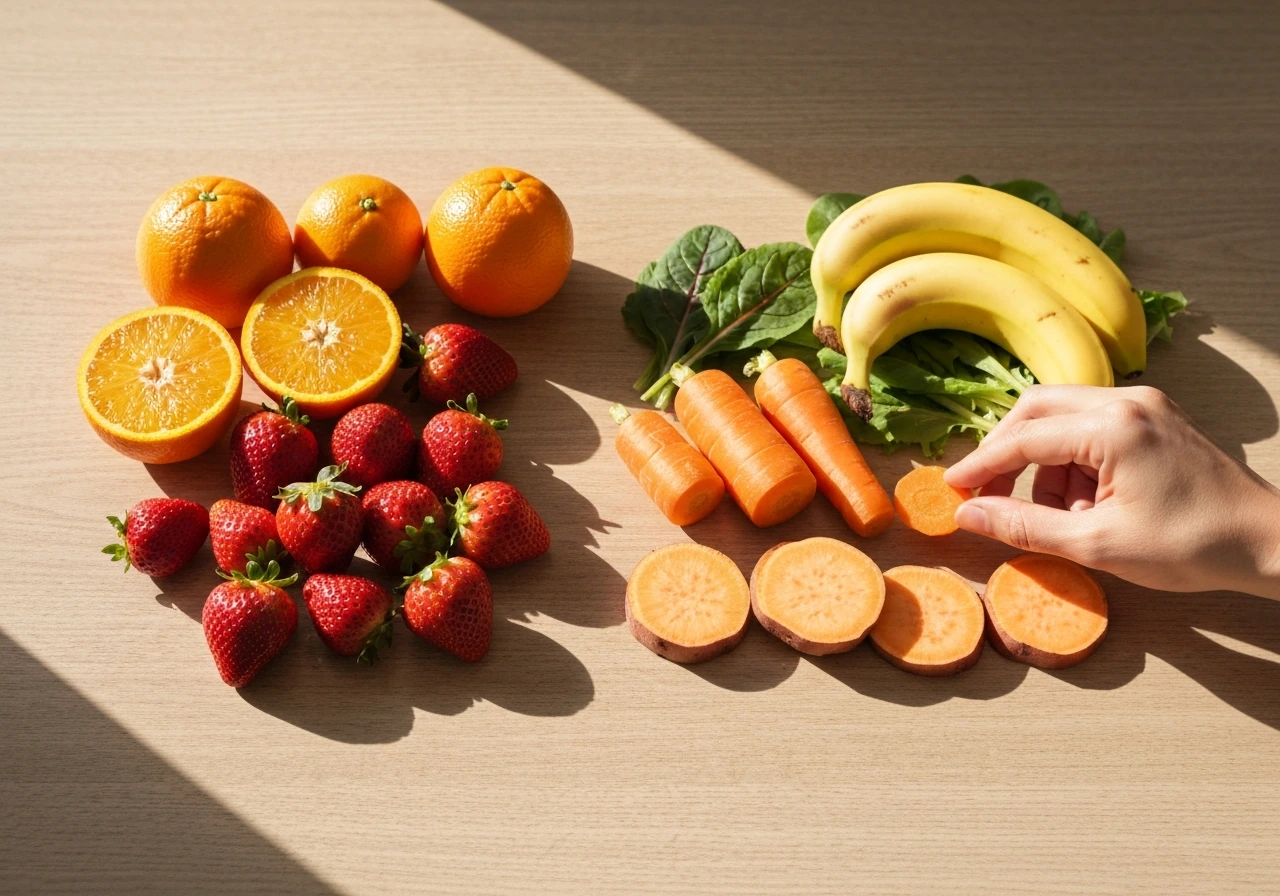
Bananas will not make you grow taller on their own. No single food can. What bananas can do is contribute useful nutrients, calories, and energy to an overall diet that supports normal growth during childhood and adolescence. If your diet is already well-rounded, adding bananas won't push you past your genetic height ceiling. But if you're undereating or missing key micronutrients, getting enough calories and variety, including fruit like bananas, genuinely matters for reaching your full potential.
Do Bananas Make You Grow Taller? Science and Nutrition Facts

Marcus Reeves
13 May 2026

What actually controls how tall you grow

Height is determined by a combination of genetics, hormones, and the biology of your growth plates. Growth plates are thin layers of cartilage near the ends of your long bones, and they're where new bone tissue is produced during childhood and adolescence. When those plates close, usually toward the end of puberty, your bones stop lengthening and your height is set. The Endocrine Society uses bone age (assessed via an X-ray of the left hand and wrist) to evaluate how mature those plates are and how much growing time remains.
The hormones driving this process include growth hormone (GH), insulin-like growth factor 1 (IGF-1), thyroid hormones, and sex steroids like estrogen and testosterone. These work together in a tightly regulated system. Puberty is described in endocrine literature as the final major phase of linear growth, the window between pre-pubertal state and full secondary sexual characteristics where most of your final height is determined. No food overrides this hormonal system. What nutrition does is provide the raw materials the system needs to work properly.
Genetics is the dominant factor. Roughly 60 to 80 percent of height variation between people comes down to inherited genes. Family history is the first thing a pediatrician or endocrinologist looks at when evaluating growth. Short stature is clinically defined as height below about the 2nd to 3rd percentile for age and sex (less than roughly the 23rd percentile by some definitions, or below minus 2.25 standard deviations in clinical referral contexts). Most kids who are on the shorter side are simply tracking their genetic blueprint, not suffering from a nutritional deficiency that bananas could fix.
What nutrients bananas actually provide
A medium banana (about 7 to 7 and 7/8 inches long) gives you a solid nutritional package, though it's worth being specific about what's in it and what's missing.
| Nutrient | Amount per medium banana | Relevance to growth |
|---|---|---|
| Potassium | 422 mg | Supports muscle and nerve function, not a direct height driver |
| Vitamin B6 | 0.43 mg | Helps protein metabolism and enzyme production |
| Magnesium | 31.86 mg | Supports bone development and enzyme activity |
| Carbohydrates | ~27 g | Provides quick energy, important for active, growing kids |
| Calories | ~105 kcal | Contributes to overall energy sufficiency |
| Calcium | 6.3 mg | Very low, not a meaningful calcium source |
| Iron | 0.33 mg | Small contribution to daily needs |
| Zinc | 0.19 mg | Very low relative to daily requirements |
| Vitamin D | 0 mg | Not present at all |
| Protein | ~1.3 g | Minimal, not a significant protein source |
The picture that emerges is nuanced. Bananas are genuinely good food: the potassium, vitamin B6, magnesium, and carbohydrates are all useful. But the nutrients most directly linked to bone growth and height, specifically calcium, vitamin D, zinc, and protein, are either absent or present in amounts too small to matter much. A medium banana has essentially no vitamin D and only about 6 mg of calcium, compared to the 1,000 to 1,300 mg per day children and teens need. You'd need to eat dozens of bananas daily just to approach calcium requirements, and that's clearly not the goal.
How nutrition actually affects growth: deficiencies versus overhyped foods
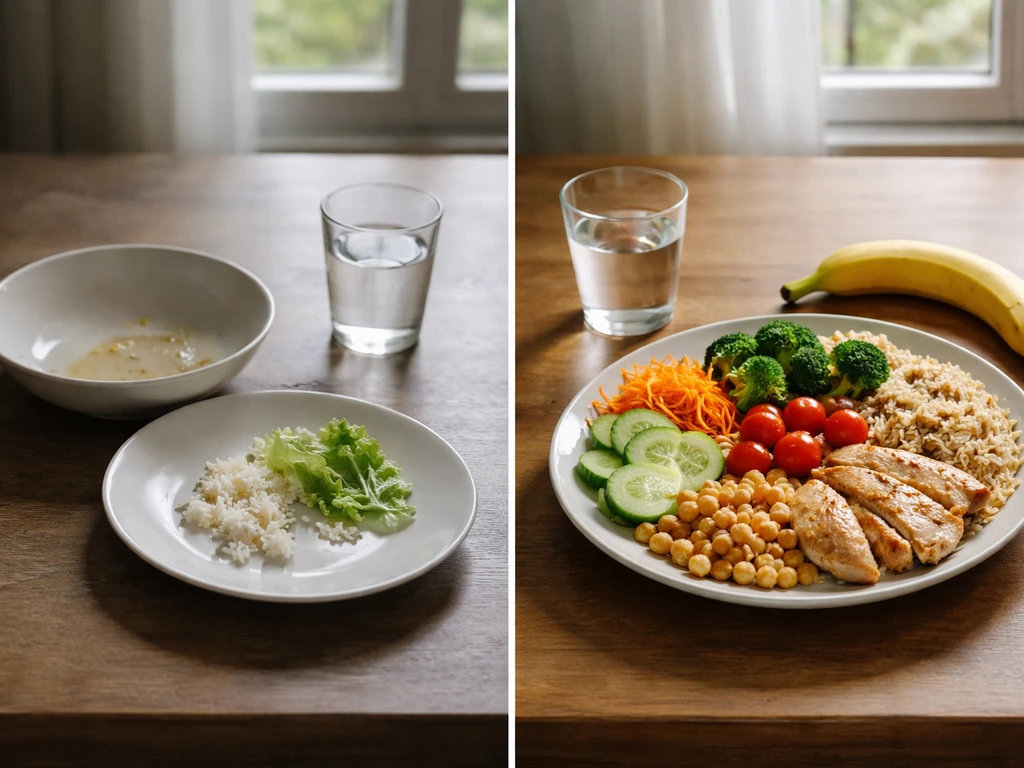
The relationship between nutrition and height works mostly through deficiency prevention, not through any food's special growth-boosting power. The WHO describes malnutrition as chronic or recurrent undernutrition and inadequate vitamins and minerals that directly affect growth and development. When children lack enough total calories, protein, zinc, vitamin D, or iron, their growth slows. Correcting those deficiencies can get growth back on track.
The research backs this up clearly. A randomized controlled trial in Thai school-aged children found that zinc supplementation significantly improved linear growth in kids with zinc insufficiency. Cochrane-level evidence also suggests vitamin D supplementation probably slightly improves height-for-age scores in young children under five. These findings tell us something important: fixing a real deficiency can influence how tall a child grows. But neither zinc nor vitamin D came from bananas in these studies, and neither nutrient is meaningfully present in bananas anyway.
The flip side is equally important. If a child already eats enough protein, gets adequate calcium and vitamin D, and consumes sufficient total calories, adding more of any specific food, including bananas, won't push their height higher. The growth machinery is already fueled. There's a ceiling set by biology, and good nutrition helps you reach it, not exceed it.
Where bananas genuinely help
Bananas are an easy, affordable, well-tolerated source of energy and micronutrients. For a kid who struggles to eat enough, resists vegetables, or needs a portable calorie-dense snack, a banana is a solid choice. The CDC notes that daily fruit intake supports healthy growth and brain development in children, not because fruit is magic, but because fruit contributes to overall dietary quality and prevents the gaps that do slow growth. In that context, bananas earn their place. They just don't have a direct, special effect on height beyond being part of a good diet.
Age matters a lot: kids versus teens versus adults
Young children and pre-puberty (roughly ages 2 to 10)
This is the window where chronic undernutrition has the most impact on long-term height. Growth is steady rather than rapid, but consistent nutritional support is critical. Adequate protein (about 0.85 to 1 g per kilogram of body weight daily), calcium (1,000 mg/day for ages 4 to 8, 1,300 mg/day for ages 9 to 18), vitamin D (600 IU/day), and zinc (5 to 8 mg/day depending on age) are the pillars. Bananas can contribute calories and a few micronutrients here, but dairy, eggs, meat or legumes, and leafy vegetables are carrying most of the nutritional weight for height.
Teens during active puberty

Puberty is the last major growth opportunity. Girls typically experience their peak height velocity around ages 11 to 13, boys around 13 to 15, though there's a lot of individual variation. Caloric needs spike during this phase, often reaching 2,200 to 3,200 calories per day for active teenage boys. Protein, calcium, and zinc requirements are at their highest. A banana as a pre-sport snack or part of a meal makes sense here because teens genuinely need the energy and carbohydrates. But the heavy lifting for height still comes from adequate total protein, dairy or calcium-rich alternatives, and getting enough sleep for GH release at night.
Adults: growth plates are closed
If you're an adult asking whether bananas (or any food) can make you taller, the honest answer is no. If you are wondering, does kiwi help you grow taller, the evidence for any specific fruit is limited and height is mostly driven by genetics and overall nutrition. If you are wondering what fruit makes you grow taller, focus on overall nutrition first rather than expecting one fruit to boost height directly. Growth plates typically fuse completely by the late teens or early twenties, and once they close, linear bone growth is finished. No diet, supplement, or exercise program can reopen them. What adults can do is optimize posture, core strength, and spinal health to stand at their actual full height, and maintain bone density to prevent the height loss that comes with age. Bananas and a balanced diet still matter for bone health and overall wellbeing, just not for adding inches.
What to do today to maximize height potential
If you or your child is still growing, the practical priorities are straightforward. No single food is the answer, but a consistent combination of habits is genuinely effective.
- Prioritize total calorie sufficiency: undereating is the most common nutritional brake on growth. Growing teens especially need to eat enough across the day, not just at one meal.
- Get enough protein daily: aim for 0.85 to 1 g per kilogram of body weight for children, and up to 1.2 to 1.5 g for active teens. Eggs, chicken, fish, legumes, dairy, and Greek yogurt are efficient sources.
- Hit calcium and vitamin D targets: dairy (milk, yogurt, cheese), fortified plant milks, and fatty fish for vitamin D. Sunlight exposure helps vitamin D status too. These two nutrients directly build bone.
- Don't neglect zinc: found in meat, shellfish, legumes, nuts, and seeds. Zinc deficiency has clear RCT evidence linking it to impaired linear growth in children.
- Sleep consistently and enough: growth hormone is released primarily during deep sleep. The AAP recommends 9 to 12 hours for school-age kids and 8 to 10 hours for teens. This is non-negotiable.
- Stay physically active: weight-bearing activity like walking, running, jumping, and sports stimulates bone development. It also supports healthy GH release.
- Eat a variety of fruits and vegetables daily: this includes bananas, but also apples, citrus, kiwi, and others that contribute to overall diet quality and micronutrient coverage.
- Reduce factors that suppress growth: chronic stress, poor sleep, very low calorie diets, and untreated illness all interfere with normal growth.
Bananas fit naturally into step seven. They're a convenient, energy-dense fruit that pairs well with protein-rich foods (banana with peanut butter, for example, combines carbohydrates, some magnesium, and protein in one snack). That's genuinely useful for a growing child or teen who needs consistent fuel throughout the day. Other fruits like apples, kiwi, and grapes similarly contribute to diet quality without being height-boosters in isolation either.
Myths, realistic expectations, and when to see a doctor
Common myths worth clearing up
- Myth: Eating bananas every day will make you grow taller. Fact: Bananas support overall nutrition but have no direct height-boosting mechanism. They lack the key nutrients most tied to linear growth.
- Myth: Any single food can unlock extra height. Fact: Height is controlled by genetics, growth plate biology, and the hormonal GH/IGF-1 axis. No food overrides these systems.
- Myth: If you're short, you must be eating the wrong foods. Fact: The AAP and Pediatric Endocrine Society note that most children with short stature are healthy and growing normally for their genetic background. Short stature is usually not a nutritional problem.
- Myth: Adults can still grow with the right diet. Fact: Once growth plates fuse, no dietary change increases height. Focus shifts to posture, spinal health, and bone density maintenance.
- Myth: Banana height 'hacks' or specific fruit combinations trigger growth spurts. Fact: There is no peer-reviewed evidence for this. Growth spurts are hormonally driven, primarily by puberty.
When to actually see a doctor
Nutrition adjustments make sense when a child's diet is genuinely poor or their growth has slowed unexpectedly. But some situations call for a pediatrician or pediatric endocrinologist rather than a diet change. The Pediatric Endocrine Society flags these as red flags worth acting on: a child whose growth is crossing percentiles downward after about age 3 (not just tracking low, but actively decelerating), height more than 2.25 standard deviations below the mean for age and sex, or growth that seems out of step with family history. A bone age X-ray of the left hand and wrist can reveal whether growth plates still have room to grow and how much time remains. If there's a medical cause, whether a hormone issue, chronic illness, or genetic condition, that's what needs to be addressed. No amount of bananas will substitute for appropriate medical evaluation and treatment.
The takeaway is genuinely straightforward: eat bananas because they're good food, not because they're a height hack. You may also wonder, do walnuts help you grow taller, but the evidence is about overall nutrition and medical needs rather than one specific food. Keep the overall diet rich in protein, calcium, vitamin D, and zinc. Sleep well and stay active. And if something about a child's growth pattern genuinely worries you, talk to their pediatrician rather than reaching for a specific food as a fix. That's where real answers come from.
FAQ
How many bananas would a child need to actually change height?
Practically, none. Because bananas do not meaningfully supply the main height-related nutrients (especially calcium, vitamin D, and protein), increasing bananas alone cannot overcome genetics or fill the specific deficiency patterns that slow growth. If intake is poor, the focus should be on meeting overall calorie and protein needs, then adding calcium and vitamin D sources.
If a teen eats bananas instead of dairy, will that help them grow taller?
Not in place of dairy or other calcium-rich foods. Bananas provide very little calcium and essentially no vitamin D, so swapping them for milk, yogurt, fortified plant milks, or eggs can create gaps that matter for bone mineralization during growth.
Can bananas help if a child is already short but otherwise healthy?
Bananas may help only indirectly by improving diet quality and preventing under-eating, but they will not be a targeted fix for clinical short stature. If height is dropping percentiles or lagging behind family patterns, a pediatrician may evaluate growth velocity, nutrition status, and bone age rather than adjusting fruit intake.
What’s more important for growth, total calories or specific foods like bananas?
Total adequate calories are a common limiter. If a child is not eating enough, growth can slow even if the diet includes “healthy” foods. In under-eating scenarios, increasing overall intake and protein distribution across the day usually matters more than adding any one fruit.
Are bananas safe for kids who need to gain weight during puberty?
Usually yes. Bananas are calorie-dense for fruit and easy to tolerate, making them helpful for adding energy. The better approach is pairing them with protein or nutrient-dense fats (such as peanut butter, yogurt, or milk) so growth-related building blocks are not limited.
Do bananas affect hormones like growth hormone or IGF-1?
No specific hormonal “banana effect” is supported. Growth hormone, IGF-1, thyroid hormones, and sex steroids are regulated by the body, and nutrition helps by providing energy and building blocks. If a child has a true endocrine or chronic illness issue, fruit intake will not correct it.
If a child has vitamin D deficiency, will adding bananas solve it?
No. Bananas do not provide meaningful vitamin D. If labs show low vitamin D, clinicians typically recommend vitamin D from supplements or fortified foods and also address calcium intake, sunlight exposure, and overall diet.
What symptoms or signs mean I should not rely on diet changes for growth?
Seek medical advice if a child’s growth crosses downward percentiles after about age 3, if height is more than about 2.25 standard deviations below the mean for age and sex, or if growth decelerates compared with family history. These patterns can indicate endocrine, chronic, or genetic causes where bananas cannot substitute for evaluation.
For adults, can bananas improve posture or prevent height loss?
Bananas are not a height-increase tool for adults, but a balanced diet can support bone health. For maintaining stature, the bigger diet targets are calcium and vitamin D, plus resistance exercise and adequate sleep, since height loss with age often relates to bone density and spinal changes.
Should I worry about potassium or sugar in bananas for kids?
For most children, a medium banana is reasonable, but it is not a blank check. If a child has diabetes risk, kidney disease, or is on a restricted diet, confirm with a clinician. Also, treat bananas as part of an overall balanced meal plan, not the sole source of calories or nutrients.
Next Article
What Fruit Makes You Grow Taller? Evidence-Based Guide
Find which fruits aid growth by nutrients like vitamin C and A, plus daily fruit and veggie meal ideas and limits for ad