
No, strawberry milk will not make you grow taller on its own. There is no evidence that any single food or drink can add inches to your height. What strawberry milk does contain, though, is real milk, which means it carries protein, calcium, and vitamin D. Those nutrients genuinely matter for growth during childhood and adolescence. So the honest answer is nuanced: the milk inside the carton can support normal growth as part of a balanced diet, but the strawberry flavoring and added sugar don't help at all, and the full picture of what drives height is much bigger than any one beverage.
Does Strawberry Milk Make You Grow Taller? Science and What to Do

Marcus Reeves
24 Mar 2026
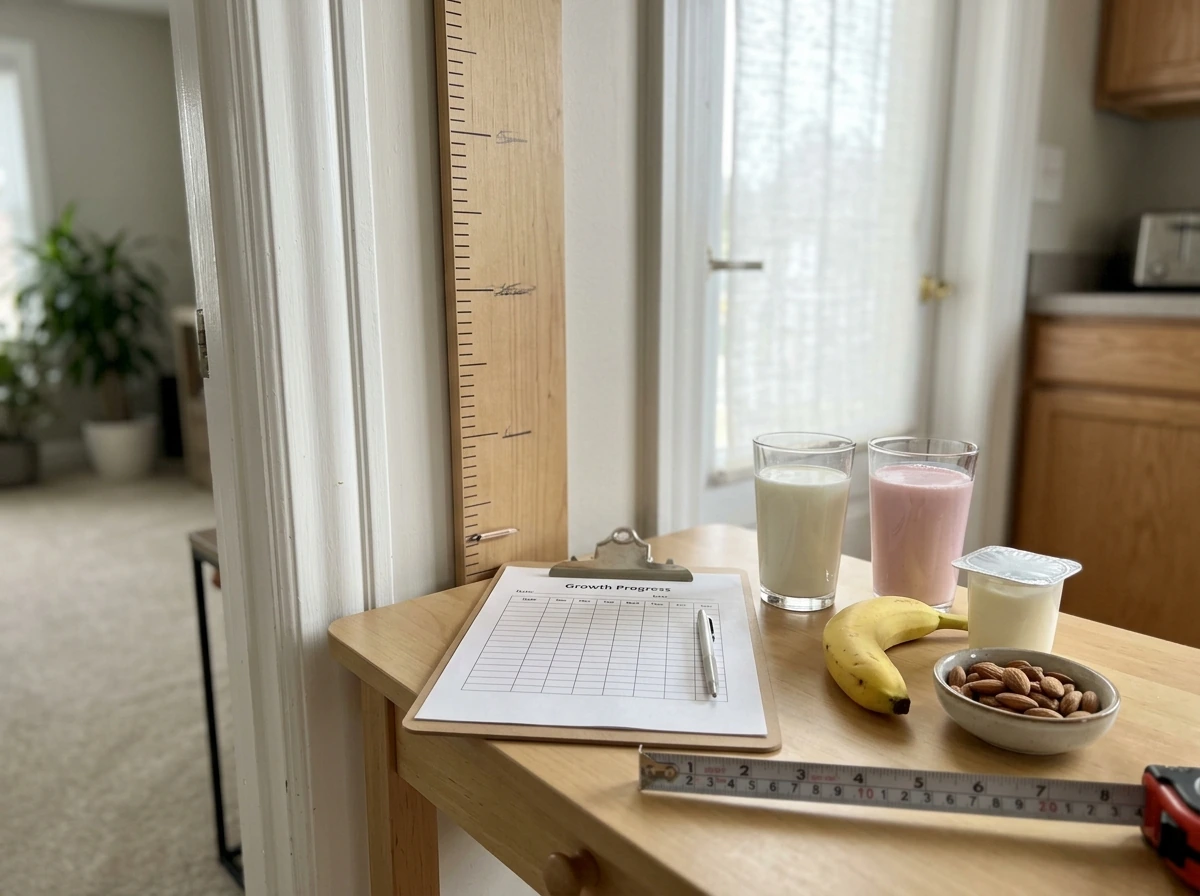
The myth vs. the actual science

The idea that a specific drink can make you taller is a myth, and it's worth understanding why people believe it in the first place. Milk has a genuine association with growth in children, which has been confirmed in systematic reviews of controlled trials showing that dairy supplementation increases bone mineral content and is linked to improvements in linear growth. Because flavored milks like strawberry or chocolate are popular with kids, the association gets attached to those drinks too. But the active ingredients are the dairy components, not the flavor or the sugar.
The science of height growth comes down to a handful of well-established factors: your genetic ceiling (set by your parents' heights), your pubertal timing, your overall calorie and protein intake, your calcium and vitamin D status, your sleep quality, and your general health. Genetics accounts for roughly 60 to 80 percent of your final adult height. Nutrition fills in the rest, but only up to that genetic potential. No amount of strawberry milk, or any other food, pushes you past what your DNA has already mapped out.
What's actually in strawberry milk
A standard 8-ounce serving of strawberry-flavored milk made with whole milk delivers roughly 8 grams of protein and about 293 milligrams of calcium. Those are real, meaningful numbers. Protein is essential for building tissue including bone matrix, and calcium is the primary mineral your body uses to build and maintain bone density. If the milk is fortified (as most commercial varieties are), you also get vitamin D, which is critical because your body can't absorb calcium properly without it.
The catch is the added sugar. Strawberry-flavored milk contains added sugars on top of the natural lactose already in dairy. Federal dietary guidelines recommend that children age 2 and older keep added sugars below 10 percent of total daily calories, and the CDC points out that sugary drinks are already one of the leading sources of added sugar in children's diets. When a glass of strawberry milk is replacing plain milk or water, you're getting the same core nutrients but with a sugar load that adds up over the day, potentially crowding out better food choices and contributing to excess calorie intake.
The nutrients that actually drive height
If you want to support growth as fully as possible, focus on these four pillars rather than any single drink or food.
Calories and total energy
You cannot grow if you are not eating enough. This sounds obvious, but chronic low calorie intake is one of the most common nutritional causes of impaired growth velocity in children worldwide. Research on milk and growth consistently flags this point: studies have to control for total energy intake because kids who drink more milk often also eat more overall, and the extra calories themselves contribute to growth outcomes. Being in a consistent energy deficit stunts growth, while adequate calorie intake gives the body the raw fuel it needs for tissue development.
Protein
Protein provides the amino acids your body uses to build bone matrix, muscle, and connective tissue. Dairy is a high-quality complete protein source, and randomized controlled trial data, including a trial specifically in 6 to 8 year olds testing combined high dairy protein and vitamin D intake, have found positive effects on bone mineralization markers and linear growth. Other good protein sources include eggs, lean meats, legumes, and fish, so dairy is not the only path.
Calcium
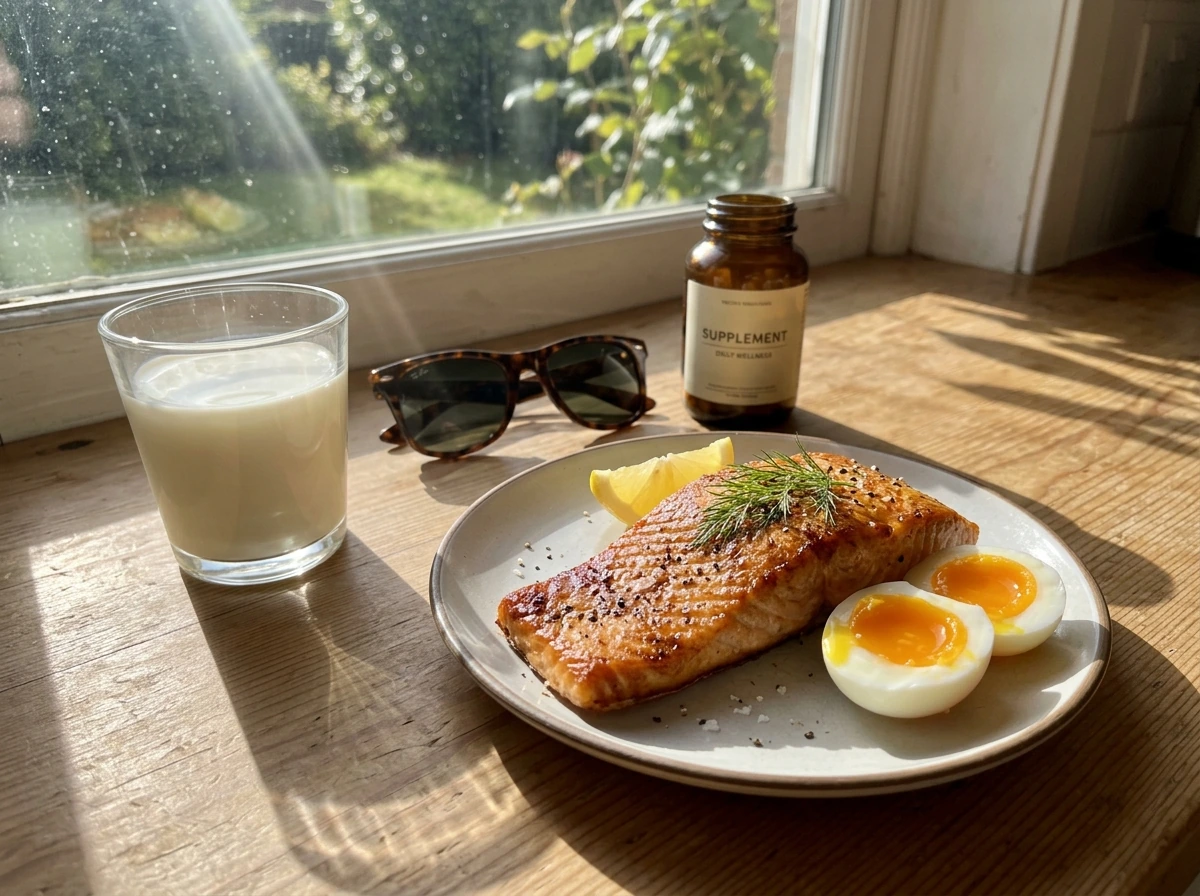
Calcium is the mineral that makes up the mineral phase of bone. Getting enough calcium during the years when bone is actively being laid down, primarily childhood through late adolescence, sets your peak bone mass. The 293 milligrams in a glass of strawberry milk is a meaningful contribution toward the 1,000 to 1,300 milligrams per day recommended for children and teens. NCBI’s DRI calcium and vitamin D table lists age-based targets, including 1,300 mg/day of calcium and 5 μg/day (200 IU) of vitamin D for ages 14, 18 calcium 1,300 mg/day and vitamin D 5 μg/day for children and adolescents (including ages 14–18).
Vitamin D
The NIH recommends 600 IU (15 micrograms) of vitamin D daily for children aged 1 to 13 and for teens aged 14 to 18. NCBI’s Dietary Reference Intakes chapter provides the vitamin D requirement values used in adequacy discussions for children and adolescents, including RDA values summarized in the text. Without enough vitamin D, calcium absorption is impaired regardless of how much calcium you consume. Most commercial milk, including flavored varieties, is fortified with vitamin D, which is one of the genuine reasons dairy remains a useful part of a growth-supporting diet. That said, many children are still deficient because they don't get enough sun exposure or fortified foods, so it's worth checking if you're concerned about a child's growth.
Growth plates and the window that matters

Height increase is only possible while your growth plates (the cartilage zones at the ends of your long bones) are still open. Once puberty is complete and the growth plates fuse, no food, supplement, or stretch routine will make you taller. This is the most important biological reality to understand before worrying about what you're drinking.
The timing of the pubertal growth spurt is different for boys and girls. For girls, the spurt typically begins around ages 9.5 to 13.5, with peak height velocity occurring around ages 11 to 12.5 and gains of roughly 9 centimeters in the peak year. For boys, the spurt tends to run from about ages 12 to 16, with peak velocity around ages 13 to 14 and gains exceeding 10 centimeters in the peak year. After the growth spurt decelerates and final height is reached, usually by the late teens for girls and by the late teens to early 20s for boys, that's it. Nutrition during those years is where it actually counts.
If you're already past your growth spurt and your growth plates have closed, shifting to strawberry milk or any other calcium-rich food won't reverse that. What good nutrition does for adults is maintain bone density and overall health, which matters a lot but is a different goal than growing taller.
What to actually do today depending on your age
The right strategy depends on where you are in your growth journey.
Children and younger teens still in their growth window
This is the stage where nutrition genuinely moves the needle. The goal is consistent, adequate intake of the four pillars above, spread across real food rather than engineered into a single drink. Here's a practical daily checklist:
- Eat enough total calories to support your activity level and growth, chronic under-eating is one of the few nutritional ways to genuinely limit height
- Get 2 to 3 servings of dairy or calcium-rich alternatives per day (plain milk, cheese, yogurt, fortified plant milks)
- Prioritize protein at every meal: eggs, meat, fish, beans, dairy, or tofu
- Spend some time outdoors daily for natural vitamin D synthesis, especially in fall and winter when sun exposure is limited
- Sleep 9 to 11 hours per night if you're a child, 8 to 10 hours if you're a younger teen; growth hormone is released in pulses during deep sleep
- Do weight-bearing activity like running, jumping, or sports, which stimulates bone remodeling and density
- Avoid smoking and excessive alcohol (relevant for older teens), both of which impair bone development
- Drink water as your primary beverage and reserve flavored drinks including strawberry milk as occasional additions rather than daily staples
Older teens and adults approaching or past final height
If you're in your late teens or older and you suspect your growth plates have closed, the honest answer is that dietary changes are unlikely to change your height from this point. What matters now is protecting the bone density you built during your growth years and maintaining good overall health. Keep calcium and vitamin D intake consistent, stay active with weight-bearing exercise, and if you have any concern about your bone health, talk to a doctor rather than relying on food choices alone.
So is strawberry milk actually okay to drink?
Yes, occasionally. It's not a harmful drink, and as flavored milks go, it still delivers real nutrition from the dairy base. The issue is frequency and context. If strawberry milk is how a young child who refuses plain milk gets their calcium and protein, that's a reasonable trade-off. If it's a daily habit that's displacing plain milk, water, and whole foods, the added sugar load adds up in ways that don't benefit growth and may work against overall health.
If you're choosing strawberry milk, here's how to do it more thoughtfully:
- Choose reduced-fat milk as your base to lower saturated fat without losing the protein and calcium
- Look for brands with less added sugar, some commercial strawberry milks have 12 to 20+ grams of added sugar per serving while others are closer to 8 to 10 grams
- Check that the milk is vitamin D fortified, most are but it's worth verifying on the label
- Treat it as one of two to three daily dairy servings, not as a replacement for the others
- Pair it with a meal rather than drinking it alone as a snack, which helps with overall satiety and nutrient balance
- For children under 2, the recommendation is no added sugars at all, so stick to plain fortified milk or formula for that age group
A quick comparison: plain milk vs. strawberry milk for growth support

| Factor | Plain Whole Milk (8 oz) | Strawberry Flavored Milk (8 oz) |
|---|---|---|
| Protein | ~8 g | ~8 g |
| Calcium | ~290–300 mg | ~290–300 mg |
| Vitamin D (if fortified) | ~100 IU | ~100 IU |
| Added sugar | 0 g | 8–20+ g (varies by brand) |
| Total calories | ~150 kcal | ~180–220 kcal |
| Growth support | Yes, via protein/calcium/vitamin D | Same dairy nutrients, but added sugar adds no growth benefit |
| Best use case | Daily staple | Occasional treat or transition tool for picky drinkers |
Plain milk wins for everyday use, and that's the straightforward recommendation. The difference isn't enormous for occasional consumption, but it adds up meaningfully if strawberry milk is a daily habit, particularly for younger children whose total added-sugar budget is small.
When to talk to a doctor instead of changing drinks
If your concern about height is about a child's growth pattern rather than just optimizing diet, nutrition tweaks are not where you should be spending your energy. The Pediatric Endocrine Society emphasizes that growth velocity, meaning how fast a child is growing over time, is more important than any single height measurement. A child whose height percentile is consistently dropping, who is growing noticeably slower than peers, or who shows signs of delayed or early puberty should be evaluated by a pediatrician or pediatric endocrinologist.
The AAP and Pediatric Endocrine Society both use growth curve tracking and growth velocity thresholds in centimeters per year as primary tools for identifying potential growth problems. These are clinical assessments that no dietary change can substitute for. Common causes of impaired growth velocity include hormone deficiencies (like growth hormone deficiency), celiac disease, inflammatory bowel disease, kidney or thyroid conditions, and other chronic illnesses. Some of these are very treatable when caught early, and early evaluation matters.
Reach out to a doctor if you notice any of the following:
- A child's height is consistently below the 3rd percentile for age on a standard growth chart
- Height percentile has been crossing downward over two or more measurements
- Puberty appears significantly delayed (no signs by age 13 in girls or age 14 in boys) or unusually early
- The child is eating well but growth seems stalled over a period of several months to a year
- There are other symptoms like fatigue, poor weight gain, digestive issues, or frequent illness alongside slow growth
These situations call for a growth curve review and possibly lab work or imaging, not a change in what's in the glass at breakfast. Nutrition matters enormously for growth, but it works within a framework set by hormones, genetics, and overall health. For deeper context on how regular milk intake compares to other beverages for growth, or how soy milk measures up as a dairy alternative, those are related questions worth exploring separately.
The bottom line here is simple: drink the milk for the dairy nutrients, skip the expectation that the strawberry makes it a height booster, and talk to a doctor if growth itself is the actual concern. The bottom line here is simple: drink the milk for the dairy nutrients, skip the expectation that the strawberry makes it a height booster, and talk to a doctor if growth itself is the actual concern does drinking milk make you grow taller.
FAQ
If strawberry milk does not make you taller, does it still help growth in any way?
Strawberry milk can support normal growth only to the extent that it helps a child meet basic nutrition targets (calories, protein, calcium, and likely vitamin D). It will not “override” genetics or biology, and it cannot create extra height after growth plates close.
What happens if a child drinks strawberry milk instead of plain milk?
If the child is already getting enough calcium and protein from other foods, switching to strawberry milk usually changes mainly the sugar intake, not the growth support. If strawberry milk replaces plain milk or water, the added sugars can crowd out healthier options over the week.
Is the sugar in strawberry milk ever a reason to avoid it completely?
In general, more sugar is the main drawback, not the dairy itself. A practical approach is to treat strawberry milk as an occasional alternative, and ensure added sugars stay within the family’s overall daily limit, not just for that one drink.
Can drinking strawberry milk every day affect a child’s growth in a negative way?
If a child routinely drinks it very frequently, it can increase total daily calories and added sugars, which may contribute to weight gain. Higher weight does not directly increase height, and if sugar displaces protein-rich and micronutrient-rich foods, it can indirectly worsen growth-support nutrition.
How can I use strawberry milk without letting it displace other important nutrients?
Try to keep strawberry milk from replacing the rest of the diet’s protein and calcium sources. If it is used, pairing it with meals that already include protein (eggs, yogurt, lean meat, beans, fish) helps ensure amino acid needs are met without relying on a sugary flavor to do the job.
How can parents tell whether a child can still grow taller?
There is no reliable at-home way to know growth plate status. The usual sign you are past the window for meaningful height gain is that puberty is complete and the child is no longer having a clear growth spurt, but confirmation requires a clinician’s assessment.
Should I worry if my child’s height percentiles move down even if they seem “about the same”?
Yes, measuring height alone can mislead. The more useful metric is growth velocity, meaning how many centimeters (or inches) a child gains over a set period. A child can look similar in height but still be growing at a healthy pace, or the opposite.
What are common non-diet reasons a child might not be growing as expected?
If a child is not growing as expected, you should not treat it as a “diet problem only.” Poor growth velocity can be caused by hormone issues, chronic GI conditions, kidney or thyroid problems, or celiac disease, and these often require evaluation and sometimes labs.
What should I ask the pediatrician if I’m concerned about my child’s growth?
If a child’s growth is genuinely slow or deviant, clinicians often focus on patterns over time, family history, puberty timing, and targeted testing. Ask the pediatrician about evaluating growth velocity and whether screening labs are appropriate before making major diet-only changes.
My child refuses plain milk, is strawberry milk a reasonable compromise?
For kids who refuse plain milk, flavored milk can be a bridge to get dairy nutrients. Still, consider gradually mixing in less flavor or transitioning to lower-sugar options, and make sure water and nutrient-dense foods remain part of the daily plan.
Does strawberry milk make adults taller or help with height over time?
For adults, nutrition can support bone density and overall health, but it cannot increase height if growth plates are closed. If you are concerned about posture, back pain, or height loss, that is a different issue than childhood height gain and may need a medical check.
Next Article
Does Drinking Milk Make You Grow Taller? Evidence and Tips
See if drinking milk increases height, how much to drink, best timing and types, and what actually limits growth plates.