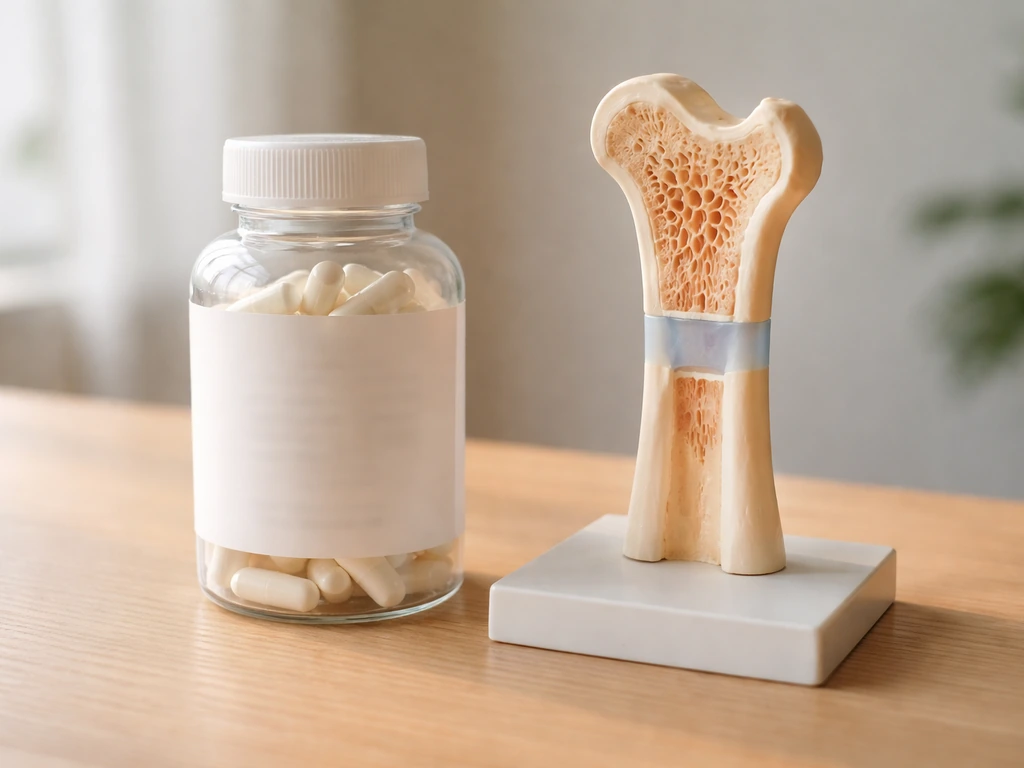
Steroids do not reliably make you grow taller, and in many situations they do the opposite. The answer depends almost entirely on which type of steroid you're talking about, how old you are, and whether your growth plates are still open. Anabolic steroids can temporarily speed up growth in children with certain hormone deficiencies, but they also risk closing growth plates early and cutting adult height short. Corticosteroids, the anti-inflammatory prescription drugs, are well-documented to suppress growth when used long-term. For adults whose growth plates have already fused, no steroid type will add height, full stop. Wellteen does not reliably make you grow taller either, because growth depends mainly on whether growth plates are still open and on underlying hormone or medical conditions.
Do Steroids Make You Grow Taller? What the Evidence Shows


Two very different drugs, two very different effects

The word 'steroids' gets used for at least two completely different classes of compounds, and mixing them up leads to a lot of confusion about height.
Anabolic-androgenic steroids (AAS) are synthetic versions of testosterone. They promote muscle growth, bone density, and the development of male sex characteristics. This is the category that includes things like testosterone, oxandrolone, and stanozolol. They're used medically in specific pediatric and endocrine conditions, and they're also the drugs misused by some athletes and bodybuilders.
Corticosteroids are a completely different story. These include drugs like prednisone, prednisolone, and dexamethasone. They're prescribed for inflammatory and autoimmune conditions like asthma, juvenile idiopathic arthritis, and Crohn's disease. They have nothing to do with muscle building, and their effect on growth tends to be suppressive, not stimulating.
| Feature | Anabolic-Androgenic Steroids (AAS) | Corticosteroids |
|---|---|---|
| Primary medical use | Hormone deficiency, delayed puberty, specific growth disorders | Inflammation, autoimmune conditions, allergies |
| Short-term effect on growth velocity | Can accelerate growth temporarily in deficient individuals | Suppresses growth, especially with long-term use |
| Effect on growth plates | Risk of premature closure at high doses | Suppresses bone formation and growth plate activity |
| Realistic height gain in healthy individuals | None reliably; risks outweigh any benefit | None; typically reduces growth potential |
| Available over the counter | No (controlled substance) | Some low-dose topical forms; oral/injected are prescription only |
Growth plates are the whole ballgame
Height increases happen at growth plates, which are cartilage-rich areas near the ends of long bones in your legs and spine. During childhood and puberty, these plates actively produce new bone tissue, making you taller. Once puberty completes, usually between ages 16 and 18 in girls and 18 and 21 in boys, these plates harden and fuse. After fusion, the bones simply cannot lengthen further, regardless of what you take.
This means timing is everything. Any steroid effect on height, whether positive or negative, only matters while growth plates are still open. A teenager in early puberty has a lot more at stake from steroid exposure than a 25-year-old does, in both directions. For the adult, height change from steroids is biologically off the table. The only exception would be extreme situations like untreated growth hormone deficiency persisting into late adolescence, which is a clinical scenario, not something a healthy person can game.
Puberty itself accelerates bone maturation. Anabolic steroids mimic sex hormones and can speed that process up further. That's the core risk: you might grow faster in the short term, but if the plates close years earlier than they would have, your final adult height ends up shorter than it would have been naturally.
What the evidence actually shows

When anabolic steroids do accelerate growth
There are real cases where anabolic steroids increase growth rate in children, but the context is important. In a historical study of hypogonadal adolescent boys (boys whose bodies weren't producing normal levels of sex hormones), weekly testosterone injections increased the average growth rate from 1.36 cm per 100 days to 3.6 cm per 100 days during treatment. That's a meaningful acceleration. But the key word is hypogonadal. These were boys whose growth was being held back by a hormone deficiency in the first place. Restoring hormones to normal levels removed the brake on growth.
Oxandrolone, a milder anabolic steroid, has been studied in boys with short stature at doses of roughly 0. In the pediatric study summarized in Pediatric Research, oxandrolone was given at about 0.12 to 0.24 mg/kg/day for 12 months with the aim of increasing growth rate without reducing prospective adult height blank" rel="noopener noreferrer">doses of roughly 0.12 to 0.24 mg/kg/day for 12 months. 12 to 0.25 mg/kg per day. It does increase growth velocity during active treatment, especially in the first six months. However, research also found that over 12 months of continuous use, there was blank" rel="noopener noreferrer">no net effect on ultimate predicted adult height when accounting for how much bone age had advanced. In other words, the short-term growth boost was largely cancelled out by accelerated bone maturation. You grow faster for a while, but the finish line arrives sooner too.
StatPearls and a 2006 review in the Journal of Sports Science and Medicine both flag premature epiphyseal (growth plate) closure as a documented risk of AAS abuse in adolescents. The evidence for specific height reduction is mostly case-based rather than from large controlled trials, but the mechanism is well-understood and the concern is taken seriously in pediatric endocrinology.
When corticosteroids suppress growth

The corticosteroid side is better documented and more straightforwardly negative for height. A 2017 study published in the Journal of Clinical Endocrinology and Metabolism looked at children with juvenile idiopathic arthritis who had received long-term corticosteroids. It found that cumulative prednisone dose correlated negatively with growth velocity, meaning the more corticosteroid exposure, the slower the growth. Even when these children later received growth hormone therapy, the prior steroid burden blunted the response. This isn't a fringe finding, it's a known clinical challenge that pediatric rheumatologists and endocrinologists actively manage.
If you or your child needs corticosteroids for a genuine medical condition, that's a risk-benefit decision made with a doctor. The takeaway here is that these drugs are not a height tool. They are the opposite.
The risks go well beyond height
It would be incomplete to talk about steroids and growth without mentioning the broader health picture, because premature growth plate closure is just one item on a long list.
Risks of anabolic steroid misuse in adolescents
- Premature epiphyseal plate closure, reducing final adult height
- Suppression of the body's own testosterone production (hypogonadism)
- Liver stress and hepatotoxicity, particularly with oral AAS
- Cardiovascular changes including altered cholesterol ratios and increased left ventricular mass
- Psychological effects including mood instability and aggression
- Tendon injury risk, as muscles strengthen faster than tendons adapt
- Hormonal disruption that can affect puberty progression
Risks of long-term corticosteroid use in children
- Growth suppression, especially with systemic (oral or injected) use lasting more than a few weeks
- Reduced bone mineral density and increased fracture risk
- Weight gain and cushingoid features (rounded face, central fat redistribution)
- Adrenal suppression, where the body reduces its own cortisol production
- Increased susceptibility to infection
- Cataracts and increased intraocular pressure with prolonged use
- Blood sugar elevation
These aren't rare edge cases. Many of these effects are dose-dependent and duration-dependent, but they're real considerations whenever systemic steroids are on the table for a young person.
What actually works for maximizing height potential
If you're asking about steroids because you want to know how to grow as tall as possible, the good news is that the evidence-based strategies are far safer and actually reliable, provided your growth plates are still open.
Genetics set the ceiling. Your target height (a rough estimate based on your parents' heights) gives you a range of about plus or minus 4 inches (10 cm) within which most people fall. No lifestyle factor, supplement, or medication is going to blow past that ceiling in a meaningful way for a healthy person. But a poor environment during childhood can easily keep you from reaching the top of your genetic range. That's where the actionable stuff lives. If you're also wondering whether something like salt in your shoes could affect height, the evidence does not support that idea does salt in your shoes make you grow taller.
- Nutrition: Adequate protein (roughly 0.8 to 1.2 g per kg of body weight daily in children and adolescents), sufficient calcium (1,000 to 1,300 mg/day depending on age), and vitamin D (600 to 1,000 IU/day) are foundational. Chronic undernutrition is one of the most reliably documented causes of reduced adult height worldwide.
- Sleep: Growth hormone is released in pulses during deep sleep, particularly in the first few hours after falling asleep. Children aged 6 to 12 need 9 to 12 hours; teenagers need 8 to 10 hours. Chronic sleep restriction measurably affects growth hormone output.
- Exercise: Regular physical activity, especially weight-bearing exercise and sports, supports healthy bone development. There's no evidence that specific exercises make you taller, but staying physically active keeps bones and growth plates healthy during development.
- Managing chronic illness: Untreated conditions like celiac disease, inflammatory bowel disease, poorly controlled asthma (or its treatment with systemic steroids), and hypothyroidism can all impair growth. Treating the underlying condition is often the most impactful intervention.
- Avoiding growth suppressants: Smoking, chronic alcohol exposure, and yes, misuse of anabolic or corticosteroids all interfere with growth during development.
Some other questions about height, like whether specific supplements or hormonal products affect growth, are worth investigating with a similar evidence-first mindset. A common question is whether Viagra can affect growth, but erections medications are not known to lengthen bones or reopen fused growth plates whether specific supplements or hormonal products affect growth. The pattern you'll find is that the basics (sleep, protein, micronutrients, and overall health) consistently matter more than any single product or intervention.
When it's time to see a doctor about growth
Most kids and teens grow within normal ranges without any medical intervention. Sperm cannot make you grow taller, because height is driven by growth plates and the hormones that regulate them sperm make you grow taller. But there are specific situations where a pediatric endocrinologist or your primary care doctor should be part of the conversation, and it's worth knowing what those are.
Signs that warrant a medical evaluation
- Height consistently below the 3rd percentile on standard growth charts for age and sex
- Growth velocity that has slowed significantly (less than 4 to 5 cm per year in a pre-pubertal child, less than expected for puberty stage)
- A height significantly below the target height range calculated from parental heights
- No signs of puberty by age 13 in girls or 14 in boys
- Noticeable deceleration in growth speed that used to be normal
- Current use of long-term corticosteroids with no growth monitoring in place
- Suspected growth hormone deficiency based on clinical features or a chronic medical condition known to affect growth
What a doctor will actually check

A growth assessment typically includes plotting height and weight on standardized growth charts, calculating growth velocity over time, a bone age X-ray (usually of the left hand and wrist) to see how mature the growth plates are relative to chronological age, blood work to check thyroid function, IGF-1 (a marker of growth hormone activity), and sometimes other hormones. If there's a genuine deficiency or underlying condition identified, treatment options do exist and can make a real difference in adult height outcomes when started early enough. That's a very different situation from a healthy teenager looking for a shortcut.
If you're a parent concerned about your child's growth trajectory, the right move is to bring up growth charts at the next well-child visit rather than exploring unmonitored steroid use. Birth control is sometimes discussed for height, but it does not reliably make people grow taller unmonitored steroid use. The window for intervention in genuine growth disorders is real but time-limited, and the earlier a true problem is caught, the more options exist. That's where the energy is worth directing.
FAQ
Do steroids make you grow taller if you are already an adult?
For most healthy adults, no. If growth plates are fused, anabolic-androgenic steroids cannot lengthen bones and corticosteroids generally do not reverse height loss. Steroids might change posture, muscle mass, or pain levels, which can make someone look taller or shorter, but it is not true height growth.
Can anabolic steroids ever increase height in kids?
In children with specific hormone deficiencies, anabolic steroids can increase growth velocity during treatment, but the goal is to restore normal hormone signaling, not to “add height.” The risk is that faster maturation can close growth plates sooner, reducing final adult height if dosing or timing is off.
How do corticosteroids affect children’s height compared with anabolic steroids?
Corticosteroids like prednisone are typically more likely to slow growth when used for long periods and at higher cumulative doses. If your child needs them for a medical condition, the doctor usually aims for the lowest effective dose, monitors growth velocity, and may adjust treatment strategy over time.
How do doctors figure out whether steroids could affect height at all?
The key factor is growth plate status. Clinicians estimate it using growth charts and growth velocity, then confirm with bone age (often an X-ray of the left hand and wrist). A fast-growing child with open plates may respond differently than a late-pubertal teen whose plates are nearing fusion.
If I have low testosterone, would taking steroids help me grow taller?
Testosterone-based treatment can be appropriate in confirmed cases of hypogonadism, but self-directed use is high risk because it can accelerate puberty and bone maturation. In practice, clinicians monitor puberty stage, bone age advancement, and predicted adult height to judge whether treatment is helping or harming final outcomes.
What should I do instead of trying steroids to improve a child’s growth?
If the concern is height loss or poor growth from a health condition, that may be different from “catching up” with height supplements. The most important next step is identifying why growth is slowed (thyroid issues, chronic inflammation, nutritional problems, growth hormone pathway issues) and addressing that cause with a clinician.
Are over-the-counter supplements or hormonal products a safer way to grow taller than steroids?
A lot of “height” products are not the same as prescription steroids, but they can still affect hormones and cause unsafe changes. Look for red flags like selling without medical oversight, unclear ingredients, or claims that they reopen growth plates. If you suspect a supplement might interfere with growth, ask the prescribing clinician or a pediatric endocrinologist.
Why do some people report getting taller after steroids?
No single injection, pill, or workout plan can reliably increase adult height once growth plates have fused. If someone looks taller after steroid use, it is usually from changes like reduced inflammation, improved posture, or increased muscle tone rather than new bone length.
If steroids reduce growth, can I just switch to another one or stop to protect height?
Switching from one steroid class to another does not remove the core issue, which is timing and bone maturation. If you are already using a medication for a legitimate condition, changing or stopping steroids should be done only with the prescriber, because abruptly stopping can be dangerous and the underlying disease may worsen.
When should a parent seek medical evaluation for a child who seems short or is growing slowly?
If a child’s growth slows (for example, dropping percentiles on growth charts) or puberty timing is unusual, that warrants an evaluation. Ask for growth velocity tracking and, when appropriate, bone age and basic labs such as thyroid function and IGF-1, because treatment decisions depend on identifying a true growth disorder early.
Does L-Arginine Help You Grow Taller? Evidence and Safety
Evidence on whether L-arginine can increase height, its biology, limits by growth plates, and safe, better alternatives.